Category Archives: Projects

365 Frankendael day 55

Today we did a Herb Sit, rather than a Herb Walk. It’s amazing what you can sometimes find when you simply sit still and take a close look at what’s around you…

Here’s a Ribwort (Plantago lanceolata), with a small Dandelion (Taraxacum officinalis agg.) plant and some Field Horsetail (Equisitum arvensis) growing just behind it.


Above is a feather leaf of Yarrow (Achillea millefolium).


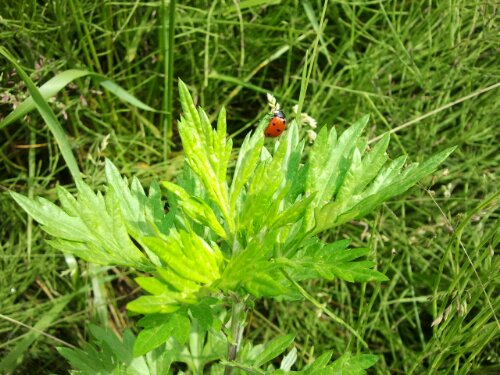
The tip of a young Mugwort (Artemisia vulgaris) plant featuring a Lady Bird.


Above, a not so clear photo of Salad Burnet (Sanguisorba minor).

We also found several types of clover and other legumes, within an arms reach of where we sat. I need my better camera to take decent photos of those. Here are the leguminous plants that we found and were able to identify today:

Red clover (Trifolium pratense)
Zigzag clover (Trifolium medium)
White (Dutch) clover (Trifolium repens)
Lesser Trefoil (Trifolium dubium)
Bird’s-foot-trefoil (Lotus corniculatus)
Please be aware that Bird’s-foot-trefoil is not a clover and is poisonous and should not be eaten. It has some historic medicinal uses. The clovers are edible. The flowers and leaves are tasty in salads and Red clover has many medicinal uses.

365 Frankendael day 54

Today, I went out to the park specifically to find Dandelion flowers. I wanted to try a recipe from The Kitchen Witches Cookbook which features closed Dandelion flowers opening up into a sea of cooked egg. After meeting Joop Eisenberger, who was trying to make one of his beautiful photos of a Lepelaar (Spoonbill), I had a good look around. However, it seems I had left it too late or the day was just too over clouded to open up the flowers. I found just a few flowers but took advantage of finding the plants and harvested a handful of Dandelion leaves. All will be eaten this evening. Notice how the exaggerated leaf teeth point down towards the ground?

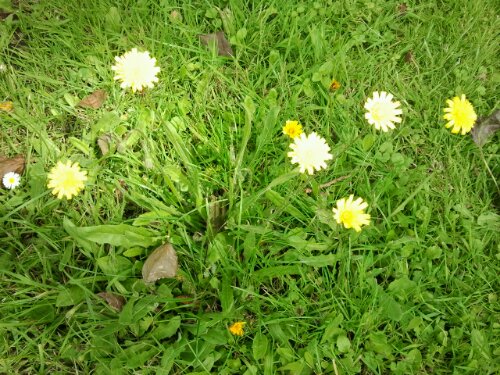
One Dandelion (Taraxacum officinalis agg.) look a like is flowering quite prolifically in the park today. It seems to be Common Cat’s-ear (Hypochoeris radicata) or Lesser Hawkbit (Leontodon taraxacoides). I’ll need my Field guide and magnifying loupe to hand, to decide which but either way they are both edible and not just a pretty distraction to the Dandelion forager! They are both hairy, whereas Dandelion is always smooth. Dandelion is always very bitter and these two are almost always not bitter. The leaves and roots of the Hawkbit and Cat’s ear are generally the interesting parts for foragers.

Here on my photo you may be able to see that the plant has leaves quite like Dandelion, has stub ended petals on dandelion like heads and it’s spend flowers tip down towards the ground like Coltsfoot.

Chives on a Green Roof

This is a photo I took yesterday through a drainage duct. It is of a wonderful Green Roof, carpeting a large parking garage near some apartment blocks. I see it every week and notice the pretty Sedums growing there but on this occasion I noticed that a large area contains flowering Chives. What a treat for the people living close by! I managed to harvest two leaf blades by reaching through the short duct and used them in dinner last night. The location will be posted on the Boskoi interactive foraging map.

365 Frankendael day 53

A busy day today, including a lunchtime reconnaissance mission to Amsterdamse Bos, in preparation for some private herb walks. So just a quick look at the herbs on the edge of the Frankendael this evening…

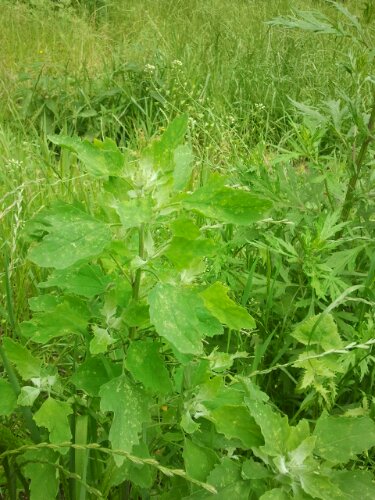
Here is a mixture of Fat Hen (Chenopodium album), Mugwort (Artemisia vulgaris) and Shepherd’s Purse (Capsella bursa-pastoris) growing together on neglected ground.

Here is Ground Elder (Aegopodium podograria)growing amongst some purple stained carrot family foliage. It may be Knotted Hedge Parsley but I need to check it carefully another time and in any case it’s not very interesting due to the similarity to very poisonous members of that family. There is one look a like of this plant, Sweet Cicely which I enjoy in the very early spring. It’s strong aniseed scent when the leaves are crushed is unique.

365 Frankendael day 52


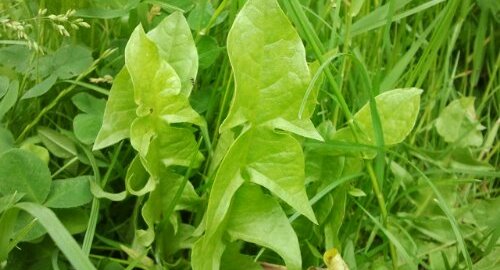
A lovely walk today, began by spotting this particular Garlic Mustard (Alliaria petiolata) plant along the Lime tree avenue. There are many many Garlic Mustards still around But this one has a few really big leaves. The one on focus here was 14cm long! It’s handy to have your field guide with you for recording such herb spotter type things!


I saw this plant from a distance yesterday and mistook it for a Calamint. I have a very stinky sample of it in my field guide, beside me as I type and it is definitely not a pleasant Calamint. It is Field Woundwort (Stachys arvensis) with beetroot coloured flowers atop hairy, strongly “scented” leaves. It is a Labiate of great herbal repute. This particular Stachys has been long used for a huge range of ailments. Have a look at the Wiki link for an overview of them if it interests. I have used it now and then as a tea. I find the taste quite strong but not unpleasant. I think the most interesting uses are to treat pink eye (conjunctivitis) and styes. For these problems, a weak, cooled and very well strained tea is sometimes used as an eye wash.


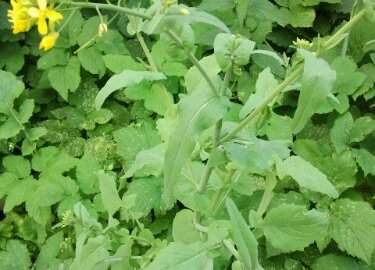
I think that the above photo is of Hedge Mustard (Sisymbrium officinale). I will need to keep checking as it comes into flower. I did manage to forage our Brassica fix of the day though, plenty of Wild Turnip in full flower alongside the Middenweg today.


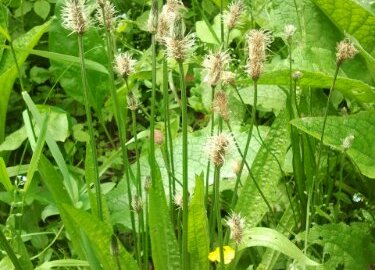
Here’s an eye catching member of the Plantain, Plantago genus. It looks like Ribwort but the flowers are super shaggy and I’m not used to seeing that in Ribwort. I have a feeling it is a hybrid between two types of Plantago. Claud Biemans told me about them when she walked with me here in Frankendael. Whatever it is I love those flowers, they remind me of a well worn Afghan coat.


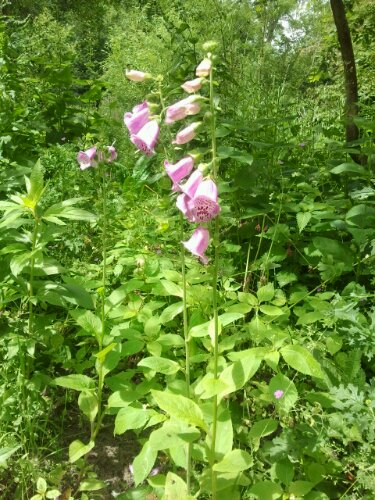
Here is Digitalis in flower. Foxgloves have strikingly beautiful flowers but all parts of the plant are highly poisonous. It provides a well known herbal medicine which acts specifically on heart muscles. Not something to be picked or used.


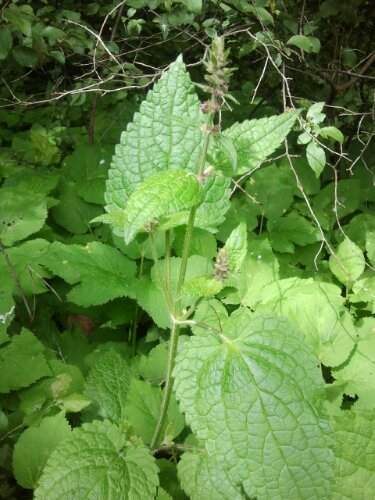
Here’s another poisonous plant, White Bryony (Bryonia dioica) entwined around Motherwort (Leonurus cardiaca). I was looking at Motherwort today because it’s flowers are just beginning to become obvious and soon the leaves of the plant will become more familiar to those who know its flower heads. Can you see the flowers developing in whirls close to the leaf bases and the square Labiate stems? This is a good time to harvest and tincture the plant but you should watch it for a full cycle to ensure its the real thing.


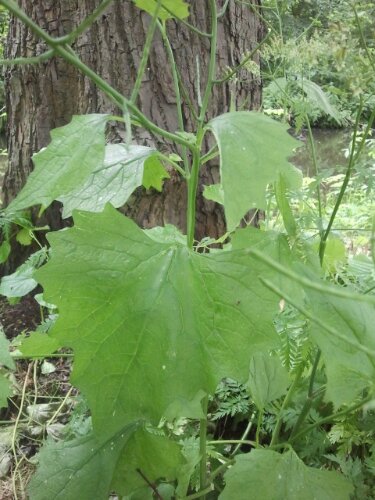
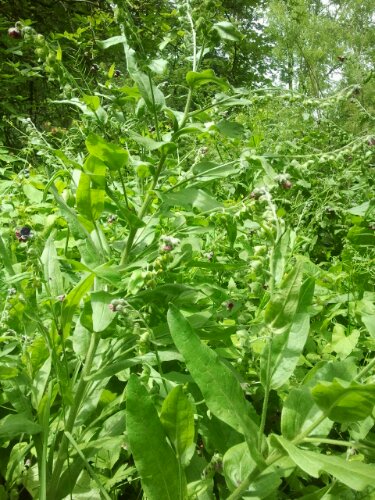
Lastly today, Hound’s Tongue (Cynoglossum officinale).
Mugwort Bread

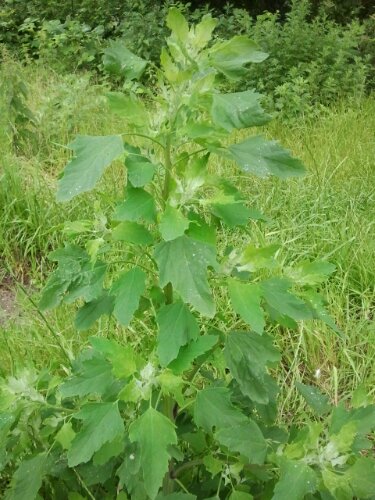
Mugwort (Artemisia vulgaris) is one of my favourite herbs, particularly at this time of year. It grows as a tall, bushy, common weed in cities. It is easy to identify by appearance and scent and I love to add it to cooking, several remedies and household herbal products. After one of my recent Herb Walks, two of the group reported back that they had incorporated some Mugwort into homemade bread. Today I had a go at the same, adding a good heaped tablespoon of fresh, chopped Mugwort leaves to my usual bread recipe. I think it tastes very nice and I’ll use it this way again. Mugwort bread is not as dramatic tasting as using Mugwort as a vegetable but it is pleasantly savory and quite aromatic. It also seems to add to the moistness of the bread. Very agreeable. I have just enjoyed a few slices, loaded up with peanut butter, not a bad combination!

I’ll add my bread recipe another time but there are plenty to find online and in cookbooks. I make mine with half Speltflour and half Wheatflour, 4 cups in all, plus 1 teaspoon dried yeast, 2 teaspoons salt, 1 3/4 cups water. Simply add the chopped herb at the start of the dough making process.

Mugwort used to be a popular culinary herb but has fallen out of fashion. The herb is bitter and aromatic and can be substituted for similar, more familiar herbs such as Tarragon (Artemisia dracunculus) and Sage (Salvia officinalis). As with all familiar culinary herbs, it should be used in small quantities and introduced gradually into the diet, keeping an eye out for personal reactions. You should also be aware that Mugwort is said to be unsafe for ingestion during pregnancy (although in China it is sometimes recommended to prevent miscarriage).

So if you like making bread and you have properly identified some Mugwort near your home, maybe give Mugwort bread a try. Thank you Daniel and Amalie for the tip!

365 Frankendael day 51

I harvested a little Russian Comfrey today, to make a healing foot ointment. The plant is still in flower but the leaves will stay contain many of the active constituents. Also plucked for the table were a small number of Daisy flowers, some Ground Elder, a little Garlic Mustard and a few pretty Pelargonium flowers. The Ground Elder itself is still on top form for foraging although it is starting to become quite dirty in some locations, due to bird droppings and general honey dew dripping from aphids and ants in the trees above. So I would say that by now it is just past it’s best and I need to focuss my forager’s attention elsewhere.

Here are today’s photos:

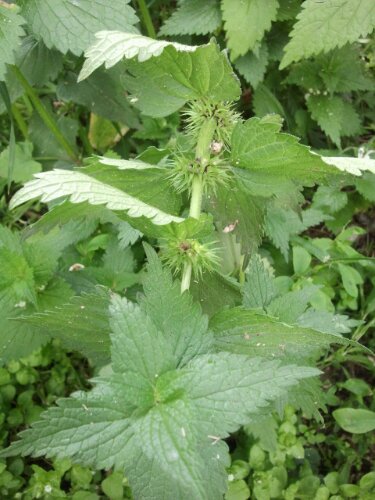
Here is a White Dead Nettle, setting seed alongside the Middenweg and the park. I think you can quite clearly see how the flower and now seed clusters encircle the square Labiate family stem, quite unlike the unrelated but often mistaken Stinging Nettle. Both plants are edible.


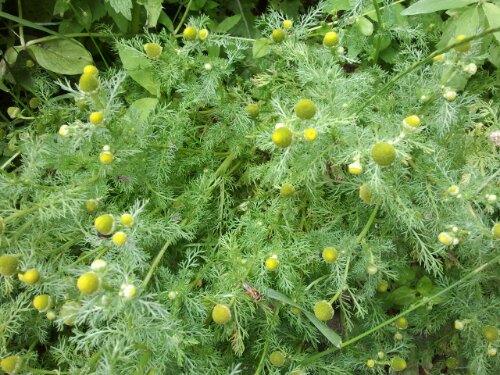
Above is German chamomile (Matricaria chamomilla) growing close to the White Dead Nettle.


Above is Brassica rapa Wild Turnip. It smells of cabbage when picked and the flower heads remind me of broccoli. It was growing close to a patch of very young Fat Hen (Lambs quarters) but both were unfortunately in a bit of a dirty location so not for the plate tonight.ill certainly keep my eyes open for both tomorrow though as they are perfectly in season at present and make very good eating when cooked. All parts of Wild Turnip are edible and tasty.

I was also very pleased to spot some Calamints in flower for the first time this year. Photos of those tomorrow hopefully.

365 Frankendael day 50


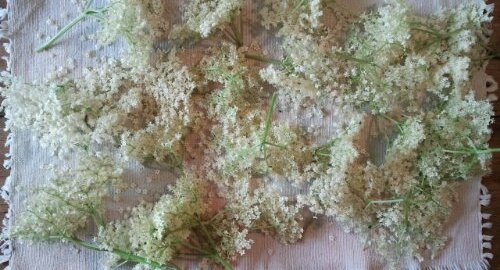
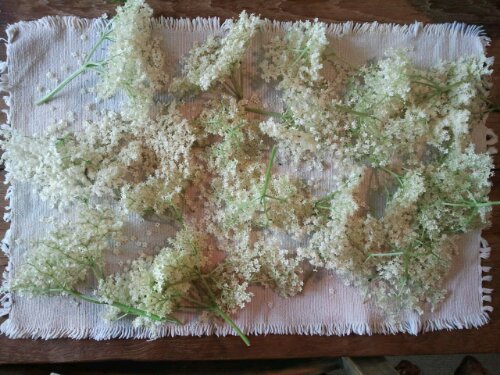
I picked a small pile of Elderflowers today, from along the outer Hugo de Vrieslaan edge of the park. The resident bugs are now crawling out of the flowers. I am about to get going with the Elderberry Delight recipe in the River Cottage Hedgerow Handbook. You will find the book and hence the recipe via my Books page. So before the flowers are ready for the pot, here are my few photos of today’s edibles in this part of Amsterdam:


Above is Greater Celendine (Chelidonium majus), still growing and flowering useful but not one for the pot. This is a poisonous plant but the bright orange juice within the stems can be helpful to dissolve warts.


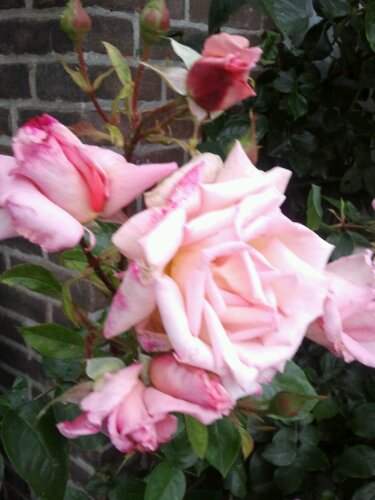
Here’s a pretty and no doubt tasty cultivated, scented Rose. It grows on a house which borders the park. Not one to harvest of course but there are plenty more like this in town at the moment.


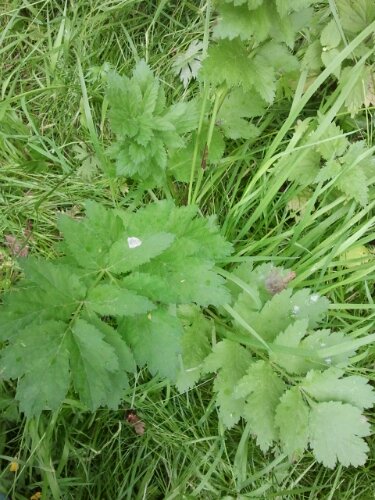
Above, lovely and tasty Wild Lovage. This makes very good eating and although another member of the troublesome carrot/parsnip/hemlock family, the leaves are quite different from its relatives and, with a field guide, very easy to identify. Just a leaflet or two will add a lovely flavour to cooking.


Here is a first for my 365 Frankendael ProjectFat Hen (Chenopodium alba). I am very pleased to find it, close to one of the Frankendael bus stops in some neglected land. In fact growing alongside another lover of neglected places – Mugwort. I harvested some of this one for this evening’s meal and my cat is having a good chew on a leaf at present. He seems to find it quite agreeable. Fat Hen makes great eating and is a weed which does very well on fertile soil, such as on allotments. Generally gardeners dig it up and dispose of it. I suggest they give washing and cooking it a try. Lots of Fat Hen recipes are available online and in foraging books.

If you would like to join me for a walk around the richest parts of this park, then why not sign up for my next guided walk on Sunday 15th July?

Sunday 15th July 2012 – Urban Herbology Walk – Park Frankendael


Maybe it will be hot, maybe not but whatever the weather there will be lots of herbs around in Amsterdam, on July 15th. To help more people appreciate some of the edible, medicinal and interesting herbs, growing within the city, I’m offering another Urban Herbology Walk, on Sunday 15th July 2012, from the main gates of Frankendael Park.

The walk will start at 11am and every one interested in finding out about wild herbs, which can be found in central Amsterdam, is welcome to subscribe.

My previous walks have been great fun to organise and very well received.  We will take a relaxed look at the bounty of summer herbs to be found in and around the park. The walk will last about 90 minutes and will probably end at the lovely cafe/restaurant Merkelbach, situated just inside the main entrance of the park.

Cost per participant will be €8. Maximum 12 places. Previous walks have been oversubscribed so if you wish to join me you must contact me beforehand. Please email Lynn.Shore@gmail.com or call me on 0627 596930.

During the walk you will…
Receive a useful handout, to refer to after the walk
Learn how to find and identify some safe, useful, local herbs,
Learn how to harvest with respect for the environment,
Learn how to use herbs safely in several different ways,
Receive some tasty Urban Herbal recipes.

And of course you will get the chance to meet other folk who like to know a little more about what’s growing beneath and above them!  If it sounds interesting to you then please contact me.

I really hope to meet you on 15th July!

Thank you! 365 Frankendael day 49

Thank you to the wonderful Urban Herbies who joined me in Frankendael this morning! Another lovely group joined me for a guided walk around some plant rich areas of the park. We found lots of beautiful herbs and raised an eyebrow or two as we picked Lime leaves from one of the trees lining the main walkway. This was the last guided walk I’ll be doing for a while. I plan to offer another on a Sunday in July and my forthcoming Mugwort field workshop (also at Frankendael), on Monday 18th June has a couple of spaces available. If you are interested please contact me and start collecting your pesto jars! Also on the 20th June, Midsummer’s Day, a group of us will be gathering Lime for lunch and a tea. Keep an eye on my Events page for further details.

The Lime tree (Tilia vulgaris) in this photo is just by the main entrance. I noticed this beginning of a leaf spur as I sat waiting for the walkers to arrive. Lime has a fascinating ability to send out such leaf spurs, directly from the truck. It is quite handy from a foraging point of view, these leaves are often within reach on trees with otherwise inaccessible leaf canopies.

Next, the developing seed pods and remaining flowers of Scullcap (Sculletaria altissima) How quickly this amazing woodland plant moves through its flowering process!

Next is a clear photo of developing Hawthorn berries (Crataegus monogyna). I have been learning more about ways to use these (when bright red and ripe) in cooking. The ripe berries will be mainly filled with seed but the fruit encompassing that is useful and quite tasty. A modern classic foraging recipe is to make hawthorn leather from the fruit. I have tried it before and found it imensely fussy and time consuming. I then forgot to eat the leather before it turned mouldy – so all in all a big waste of berries and time! This year thanks to Amalie Bang, who came on one of my recent walks, I’ll be trying to make Danish style Hawthorn juice which can then be used in different ways to make tasty foods. I can’t wait for this year’s harvest!

Many other herbs around today but it’s time to put my feet up and start thinking about the Mugwort workshop…