365 Frankendael day 356

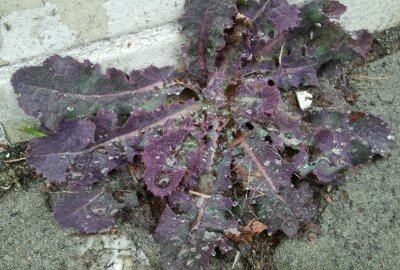
What a beautiful colour this plant is! It’s a type of Sow Thistle and here it is growing against a house on the Middenweg. It’s an edible plant but very bitter.

image

Also today, my favourite clump of edible and medicinal Hollyhock (Alcea rosae). It’s nice to watch one plant change through the year, a lot can be learned that way, little by little. I’ve enjoyed charting the progress of this one.

image

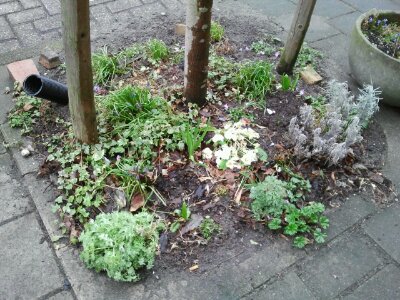
And lastly a quick photo of my close to home treepit/boomspeigel, with it’s springtime look. No herbs for the pot, it’s far too accessible to dogs and cats, but very useful to me and local insects none the less.

image

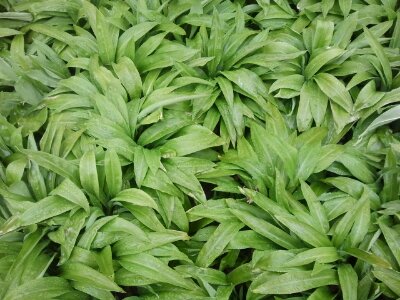
In the pit you may be able to spot Wormwood, Primrose, Pansy, Wild garlic, Ivy, Curry plant, Chickweed, Lemonbalm, Grape hyacinth. All are edible (in the right spot) and medicinal.

Herbal Moon Gardens

Last month, I asked my apprentices to think about planting a herbal moon garden, in whatever space they can find. I finally got around to making my own last night.

The idea of a moon garden, for me at least, is to welcome the moonlight into a peaceful outdoor space. Moon gardens catch the moonlight with plants and reflective objects. They are spaces to meditate or just sit at night whilst able to see and smell beautiful herbs. I like to know where the Moon is in its monthly cycle and creating a space to contemplate the moon is a good way to keep that connection. Here’s a link to previous UH information about gardening by the moon.

Colours
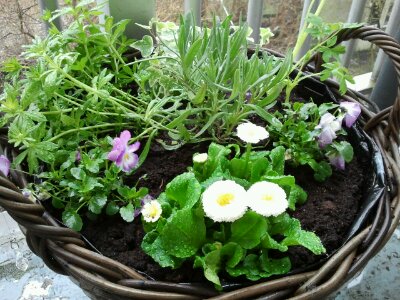
Most gardens are planted with daylight in mind, this is of course understandable. I still needed to consider the amount of sunlight in my chosen location but when selecting plants, I looked for colours that linger as the sun goes down. Silver and white flowers and foliage are generally the last ones you will see as the sun sets completely. Blues and violets are the next colours to fade and are associated with spirituality and intuition.
wpid-2013-04-11-09-22-20

Location
Choose somewhere safe and accessible to you at night and where plants will grow! Preferably select someplace where you can see the moon as it charts its path across the sky. This is not always possible of course. Try your best for a moon view but above all aim for somewhere that is relaxing in the evening and nighttime. I chose the sheltered upstairs balcony of my home. I can always get to it, plants grow there, it often provides a glimpse of the moon and is a little further away from barbecuing neighbours and signs of active daily life. My balcony gets some sun but faces North-East. It becomes quite windy up there, especially in the winter so I’ll try to provide extra protection for the plants as the year moves on. All of my plants are in pots, due to my home being an above ground apartment, so I must also be able to water and feed the plants.
wpid-2013-04-11-09-22-53

Moon Garden Herbs
I tried to find herbs with silvery leaves as well as white, purple or violet coloured flowers. But my main aim was for a succession of flowers and of course I wanted only edible and medicinal plants. The herbs I chose should provide a succession of colour from March to September. Later in the year, I’ll see how the plants have managed, will move some away and add others to fill gaps in the flowering year.

Crystals, Light, Shapes
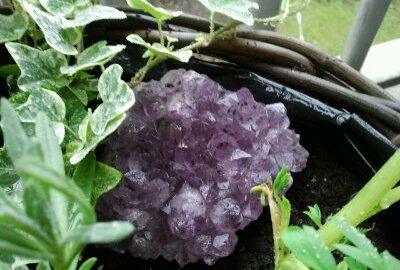
I have added a few crystals to the balcony, to catch the moon light. Also a couple of pretty candle holders to produce extra light when I want it. The shapes I have added remind me of the moon. So far I have a woven willow ball, a little star decoration, some amethyst and quartz crystals. I’ll add more as time goes on but for now I am pleased to have created an edible and medicinal herbal moon garden which I enjoy glimpsing during the day and sitting in at the night.

Now I know that not all of you will be limited to creating a moon garden in a pot, balcony or other small space. I also know that you may be far more creative than me! So he are a few links which may inspire you to get out your gardening tools and get planting a moon garden…

Images of moon gardens
Plants that give scent at night
Moon garden herbs
365 Frankendael day 355

I met the gardener who looks after Park Frankendael today. He’s happy with our little Elder babies and suggested another location for additional planting. He also taught me about the the Primrose species which live in the park. I’ll order some seed of those species soon and will be bringing on Primrose and Violet plants to add to the park at suitable locations.

One of the Elder babies is in the middle of this photo.

image

The Comfrey (Symphytum uplandicum x) plants are looking great today.

image

As is Ground Ivy (Glechoma hederacea), in flower in some situations.

image

365 Frankendael day 354

Just what the plant doctor ordered this afternoon – mild weather and a good dose of drizzle!

In the park, Wild garlic (Allium ursinum), succulent and far too tasty to park your bike against.

image

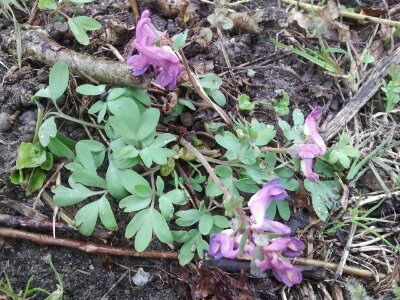
Fumitory, used in some areas of the world to clear the body of radiation damage, following radiotherapy etc.

image

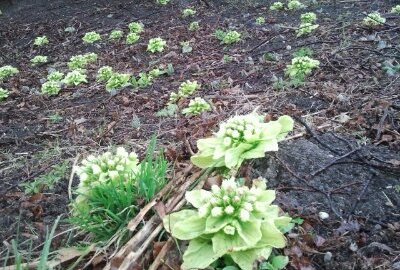
So much Fuki in one place! And still, it flowers on.

image

My daily dose of White Horehound (Marrubium vulgare) from this plant.

image

365 Frankendael day 353

More and more green life by the second!

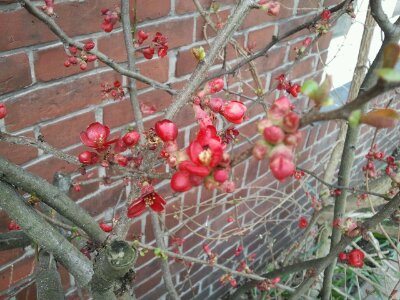
Japonica flowers are still blooming vibrantly and tastily.

image

And also lovely patches of Purple deadnettle (Lamium purpurum) in flower.

image

They make a nice addition to general cooking and have many medicinal virtues.

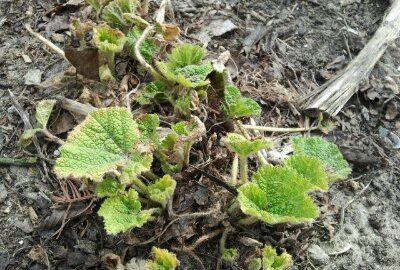
And probably my favourite street herb Hollyhock (Alcea rosea) is really starting to leaf up now.

image

I met a woman at the local playground yesterday who mentioned using Hollyhocks as growing support stakes, amongst tomato plants. A lovely idea.

365 Frankendael day 352

image

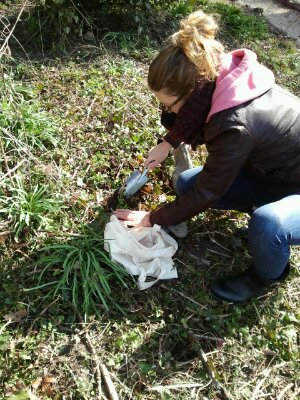
Today a small group of us planted out the Elder cuttings which we took from mature Elder shrubs on Hugo de Vrieslaan last year. The idea was to grow more of this useful native herb in a slightly cleaner part of the area.

image

We choose to plant our well rooted cuttings along the edge of the Frankendael woodland. They blended in instantly and we have our fingers crossed that they will take well to their new home.

We also took a fresh batch of Elder cuttings and will care for them at our homes until next year. Thanks everyone who came along today!

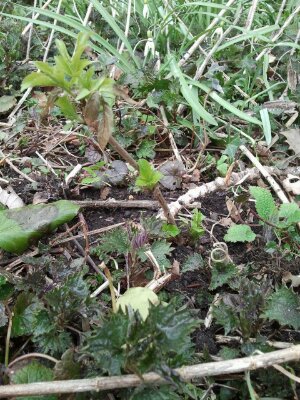
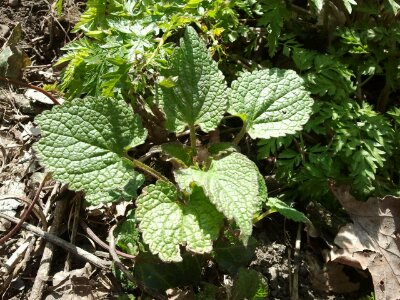
Also today, I spotted a good amount of Cleavers (Gallium aparine) for the first time this year. It is growing here beside some Stinging nettle (Urtica dioica).

image

And Common Figwort is starting to bolt forth.

image

365 Frankendael day 351

image

Elder (Sambucus nigra) NL:Vlier, today. I’m running a little workshop on this incredible shrub tomorrow morning (see events page). At the moment in Amsterdam, it is covered in medicinal foliage. All green parts of the plant contain a toxin which our bodies convert into cyanide. So ingesting Elder leaves is not wise but turning them into an infused oil or ointment can produce very useful external remedies. I like to make an ointment with Elder for healing of skin wounds, bruises and bumps. It’s very effective.

365 Frankendael day 350

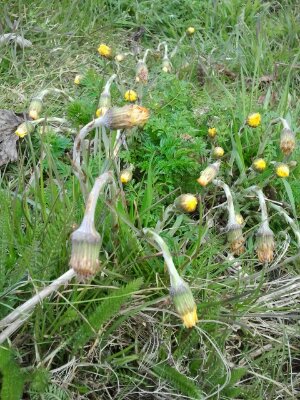
Coltsfoot (Tussilago farfare). Cough go away!

image

Now my eyes are open to them, I’m finding clumps of this unusual looking flower all over the place. Unlike Dandelion, the flowers come up long before the leaves. Here you can see fresh just about to open flowers along side those which bow their heads and are starting to set seed. Wonderful and so easy to capture the properties in honey.

Love your Elders!

Love Your Elders – Plant Your Elders!
Sunday 7th April 11.00-12.30

Time to join me to either plant your Elder cuttings from last year, or to learn how to take cuttings and propagate this medicine chest of the European hedgerow. Native Elder (Sambucus nigra, NL:Vlier) grows easily and offers familiar flowers and berries each year. But all parts of the shrub have medicinal, magical and culinary uses. Learn which parts of this beloved urban herb are safe, which parts are toxic and how to make simple remedies, tasty concoctions and fibre dyes from each.
Park Frankendael

As a regular city forager, I think it’s vital to give something back to the land which I harvest from. Of course there are other ways to show gratitude the the Earth but I find that one of the most powerful ways is to add more of the native plants which I use.

€10 per adult
Free for apprentices
€5 if you bring along a rooted Elder baby from last year
Or no cash exchange for a few nice herb seed packets

Includes handout
Please contact me directly (lynn.shore@gmail.com) if you would like to come along.

If you can’t come but want to know how to grow Elder, here’s a link to instructions I wrote last year. Let me know if you need any tips.