Tag Archives: Chickweed

365 Frankendael day 139

Today, a quick list of 16 edible or medicinal plants, currently in season in Amsterdam. Here they are, photographed in Park Frankendael this morning:

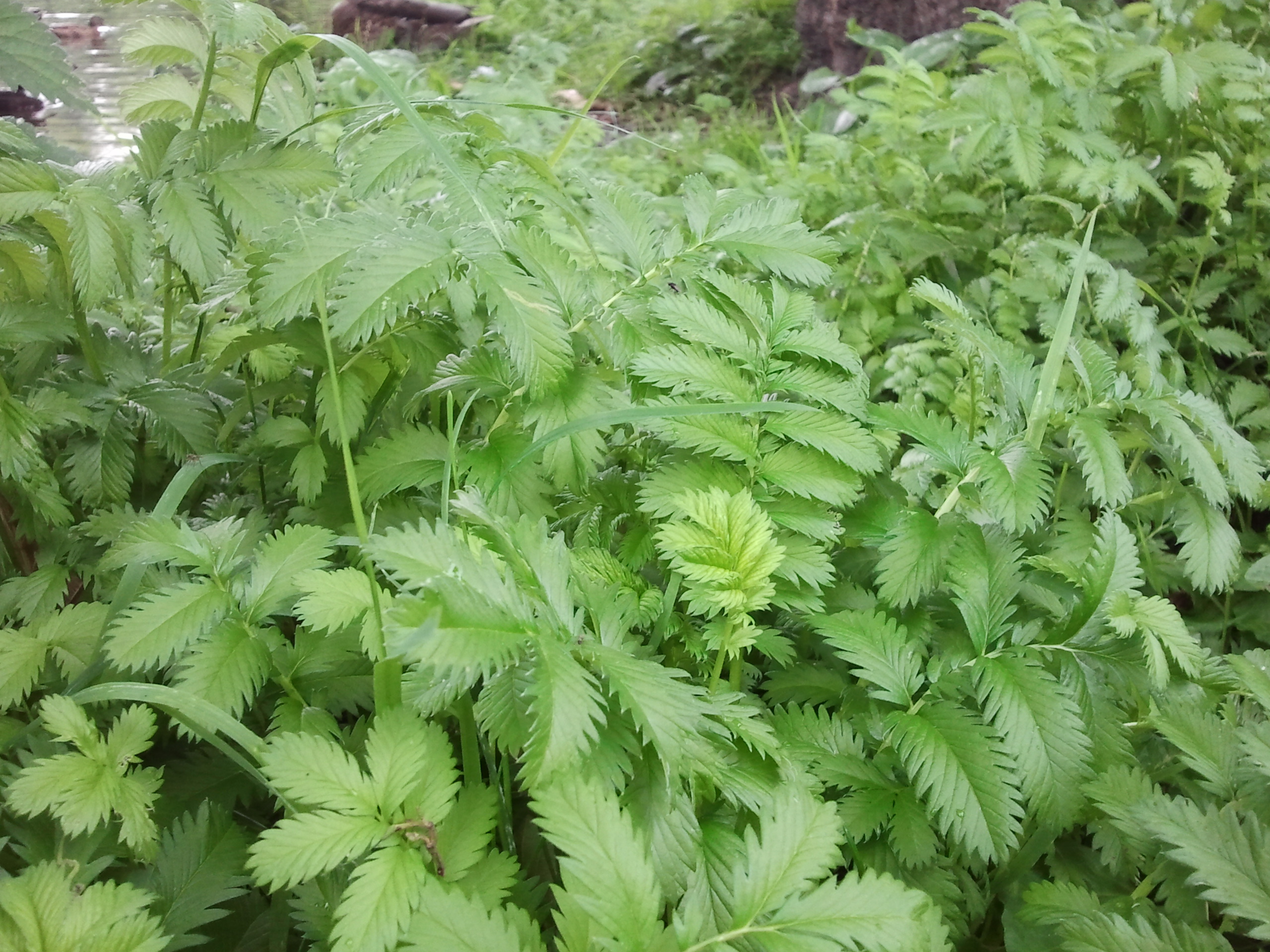
Silverweed – edible, all parts.

image

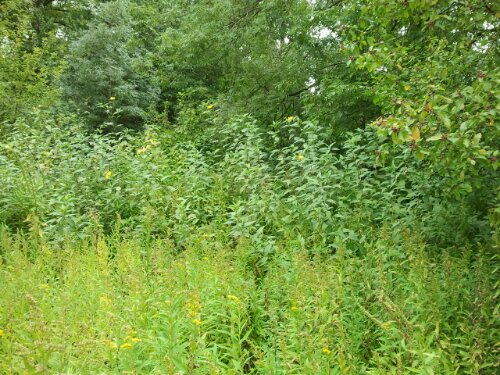
Jerusalem artichoke – invasive, very tasty. Heaps of it at the back of the closest flower meadow to Frankendael huis (behind the house). Cook the roots with winter savoury – it helps eliminate the intestinal gas which these vegetables are infamous for producing.
image

image

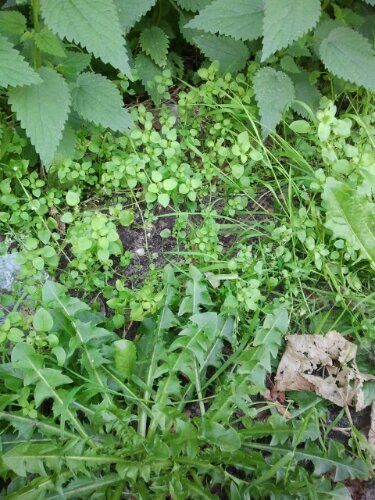
Dandelion, Stinging nettle and Chickweed. All three are edible, nourishing tonic herbs. Can be eaten safely in fairly copious amounts but just a leaf our two, or a handful of Chickweed, will really boost a meal.
image

Rosehips, in abundance. They could be made into syrup now but if the birds leave them alone, I’d wait another few weeks. Medicinal due to high vitamin c levels in particular and other immune boosting constituents. Interesting added to stews etc also.

image

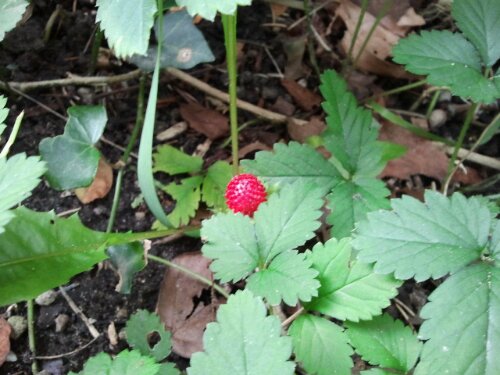
False, but edible, look-a-like strawberries of a Potentilla.
image

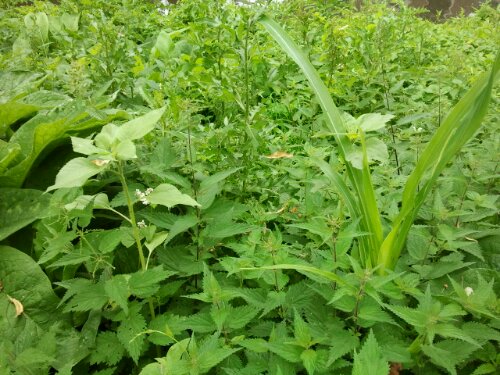
Sweetcorn and Sunflowers, growing alongside the Middenweg. I’ve seen quite a few wild Sweetcorn plants lately. Maybe sometimes been sewing the seed as they walk the streets? Not likely that either of these plants will be left, strimmer free, long enough to flower or seed, but what fun that would be if it happened.
image

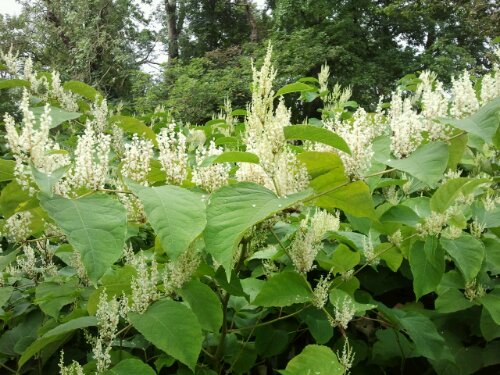
Japanese knotweed, rhubarb like, super sour edible and terribly invasive plant. Search this site and others for how to cook it.
image

Marshmallow (yes, it’s the original sweet namesake). I simply collected a thousand seeds or so from this plant today. It’s so easy to grow in town and so useful as a soothing medicinal and as a food – think gooey egg substitute.

image

Not so easy to see – though what a pretty woodland view – Ground elder and Wild geranium.

Garlic mustard, edible – very! – but only pick one leaf per plant at this time of year. They need to build up energy reserves to survive the winter. You’ll hopefully be rewarded with tall healthy leaf and flower rich plants next year.
image

Wild rocket. Rucola in Dutch. A heap this size would be sold for a small fortune in Albert Heijn. It will taste extra strong and be a bit woody at the moment due to flowering but still useful and very peppery. Maybe collect a seed pod or two and sprinkle them in a price of underused safe land near your home.

image

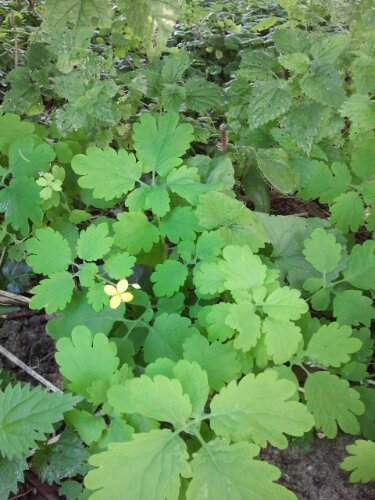
Greater celandine. NOT edible! Poisonous orange sap, but that sap is very useful as a topical treatment for warts and some other skin spots.
image

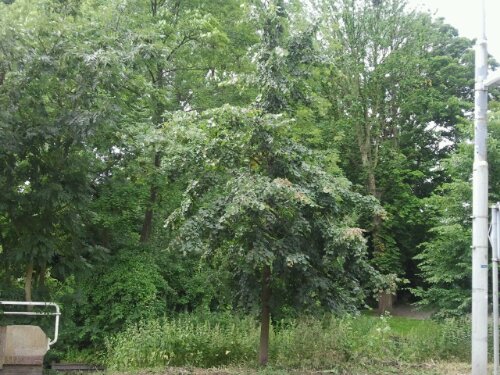
Lastly the mystery Nut Tree that several people sent me photos of whilst I was on holiday. I still don’t know the name or whether it if edible our not. But I now know it’s sticky and I think it is setting fruit rather than nuts at the moment. Will keep am eye on it as they develop.
image

365 Frankendael day 131

Today I looked at small herbs, growing along the Middenweg, which could easily be”weeded” out and replanted in locations where they could be allowed to grow unhindered and provide food…

image

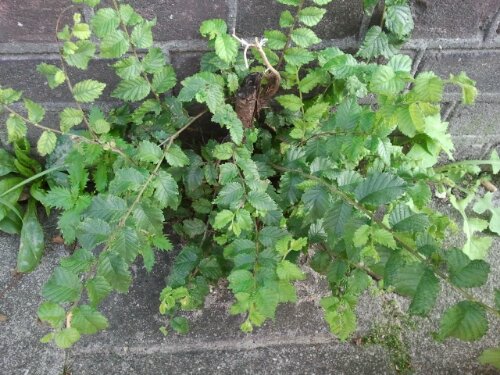
Here’s a little Hazel, coppiced by repeated strimmings and strong.

image

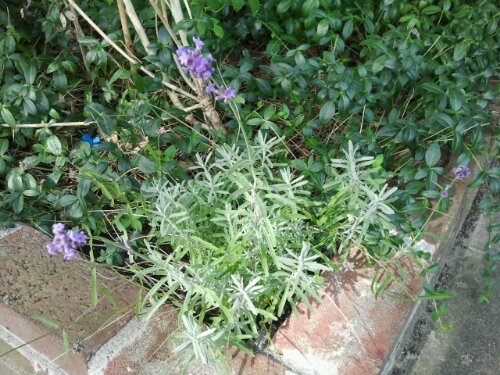
Lavender. Smells great, tastes interesting but more useful for remedies and use in the home. Consider adding a handful of the flowers or fresh seeds to a small jar of honey, infuse for anything from a few days and use on minor burns.

image

Hollyhock, seeds. Now’s the time to collect them and help new plants grow where you’d like them.

image

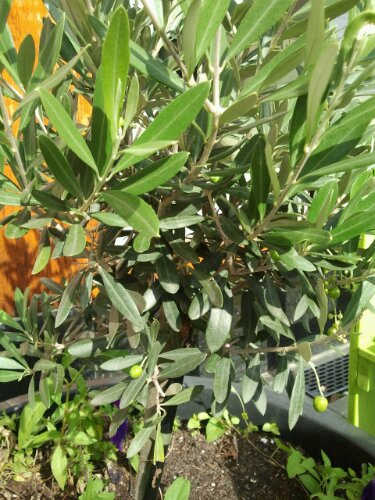
Olive, with little Olives! We lost our roof top Olive last winter, during the drop freeze, but they can do just fine here, if protected in mid winter. No need to wait for the fruit, the leaves are also useful.

image

A very well trodden Plantain. These look great in a put and are so useful.They do well in tree pits, are evergreen and can look quite attractive.

image

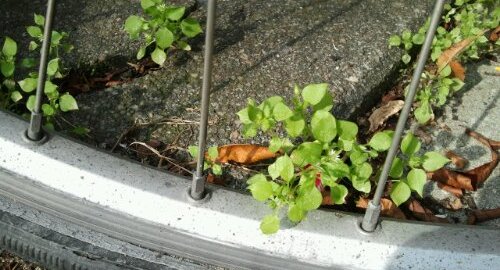
Chickweed, one if my favorites for food and remedies, even in the winter. grown in a put they can make a thick yet delicate edible herbal carpet.

image

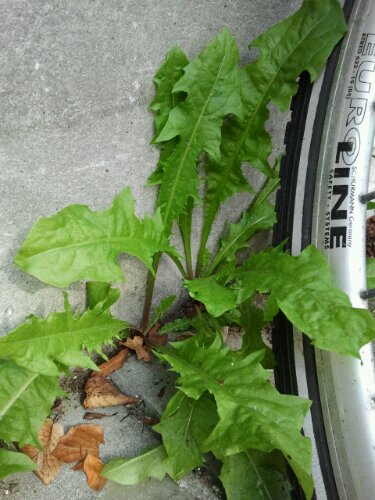
Dandelion. So useful and so bitterly tasty! Encourage strong roots by digging the soil before transplanting to your chosen location.

image

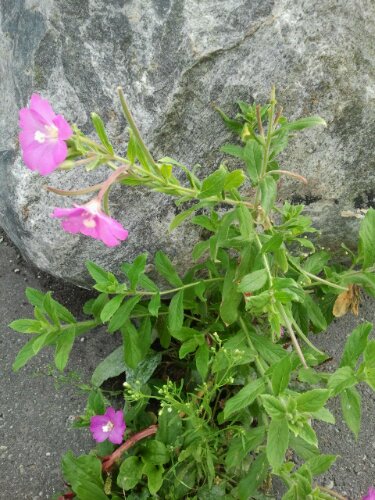
Lastly today, Rosebay willowherb. Such pretty and tasty flowers.

365 day 102 Sarphatipark

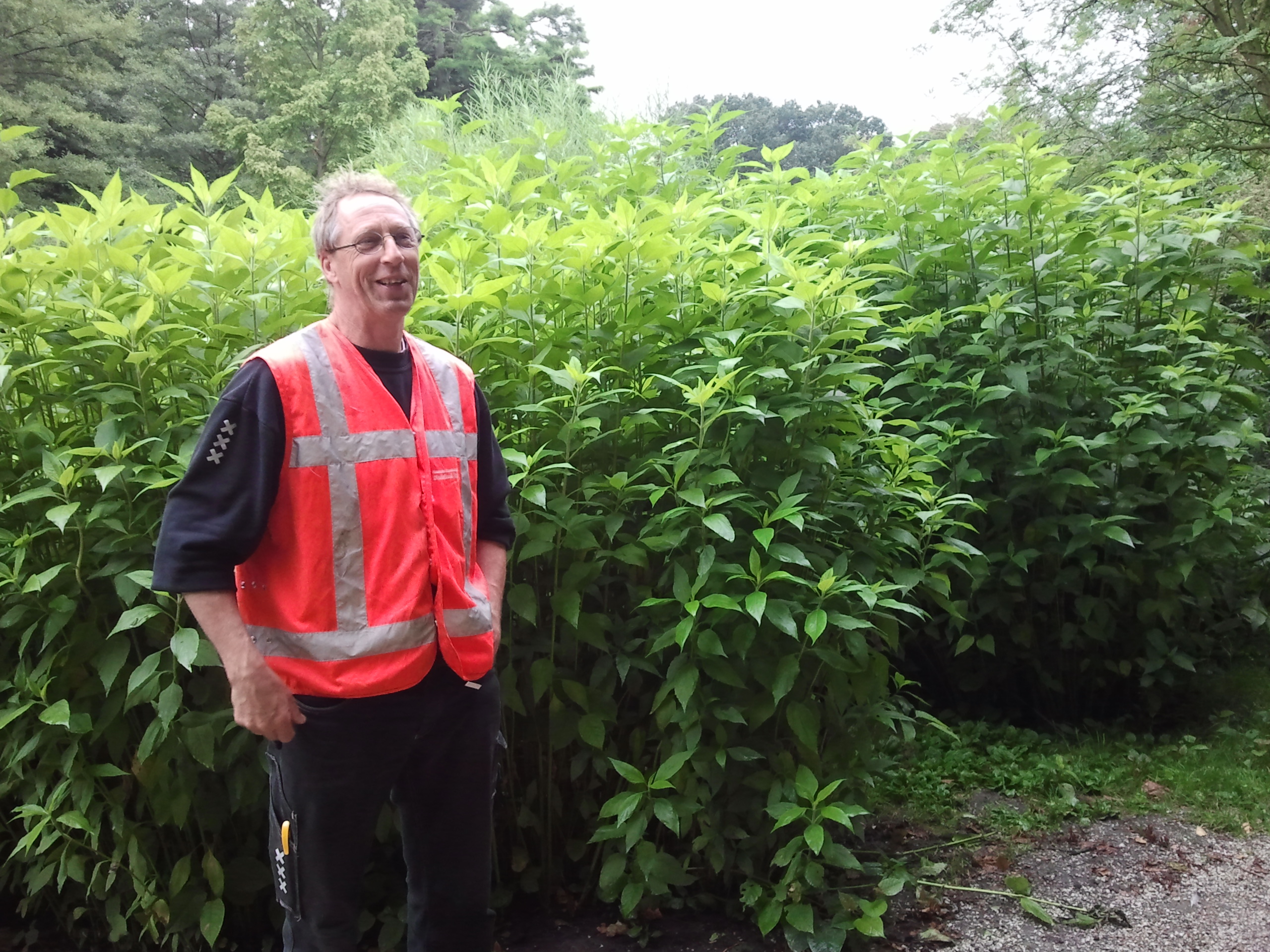
Thanks to the watertolerant group who joined me to herb walk in Sarphatipark today. We found lots of useful herbs and also interesting park workers who told us how the park is maintained by a dynamic group of volunteers and is trying innovative edible approaches to eradicate Japanese knotweed. Above is a park warden, pictured by the enormous Jerusalem artichokes which are being used to keep knotweed at bay. When the invasive plant is removed, the ground can quickly turn into a home for other unwelcome invaders or can see the return of knotweed. Using Jerusalem artichoke, another rapidly growing and spreading plant, can provide tasty tubers and quash the knotweed. So far so good!

I was also reassured to learn that the Ginkgo trees I’m so fond of in parts of Our Zuid are indeed female and yield plentiful Ginkgo nuts. Amsterdam is fortunate to have such edible plant loving folk in its green spaces team.


The plants I remember finding today are listed as tags to this entry. The spreading soft leaved plant which looked quite like Agrimony but wasn’t, was indeed a cinqefoil, called Silverweed previously called (Potentilla anserina) but now reclassified as Argentina anserina . It is shown above and it is edible. If you were on the walk and can remember other plants which I have missed from the tag list then please let me know.

Thanks again to everyone who joined me. It was a real pleasure to walk around with you. If you signed up but were not brave enough for the wet weather, remember there are always trees to shelter under next time 🙂

365 Frankendael day 74


Lots of edibles but not much time to photograph them today. Here’s a photo of a smart young Tilia, Lime or Linden tree growing on the edge of the park. I just wanted to mention that the trees are still very much in flower and the flowers are very tasty and easy to dry for later use. Tilia is nothing to do with citrus Lime, although many find it a very refreshing herb. Here’s my previous post about Lime and it’s uses.


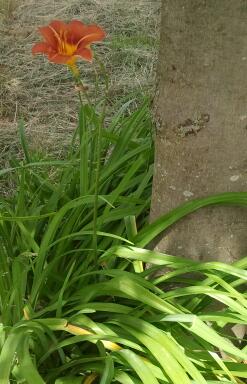
Next is Daylilies (Hemerocallis fulva) a flowering plant that looks too dramatic to be wild or edible and yet it is quite a forager’s favourite. Please be aware that regular lilies are definately not edible. Day lilies are different. I haven’t yet tried them and hope to later this week. Here are a few links which you may like to peruse if you have mind to harvest and eat some…

Susun Weed, Lily family article
Dining on Daylilies
Eat the weeds article

365 Frankendael day 62


Some common “weed” plants have the most subtely beautiful flowers and I think that Ribwort (Plantago lanceolata)  is one such plant.  Many of you already know of the merits of this wonderful first aid herb and I hope that more appreciate how pretty the flowers are.  I think they ar quite incredible creations and couldn’t resist another Ribwort photo today on an outer edge of the park.  There are many Plantago species growing here. Another notable one which has settled in my roof pots is Plantago major. It has broad leaves and it not as highly prized for it’s medicinal qualities but it none the useful.  Douzens of seedlings have taken root in my pots and they are very useful for first aid. Yesterday I was harvesting rooftop Gooseberries and Blackcurrants with my daughter and we chewed on and a leaf or two before gently rubbing the sap onto her berry bush scratches.  It worked a treat and was much quicker to apply and work physically (and mentally) than any remedy I have inside of the house.

If Ribwort and making remedies at home interests, you may like to join me for a small workshop near the next New Moon.


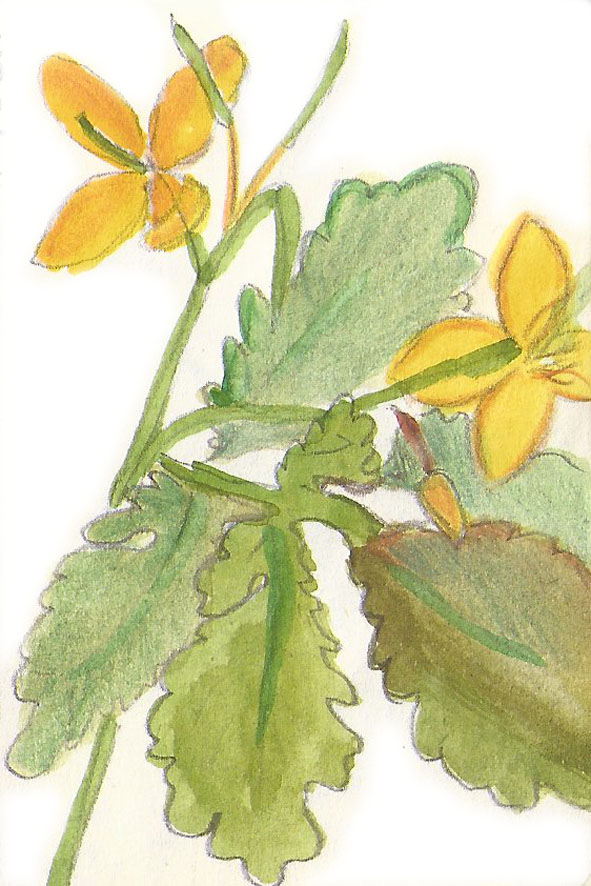
Here is Greater celandine, a wonderful plant with poisonous/potent orange sap, which can often help with unwelcome skin growths, such as warts and corns.  Today I noticed lots of Greater Celandine setting seed and I look forward to collecting some when the time comes.  Below is a lovely picture of the plant drawn and painted by Elodie some time ago. Sometimes paintings tell more about the spirit of a plant than photos ever can.  I need to make more time to sit and draw plants, maybe it’s something you would like to try too?  Drawing a plant requires that you sit with it for a while, that you and it breathe each other in and out and from that you can learn a lot.

Lastly today, a mixed salad in scrub-land beside the park.  I love this untended patch and I’m pleased it gets little maintenance as the wild edibles love it!  Here you may be able to see Chickweed and Ground ivy growing together with some Shepherd’s Purse.  All three, tasty and nutritious.  The main thing that worries me about harvesting from such locations is not really knowing what is in the soil. You can never really know for sure but some scrub-land such as this may be used for tipping unwelcome materials.  I keep that in mind when I choose to harvest or not.

365 Frankendael day 36

Today again, is quite hot so the translucent and spiky Teasel (Dipsacus spp.) foliage does not have pools of water at the leaf bases.  Teasel shouldn’t be harvested at all, due to it’s wildlife benefits. But the pools of water which accumulate within them can be useful.

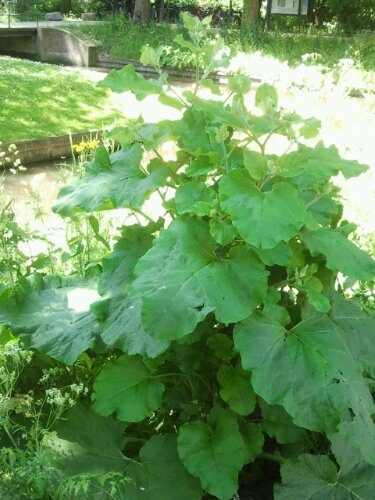
Here is a Burdock (Arctium lappa) plant preparing to flower.

Restaurant De Kas has a lovely herb and vegetable garden wrapped around it, within park Frankendael. Obviously it’s not for public harvesting but the fresh young leaves on the Copper Beech hedge around that garden, may look quite tasty to some.

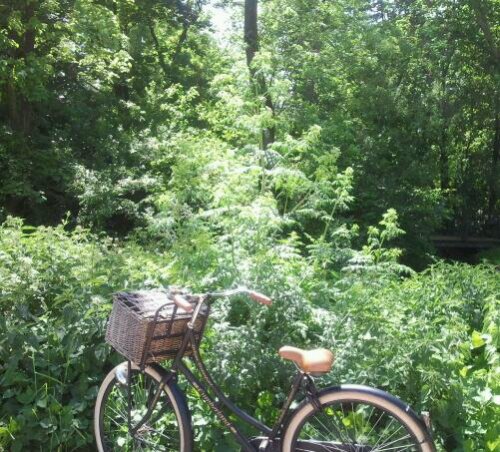
Here’s the Poison Hemlock (Conium maculatum) on the outside edge of the park, which I found some time ago. It now towers above my bike and it’s flowers are almost ready to open. Quite an imposing sight, close up.

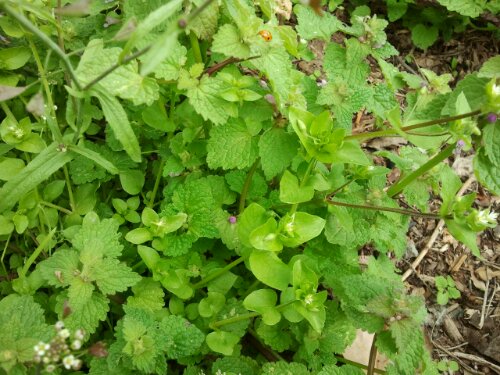
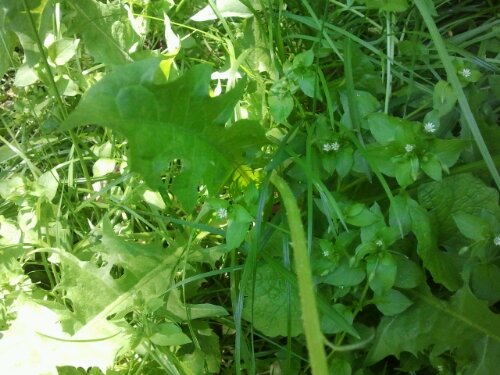
Lastly today, two plants which I underuse from wild Amsterdam. If you have access to clean sources of Chickweed or Dandelion, they may be useful to you. There are many look a likes for both plants. Those for Chickweed are generally edible to but those for Dandelion are mostly not and some are poisonous.

Chickweed (Stellaria media) has a line of tiny fine hairs running down the medial line of the stems. Dandelion leaf teeth point downwards, but you need to have your guide book with you for this as any other edible plant, until you are totally secure about it’s identity. Here’s a nice link if you are interested in Chickweed and Dandelion in particular.

365 Frankendael day 33

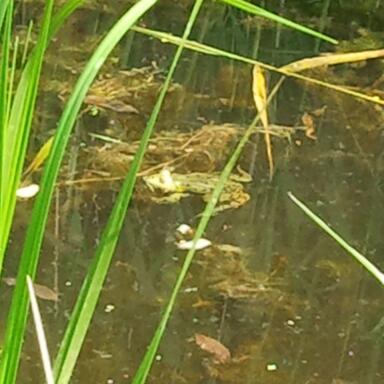
I don’t think a real Herbology session would be complete without at least a mention of frogs or toads and today I had great fun listening to mating frogs in a pond within Park Frankendael. No uses for these as they look and sound so great where they are, alive, kicking and trying so hard to make tadpoles, in the water.

Endangered Hoary plantain (Plantago media) in flower. I am so pleased to see this plant in the same location, a year on from first noticing it in the park. This year there are two plants instead of just one. I really hope it will reproduce unhindered this summer. Seeing it up close and in the proximity of Plantago major and Plantago lanceolata makes it easy to see why it was named P. media. The leaves are really about midway between the widths of the other two species.

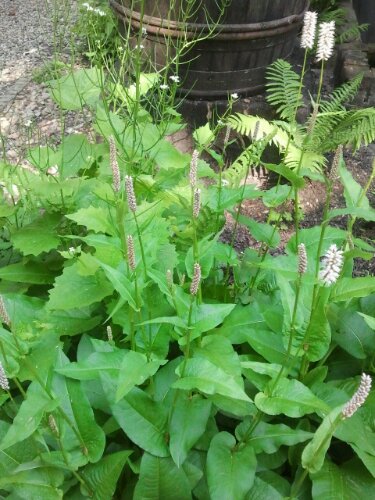
Bistort is a herb I dont use much but I found this plant which looks very similar in the park. There are several patches growing well, near Frankendael Huis and it is in the labelled herb garden. Will have to do some more investigation to check the identiy.

I also found a huge patch of well hidden nettles in a shady place which doesn’t get as many visitors as other quarters of the park. Probably a good spot for harvesting the tops.

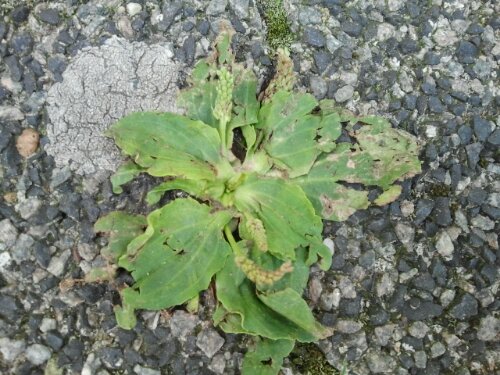
Chickweed (Stellaria media) worth a mention today for its array of self help medicinal uses and high vitamin and mineral content. It is neglected by many (including myself) through the summer months as there is so much edible plant life to choose from. But come midwinter most foragers will be pleased to add this to a plate. At midsummer chickweed won’t be visible anymore. It will then return after the hight of summer, when this season’s seeds start to germinate. Chickweed is big and delicious at this time of year. I’ll try to take a better photo of it tomorrow.

Lovely Pelargonium foliage.

Walnut foliage. Perhaps there is a tree near you. Have a look at Boskoi or similar apps and maps perhaps.

Cats Tail (Typha spp.) Not Bull rushes but yes, edible. I mentioned these a while ago when I spotted them on another edge of the park on day 17. All parts can help make a feast but why bother when you don’t know the water quality and they do look so stunning for everyone in town to enjoy.

Lastly, a statue close to the old Frankendael house. Beautiful flowering carrot family flowers and stinging nettles at its feet.

I’m looking forward to Claud Biemans joining me in the park tomorrow. She’s going to help me identify a couple of herbs which I have no clue about, but which smell amazing and are surely worthy of some attention.

Chickweed Amsterdam April 2012

Chickweed abounds!

Chickweed Amsterdam April 2012Chickweed makes a delicious and nutritious sandwich filling, it’s also plentiful, easily forage-able and available almost year round (it gets scorched and disappears at midsummer and has a slightly different form in mid winter but still tastes great).

It’s a popular medicinal herb, used as a tonic and for a multitude of ailments including skin complaints. It tastes fresh and peppery and it’s so successful that you are very likely to notice it as a”weed” in any plant pots or borders you may have. Birds love it, hence the name.

I took the photo this afternoon in my neighbourhood, the chickweed is growing in a city tree pit (aka dog latrine) so I won’t be harvesting this patch. But when I find chickweed on my balcony or in a nice clean area, I don’t hesitate to pick some for food.

If your not familiar with it use a good field guide for wild flowers to help with correct identification. Herbalist Susun Weed has lots of detailed information about this plentiful nourishing herb on her website.

As low impact lunch items go, I don’t think you can get much better than a weed which most people dig up and send for incineration here in town. If you haven’t already, please give it a try and let me know what you think.

Update:
Today I shared an exquisite meal at gastronomic restaurant Bord’deau in Amsterdam with my lovely and was delighted to find chickweed in one of the amuses! In the photo you will see a sprig of fresh chickweed nestling against beetroot and mustard ice cream. A perfect combination and what a great recipe that would be for the blog. The meal also included a sprig of what seemed to be rock samphire and many other seasonal herbs. Umm, no dinner required for me this evening.

Vinegar and Brown Paper

wpid-2012-12-22-12.38.07.jpg
Chickweed (Stellaria media)

I recently bought a wonderful second hand copy of Herbal Remedies: A practical beginner’s guide to making effective remedies in the kitchen. It contains instructions on several traditional herbal remedies that many modern herbals omit.  One, which I read with interest, is Vinegar & Brown Paper, as featured in the nursery rhyme Jack and Jill.  Apparently it is quite an effective remedy for sprains, bruises and sore joints.  It made me think more about the virtues of vinegar.  So here are few preparations which you may like to try.

If you like investigating this sort of thing, you may be interested in the Urban Herbology Apprenticeship Course. The course covers foraging, crafting herbs, fermentation and nature celebrations, among other topics!

Vinegar and Brown Paper
This traditional remedy (taken from Hedley & Shaw’s book) is said to relieve swollen aching joints and limbs.  I have not yet tried it and am very interested to hear from anyone who does! Why not let me know in the comments or contact boxes below.

To prepare:
1. Cut 5 or 6 pieces of brown (packaging) paper, just big enough to fit over the affected area.
2. Place in a saucepan and cover with Sage vinegar (read on for how to make this).
3. Simmer very gently for about 5 minutes, until the brown paper becomes soft and has absorbed some vinegar, yet is not broken down.
4. When cool enough to safely handle, place the brown paper on the affected area and hold it in place with cling film (not too tight).
5. Cover with a roller bandage and leave in place for 4 hours.
Hedley & Shaw recommend reapplying fresh vinegar and brown paper twice daily.

wpid-2013-05-29-11.52.45.jpg
Ramsons – Wild garlic (Allium ursinum)

Herb vinegars
These are prepared in a similar way to tinctures but vinegar is used as a carrier for the herb properties, rather than alcoholic spirits.  Many herbs can be easily preserved in vinegars, a few favourites are Rosemary, Sage, Tarragon, Chamomile and Parsley but why not try wild herbs such as Chickweed, Catnip, Lemonbalm, Motherwort, Ramsons or Hyssop?  Dried or fresh herbs can be used but vinegars are a great way to preserve a glut of fresh herbs so that they can be used throughout the darker months.

Vinegar, particularly apple cider vinegar, is beneficial in its own right. It helps to build bones and has the ability to extract more minerals (such as calcium) from herbs than water. So preserving herbs in vinegar can provide a mineral rich preparation which is also very tasty and can be used in a variety of ways. They can be used in salad dressings, taken a tablespoon daily in a glass of water as a tonic, added to green vegetables and beans whilst they cook, used a flavouring in food or used in specific remedies.  Adding a splash of vinegar to the cooking water of green vegetables dramatically increases available calcium.

To prepare, completely fill a glass container of any size with chopped fresh herb and then fill it completely again with vinegar.  Seal (not with a metal lid), label and allow to sit (macerate) out of direct sunlight for between 2 and 6 weeks. After this time strain and bottle the herb vinegar in sterile dry containers.  Use plastic lids or waxed paper held in place with strong rubber bands. For advice on sterilising see the post on Cough Syrup.

If you prefer to measure your herbs and vinegar there is a traditional recipe which recommends adding approximately 25g dried chopped herb or 50g chopped fresh herb to every 600ml of vinegar. Pure malt vinegar, apple cider vinegar or white wine vinegar can be used.

wpid-2012-11-21-14.40.03.jpg
Sage (Salvia officinale)

Herb Vinegar Hair Rinse
When my sister and I were children, my mother would add a little lemon juice to our final hair rinse.  It makes hair shine beautifully and is a natural conditioner (shampoos are slightly alkaline, conditioners slightly acidic). Vinegar hair rinses work in the same way and can be very beneficial to the scalp.  I like to use apple cider vinegar when my scalp feels overloaded with hair products; it feels cleansing, cooling and calming.  Surprisingly it doesn’t make hair smell of vinegar.

To prepare simply add 1 tablespoon herbal vinegar, apple cider vinegar or fresh lemon juice to about 250ml water. Pour the rinse over washed hair and massage into the scalp.  Leave on for about 5 minutes and then rinse with plain water.

Sage vinegar is thought to darken hair,
Chamomile vinegar to lighten hair,
Parsley vinegar to relieve dandruff,
Rosemary vinegar to condition dry or falling hair

There are dozens of other uses for vinegar, I’d love to know of any which you or members of your family have used. Get in touch through the comments or contact boxes!

28/12/24 A recent comment from Val who says: My mother taught me the old fashioned remedy for a bad temperature.:- Soak a strip of brown paper in vinegar and apply to the forehead. As the paper dries the temperature decreases. Tried and tested.

This is great to hear! Thank you Val 🙂

← Back

Thank you for your response. ✨