Tag Archives: Foraging

Foraged-only days

Could you add more foraged food to your diet?
Years ago, I set myself a challenge to find wild growing edible plants in Amsterdam, every day for a year. It was fun and it was possible, the posts are in this blog listed under 365 Frankendael. I have set myself a new challenge, to have one complete day a week, for a year, where I eat only foraged foods and drinks made from foraged finds. For the other six days a week I will eat as I usually do, some foraged food, mostly shop-bought food, but with some adjustments.

On the foraged-only days, I will drink herb teas made with plants that I have foraged, and eat only foods made from plants that I have foraged myself, or other foragers have given me. Or, the meals could include meat or fish which has lived wild and is caught or culled locally to Amsterdam or places where I travel. My foraged-only meals will not include purchased grains, seeds, powders, tubers, spices, herbs, eggs etc. If food is not foraged, I will not eat it that day and if I do not have enough foraged foods to make a hearty meal on that day, then so be it; I will have a light eating day. This is not a great problem for me as I generally overeat and I see this challenge as a way to embrace intermittent fasting more than I usually do. I love food and derive great enjoyment from creating meals from foraged finds, so If I do have enough for a hearty foraged-only day, I will be delighted!

Today’s finds in Amsterdam

Meals on the partly-foraged days will involve some foraged foods mixed with my regular foods, purchased from local shops. These purchased foods include rice, oats, meat, fish, vegetables and fruit. The dietary adjustments that I plan are firstly, adding more foraged foods daily than I usually do and secondly, to make far more effort to buy and eat seasonally appropriate foods.

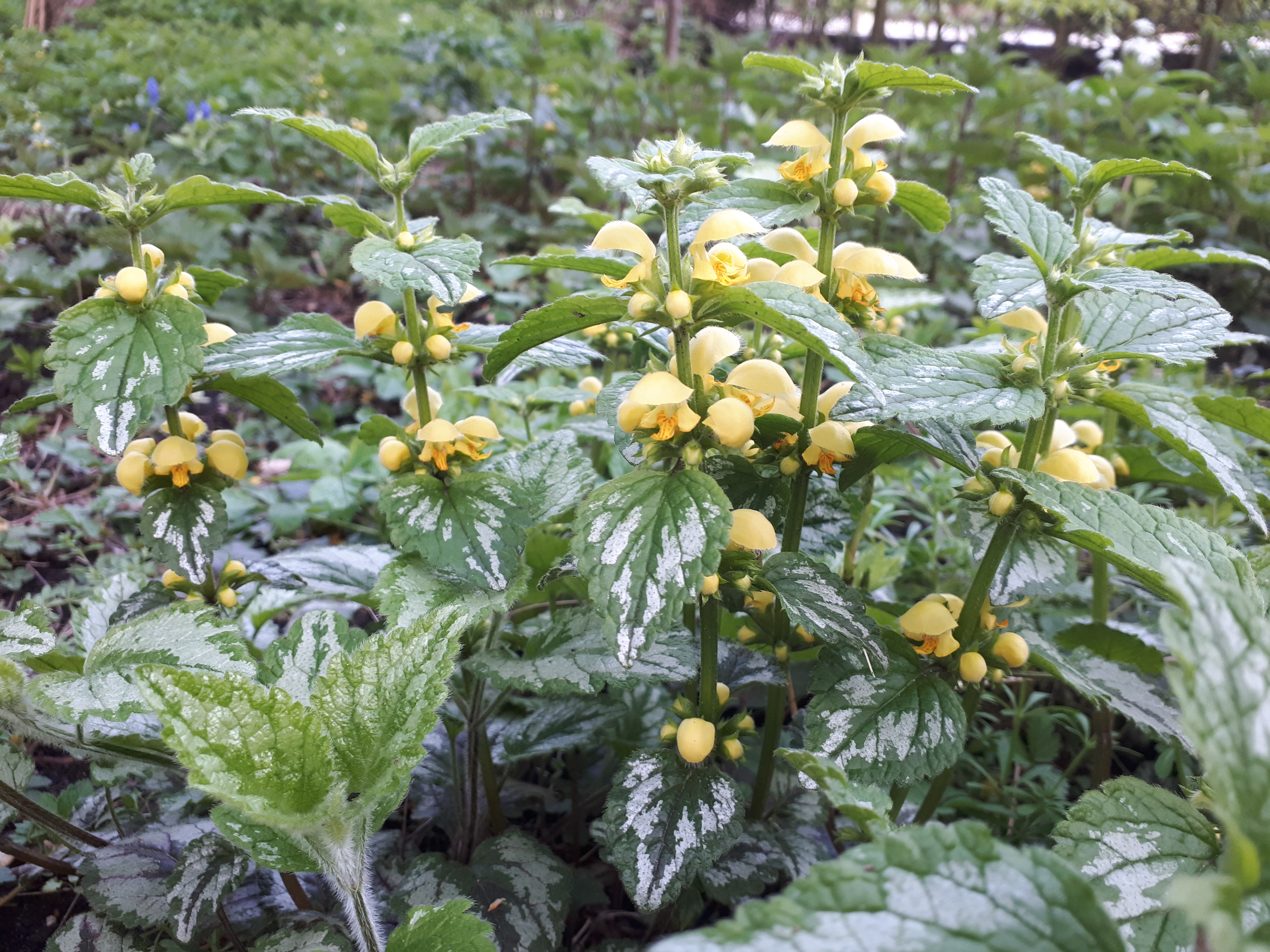
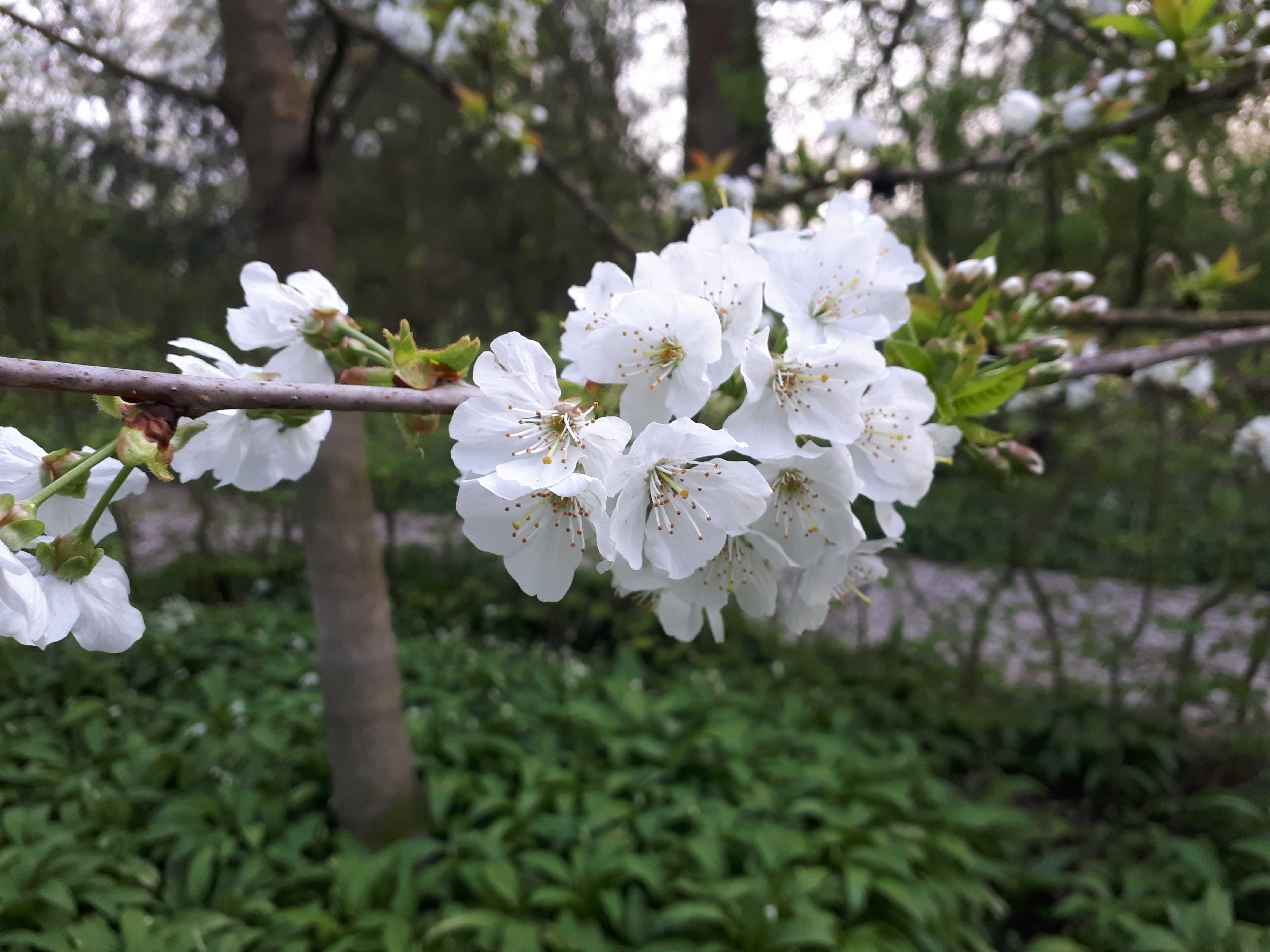
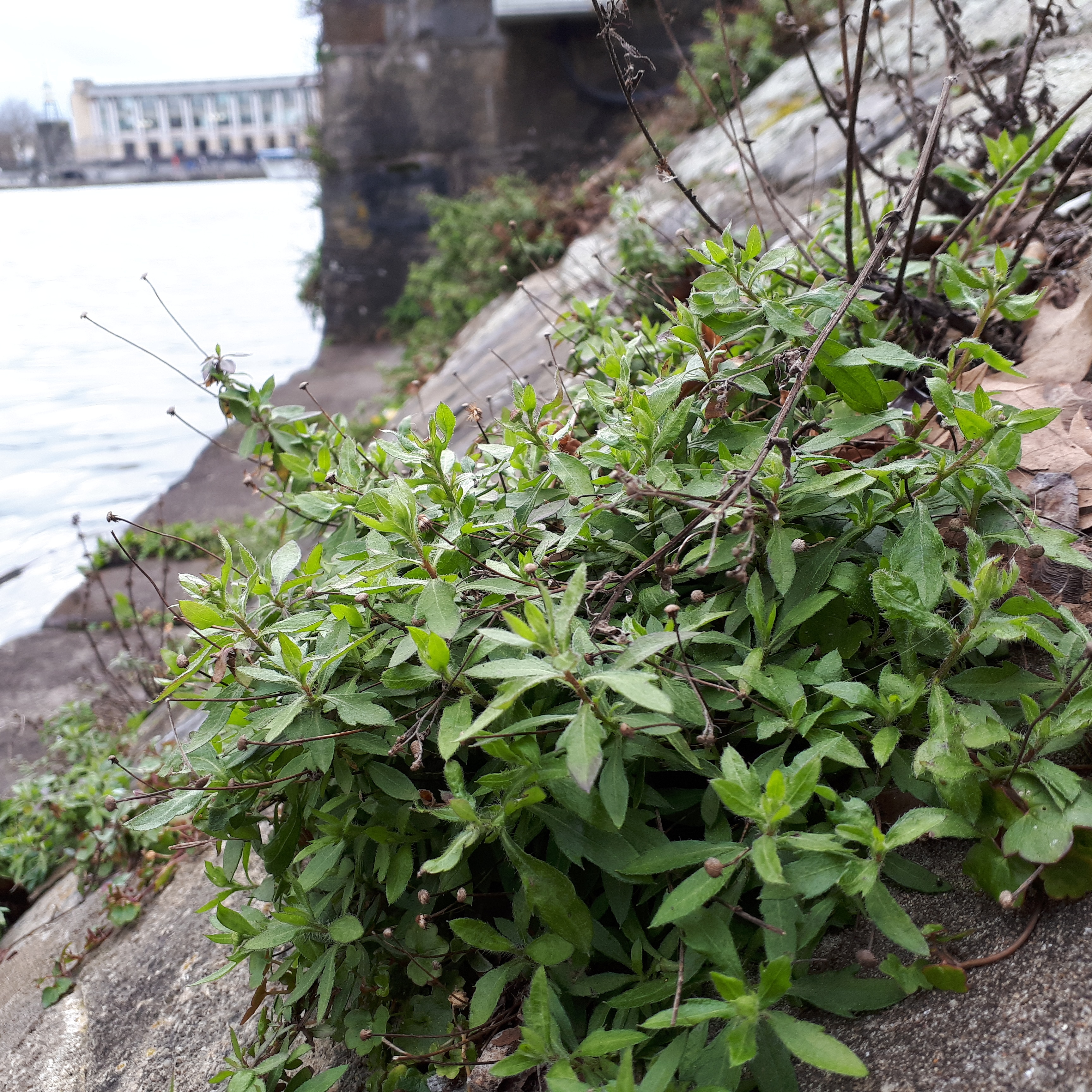
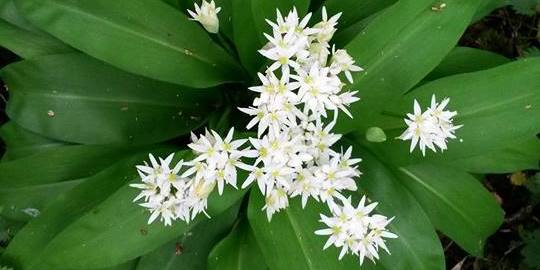
The photo shows what I foraged in Amsterdam east today. This is a little more than I would usually forage weekly because an annoying edible weed (Pennsylvania pellitory) is in great shape at the moment so I took more than I ususally would. These finds will add foraged goodness to my family’s diet. This will be my main forage for this week because I have a busy schedule the coming days. Some of this plant material will be eaten this week (it keeps well in my fridge), some will be preserved (in salt, alcohol, dried in paper bags etc) which will make it available to me throughout the year. That will become especially useful during the winter/early spring “hungry gap”, where the nuts and berries have gone and wild spring greens are yet to show themselves above soil. I will keep to the ethical foraging rules which I created many years. So, no root harvesting, unless I have permission from the landowner, and of course being highly attentive to light, safe, clean and environmentally sustainable harvesting.

This feels a great time of year to start a foraging challenge, for several reasons;
1. Nuts, berries and other fruit are foragable late summer into autumn, so it is a perfect time for stocking up on those.
2. There are still plenty of leafy green vegetable type plants, growing locally as weeds. So time to make the most of them directly and presevere as much as possible before the days shorten and those plants fade underground.
3. This will give me something green, wholesome and enriching to focus on as the days become shorter. Foraging is great for mental health!
4. I am a year round forager, but tend to forage tiny amounts of wild herbs alone during the winter and I stick to my favourite others throughout the year. This challenge will encourage me to use a wider range of foraged food, especially through the winter.
5. I love mushrooms. I don’t teach others how to forage them as my expertise is in plant foraging but I safetly forage about 8 common local species myself. The main mushroom season is fast approaching.. nuff said.
6. I want to find out more about local sources of wild caught fish and locally culled meat (such as venison). I shop organically (especially for dairy, meat and fish) but I do not like the physical and psycological distance between consumer and food source (especially animals).

Inspiration for this challenge
The Wilderness Cure by Mo Wilde, is an excellent book which I now highly recommend to anyone interested in foraging and food sovereignty. Mo is also a professional forager and herbalist. She lives in the Scottish countryside. Her book documents how she lived completely off wild food (foraged, caught or hunted) for a year. From the first page, it is inspiring! The book also includes lots of ideas for how to eat the diverse foraged foods which Mo found. The information is beautifully woven into diary entries. It also contains useful tables at the back, to help readers build their plant knowledge. I have been teaching people to forage in Amsterdam for well over a decade, and almost never recommend foraging books. Many regurgitate the same information, others contain quite dubious recipes and advice, but, I am thoroughly excited by Mo Wilde’s book and won’t be lending this one out to any freinds for a long time!

As much as I would love to live off the land year-round, and probably could in the right setting, I live in Amsterdam, surrounded by built up streets and well-used public spaces. Added to this, I work most of the week and foraging is not legal in the Netherlands. So, I decided to challenge myself to a lighter version of the Wilderness Cure. Hence one foraged-only day per week and a boost to my other part-foraged days. I can manage that, and I am sure it will be fun and enriching. I hope that my doing this will encourage at least a few other people, especially those towns and citys, to get out and ethically forage in their neighbourhoods. Foraging is such a wonderful way to connect with your local envirnment and get you out in more fresh air. Maybe you don’t live in much fresh air, but I see that all the more reason to get outside and realise that change is needed. In my experience, people who live in urban environments tend to be the ones who think that foraging is impossible for them, but it is not, I really see it as a birthright. We need to forage very carefully and ethically in urban spaces, but shouldn’t everyone, wherever they go? I think that every one could include at least a touch of foraged food to their lives. And in doing so, green magic can start to evolve in their lives.

As Mo Wilde did, I will chart a few personal health markers, at the start of the challenge and periodically as I move through the year. It will be interesting to see if this diluted version of the Wilderness Cure will have much impact on my body and mind. I will share updates on this blog periodically, less on the health markers, more about the food and finds.

Something for you?
If you are interesting in taking up the foraged-only challenge, and getting some moral support by sharing your successes and difficulties with me and others, please follow my blog or insta posts, reply to this post, or send me an email. I think that a foraged-only day a week, or simply challenging yourself to eat some foraged finds, can bring great rewards on many levels.

#10 Ivy

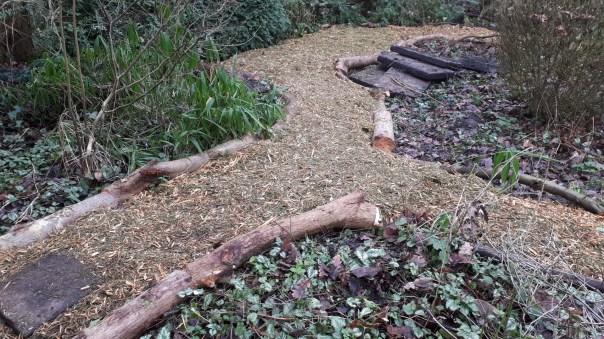
It’s week 10 of the Urban Herbology Winter Foraging Challenge! This week I have laid more paths at my volkstuin garden, edged some with wood and am ordering plant labels. Have been listing the edibles and medicinal plants which are already growing there and making a crazy-long list of plants that I intend to add there this year. At present there are over 40 distinct types of herbs growing in my volkstuin garden, some as single specimens and others as abundantly as weeds! Am looking forward to welcoming more of my students there this year for walks, 1:1s and workshops. I think that some good labelling will help this along – and help prevent me from trampling on sleeping herbs during the soggy winter!

Here’s an update ..

This week’s herb grows prolifically in my volkstuin garden. Many gardeners pull it out as they find it can smother an area with some speed, but I welcome it and try to guide it to provide me with wildlife friendly fence and frame covering. It is evergreen and a very overlooked historic herb. This week’s herb is Ivy (Hedera helix).

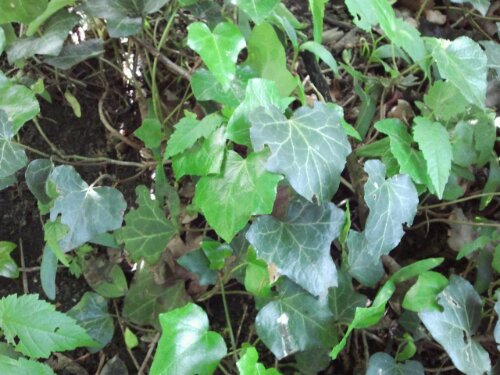
Ivy is a cunning shapeshifter! It has various leaf shapes, depending upon it’s life cycle stage and location. It readily creeps around damp soil, covering the ground and taking full advantage of any sunlight but perfectly tolerating shade. It is found often in woodland settings and my volkstuin provides it with the dampness and shade – hence, it grows abundantly and very healthily there. Notice the smooth, barely lobed leaf shape, on leaves attached to a flowering stem of ivy:

Fertilised Ivy flowers on a metal chain-link fence which is now dense Ivy – Amsterdam business district

Many people who come on my walks, ask me about Poison Ivy, as found in the USA and Canada. That plant (Toxicodenron radicans) causes contact dermatitis, which is a cause of great irritation to gardeners and foragers. Sometimes, reactions to the plant can be serious. The Ivy which I am familiar with (Hedera helix), is an unrelated plant. It can cause contact dermatitis in some people but this is far less common than for Poison Ivy. I am interested to hear from anyone who has had a reaction to Hedera helix, as I have not had direct contact with any such people over the years. Whereas I know many who have had uncomforatable times due to Poison ivy!

Here are a few photos of Hedera helix at different life cycle stages. Notice the classic five lobed leaves, as the plant spreads and climbs just a little.

Ivy seems to like climbing high, to produce flowers which have the best chance of being fertilised by bees and then to give the seeds the best chance for dispersal far and wide. The flowers are quietly beautiful and the developing seed heads looks space age. People often ask me about them. Ivy grows up to about 30m high but to do that, it must have support.

This summer, I witnessed a mass of wasps, boring into the unopened flowers of ivy, at the end of summer, and I guess, drinking the nectar, before the flowers had a chance to open. Come autumn/winter, Ivy flowers are often in abundance (although we rarely notice them due to their yellow/green colour) and they provide an essential source of food for bees and other insects, before they bed down for winter.

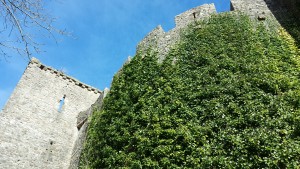
Ivy is often given a hard time because it grows up buildings and trees. It has suckering roots growing along the stems and these embed it very effectively into cement, stonework and onto tree bark. When it is pulled off – which is quite easy to do – the suckering roots will pull off cement, small pieces of stone or brick and some tree bark. One fear for them growing up trees, is that the ivy becomes so heavy, it destabilises the tree or it causes too much shade or it strangles it. I disagree with all these thoughts. Mostly ivy, growing up trees is a wonderful thing; providing incredible wildlife habitats and actually protecting trees from harsh climatic conditions. Some green space contractors rotate which trees they de-ivy each year. I think it a pity and unnecessary work.

Romantic Ivy-clad Tintern Abbey

Ivy can help to stabilise old piles of racks and ruins but it will of course cover then and hide them from view. Note the old painting of Tintern Abbey – what a lovely place that is, not far from my parents home. I remember it being ivy clad as a child. Now it is clean of ivy and the ruin is somewhat renovated. Removing the ivy will have caused some damage and certainly makes it look less romantic but now the abbey structure can be more effectively maintained in a safe structural state.

So how can we use ivy as food or medicine?
The leaves and berries can be used both externally and internally. They contain saponins, sterols, polyacetylenes, flavonoids and volatile oils.

Externally, ivy can be used as a poultice or compress and has an age old reputation for calming inflamed and painful rheumatic joints. It is also used as an infused oil as an anti-cellulite preparation. I mentioned above that some people will develop contact dermatitis from Hedera helix. So always be wary when trying this herb for the first time.

Make infused oil from fresh leaves, if you would like to try it as a gentle skin stimulant. Macerate for about 6 weeks, strain and use as a salve base or as a massage oil for congested skin areas. Ivy is a constituent in many expensive anti-cellulite preparations.

There is some much lore associated with ivy.  Like Holly, Ivy has been used to decorate homes since ancient Pagan times.  Poets’ wreaths are made from ivy leaves, as is the wreath of Bacchus.  It was thought that gently boiling bruised ivy leaves in wine would remove the wines powers of intoxication.  Perhaps the alcohol simply boiled away? Perhaps not.  Ivy has long been a sign of fidelity and was given to newly weds in ancient Greece.

Another traditional use for Ivy is as relief for sunburn.  Soft ivy twigs, when boiled in butter were thought to produce a useful remedy.  Clearly, not for experimenting on severe burns but worth investigation.

Internally, it is a renowned expectorant and decongestant of the ear, nose and throat. Ivy has with an affinity for the upper respiratory system. It has a good reputation for easing bronchitis symptoms. It can be taken as a medicinal tea. You should not have too much of it and avoid it during pregnancy and breastfeeding but this is actually a more widely used herb than you may realise. Extracts of Ivy are found in a very popular over the counter mucus relieving product called Bisolvon. In some countries, Bisolvon packaging shows ivy leaves. Interesting to see how a commercial product contains some of the constituents of this common plant.

A pleasant tasting tea, which can help to ease congestion in the nasal and upper chest could be made from 1/2tsp of dried and then crushed ivy leaves. Infuse for 5 minutes then strain and sip. It combines well with Elderflower and Thyme (you may like to try 1/3 teaspoon each, dried, in a large cup). You can easily dry Ivy leaves in a paper bag. Make sure they are not tightly packed in the bag, label and leave in a room temperature, dry environment. Fresh leaves can also be used. Dried ones are convenient for use.

I find that working in the garden, or wandering around ivy rich woodland and streets, has a really opening and refreshing action on my respiratory system. It also seems to clear my mind. I like to crush a leaf (which is not so easy – Ivy leaves are built to last!) and deeply inhale the released volatile constituents.

Other uses
There are many other ways to weave ivy into your life. I love to grow it as a cover plant, over piles of sticks, over dull looking fences and especially over arches. As a semi-glossy evergreen, it can provide amazingly effective form to a garden in the wintertime.

I also like to make simple crowns from long ivy stems. I did this in the autumn at one of the Witching season gatherings. I find that ivy crowns provide comfort, clarity and protection. Ivy can be grown inside of the house and I find it a quiet, refreshing presence to have around the place. Be wary though, ivy needs some moisture but not too much. It appreciated a gentle rinse occasionally and not to be dried out. When I make an alter with ivy wound around, I find it helps to splash or spray the ivy each day, to keep it fresh and vibrant.

Next Zoom meeting for my course students is this Friday evening. We will be focusing on Ivy, learning more about its active constituents, actions and uses and we will meditate on it to see how we can weave it’s magic and medicine into our lives. If you are joining the Zoom, you may like to bring a candle and some fresh Ivy leaves to the online meeting. If you have enough ivy growing near you and you feel the urge for full urban herbology immersion – why not make yourself a simple crown from a long stem of ivy? I look forward to seeing you there!

#9 Cleavers seedlings

It’s week 9 of the Urban Herbology Winter Foraging Challenge! This week we’ve had proper frost and I have been laying a woodchip path at my volkstuin garden and am getting really excited as I continue to plan the new layout and detail of that garden. Here’s a little walk around the new path:

This week’s herb is actually too young to harvest ethically at present. In the photos, you can see it’s only just above the fallen leaves, right now. If you harvest them now, you’ll deprive the plants from the chance to self-seed, you’ll deceive wildlife of food and you’ll deprive yourself from more of these delicious plants next year.

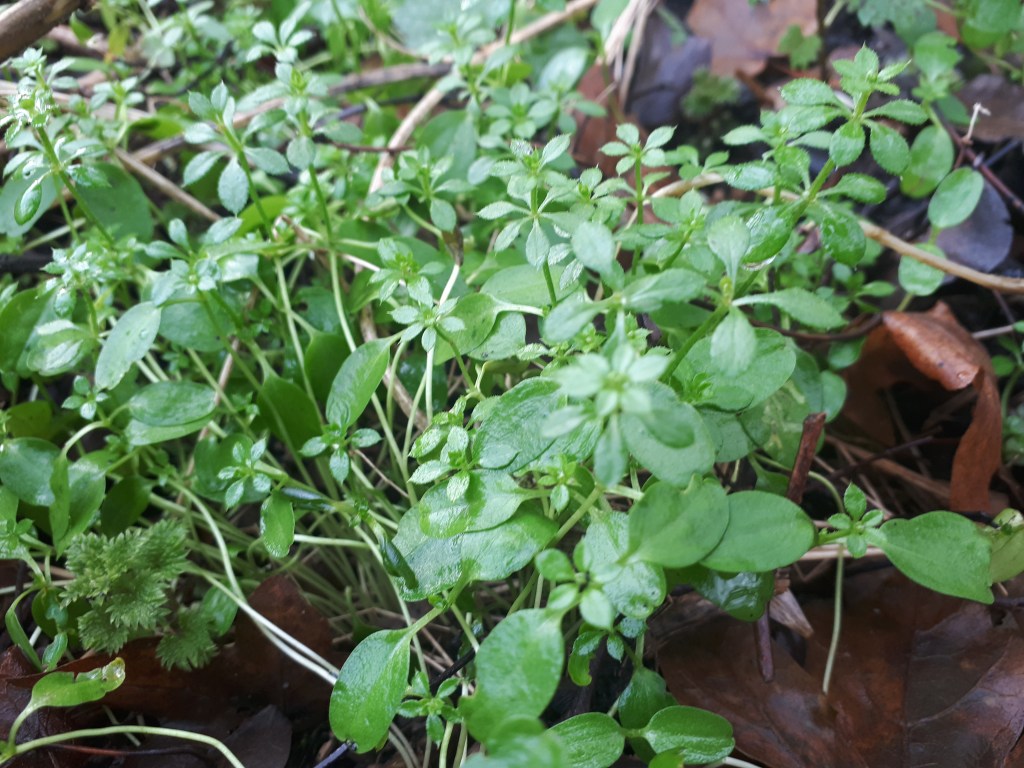
Cleavers – seedlings. January 2021

Here in Amsterdam, this plant is only a few centimetres tall right now and is found as seedlings. Now, the annual plant in question will eventually grow quite tall and the best time to forage it is during spring and summer. At that time the pretty whorl-leaved seedlings seem to grow a mile-a-minute. They make a fabulous spring cleanser and they smell and taste like lush, fresh cut grass.

However, several of my students have been noticing these little beauties recently so I felt it useful to post about them so that we can identify where they grow now, and return during the coming months, to harvest.

Cleavers (Gallium aparine), is this week’s foraging plant. I use it in general cooking, steamed as an interesting side vegetable, to stuff whole fish and I make remedies from it. This herb can provide gentle and effective nourishment for the lymphatic system.

Cleavers seedlings

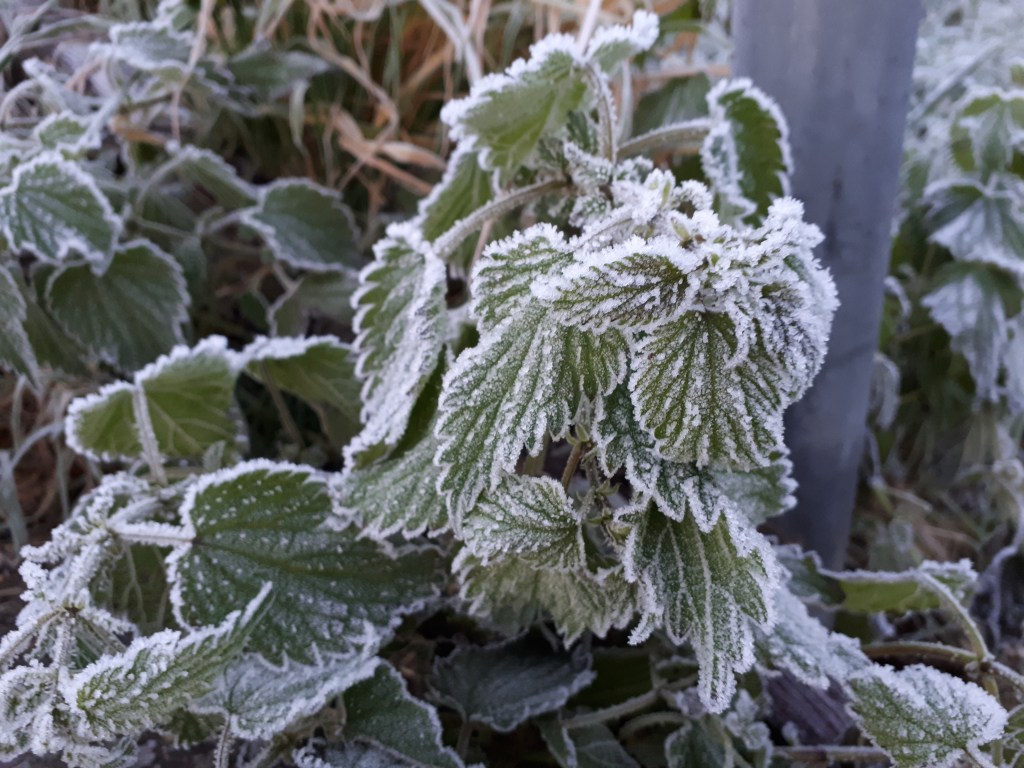
Let me know if you find any of these beautiful seedlings. They grow in many varied locations but did best when growing amongst task stinging nettles, in neglected undergrowth and nearby chain fences, all of which can offer them support as they grow. And here’s a frosty Stinging nettle photo for you..

Free food !

Want to grab a bag of hyper-local organic herbs in grateful return for a couple of hours light gardening? Sign up through the Meetup link to join the River of Herbs volunteer gardening team on Monday morning. Details are on the meetup event information.

I won’t be teaching here – doing that in the afternoon and the walk is full. This is for gardeners – no experienced required – everyone is a gardener because we all need to eat 🙂

Sign ups must be through meet up please and did bring along a bag to take your herbs home.

Some of the herbs available to volunteers in the foraging gardens pantry this week (in varying quantities) are:

Stinging nettle tops

Wild garlic (Daslook – Ramsons)

Fennel

Horehound

Chives

Deadnettles

Amsterdamian Interview

Lynn in gnome like position (Photo credit: Amsterdamian.com)

I met Dana Marin of Amsterdamian.com several years ago through the River of Herbs project. She is a beautiful soul who loves herbs, crafting and gardening. She also loves Amsterdam and runs the Amsterdamian.com website which you must visit!

Last summer Dana joined me in the Frankendael Orchards to catch up, take photos and forage. It was lovely, a lot of fun and included me falling of the bench in this photo, into the plants!!

Dana’s interview with me is now published on Amsterdamian.com. If you fancy some background about urban herbology, ethical urban foraging, city witch-iness and to know what’s driving me at the moment, hop on over to Dana’s beautiful website!

Edibles at Bristol Harbour

This week, I am with my family in the UK. We began the visit on Tuesday with a stroll around the harbour area of my birthtown Bristol.  What a pleasure to be there! In addition to the whole harbour area being very spruced up since I lived there, the weather is exceptional for this time of year; beautiful sunshine,  stunning skies and it is warm – well for February anyway!

IMG_20190219_173938_517.jpg
Leucanthemum vulgare (dog daisy, about to flower)

After a peek at the SS Great Britain, visiting a great whole food store (which sells oxalis tubers to eat!) and filling our bellies with fish and chips at Wrapping Warf , we wandered around the Arnolfini and Watershed areas.

20190219_124115.jpg
Ship shape and Bristol Fashion – I loved growing up in this city and I love to come back and visit!

I took a few snaps of edibles which I noticed along the way. The place is very tidy, and popular so most of the plants that I found are resilient perennials. Just look at this little beauty: Ivy Leaved Toadflax (Cymbalaria muralis), sometimes called the Climbing Sailor which makes it so suitable for this nautical location!  What lovely geranium-like rubbery leaves. I do enjoy a nibble on this sort-of-cress-tasting-plant when I find it growing abundantly.  Today was neither the time nor place so the plants spotted in Bristol, carving out a quiet existence in the ship shape hustle and bustle, were left in peace.


IMG_20190219_174138_032.jpg
Climbing sailors – Cymbalaria muralis

Now, along this old railway track – a remnant of the old coal dock, I did find a lovely (if small) selection of urban edibles including Herb Robert (Geranium robertum), Chickweed (Stellaria media) and Mugwort (Artemisia vulgare).

20190219_123602.jpg
And here some of what I believe is Common Mouse-ear (Cerastium fontanum). Very pretty, clustered chickweed-like flowers, bouncing in the breeze, a top leafless stalks. I find this a stunning little edible. Darned tasty (if a little hairy on the tongue) and very fertile. So, if you can access one in a location that it flavours, you will not go hungry.


IMG_20190219_174408_139.jpg
Mouse-ear

The only place that I found around the harbour which was worthy of some urban herb harvesting was on the sloping path that runs towards the little ferry (to the SS Great Britain). There is a quiet green patch, full of brambles, stinging nettle and other lovelies. The plants are starting to build their foliage now so best left for now but in a month or so, that patch should be brimming with nettle tops and bramble buds. I find Bramble leaf buds a great source of fruity-tannic flavour, vitamins and minerals. By shrewd nibbing-out of buds, you can control the growth of a bramble patch in seconds whilst building up an interesting wild tea in your caddy.

So that was my little February Bristol Harbour edibles wander.  I am in Chepstow now, thoroughly enjoying the sounds, sights, taste and company. Will try to make a compilation of Chepstow forage-ables, before the week is out.


Want more?
If you want to learn about the edibles growing near you, how to ID, safely & ethically forage and how to include them in your life, take a look at my course. I would love to help you along your urban herbology journey!


Gentle wild garlic

Ramsons in Frankendael Orchards

I stood stupefied and watched a woman take out a knife and cut bunches of Wild garlic from inside the entrance of Park Frankendael this evening. Felt so mad and sad and bewildered that I didn’t know where to begin with her. So just stared at the mini massacre until she saw me and my little girl watching and finally she stopped.

Ramsons/Daslook/Wild garlic/Allium ursinum tastes outrageously good but it should be harvested gently! It is currently on the endangered list in NL so strictly, even though it’s almost a weed in some parts of some Amsterdam parks, it should not be cut or ripped out in handfuls! And even if it is prolific everywhere how could it feel good to rip or cut it like that!

Cut rather than plucked.

If you know of a plentiful supply please go for the out-spill plants – where it’s growing in paths etc and will be rooted out by the park gardeners. Or grow your own. Or meet the park gardener and ask where/if he/she suggests you forage. And use your common sense. That woman foraged from the filthiest part of the park – dog spot number one – right by the main gates. Come on!

Badly foraged wild garlic.

And even when you find thousands of those leaves, please know that just three leaves, plucked between finger and thumb are needed to make enough pesto, herb oil or mojo to last several weeks. After plucking carefully, no one should be able to see that anything has gone.

If you want some Daslook but still don’t know where, when and how to pluck it, please come and see me on Wednesday morning at the Frankendael orchards (10.00 – 11.00 behind Huize Frankendael). You can take home your own plant too, if you like.

We are what and how we eat.


Tuesday 31st July 2012 Urbanherbology Walk in Sarphatipark

Every time I walk or cycle past Sarphatipark, edible and medicinal plants seem to leap out at me, through the iron fence! So, as I continue to build material for my project and book, I think its time I ran an Urban Herb Walk there. I’d like to see just how many urban edibles and medicinals, can be found in 90 minutes.

Sarphatipark Urban Herb Walk
Tuesday 31st July
1230 –  1400
€8 per person
Max 12 Walkers.

Please contact me directly (lynn.shore@gmail.com) if you’d like to join this walk. The price includes a handout, to help you learn more about some of the herbs we are likely to find.

You may like to forage a snack or herb tea, on the way around.
– Bring a small flask of hot water, if you fancy making an urban herbal brew whilst we walk.
– Bring a small bottle of cold water, to wash any herbs that you may want to eat directly

We will meet at the main entrance of the park, the one near the children’s play area and the small building beside the plant swap centre.

The walk will go ahead, come rain or shine!

Gathering Herbs in May


Here are a few tips on what to take with you, if you go foraging in Amsterdam, or anywhere else for that matter…

Paper bags
Fabric/plastic carrier bag
Rubber/gardening gloves (stinging nettles)
Small scissors (nettles/elderflower/processing herbs)
Sun hat
St. John’s wort oil (sun protection)
Aloe vera gel (sun burn remedy)
Layered clothing
Waterproof jacket
Sturdy shoes/boots
Long trousers and socks (Lymes disease)
Drink
Water for hand/plant washing
Plant ID guide book
Mini magnifying lens
Foraging book
Paper/book and pencil (samples, notes)
Bread/trail mix
Clean small glass jars with lids (for instant processing of herbs, pesto jars are a good size)
Olive oil and/or vodka (for filling the glass jars of herbs)

Of course you don’t have to take any of these things with you at all and the list is not exhaustive. But if you head out with foraging in mind, you may as well be prepared.

if you intend to forage some kind of root (such as Wild Carrot or Burdock) then something to dig them out with would be needed. I don’t usually harvest wild roots, for ecological, health and social reasons but if it’s your preference then pack a trowel or spade!