It’s just six days into the WildBiome Project month, and already my relationship with food feels transformed. I find myself eating far less than usual, not because of restriction, but because wild food satisfies in a different way – deeply, viscerally.
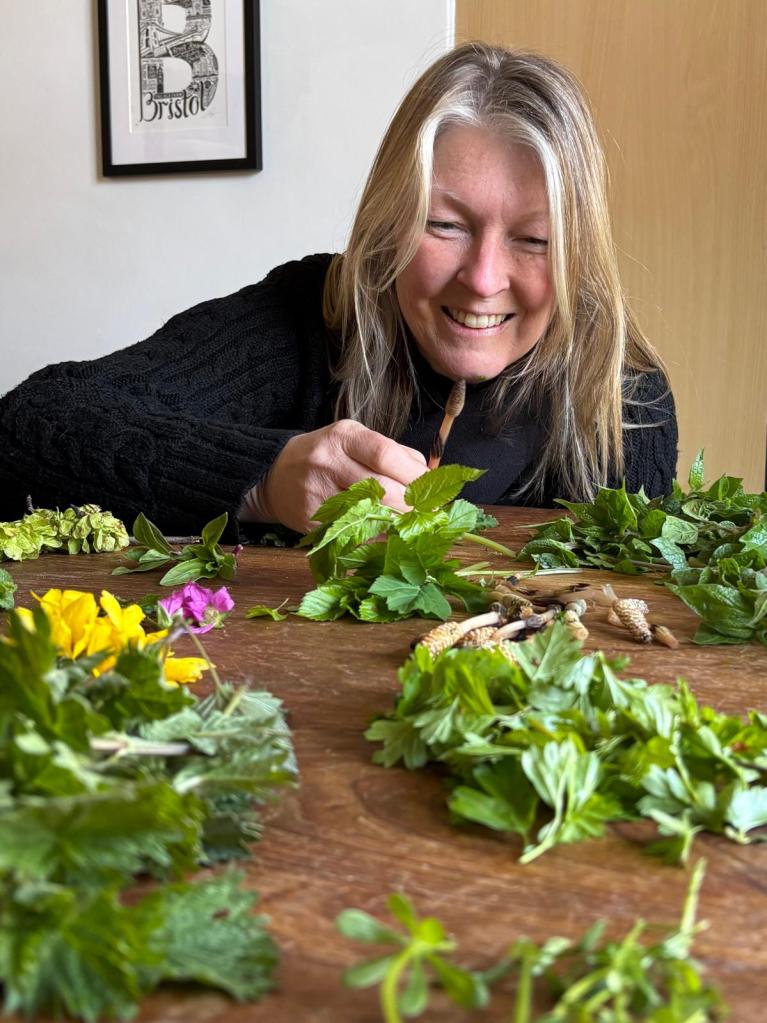


The WildBiome Project is a citizen science research initiative, organised by Mo Wilde and her daughter Caitlin, it brings together over 100 forager participants who are shifting their diets to primarily foraged and wild foods. The University of Bradford (UK) is working with the project, and explores how a need to live on ancient wild, local, famine foods might impact the health of modern humans. We’re tracking our health throughout, with start and end testing of gut microbiome, blood markers, and biometrics. We all keep a daily log of everything that we eat and drink. I am also tracking daily shifts in my mental and physical health.
There’s a stark difference between the wild greens and meats I’m eating now, and the shop-bought versions I’ve relied on in the past. Vegetables grown for mass production are often bred for size and uniformity, but in the process they’ve lost something essential: flavour, and likely nutrition too. In contrast, wild foods are packed with intensity – smaller, perhaps, but potent, rich, and alive.
The act of collecting all of my green food myself has also changed my experience entirely. There’s an intimacy that forms when you forage – a kind of sacred attention. I know this week but this week I’ve found myself spending more time with each ingredient, observing where it comes from, how it grows, how it feels to pluck it from the earth or the tree. This relationship is further deepened when it comes to wild meat.
This week I prepared and ate wild meat – deer shoulder, and duck breast. Both being lean, nuanced in taste, with far less fat than farmed meat. I could sense the creatures in the process, which brought a kind of ceremonial reverence to the act. From the moment of deciding to cook them to the careful seasoning with wild herbs, I gave full attention. I wanted nothing to be wasted. Even as a previous vegetarian, who’s long considered herself a very thoughtful consumer, this experience felt markedly different. The sterility of supermarket meat – even the organic kind – is incomparable to the energy that remains in wild flesh.
I visited my father-in-law during the week, a drive that winds through mile upon mile of Dutch farmland. The landscape is functional, but stark: wide-open fields of monoculture grasses, scattered blue feed containers, massive sheds filled with chickens. You hardly see a tree sometimes, let alone biodiversity. It’s efficient – but eerily empty. In contrast, the wilder parts of the landscape – the wetlands, reedbeds, patches of woodland – teem with life: deer, wild boar, rabbits, geese.
I deeply respect farmers and all they endure. This isn’t about blame or judgement. But it’s hard not to notice how skewed our system is – how difficult it is for most city folk like me to access ethically sourced wild meat. And, how disconnected most of us are from the life that sustains us. Imagine a landscape where more people ate far less meat, but what little they did eat came from the land itself – wild, respected, shared.
I’m also learning to appreciate the value of modern food preservation. My little freezer is now filled two-thirds with wild food – a security blanket of sorts. But I’m also aware of how vulnerable it is. A power cut, due to cable laying or drain repairs in my area, could erase all that effort. So I’m thinking ahead. I have plenty of dried foraged herbs, and locally harvested nuts (those thanks to a more forward planning friend) but I’m lacking wild pickles, dried mushroom and more – I’ll definitely remedy this for next year.
This autumn, I plan to forage more rosehips, blackberries, and nuts. I’ll dry mushrooms and grind them into powder, press roots and greens into pastes and condiments, collect grass seeds to winnow and cook, and build a pantry that doesn’t depend so heavily on electricity. These preserved foods will support not just me, but my family – Frank and Livvy already enjoy wild foods integrated into our regular meals. But I want to go further: I want wild food to be abundant and delicious enough that they can choose whole meals from it, not just flavour boosts.
I’ve also been shifting away from wheat. I already use organic spelt, which feels gentler on my gut, but I’m now using chestnut and acorn flours – rich, earthy, and gluten-free. They won’t replace everything, but they open up new textures and tastes. And they are available from Amsterdam street trees. A more feral kind of baking.
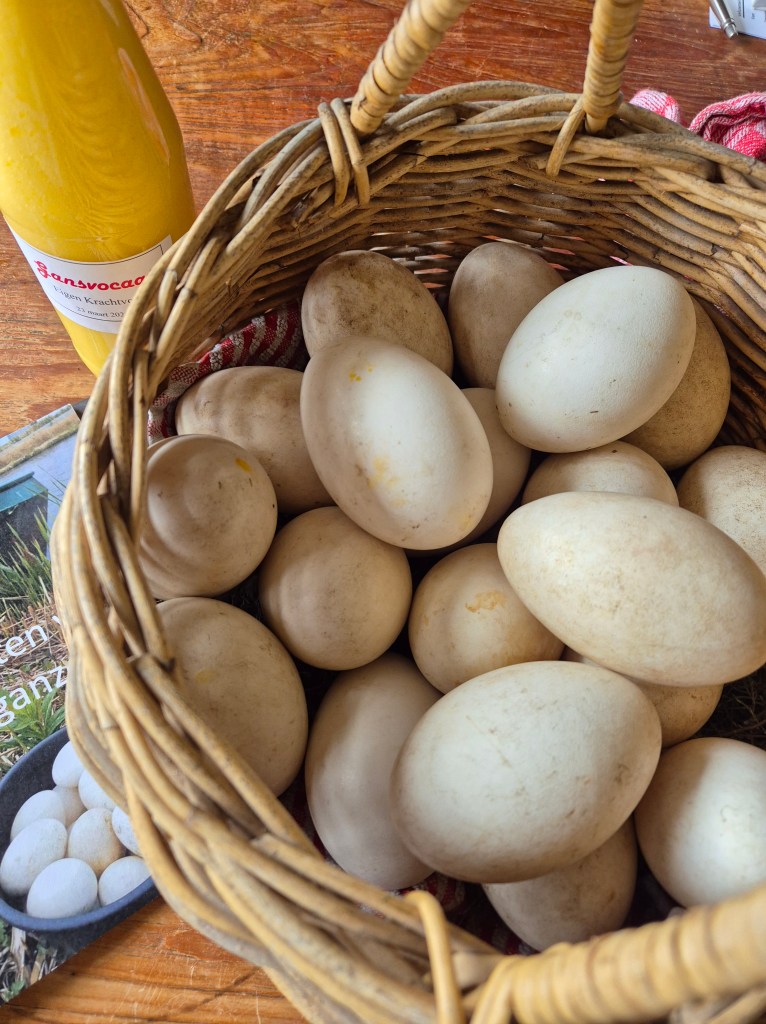
One final joy this week: goose eggs. I’ve been fortunate to connect with a group licensed to collect them (Eigenkracht voer) – part of an effort to manage populations in a wetland area close to Schiphol airport. Rather than shooting or gassing, they use a more humane method: nest-emptying. They carefully remove eggs from accessible nests by boat, leaving one or two in each nest. The process is regulated, seasonal, and animal-conscious. Goose egg collecting was in season until the end of March, and I was able to get a basketful – they’re the equivalent of two chicken eggs each, and utterly delicious.
There are still three weeks to go on this WildBiome journey, but I’m already planning beyond. I won’t continue eating 100% wild – not while I live in the heart of Amsterdam, surrounded by incredible global cuisine that I still want to enjoy occasionally. But I will rebuild my pantry. I want the backbone of my diet to be wild, local, environmentally sound, and deeply nourishing. A way of participating in the land I live on, not just consuming from it.
This isn’t about perfection. It’s about connection. It’s about weaving food, place, and life together – one meal at a time.


 Urban Herbology