All posts by Lynn

Unknown's avatar

About Lynn

Learning

Valerian Amasake Hot Chocolate

Amazake is a traditional Japanese fermented rice drink or pudding, which is incredibly easy to make – provided you have access to some Koji (rice grains, inoculated with the fungus Aspergillus oryzae). We in Amsterdam are incredibly fortunate to have Deshima Freshop on Weeteringschaanscircuit, which sells biodynamic quality Koji.
image

I was teaching some of my apprentices how to make Amazake yesterday and consequently had lots in stock today. It keeps well in the fridge for a couple of days but I rarely manage to leave it that long – it just tastes so good!

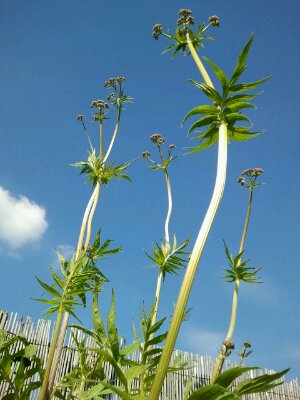
You may know that I love the taste of chocolate and that I grow Valerian on my roof terrace. Valerian is currently in flower, I need a good night’s sleep and I wanted to use up some of the Amazake. Hence the outcome of that combination – Valerian Amazake Hot Chocolate. Umm.

How to make Amasake
1. Cook 2 cups of rinsed basmati rice (or similar) in 4 cups of water (lid on pan), until the rice is well cooked, fluffy and has absorbed all of the water (adjust water proportion if using different rice). Remove from heat.

2. Set the rice aside (lid on) until it cools to a temperature that is easily tolerated by your finger (60°C is optimal).

3. Now gently stir 1/2 cup of dried Koji (innoculated rice) into the warm cooked rice.

4. Put the lid on again and wrap the pan in a couple of clean tea towels or simply place it in your oven (cool and turned off). This is to maintain some of the warmth so that the Aspergillus can grow at a reasonable rate. Less heat = less fermentation. Too much heat = dead Aspergillus so no fermentation.

5. Leave it to ferment for 12-24 hours. Stir the rice and Koji mixture very occasionally. It will become progressively more runny and sweet to taste as the fermentation proceeds and the Aspergillus beaks down the rice starches into sugar.

6. When the sweetness of the Amazake is to your liking (max 24 hours) boil it to stop the Aspergillus from growing further. This is an important step to avoid fermentation turning the rice starch into alcohol (even in the fridge this fermentation will slowly occur).

7. I like to blend my Amazake at this point, or just before boiling. I use my little electric hand blender. You may prefer the natural consistency. Both taste as good. Allow to cool before refrigerating or eat warm as soon as prepared.

8. Use as a pudding, sprinkle in ground ginger, cardamon, cinnamon or drizzle with honey. Eat hot or cold. Thin with water to your preferred drink consistency or spoon it to eat. Use in place of yoghurt or buttermilk in muffin recipes and similar. Uses for Amazake as a natural sweetener are almost endless.

image

Valerian Amazake Hot Chocolate
1. Pour just less than a mug full of Amazake into a small saucepan.
2. Add a splash of water, a sprinkling of tiny fresh Valerian flowers (about 10) and 1 – 1 1/2 teaspoons of cacao powder.
3. Stir gently as you bring the mixture to the boil.
4. Simmer for a minute or two and then allow to cool to a comfortable temperature before pouring into the mug.
5. Enjoy!

The king of fermentation is Sandor Ellix Katz. He has done a great job in teaching people how different fermented foods can be made. Please visit his website and buy his wonderful books if you have even a passing interest in fermented foods.

Willow Apprenticeship Meeting

I met with my Willow Apprenticeship Group this afternoon and as usual had a wonderful and enriching time with them.

I took a few photos whilst we were out and about…

image

Skullcap (Sculletaria sp.) in the woods. It is best to harness the powers of this bitter labiate, actually at the plant. So take your tincture materials to the woods, harvest just enough, sparsely from across all of the Skullcap plants, in areas where it is abundant and set up your small tincture there and then. Otherwise the active constituents tend to change or evaporate. Either way, Skullcap loses potency hugely if you harvest, take it home then tincture.

image

Above is Plantain (Plantago major). Absolutely the best time to forage this healing and nutritious plant. It is easier to eat them if the ribs have been removed first. The leaves make a wonderfully soothing skin ointment. It combines well with leaves of Elder and Comfrey in such an ointment.

image

Above is a Verbascum sp. plant. Probably Mullien but we’ll check on it again when the flowers appear. A very useful plant. One traditional use for Mullein is to gradually fill a small jar with individual flowers and olive oil. Harvest only a tiny amount of what is available, leave lots of flowers for the bees and other pollinators! The oil is used by some to soothe earache. Another widely used application is infusing the whole flowering plant to treat allergies and chronic asthma.

image

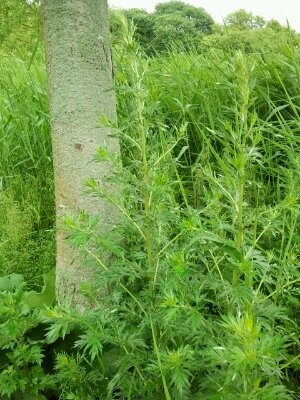
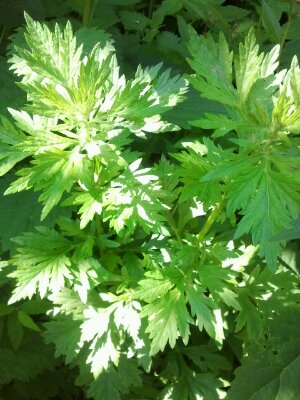
Mugwort (Artemisia vulgaris). Not the most productive year for bushy Mugwort plants in Amsterdam. They are far more slender than usual but still taste great and are very potent at the moment.

image

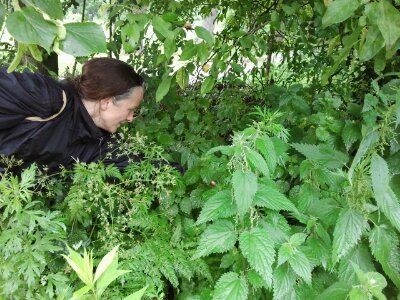
Searching for Horehound (Marrubium vulgare) amongst Stinging Nettle (Urtica dioica) and Jerusalem artichoke (above).

image

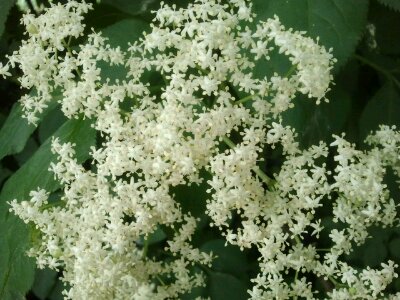
Elderflower. A superb year and so many uses!

image

Hedge woundwort (Stachys sylvatica). We found it full of bees. This has also been planted next to the bee hives of de Hortus Botanicus. Strongly scented, bristly, slightly sticky leaves which seem to ooze potency. This Woundwort had many historical uses and remains very useful today.

image

White deadnettle (Lamium album) amongst Ground Elder (Aegopodium podograria). Both are edible, delicious and useful for several conditions. Lamium album being especially useful for helping normalise females flows.

Lots more wonderful plants were spotted today and the time went by so quickly!

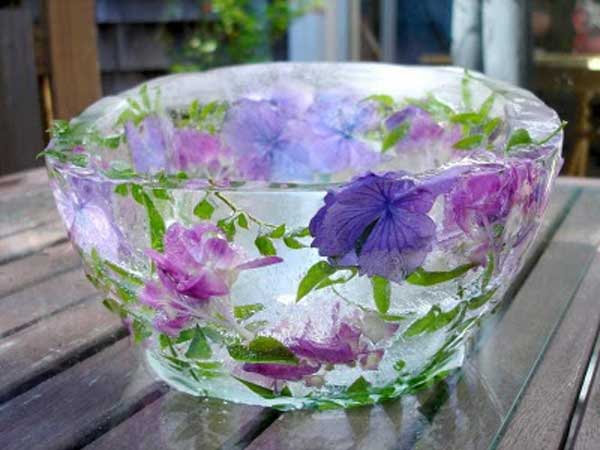
And some kitchen inspiration.

Photo credit: gulummse.blogspot.com

Magneet Festival – Ethical Foraging

mobi-01 Frankendael

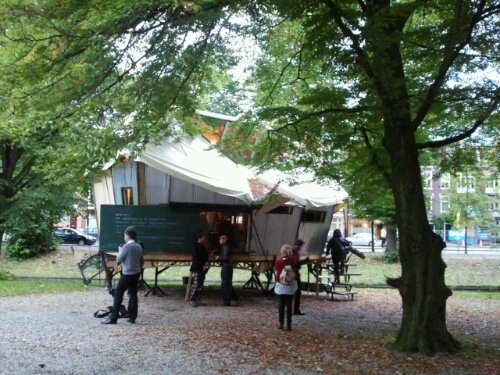
The Magneet Festival is an inspired event running over the weekends between 23rd August and 15th September 2013. It  has been running for a few years now, on a patch of land in Oost Amsterdam. The public decides on what will be happening and I am lucky enough to be invited to forage for the Mobiation Project, who are living in their incredible Mobi-01 home in the Green Zone. You may remember when they were living in Park Frankendael last year, at the Urban Outsiders exhibition. They will be offering all sorts of interesting activities to the festival participants and I’ll be helping them to eat from the land.

One of the central features of the Magneet Festival is Leave No Trace! So I shall be showing participants how to forage useful plants from the site in an ethical way and teaching how to give something really useful back to foraging sites and the rest of the city.

My foraging missions will be scheduled more tightly, closer to the event but for now I can tell you that I’ll be out there, whatever the weather, twice a day on the second, third and fourth weekends of the festival. There is no need to book with me but you will need a ticket for the festival and they are on sale now. Here’s a link to my event’s page in case you want to tell me that you will be there. It would be great to see you!

It should be an awesome event so please participate and join the celebration.

Elderflower honey

image

Today was a beautiful day to harvest Elderflowers from local trees. Here is one of the simplest and tastiest ways to preserve this delight of the hedgerows and it keeps for as long as you like. This can be used instead of Elderflower syrup. To make a delicious drink, pour a small amount into a glass and top up with still or sparkling water.

Elderflower Honey can be made by filling a clean glass jar with freshly picked fragrant Elderflowers (do check as you are about to pick, some smell distinctly unpleasant 🙂 and then filling the jar again with organic runny honey.

image

Prod with a chopstick for a while, to release any trapped air then top up to the brim with more honey. Securely lid, label and leave to infuse for as long as you like in a kitchen cuboard or similar place.

After just an hour or so, you’ll have a deliciously fragranced honey suitable for deserts or just eating from the spoon as I do. But if you can bear to wait three days or a week, you’ll have something close to nectar. So simple, so tasty and so useful.

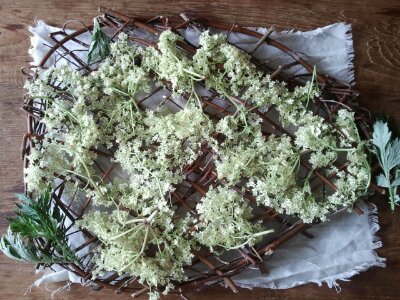
When you pick Elderflowers, gather them into a paper bag if possible, being careful to take the precious pollen home with you. Nip them cleanly from the tree as whole sprays of flowers. I use my thumbnails to do this usually or a small pair of kitchen scissors. When you get them home, lay them face down (stalks up) on a white surface for a while to allow bugs to climb out from the flowers. Here you can see some of today’s harvest drying breifly on my Willow rack. I tend to harvest some Elderflowers to dry completely for winter cold and flu remedies but most of my harvest is eaten freshly or turned into sweet treats and drinks. Elderflower honey is the perfect base for many of these recipes and is far more simple than making a sugar syrup. If you are vegan or just don’t want to use honey, you could infuse a vegetable syrup such as oat syrup or agave syrup in the same way. Honey has the added benefits of being a medicine in itself and keeps indefinately is stored well, so preseving herbs in honey is my logical choice. Be aware that honey may contain Botulism spores which can be lethal to children under one year of age (their immature immune systems are not equipt to fight Botulism).

image

I’m currently working on a vegetarian Elderflower Jelly recipe, using my infused honey. I’ll post the recipe soon for you to try out. If you want to be ready for it then set up a pot of Elderflower honey tomorrow, as above and keep your eyes open for Agar agar powder in Chinese grocers or for the organic option, visit Deshima Freshop (on Weteringschaanscircuit). My Handbook of Urbanherbology methods is almost complete and the final herb jelly recipe will be in there.

Forest School Finds

My school runs a lovely Forest School programme using some of the local space in Beatrixpark. Here are some of the beautiful plants, growing there at the moment…

Mugwort (Artemisia vulgaris) Bijvoet. Edible and extremely useful.
Mugwort Beatrixpark Urbanherbology


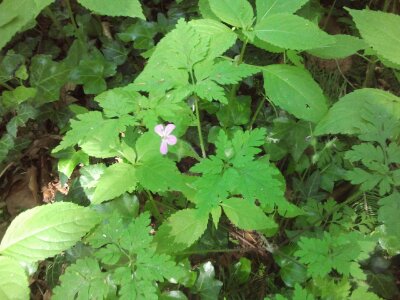
Herb Robert (Geranium robertianum) Groot Robertskruid. Edible and useful.
Herb Robert


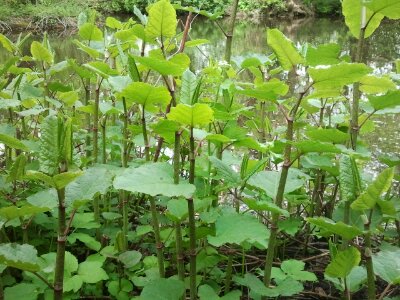
Japanese Knotweed (Fallopia japonica) Japanse duizendknoop. Edible, rather like rhubarb, when cooked. Likely to give children a sore tummy as it is very sour.  It can be quite useful as a medicine. This invasive plant is a major pest as it quickly takes over space and light from native slower growing species.
Japanese Knotweed Beatrixpark Urbanherbology

Lots of this woodland plant visible at present, it is one of my favourites. It is called Enchanter’s Nightshade (Circaea lutetiana) Groot Heksenkruid.
Despite the nightshade name, this plant is edible and is quite tasty when cooked (wilted like spinach). It is not a member of the Solanacae family (the poisonous Nightshades) is linked to the ancient Greek sorceress Circe. She apparently used this plant in many of her potions. It apparently has the ability to draw back to you whatever you send out, especially love.
Enchanter's Nightshade

Young leaves of Garlic Mustard (Alliaria petiolata) Look-zonder-look. Edible, delicious, very versatile as a culinary herb and useful too. Note the kidney shaped first leaves arising from the soil. Then as the biennial plant matures, it develops more elongated heart shaped leaves. In time there will be a cluster of tiny Brassicaceae (cabbage family) flowers atop the tall stem. If you fancy trying some just pluck one leaf per plant and leave those precious flowers and seeds to develop. This is a huge pest in some areas but here it is a delicious treat to find! I eat it raw or cooked.

Garlic mustard

Common Daisy (Bellis perennis) Madeliefje. This plant is edible, the flowers are a fun addition to soup or salad and the leaves, when chewed up to make a spit poultice, make a useful and quick to find wound herb. It is quite astringent to helps to stop bleeding. The Roman soldiers apparently travelled into battle with it, ready to help injured centurians.

Daisy

Here is pretty Ground ivy (Glechoma hederacea) Hondsdraf. What a tasty little mint family plant this is! I love to add a pinch of it to a pot of tea and add it to lots of my cooking. It is aromatic, a digestive and an evergreen member of the mint family. A welcome find for winter and summer foragers alike! Edible raw and cooked.
Ground ivy

Another edible plant from the woods: Ground Elder (Aegopodium podograia) Zevenblad. This is another versatile herb for the pot. I really enjoy cooking meals with a few leaves of Ground elder chopped in for the last ten minutes. It has medicinal virtues too.
Ground Elder Zevenblad

Here is a member of the Potentilla family (Ganzerik). These are edible and useful.
Potentilla sp

Elderflower (Sambucus nigra) Vlierbloem. Green parts poisonous (but medicinally very useful), flowers – lekker!
Elderflower

Now for the less tasty plants which I found on Friday:

This one looks decidely like highly poisonous Datura to me (or a close relative in the Solanacea family). It may not be but this is a plant to watch at a distance. I know that the cultivated herb garden of Beatrix park does deliberately grow some of this plant so it could well be a seeded escape. I found this growing inside of the entrance path of the park.
Datura perhaps

And this large and striking looking plant is probably edible Common Hogweed (Hereacleaum sphondylium) but it is easily confused with poisonous Giant Hogweed (eracleum mantegazzianum).

wpid-2013-06-07-15.31.11.jpg

Embrace Your Weeds!

A huge thank you to Ann Doherty from City Plot and all of the enthusiastic gardeners, who joined us in Wersterpark to embrace weeds, this afternoon!

We found lots of interesting plants which can act a soil indicators, food, mulch, compost activators, medicine and much more. Some of the plants that we found, in addition to those covered in the handout, are as follows:

Teasel (Dipsacus fullonum) with those amazing fused leaves which capture rain and morning dew. It shows promise as a medicine for those with Lyme’s Disease.

image

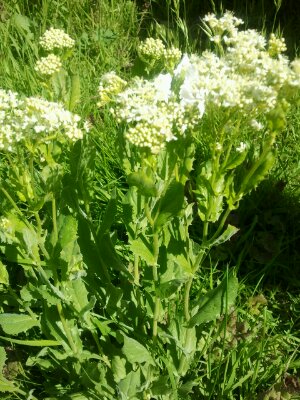
This pretty brassica with large clusters of tiny white flowers could be a type of Wild Candytuft (Iberis amara). There seems to be alot of this plant in parts of Westerpark. It certainly fits the criteria for a brassica. I need to have a look at the flowers with my lens and check out the soil to confirm.

image

Japanese knotweed (Polygonium cuspidatum) Japanse knopjeskruid? Invasive alien plant which is the bane of many gardeners and home owners. This edible plant has some medicinal virtues but is best eaten in small quantities due to it’s strong acidic taste. See here for a tasty desert recipe. If you have problems eating rhubarb, you’ll most likely have them with this plant too.

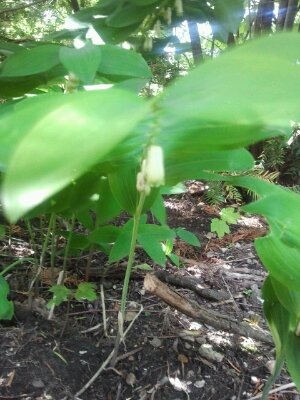
Not such a good photo but we found Solomon’s seal (Polygonatum multiflorum) in the volkstuinpark. It’s arching stems of hanging flowers are strikingly beautiful but it’s the roots that have a history as a staple food amongst some native American people.
image

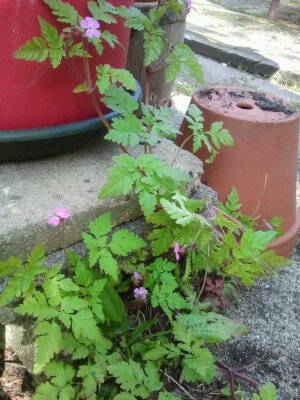
Herb Robert (Geranium robertianum) A tasty, easy to consume geranium with medicinal virtues. In the Canary islands it is sometimes used to help recovery of those who have received radiotherapy.

image

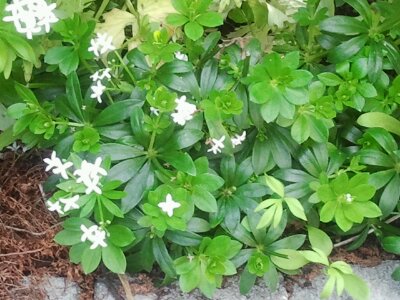
Sweet woodruff (Galium odoratum). This plant smells beautifully of sweet mown grass. I like to add it to a traditional German May day drink called Maybowl.

image

One of the group showed me a photo of a distinctive weed which is making a comeback right bite in many patches of bare earth (including her garden!). It is called Redshank (Polygonum persicaria). It has distinctive black arrow-shaped blotches on the leaves. It is edible.

Pansies (Viola sp.) Are delicious, if unsprayed and organically grown of course. Beautiful on a salad or desert.

Cleavers (Galium aparine) Kleefkruid, a plant for I recommend highly to those who want to juice their weeds. Here’s how I do it when you have a handful growing in a clean spot.

And those three plant families that are best avoided; Euphorbia, Nightshade, Carrot. Not all poisonous plants belong to these families bit many of the most toxic do. Other notable poisonous plants: Yew tree, White Bryony.

Thanks again everyone – happy gardening and munching!

Come Rain or Shine

image

On Sunday, I took a large group of people around some cold, windy and weedy parts of Westerpark. Today a small group of us walked around the woods of park Frankendael in the sunshine and rain, before enjoying a warm drink in Restaurant Merkelbach.

Here are a few of the things we found and tasted on those walks…

Yellow deadnettle (NL:Gele dovenetel)
image

Urban Dandelion and Burdock honey (NL:Paardebloem en Grote Klis)

20130529-213655.jpg

Wild Garlic Bread Sticks.
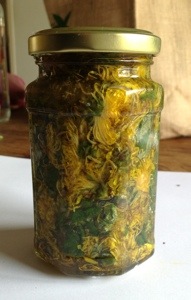
Today’s group had the same bread but with Rosemary and roasted sesame seeds, mixed into the oil.

image

Comfrey NL: Smeerwortel (Symphytum x uplandicum), with it’s purple flowers, distinctive cucumber scent and taste alongside those winged leaf-stem joints.

image

Wild garlic (Allium ursinum) NL:Daslook.
image

Catnip NL: Kattenkruid (as also found in huge quantities, planted along side some Amsterdam roads)
image

Here is Ground Elder (Aegopodium podograria) NL:Zevenblad.
image

Skullcap (Sculletaria longifolium) before flowering.
image

Here is a lovely post by Whispering Earth, all about the beautiful Hawthorn tree, which some of us tinctured blossom from today.

image

Both the recent groups also received a packet of River of Herb treepit seedmix. I hope that everyone will find a few moments to plant them in the weeks to come.

I won’t be leading any more walks until mid July but on Midsummer’s day (June 21st, 4.30pm) I am organizing a free Lime blossom (NL:Linden, Tilia sp.) harvest in park Frankendael. Do come along if you would like to meet some other Urban Herbies or simply to learn a little more about this magical tree.

Let’s Make Hawthorn Tincture!

What a perfect day!

image

I finally found time this morning to have a leisurely wander through the woods of Frankendael, seeking out the most pleasantly scented Hawthorn (Crataegus monogyna) trees.

I was not disappointed! The flowers and leaves of this heart toning tree always taste good to me. Munched on a late spring walk, not much else lifts my spirits and makes me stand tall as does Hawthorn “bread and cheese”. But the flowers (the cheese) do vary in their tastiness, so if you want to capture their essence, it’s worth taking time to seek out the ones which really appeal to you.

Some of the flowers smell rather unpleasant, like cat pee, others are unscented because their insect-attracting job is done. Just a couple smelled sweetly, really sweetly, like vanilla rice pudding. Those smelled and tasted jaw-droppingly good! So guess which ones ended up in my tincture jar?

image

Equipt with a small bottle of vodka and a little glass jar, I made my tincture at the tree. To do it yourself, simply fill a jar well with carefully picked Hawthorn flower clusters and a few Hawthorn leaves (the bread). Then fill the jar again with vodka, brandy or whatever strong spirit you choose. Check that you fill all the way to the brim. Flowers exposed to any air will quickly spoil, they need to be completely submerged in the spirit. Check for bubbles of air and top up if needed.

image

I’ll leave my tincture like this, labelled, in a cupboard until the autumn, when I’ll strain the flowers and pour the liquid over a fresh jar of Hawthorn berries. Then after a further six weeks of infusing, my double Hawthorn tincture will be ready for use. It will be infused with the properties of Hawthorn leaves, flowers and berries.

If a regular few drops of that doesn’t warm, tone and open my heart through the depths of winter, then not much will!

image

I could use the simple flower tincture after six weeks infusion time but I have enough Hawthorn elixir in stock, to see me through summer and autumn so I shall wait. And we all know that the best things come to those who wait 🙂

Hawthorn is an age old preventaive and remedy for many types of heart disease. It is a heart tonic, offering as it were, food specific to the heart. It is used by many, alongside allopathic (conventional drug based) medicine such as betablockers but of course you should always consult a qualified medical herbalist if considering using it as a remedy for heart disease.

If you’d like to join me for a walk in the park, to learn about tasty and useful plants of Amsterdam, and to set up you’re poem tincture, why not sign up for tomorrow’s lunchtime forage?

Embrace Your Weeds!

image

Sunday 2nd June
3-5pm
Westerpark (Proef Restaurant to the Educational Garden)
€25 per person

There are so many incredible plants which we dismiss, dig-up or discard. We could do so much with these humble weeds, if only more people knew how!

image

This workshop with foraging walk will open your eyes to the wonders of the weed world! Together with Ann from City Plot Amsterdam, I will lead you from Proef restaurant in Westerpark through to the City Plot educational garden, right at the back of the park. We will wander through prime public foraging grounds on our way. When we get there, we will plant some of our weedy wonders in the River of Herbs section of the Educational Garden.

Bring (if you like):
Paper bags for foraged finds,
Flask of hot water, to make a herb tea
Hand trowel, if you have one,

image

I will tell you about medicinal, nourishing and historical uses of the plants and Ann will show how to make the most of them in the garden and kitchen.

You will receive a comprehensive colour handout, to help you at home and the chance to spend quality time with us and the weeds, in a small group. To book, please email me or click here.

image

The Educational Garden is an inspirational place: It has been divided into different mini gardens, from a Mushroom farm, Permaculture patch, Medicinals section to the River of Herbs meadow.

image

Proeftuin is maintained as an organic restaurant garden by City Plot.
Westerpark is big, bold and full of foraging spots!

Our walks and talks go ahead, unless there’s a hurricane overhead. So please come prepared to get stuck into our wonderful urban nature, whatever the weather.

20130523-133953.jpg

So whether you have a garden, a plant pot or like to forage, join us to discover how to find, identify and Embrace Your Weeds!

River Of Herbs Flows On

Yesterday was the fourth meeting of my first River of Herbs course.

image

A tidy group of us met on Spuistraat and proceeded to speak with a few locals before launching into a little tidying up of earthy spaces, some herb planting and some gardening chat! The main aims of River of Herbs are to enable as many people as possible to grow edible and medicinal herbs in disused urban spaces and for those herbs to encourage pollinating insects into our city streets.

During this meeting we also leaned about how a range of other beneficial insects (such as Lacewings, Ladybirds and Ground Belles) can be welcomed into herb gardens, to control pests and keep the plants in good condition.

image

You can read all about it on the River of Herbs website. And you can download the booklets which the course participants receive from this page.

The current course members have all been planning and planting small (and large) urban spots, close to their homes, which we call Urban Herb Meadows. The current group will soon be ready to go fourth and offer their own courses to other interested volunteer gardeners. The courses are free and are funded by sponsorship and gifts.

If you are interested in joining one of our courses or getting involved in other ways, then please get in touch!