All posts by Lynn

365 Frankendael day 122
Today I was kindly sent a batch of beautiful photos of herbs in the park by Joop Eisenberger. I often meet Joop in Frankendael whilst I hunt for herbs and he hunts for dragonflies, butterflies, frogs, bees, plants etc. He is well known for taking the most wonderful nature photos in this area. Joop, thank you so much for sending these to me! I am showing a few photos today and will post more over the coming days. It’s always inspiring to see the work of someone who takes such time and effort to get just the right shot.
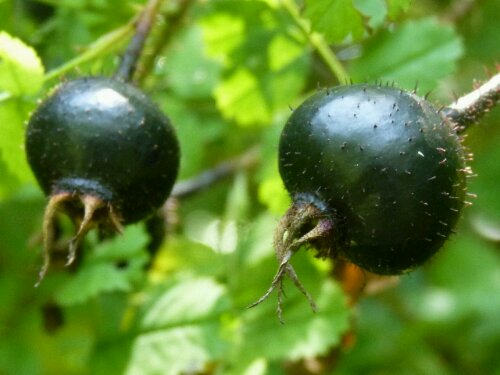
Firstly, black rosehips of Burnet Rose (Rosa pimpinellifolia). These are really quite an amazing colour, compared to most other hips. I showed the flowers of this shrub a few months ago and now the hips are maturing and standing out gloriously. All rose hips, of whichever colour, from whichever species, can be transformed into delicious and nutritious vitamin c rich conserves. I look forward to giving these a gentle squeeze, when I return from holiday, to see how ripe they are. Rose hips need to be fairly soft but not at all rotting, to be harvested. Whatever preparations are made from hips, the pips (seeds) must be carefully removed by sieving, before the final storage as they are covered in tiny irritating hairs.

I thought most St John’s / Joan’s wort flowers (Hypericum perforatum) were over now but this photo taken yesterday prove otherwise. I have taken a bottle of oil, infused with this plant, on holiday with me. It is my sun lotion. Contrary to popular beleif, this sunny little wonder herb can prevent sunburn as well as soothing aches and pains and uplifting depressed minds. Avoid the dried herb for depression, it tends to make things worse. The tincture seems to do a better job. If you are interested in this herb, take a look at the writings and recordings about it by Susun Weed. The herb can interect with the contraceptive pill, so beware.
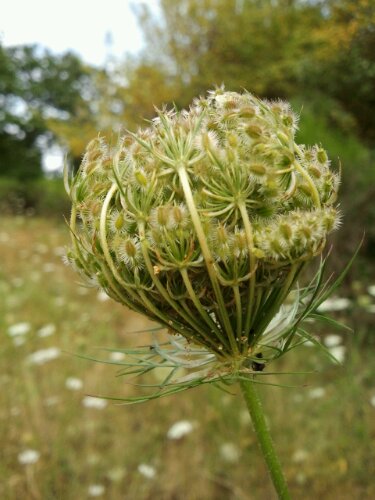
Speaking of contraceptives, I’ve a renewed interest in Wild Carrot (Daucus carota) flowers and seeds at present because where I’m holidaying is absolutley covered in the plant. There is some extrememly interesting reseach into its effectiveness as a birthcontrol herb, by Robin Rose Bennett. Read her research findings and updates if it is of interest to you. In short, it appears to work like a herbal morning after pill. If taken regularly it stops working. So if you facy trying it, read up on it thoroughly, get some advice and make sure you harvest the right flowers or seeds!
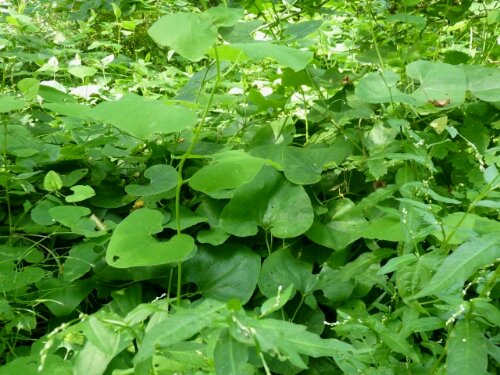
Lasty today, here is a poisonous herb, also associated with birth, or otherwise. It is called Pijpbloem in Dutch, Birthwort in English and Aristotolochia clematis in Latin. The Doctrine of Signatures was responsible for wrongly linking many herbs with dieases of body parts which they resemble. This is one such herb. It was thought to resemble the birthcanal or uterus and was used by many for quite sometime to help childbirth proceede and for other gynacological issues. It does cause the uterus to contract, eventually, but it all also causes kidney damage and failure and thus sometimes death. It’s quite a beautiful plant, creeping around the woodland area with unusual leaves, tendrills and a vibrancy that really makes it stand out from the other plants. It is very poisonous and shouldnt be ingested.
365 Frankendael day 121

Here’s a beautiful fungus (not for foraging or eating!) and a stem of Bramble (NL: Bramen), which I saw in the park on Friday. The bramble is the mother of blackberries, which are not in the photo but are totally in season here in Amsterdam, right now. I love them, eat them straight from the bush (high up and if clean) and could take photos of them everyday but other people may get bored of seeing them, hence the fungus photo today.
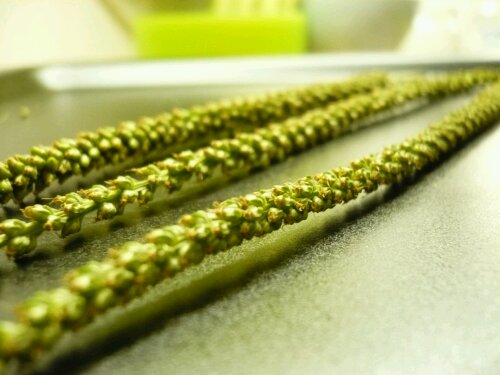
Here is a photo sent to me by Youko yesterday. It’s some of the Plantain seed spikes (Plantago major) which I took over to her place when we had a lunch appointment. I think it looks really beautiful. Thanks Youko!
If you would like to send me any photos of herbs and edibles which are currently in season in town, I’d love to receive them and post some of them on the blog. I always like to see and share what other people are finding in the city but especially now as I’m away for a short time and want to keep the 365 project alive. If you have any that you think may interest others, please email them as attachments to Lynn.shore@gmail.com. Thanks you!

365 Frankendael day 120

These photos were kindly taken a couple of days ago and sent to me by Lina, who lives in Amsterdam West. Above is a huge swathe of Evening Primrose, the flowers almost done for the season but still looking great and the whole plant being useful as a medicinal herb and as vegetable.
Below is a plump grape vine on Lijnbansgracht. They look so good!


Elder and Sugar Plant Cuttings

How are you’re Elder babies getting on? Did they survive the dark wet weather and then the recent heat wave? It’s almost a month, since we snipped them from their parent bushes on Hugo de Vrieslaan and I know some have had a tough time. But be confident and don’t give them up for dead, even if they look lifeless. Just water when they or the soil seems to need it, they don’t like having soggy feet but they don’t like drying out either. Elder (Sambucus nigra) is once of the easiest cuttings to grow, they stand a very good chance.
Mine are in a quiet north facing balcony corner, with a large plastic bag at their base. I loosly pull it up when I feel it’s too windy for them, or too sunny. I pull it down at other times, when I remember. One cutting lost it’s leaves quite soon but now has fresh green buds. The other two have kept hold of their leaves and show new growth. I’m very pleased.

Here is a cutting I took from Youko’s Sugar plant. This is not Stevia and it’s clearly not Sugarcane or anything similar but it does taste of sugar – a lot! Youko, could you tell me the real name when you have a chance? I thought it died on the way home, it looked so limp for a couple of weeks, but it didn’t dry up so I kept faith and just monitored the soil wetness. Not too wet, not too dry, as with the Elder. I kept it in a similar location to where Youko has hers. Yesterday it seemed to gain energy (probably from roots!). It now looks positively perky and sports new leaves! I think it is now through the most tricky cutting phase so hopefully I’ll have a nice healthy plant for some time to come.
I’d love to hear how your Elder cuttings are getting on, and other plants you are trying to proliferate. Likewise, whilst I can’t take photos of herbs in Frankendael, I’d really love to receive any photos of plants you think may be edible or medicinal, in Amsterdam.

365 Frankendael day 119
Today I went looking for Wild Carrot (Daucus carota) flowers, to make a tincture but found that all the red spots had become black spots, so I left them all alone and will wait to collect seeds.

I collected just a few seeds from Soapwort (Saponaria sp.) plants. The seedheads look similar to those of poppy, and the seeds are a similar size and shape but the plant is quite different.
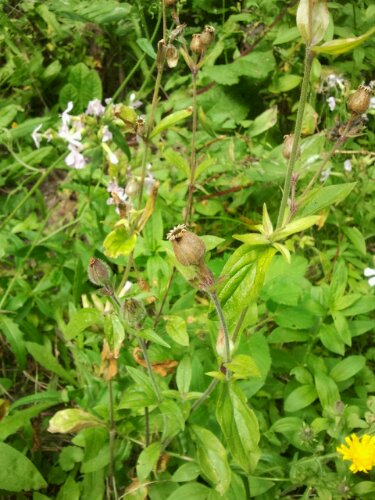
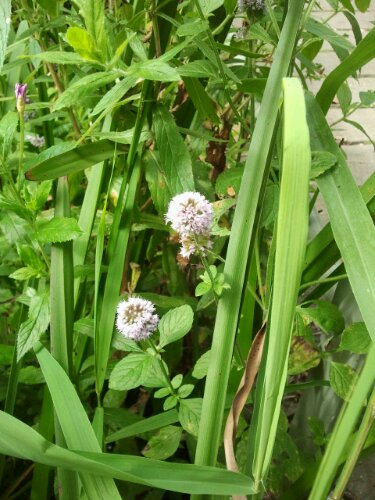
Here’s a pretty Water mint (Mentha aquatica) plant, now in full bloom.
365 Frankendael day 118
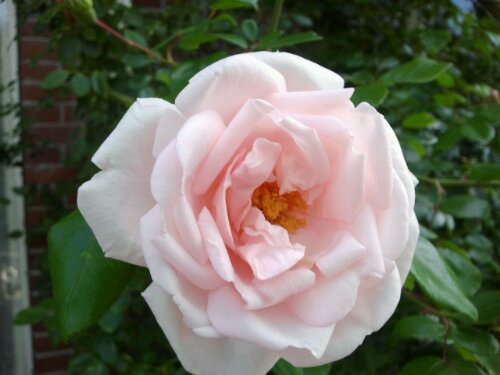
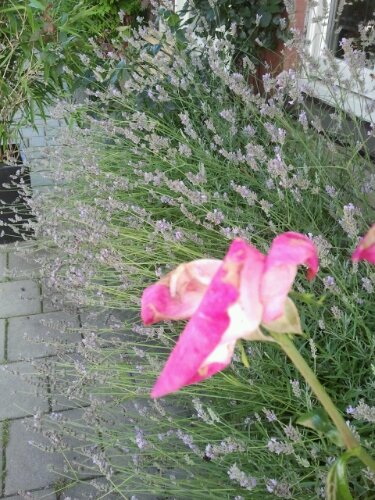
These herbs and edibles were photographed along the Middenweg today, in geveltuinen, plant pots and pavement cracks. They all grow well here, with the need for very little care so are a good choice for pavement gardens.
Hazel sapling, growing out of curb stones.

Rose.
Lavender
Passionflower

Hollyhock

Hollyhock Seeds & Fraunhofferstraat

Here are some Hollyhock seed heads from the plant which found its way to my geveltuin last year. I harvested one really dry, ripe seed head today and collected the seeds from within. They are beautifully arranged in a wheel-like pattern and are big enough for kids to deal with.
Hollyhock is a biennial, is quite beautiful and can be used to soothe inflammation for such things as cystitis and sore throats and offers a remedy for several chest complaints such as persistent coughs and bronchitis. It is a close relative of Marsh Mallow. Obviously Hollyhocks won’t make a suitable remedy for everyone with a bad chest but it’s a good enough reason for me to want to proliferate them in the city.
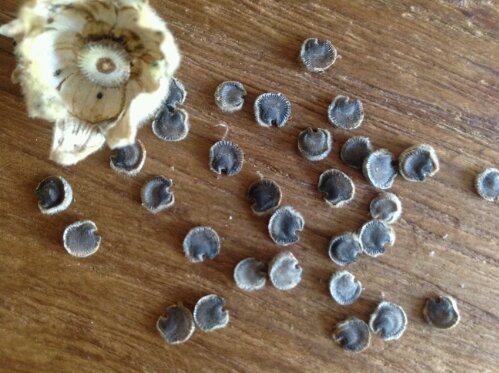
I’ll be sewing some of these seeds in nearby tree pits this week and saving others to plant later, just I case the first batch fail.
Since I wrote about the untended tree pits close to my home, on Fraunhofferstraat, they have magically been tidied up! I don’t know when it happened or who did it but every single tree pit now looks really tidy, seems to have been hoed and is ready for seeding or planting! Thank you whoever it was!! I began with sewing some poppy seeds at the weekend and will move a few useful pretty herbs in there, which I find in pavement cracks etc.
365 Frankendael day 117
Just a few photos today, of much over looked useful and tasty urban plants…
Here is Ground Elder (Aegopodium podograria), it tastes fresh and of Parsley to quite an extent. it’s also a huge pest in many gardens, so of the soil is uncontaminated and the plants are unsprayed, I suggest carefully identifying it as the real thing and cooking it rather than adding it to garbage or dosing it with pesticide. It’s really interesting, finely chopped and sprinkled over many meals (I especially love it on fish and chicken), about 10 minutes before the end.

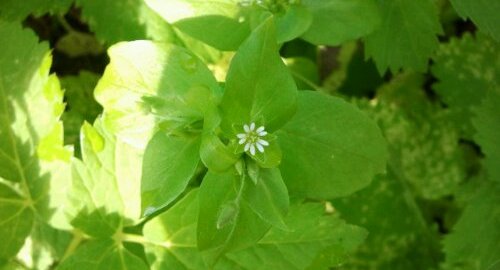
Next is Chickweed (Stellaria media), property salad, packed with nutrients and able to soothe the skin of itches and irritations. I add this to a vinegar, making the bone building nutrients readily available.

Next is Stinging Nettle (Urticaria dioica).

Lastly today, White dead nettle (Lamium album). No sings and very tasty. Can be cooked or eaten raw. I often hear of people who enjoy sucking the nectar from the flowers. I ad them sometimes to a salad but prefer to eat the leaves and stems.

365 Frankendael day 116
A quick tram stop hunt for herbs today as I ran the Honey and Herbs workshop this afternoon.
Here’s a lovely little Hazel tree growing in the lowerparts of a beech hedge.

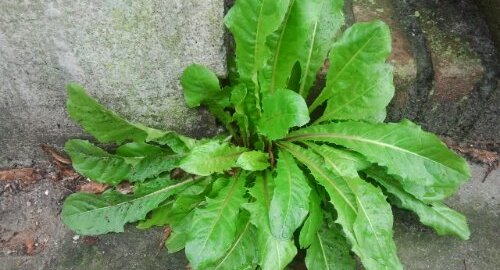
Here’s a very vibrant Dandelion (Taraxacum officinalis agg.) growing in a dirt filled pavement crack above a bridge.

I harvested lots of Plantain (Plantago major) today, from close to de Kas restaurant. I’ll be dressing the leaves as I haven’t had time to make a succus with it and I don’t want to waste them.
 Urban Herbology