 Kombucha is something I’m being asked a lot about at the moment. Here are some of my thoughts and experiences of it and also some links which you may find useful. Please do let me know what you think of the drink, good or bad. I’m including it in the Urban Herbology blog because tea (Camelia sinensis) is indeed a herb and Kombucha is another way to process and consume it…
My Kombucha
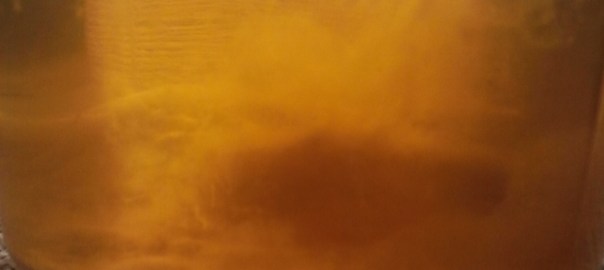
I make Kombucha in my airing cupboard. I drink a small amount of Kombucha from a cute Marrocan tea glass most mornings, as I prepare breakfast for my family. I like my Kombucha on the acidic side and I let some batches ferment so long that a strong vinegar is produced. I then use the vinegar in cooking or to infuse fresh herbs, in place of apple cider vinegar. I let my two year old drink a little diluted Kombucha now and then. I feel it kick starts my system, particularly my digestive system, much as a glass of water with an ample squeeze of lemon juice does. I don’t drink it close to eating starches as starch digestion occurs optimally in an alkaline environment. I give my Kombucha babies (or mothers or SCOBYs or what ever you like to call them) away periodically so that others can start their own brew. SCOBY stands for Symbiotic Culture of Bacteria and Yeast.
I don’t think that Kombucha is a panacea for all ills, an elixir of life that will prevent all manner of disorders. I also don’t think one should drink too much of the stuff, an absence of scientific research doesn’t mean there is anything amiss with Kombucha but I don’t feel that a single food stuff should be consumed copiously. But I do like it and will continue to brew it, to use it and to share the babies as and when there is interest.
So what is Kombucha?
It’s the drink made when a jelly like bacteria/yeast symbiosis ferments sweet tea.
If you like, you can read more about the specific microbes which have been isolated from kombucha cultures via the links below.
How to make Kombucha?
You will need…
1 large glass or plastic container (2 litre Italian, rubber seal pickling jar from Blokker is perfect)
Kombucha mother/baby/scoby/tea mushroom/ tea monster (or a part of one)
Some good quality loose tea*
Some sugar**
Water, filtered preferably
Rubber band (to fit top of jar)
Very clean teatowel or muslin
*Any tea can be used, black, green, oorlong etc but not what we would call “herb teas” (e.g. rooibos, mint or chamomile). I use green tea flower bombs, provided periodically by freinds who live in China. I’ve never been a regular tea drinker so green tea gives me the least classic tea taste and I like the result.
**I use organic white or “halfwit” sugar. I have not experimented with other types of sugar because the guidance I have read from many sources states overwhelmingly that brown/ golden/dark etc sugar gives very inconsistant results. So I keep a bag of white in stock specifically for my Kombucha.
You’ll find different recipes around and there are whole books on the subject but here’s the way I make it…
1. Boil 1 to 1.5 litre filtered water
2. Fill a large tea pot with the water and add 2 (Numi brand style) tea flowers/bombs.
3. Leave to brew until the water is warm enough to dissolve sugar but cool enough to have a good strong tea inside, and be easy to handle.
4. Pour the tea through a strainer into the large glass jar.
5. Stir about 16 tablespoons of sugar into the strained tea. It needs to dissolve. If it doesn’t then heat the water a little or add some freshly boiled water.
6. Leave to cool to body temperature. I close the lid properly for this part.
7. When cooled, so you don’t cook your live culture, slip in your mother/scoby/baby/tea mushroom/monster and the Kombucha vinegar that it arrived with. It doesn’t matter if the SCOBY floats or sinks, so long as it is in the sweet, tepid tea, it will have what it needs to grow.
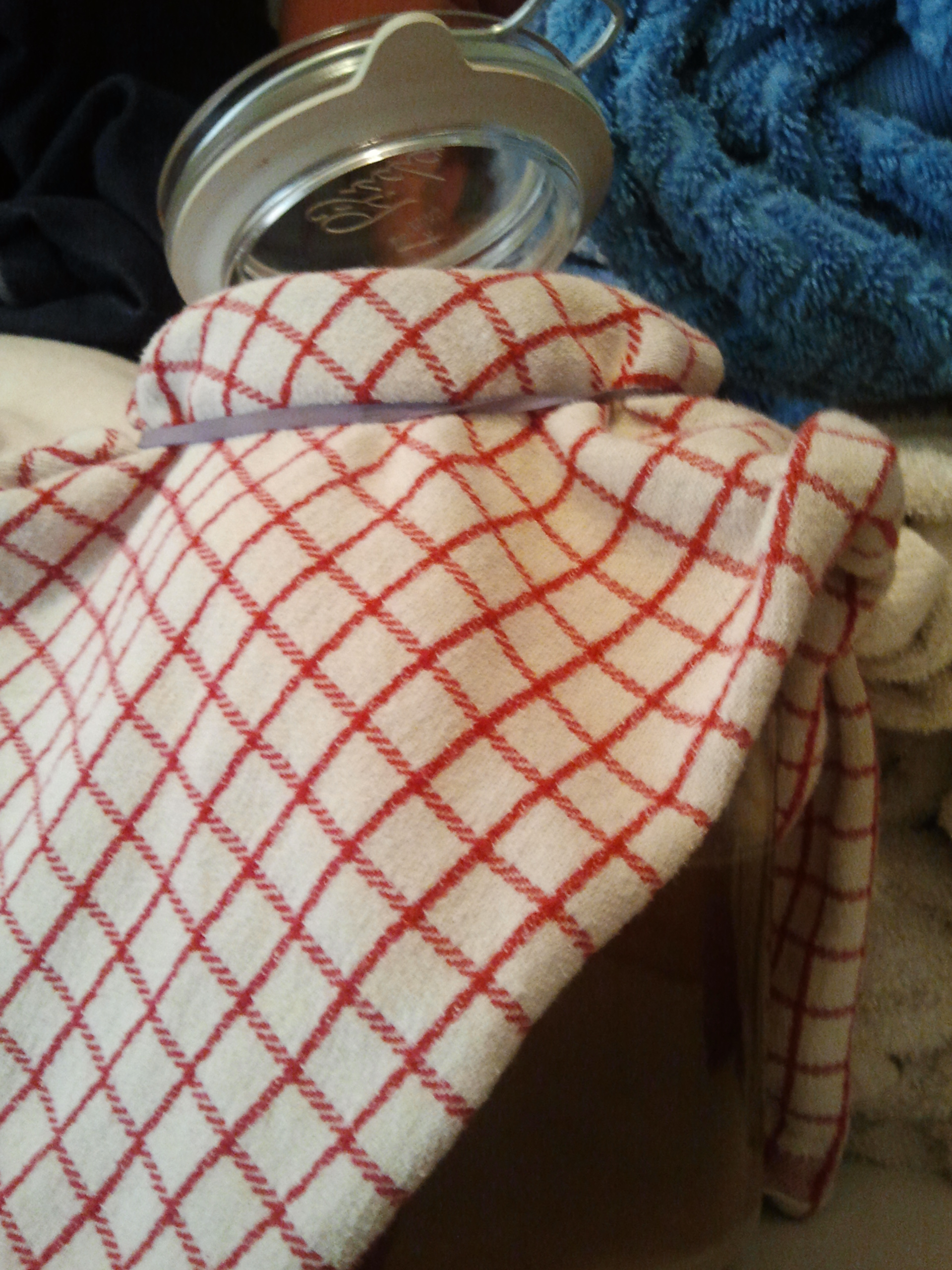
8. Place a clean tea towel or similar over the top so the ferment can breathe and secure that with a clean rubber band. Do not close the jar properly as Kombucha is made aerobically, not anaerobically.
9. Take to a clean, dark and moderately warm environment (my boiler room/airing cupboard works a treat) and leave it for 7 days to 3 weeks.
10. Check your jar periodically for signs of unwelcome mould growth.
11. The longer you leave it to ferment, the more acidic the Kombucha will become. So taste the liquid now and then, especially when you are getting familiar with the process. Find out what you like and make a note of the time required to produce that (although things change).
12. When you are ready to harvest the ferment, get a couple of super clean glass jars ready. Reserve your scoby in about a cup of the ferment – to start your next batch – and pour the rest into your bottle for refrigeration and use. I like to store in used tomato passata bottles – they take up less fridge door space.
13. The reserved liquid and scoby can be refrigerated for quite some time, the more acidic the liquid, the longer it will keep.
14. After the first ferment or two you will probably see a baby scoby being formed beneath the mother. It will in time peel off. This is your symbiotic colonie multiplying so much that it is seeking out a new home. You can store these babies in acidic/vinegar kombucha for yourself, compost them or give them to an interested friend – with 1/2 cup of Kombucha vinegar.
So that’s how I make it. If you don’t feel good or confident about the taste then don’t drink it or offer it to others.
Now why do people want to drink it?
Claims about Kombucha
Please be aware that most claims about Kombucha are annecdotal. I’m not aware of any good scientific research about it’s effects or any side effects. It seems that any problems have resulted from contamination at some stage in production.
The following list, summarises many of the claims to be found on the internet. You will see many are very attractive and some far fetched. The list is taken directly from a website called KombuchaKamp.com
*Probiotics – healthy bacteria
*Alkalize the body – balances internal pH
*Detoxify the liver – happy liver = happy mood
*Increase metabolism – rev your internal engine
*Improve digestion – keep your system moving
*Rebuild connective tissue – helps with arthritis, gout, asthma, rheumatism
*Cancer prevention
*Alleviate constipation
*Boost energy – helps with chronic fatigue
*Reduce blood pressure
*Relieve headaches & migraines
*Reduce kidney stones
*High in antioxidants – destroy free-radicals that cause cancer
*High in polyphenols
*Improve eyesight
*Heal excema – can be applied topically to soften the skin
*Prevent artheriosclerosis
*Speed healing of ulcers – kills h.pylori on contact
*Help clear up candida & yeast infections
*Aid healthy cell regeneration
*Reduce gray hair
*Lower glucose levels – prevents spiking from eating
Getting a Kombucha culture
One of the links below has a worldwide list of Kombucha brewers who are often happy to pass on their excess scobies. My kombucha builds up spare SCOBY very regularly – It is an amazing creature!
Join my Kombucha list if you would like one and you live in Amsterdam. I’ll send you an email when I have one spare. I’ll swap SCOBY for a small organic herb plant, organic seeds or a little organic chocolate. Don’t worry, I won’t spam you! I just can’t manage the emails otherwise.
Kombucha Links
http://www.naturalpedia.com/Kombucha.html– informative and referenced quotes about Kombucha, by natural health / natural lifestyle authors.
www.kombu.de – exchange list, some charge a small fee, others not, some will post the scoby to you, some ask you to collect it in person.
www.wildfermentation.com – I love this website! The man who runs it (Sandor Ellix Katz), has made learning and teaching about traditional fermentation his life’s work. He has also published a really wonderful book called Wild Fermentation and has another coming out in the summer (Update: It’s called The Art of Fermentation and is fabulous!). Everything from kefir to fermented rice to kombucha to sour dough containg left over cooked oats… he’s a fermentation activist!

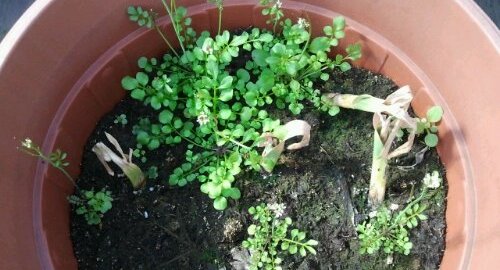
 I did a spot of roof gardening this morning and was very pleased to find this herb growing in a neglected plant pot. It’s thought of as weed by most and yet it’s providing at least two services here; covering lots of surface soil thus acting as a green mulch and also it’s soon to be part of my food! Hairy bittercress (Cardamine hirsuta) spreads readily by seed and is very successful at monopolising open ground. According to Wikipedia it can be quite a nuisance in lawns, in fact there are many articles on the internet dedicated to eradicating this plant. What a waste, it tastes so good and I’d prefer a useful mixed “weed” lawn to a monoculture of grass any day! It’s very welcome in my plant pots, I’d also say it’s non-invasive in this situation as it’s very easy to pull out completely when you need to.
















 Urban Herbology