All posts by Lynn

Unknown's avatar

About Lynn

Learning

Midwinter Malva

One thing that I really miss when I am at school all week, is a long, relaxed, morning walk. I really need to start weaving more walks into my work week schedule. In any case, I certainly can’t complain as I am now on school holiday for a couple of weeks so started with a leisurely walk today. Taking in the air, sights and plants as I wander for 5km or more through Amsterdam east, is a great way to start the day.

wp-1576829054002.jpg

This morning, my walk took in a long stretch of the Weespertrekvaart. On one side, a cycle path, sport fields, allotments and Amsteldorp (with plenty of Christmas lights at the moment). On the other, a mix of new villas, tower blocks, boats, businesses and the old Bijlmerbajes prison buildings. In between, a wide stretch of canal which a few ducks, gulls and a morning rowing team were enjoying. Between the canal and the cycle path is a footpath and parts of it are edged with reeds and wild herbs.

At this time of year there is a lot of green to be found in Amsterdam but due to midwinter’s reduced light and temperatures, most plants are not in flower or in good shape for foraging. At this time of year, it’s best to look but not touch, unless you find a big area of something quite special which is clearly loving the reduced competition for light, which midwinter also brings.

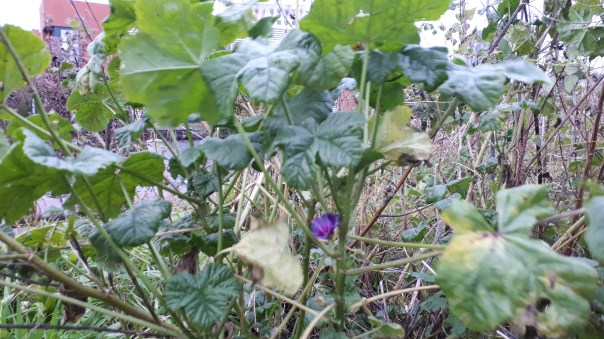
This Malva patch caught my eye. Not only is the plant quite prolific in places along the footpath, but here and there it can be found in flower. Plants are much easier to identify when in flower so this is great for foragers. Even if you don’t fancy foraging during midwinter, it is a great time to build your knowledge – of plant ID and where the plants like to grow.
wp-1576843899851.jpg

Yesterday in school, one of the classes ran an assembly about different foods eaten to celebrate Christmas around the world. One mention really caught my attention – Malva Cake in South Africa! Malva – in a cake – what a great idea!

I tend to eat malva leaves, of all sorts, in salads or I cook them gently and eat in savoury dishes. They can be chopped up into a tasty falafel mix, fried, stuffed, cooked like spinach and then sprinkled with feta type cheese. The options are endless (so long as you are sure to wash dust off as they can be quite hairy). Marshmallow (Althaea officinalis) is in the malva family, so is the Lime tree (Tilia spp) and they have ever so unctuous leaves. The malva in this photo looks like Common mallow (Malva sylvestris) to me. In my experience, it has less unctuous leaves than lime and marshmallow but they are mild tasting, very palatable and quite abundant in the greener parts of Amsterdam. More importantly, Common mallow is neither endangered here in The Netherlands (the Marshmallow plant is) nor is it out of reach (as Lime tree leaves certainly are in winter). So I became more and more pleased with this find on the footpath edge. One of my favourite Amsterdam plants is Hollyhock. That is also in the Malvaceae family and the leaves look quite similar to Common mallow. And while I think of it, some other Malvaceae members are cacao, cotton, durian and okra. This family of plants has high economic importance around the world.

20160807_084216
Found these cacao pods growing from the trunk of a Theobroma cacao tree in Costa Rica (2016).

Malva cake sounds great to me and also brings to mind the big packets of dried Malva leaves sold by my local Turkish supermarket (Yakhlaf on Javastraat). I googled recipes for malva cake and was a little disappointed that most contained no malva at all and looked distinctly similar to sticky toffee pudding. I found one reference to a Dutch cake with malva in the name but no actual malva in the recipe. So I am now on the hunt for a recipe which contains enough malva leaf to make a delicious unctuous cake – and preferably without carb-rich flour (as I am trying to avoid carbs). If you know of a recipe, I would love to hear! In the meantime, I will start experimenting with almond flour and malva leaves.

malva pudding cake
David Lebovitz’ Malva Pudding Cake (click for link) – I know, it’s not exactly disappointing but where is the actual malva leaf in this mouthwatering recipe? Photo credit: David Lebovitz

Do you have any uses for Malva leaves which you would like to share? If so please let me know in the post comments or through my contact page. Malva leaves seem to be very widely used in other parts of the world and right now, they are looking good in both Turkish supermarkets and winter footpath edges here in Amsterdam.

Forage lightly and happily, my friends!


Next Urban Herbology walk in Amsterdam – Tomorrow! 21st December. Check out my meetup group or What’s app me on 0627596930 if you would like to join the Winter Solstice walk.

My Online+ Apprenticeship course is open to newcomers for just 5 more days (until end of 25th December). Then it will be closed to new members until Imbolc (February 1st 2020). For more information see here or contact me.

Minimal Herbology

I amassed alot of herbs over the years. If you’ve been to my home for a workshop, you’ll know this. Through using them for food, home medicines and teaching apprentices, I reached a point this time last year where they were deposited all over my home and it didn’t feel good. Everything felt cluttered and kind of neglected, unloved.

There were paper bags of dried herbs and seed stems among children’s books and bike repair kits. Canning jars of elixir between piles of laundry and so so many tinctures! Imagine the scene of these things secreted in every nook and cranny of my home – a nice but not big home – a typical Amsterdam apartment where usage of space needs careful consideration. It was not a comfortable sight. To intensify the image, imagine the many associated Herbology crafting materials in my kitchen and cupboards. Materials like filter funnels, strainers, aquarium tubing and demi-johns. I had accumulated a lot of Herbology related things.

For years, I have been encouraging herb crafters to buy multipurpose tools and only harvest what they needed but some how, these objects had some magnetic attraction you me – or I did, to them. I had lost track of what I had and where it was – it didn’t feel good. I wanted to reduce my possessions once and for all. No more basic tidying and mild mannered decluttering, I needed to minimalize! And I have. And I still am. After a steady minimalising process, I’m feeling clearer, fresher and more effective. So is my home. I highly recommend the process!

I am sure that I’m not alone in this issue. If you are in the middle of a sense of herb crafting overload, I would love to hear from you. Personally, it feels quite cathartic to talk about it so I hope it will help you to share too!

Here is how I reached a happier herbal place over the past year:

1. Nothing Extra: I imposed a No Foraging rule on myself. I wanted to stop bringing more herbs and related materials into the house until everything was used up. I told myself that I should only consider light foraging of plants that I was going to use immediately. Not “soon”, not “if” nor “just in case” but immediately. If the urge to forage came upon me (and it did often) I had to check everywhere at home, in case the herb I sought (or could use as a substitute) was hidden away somewhere.

Substitutes: If the herb that I wanted wasn’t at home, I had to think it over for 48 hours before going out to forage. Mostly, I found a substitute and didn’t forage. So my herbal stocks didn’t increase.

It felt great to use up herbs that I’d collected a while back with a few purposes in mind and then found myself using them up for something different but very worthwhile.

Politely Refusing: Turning down offers of herbal gifts also helped this year. I do have a reputation of being quite blunt with people sometimes so hopefully I haven’t offended anyone in the process but I really didn’t want more coming into my possession. This has been true for everything else too for a few years but for herbal stuff – this year, I was on a minimalising mission!

I did fail to refuse a block of beeswax from an old apprentice, during the summer but agreed that I would take it to grate it up and share with new apprentices and give some back to her. We use it to make salves and candles, in case you’re wondering. The grating and sharing is still to happen but it will!

My nothing-extra strategy certainly stopped my supplies increasing further and helped me become aware of what I had and what I needed.

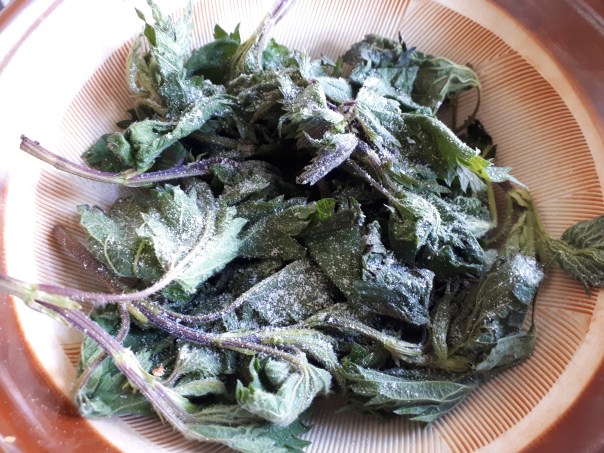
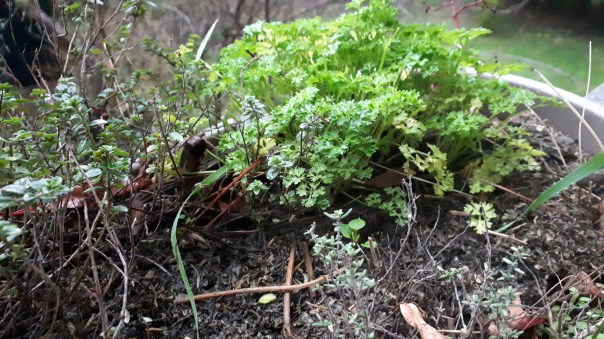
2. Use it up: I worked my way through a lot of tinctures, honeys and elixirs this past year. I found several ways to do this including giving some away as gifts, using them to make products I could use immediately, adding more to my diet and composting all the dried herbs which were aging and not oozing energy anymore. My house and balcony plants got a hefty herbal mulch layer and they look good as a result. The top image on this post shows a good layer of old dried nettle leaves, around my evergreen balcony parsley.

3. Organise – Sustainably: When I finally whittled my stocks down to a manageable level, I hauled everything herbal from around the house into one place – the living room. If I was to keep anything of my stocks then those things had to be in an easily accessible place.

I found multiples of some concoctions so I condensed them into single larger containers. This helped the stocks to take up less space and be easier to organise.

Next, I emptied the shelved walk-in cupboard off the side of our living room. It was half filled with herbal stuff and half with household “things”. Some of it was useful (vacuum cleaner bags, spare bike saddle, a never-used Tagine from the Tropenmuseum which is now in action and it’s such a lovely raw earthenware cooking pot!…) but a lot of it was total nonsense which we had hung onto just in case.

I took unwanted household clutter to the local charity shop and cleaned the cupboard out. No painting or changes were required, just a good clean.

The tagine – a buried treasure

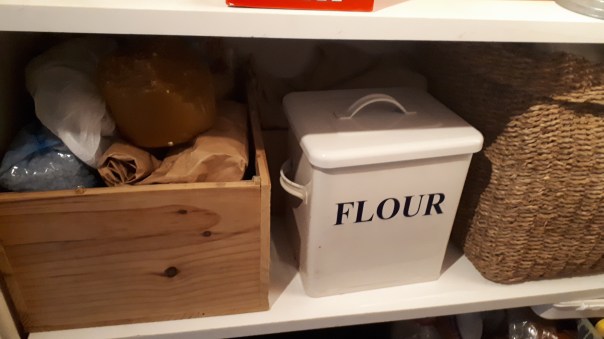
4. Limited Herbal Storage: I pledged to only put back in to the cupboard what I wanted and felt we needed. To ensure things didn’t get out of hand again, I found two sturdy shoe boxes and an old wine crate and limited my stocks to what could be stored neatly within them. There were also two small plastic tubs filled with old essential oils and my mini herbal medicine chest. Any overflow had to be given away or composed. I was very strict about this (not difficult by this stage in the process – I was so ready!). I used storage containers that I already had so I spent zero cash on this mission.

5. Less is more: Now I’m left only with the herbal supplies and crafting accessories which I can use, do use and feel that my family need. The rest is gone. It feels great. The rest has not gone to the big elixir shop in the sky but it has gone to freinds, family and the local community via the charity shop.

Whilst working on the herbs, I also worked on everything else that I possess and have consequently purged many many things from my life.

It feels liberating and spacious to have done this and my head feels clearer. I now know what I’ve got and what it’s for.

6. Sustainable Minimalism: The last time I felt so materially clear was when I moved to Amsterdam from the UK, via India. Gradually extra possessions crept in. With the herbs, I felt compelled, perhaps even ethically obligated, to keep them (aka “hoard” them). My intentions at the time felt pure but now I feel it far better to help show people how little we really need to do this work. So it seems I’ve gradually metamorphosized into a Minimal Herbologist.

It seems to be human nature to hoard things which we know are valuable. Knowing the value of herbs and wanting to help others know it, led me to hoard them and the associated paraphernalia. Things have changed.

I’m still passionate about helping others to learn the herbal ways – I feel it’s important for everyone to have the chance to learn about it. It’s a life skill. But these days, I also want to show that teachers of Herbology such as myself can do it with very little. And I mean very little.

I’m now growing fewer herbs, have a well organised home with far fewer possessions. My fridge and food cupboards only hold what we need this week (plus some long term seasonings). Our excavated pantry is now my herbal, spare food and household essentials store and my clothing has reduced to around 30 items. I’m also doing better at controlling my finances as I’m uber -conscious of what I allow myself to bring into my home.

7. Ongoing process: My Herbology library remains quite extensive, especially compared to all other categories of my things. I seem to be keeping them just in case.. I’ve given quite a few books to Eelco over the past year or so, for his green community library in Transvaalbuurt and more need to go. They are like an extension of my mind so it’s odd to let them go but more need to go. There, I’ve said it – so I must do it. Perhaps one bookshelf clear by the end of the year? Let’s see.

8. Good Company: It really helps to have like minded people around you, when you’re on a mission of any sort. And I’m certainly on a mission; a multi pronged mission of Herbal Minimalism, Frugality and Financial Independence. I’m very fortunate to have a great family and freinds who respect and embrace that mission. I learn such a lot from them and they keep me on track. Other lovely folks have crossed my path this year, notably Jane & Jim Collins and Sisters A and B from Project Rijkleven. I have also been reading lots of inspiring books, blogs and listening to great podcasts which light me up. When I start to wobble from my steady path, I think of all these people and get back on track!

Your experiences

So how are your experiences of sustainable minimalism? Have you got a crafty hoarding habit which could do with a deep clean? Are you a small space crafter who no longer has space for food in their cupboards? Have you lost track of how many jars of infusions and elixirs you have? I”d love to hear about your experiences in the comments below!

Sweet Midsummer

I haven’t posted anything for a while although have been out in the plants a surprising amount, especially considering I’m now classroom bound five days a week. Yesterday was midsummer so I held a small gathering in Park Frankendael. I felt so honoured to be surrounded by such lovely people and freely the urge to share a free photos and words about it.

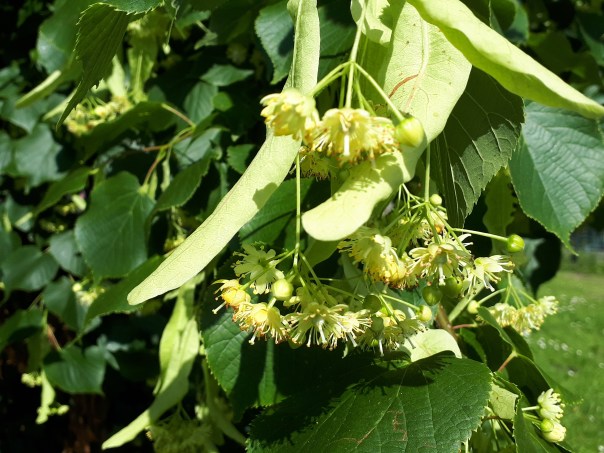
We gathered early, soon after 5pm under the grandest Lime trees in the park. I laid down an old, well loved and patched gold-threaded Indian quilt on the grass and we spread out the food. By Lime trees, I mean Tilia, linden. Amazing trees, here’s a post I wrote 8 years ago about them if you’d like to explore some of their numerous gifts and folklore.

Sameena came prepared as ever for some ceremony. This time with a sweet ripe melon, orange and apricots. She scooped out enough of the melon and Livvy poured in sunshine coloured fruit juice. This sat in the centre of the quilt, we sat circled around it age then Sameena added a slice of dripping orange and an apricot for each of the group.

We joined hands and shared thoughts about the sun at midsummer. One by one the group swelled in number so extra slices of orange and more sharing of thoughts.

After, we supped from the melon bowl and ate the orange and other foods. Such a simple, homespun and effective ceremony.

I’m dramatically reducing my stocks of herbal concoctions at home right down; pairing it right down to nothing more than I need for one season. My library is also being shared so more people can benefit from it and my energy has more space to expand – More on that from this lovely new post by apprentice and illustrator Hannah McDonald.

I’ve been holding onto some magical homemade mead for quite a long time so last night was the perfect opportunity to crack them open and enjoy. I believe that there’s little happier in the glass kingdom than a bottle of home crafted ferment, being steadily shared between freinds. First to be sampled was a very low alcohol but high energy Elderflower mead. The colour was just right for the bright early evening sun. Later, as the strength of the sun waned, a deep red heady and potent concoction was downed, sip by sip.

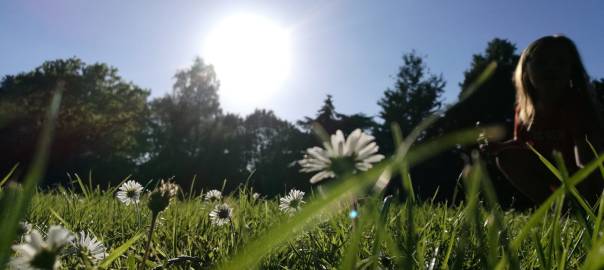
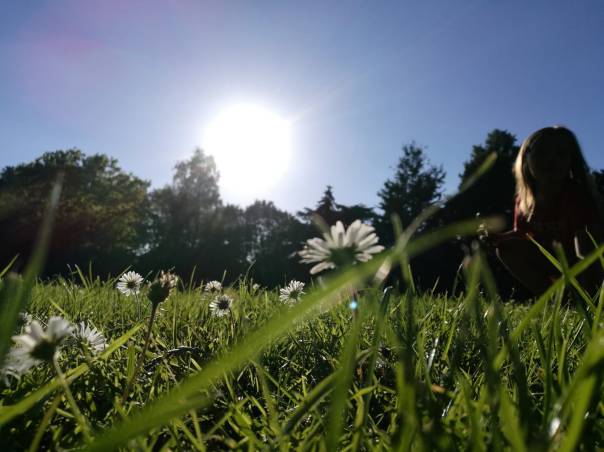
Photo credit: Sameena. Midsummer 2019 – Livvy, roly-polys and daisies.

After some wonderful tree song singing courtesy of Grace, lime leaf munching, pistache shell ephemeral creating, catching up on thoughts, roly-polys and eating, we packed up camp and took a stroll through the River of Herbs orchards, just in time for the sun to set over the Limes. How wonderful the herb gardens look too! Full of frogs, scents, flowers and energy. The River of Herbs Monday morning team are doing such an amazing job of caring for them. More help is always welcome to get in touch if you’d like to be involved. I look forward to joining them more during my summer holiday.

We explored the newly crafted fairy homes, harvested a little Motherwort and Bay and observed the Lotus blossoms in the small pond, close up over the time that we were there.

All in all, a beautiful evening with beautiful souls. We’re hoping to meet again for Lughnasa. If you’d like to join, keep an eye on the Meetup group or get on touch.

Wishing you a sweet, wonderfilled midsummer.

April stuff

A selection of moments from April:

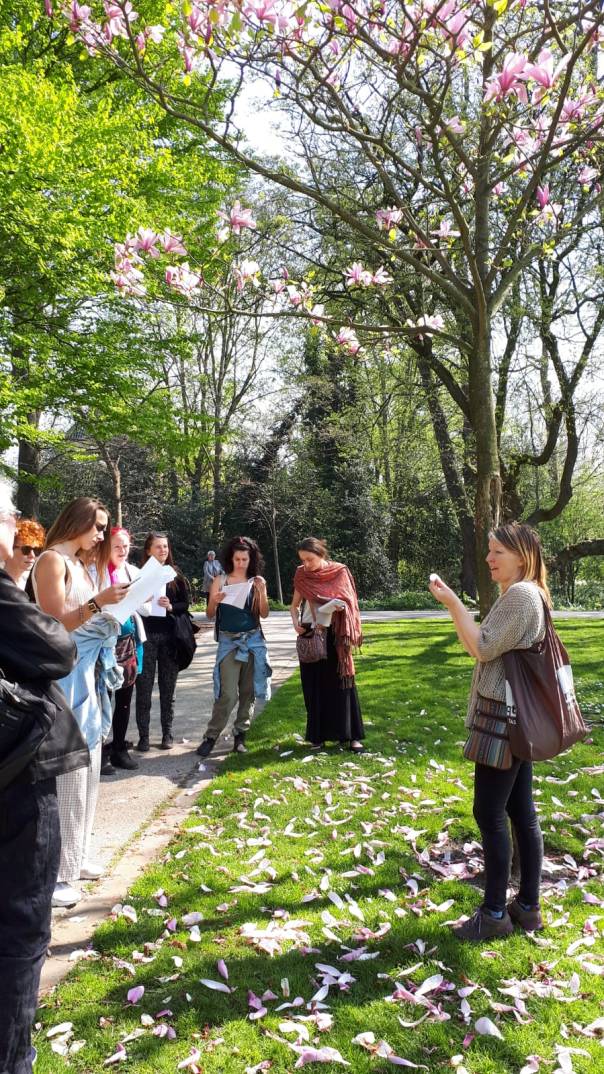
Meetup walk from Amstel Station to Park Frankendael.
Tempeh making for the apprenticeship module
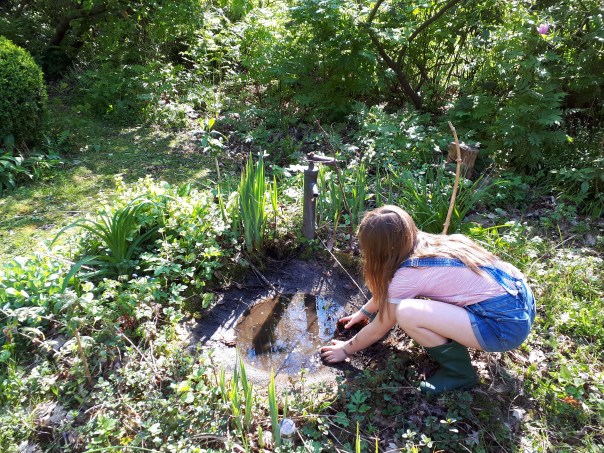
Relining the little pond with a trailer cover.
Leaf shapes
Magnolia time continues
Speaking about nature based spirituality at University of Amsterdam
Larry the cat and the herbs
Last year’s grape vine leaves come out to play
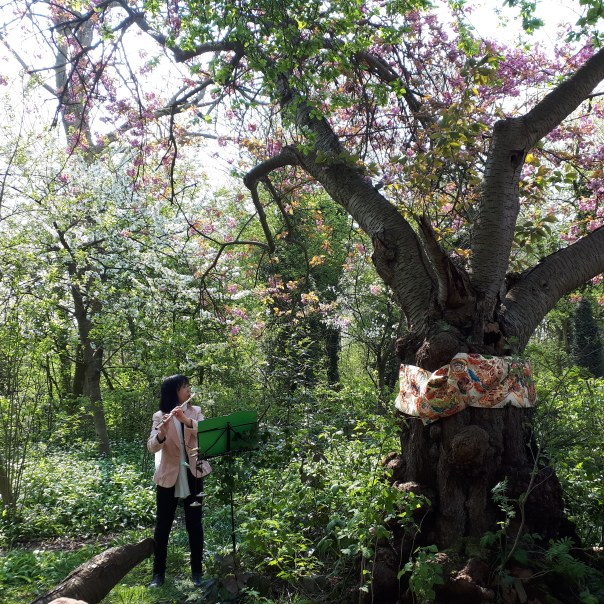
Cherry blossom gathering at the Orchards

Saurkraut time
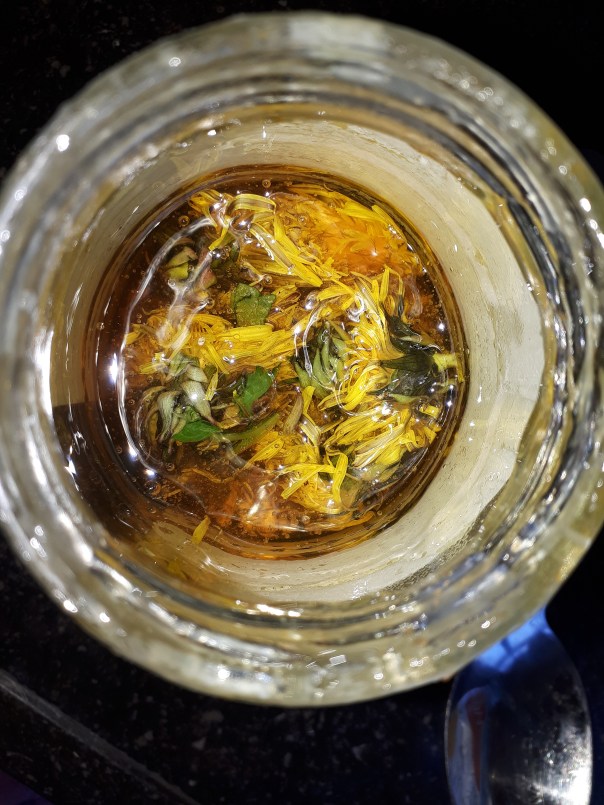
Fermenting stinging nettle tops
Urban dandelion and burdock
A walk in the park
Grub
Allium paradoxum
Looks like a baby Giant Hogweed or a hybrid
Mahonia in bloom everywhere
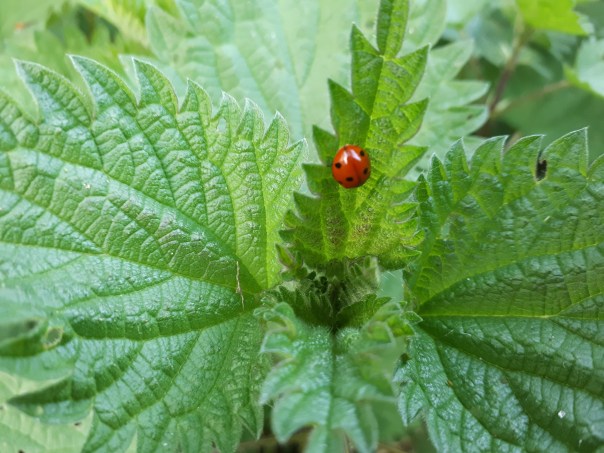
Nettle and friend
Yellow deadnettle all over the place

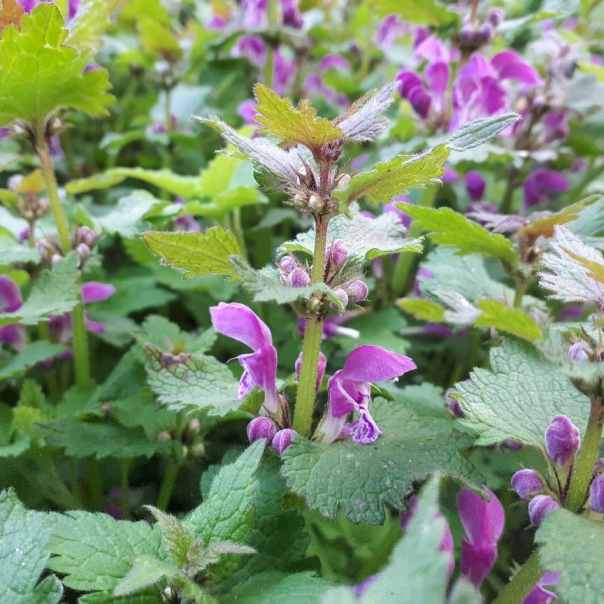
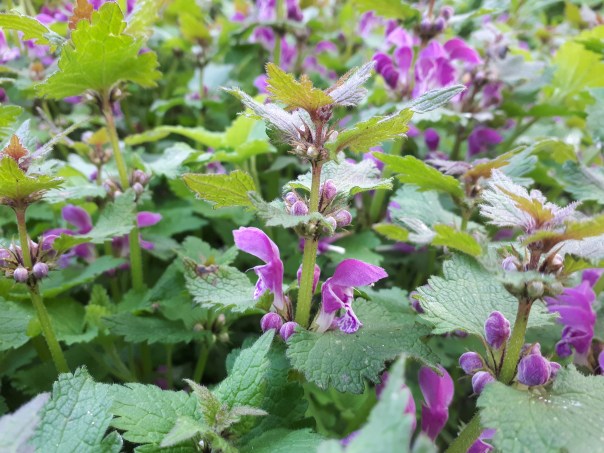
Purple deadnettles all over town

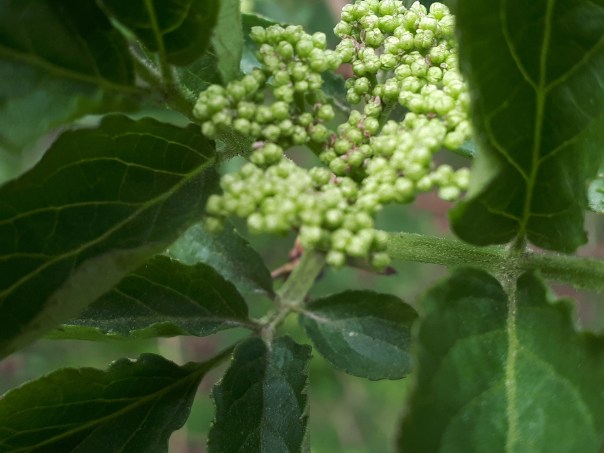
And it’s almost Elderflower time…

Chilli Children

I’m growing chilli peppers from seed this year. They are growing in pots on my bedroom windowsill because that’s the sunniest spot in our apartment and our cat can’t get into the room to munch the seedlings.

I am hoping for a tidy crop from the varieties that I have sown. So far, sturdy little seedlings of Purple Jalapeno and pale green Lombardi Pepperoni are leading the way. They look great! I also selected some heatless varieties with my daughter (from the South Devon Chilli Farm) as she loves the plants but not the spice. So I’m interested to see how it all works out.

Actually, I’m not really interested, I’m beyond excited about my chilli plants!! I’m checking them all the time and I wonder how many other people are out there, living in apartments, tending similar little beauties and getting equally excited!

Today, whilst trawling YouTube for timelapse chilli plant videos (yes, there are many and many people watch them!), I discovered the Clifton Chilli Club which is very informative, which in turn led me to the Dutch Chilli Fest (September 8-9, near Eindhoven). The festival looks great, full of all things chilli. It looks quite a “who can eat most of the world’s hottest chilli pepper” style of event but it looks very interesting.

It got me dreaming of a chilli harvest celebration in Amsterdam. Perhaps there is such a thing? Please let me know if so – I’ve no idea. Anyway, if you would like to share your chilli growing love with me, feel free! Maybe we could meet later this year to admire each other’s chillis, salsas and pickles and swap a few choice seeds?

I’ll add updates as my Chilli Children mature.

Easter Monday Walk: Amstel to Frankendael

20190408_142155.jpgMonday 22nd April (Bank Holiday)
Amstel Station to Park Frankendael Walk
14.00 – 16.00

This Easter Monday walk will take you on a free-food journey from Amstel Station through delicious residential streets to the foraging gardens (that I run) in Park Frankendael. Learn how to ethically forage the delicious treats which grow around us in Amsterdam!

If you would like to join this walk, please sign up via the MeetUp.com listing.

Free food !

Want to grab a bag of hyper-local organic herbs in grateful return for a couple of hours light gardening? Sign up through the Meetup link to join the River of Herbs volunteer gardening team on Monday morning. Details are on the meetup event information.

I won’t be teaching here – doing that in the afternoon and the walk is full. This is for gardeners – no experienced required – everyone is a gardener because we all need to eat 🙂

Sign ups must be through meet up please and did bring along a bag to take your herbs home.

Some of the herbs available to volunteers in the foraging gardens pantry this week (in varying quantities) are:

Stinging nettle tops

Wild garlic (Daslook – Ramsons)

Fennel

Horehound

Chives

Deadnettles

Spring beauties

Here are a few images from the recent 7 Day UH Foraging Challenge and also taken on the walks I’ve led this month. March has been beautiful and fresh plants are everywhere! If you would like to challenge me to a few days – a week – a month – whatever – of finding tasty urban plants to forage in the town or city where you live, let me know! I did this for 365 days, several years ago. There is always something to forage in cities, why not give it a try! Let me know through the comments / contact form if you would like to. Instagram was a good place to hold and #urbanherbology #7daychallenge the photos. So if you use Instagram it’s even easier.

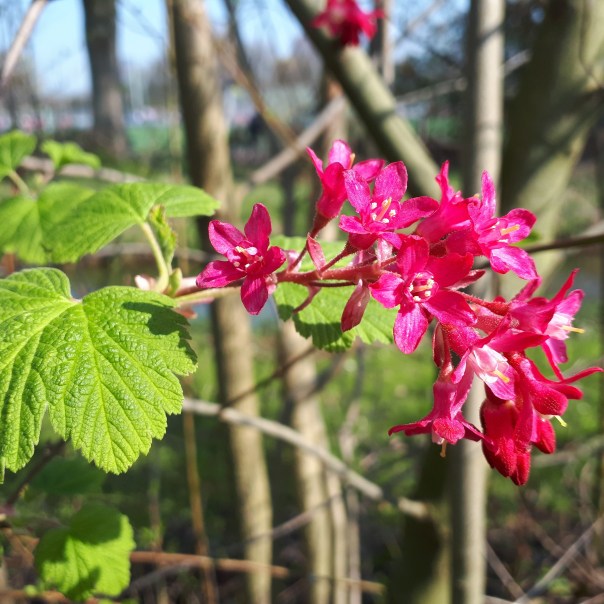
fruit_bush_in_flower_fruit4sport_Amsterdam.jpg
Edible Ribes bush, alongside my daughter’s Athletic club. I don’t wait for the berries, the leaves taste great and make a delicious nutritious tea (and remedy).
Wild garlic at the back (Allium ursinum) with a poisonous bulb flower at the front.
A copse of Magnolia trees in Park Frankendael, Amsterdam. Love these trees!
Magnolia blossom – Delicious when foraged sensitively.
I took some walkers into the orchards yesterday.
Gallium odoratum – Lady’s bedsraw – Ooh, I hope it’s in flower to make Maybowl this year!
Herbs growing beneath an orchard, part of Fruit 4 Sport project in a sports fields of Watergraafsmeer. Purple deadnettle, stinging nettle, daisy.
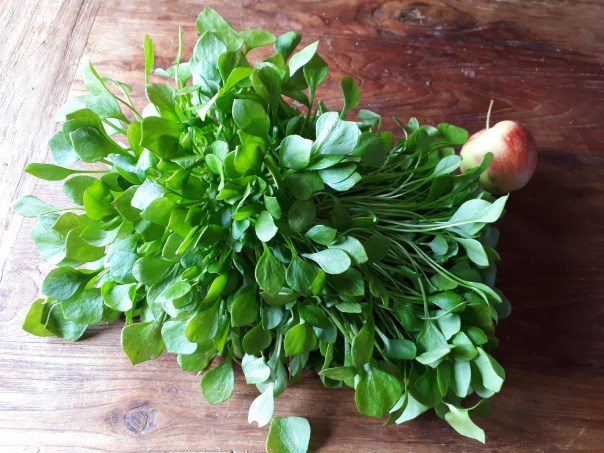
I was so happy to find two huge plants of Miner’s lettuce / Spring beauty / Winter purslane (Claytonia perfoliata), close to my school. I plucked them from a council flower border and we ate them over the week. Delicious!!!
Here she is – Certainly worthy of the name Spring Beauty (Claytonia perfoliata).
Wild garlic, Daslook (Allium ursinum), has been creeping into flower here for a couple of weeks. The most sought after foraging herb around at this time of year. As I type this, I’m off to dig up some bulbs from a path in one of the River of Herbs orchards, to give to children on my Foraging & Fermentation course at school. They are big fans of Allium ursinum and want to grow it.
20190316_144703.jpg
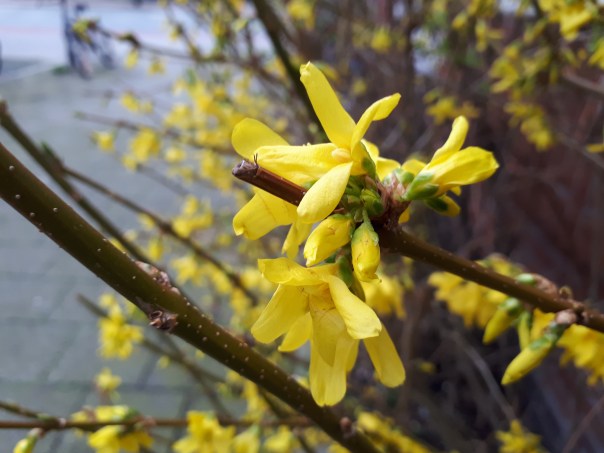
Forthythia – The flowers are edible but they open when not many flowers are available to wildlife. They taste good though and this is mine and my daughter’s birthday flower 🙂 It is generally looking amazing for the Spring Equinox.
Euphorbia.jpg
This is a Euphorbia species. A striking plant, growing outside of the law courts close to my work. This whole species is poisonous. It bleeds a white latex sap when the stems or leaves are damaged. Foragers should know the poisonous plants as well as they know the edible plants.

I went to the orchards today to dig some of the wild garlic out of the paths. It is so successful in this area that it clogs some sections of the wood chip path. These are going to shady tree pits and to my school foraging group.

The River of Herbs orchards gardening group meets every Monday morning, behind Huize Frankendael, address: Middenweg 72, Amsterdam 1097 BS. Do join them any time, especially if you’d like to get involved and help out.

In this short video, I’m plucking out flower buds on their stems, from the path edging wild garlic. This prevents it getting out of control next season.

And in this one, outs just to show the difference a bit of wild garlic recall can make to the paths. There should be a clear path right up the the gauze leaf bin…

Last but not least, two lovely orchard regulars…

Amsterdamian Interview

Lynn in gnome like position (Photo credit: Amsterdamian.com)

I met Dana Marin of Amsterdamian.com several years ago through the River of Herbs project. She is a beautiful soul who loves herbs, crafting and gardening. She also loves Amsterdam and runs the Amsterdamian.com website which you must visit!

Last summer Dana joined me in the Frankendael Orchards to catch up, take photos and forage. It was lovely, a lot of fun and included me falling of the bench in this photo, into the plants!!

Dana’s interview with me is now published on Amsterdamian.com. If you fancy some background about urban herbology, ethical urban foraging, city witch-iness and to know what’s driving me at the moment, hop on over to Dana’s beautiful website!

7 Day Challenge

Push Your Boundaries
Voluntary hardship is an enriching thing. It takes us to new places and teaches us much about ourselves. I challenge you to make your life a tiny bit harder for just one week, for the benefit of your health, your knowledge, your self-reliance and our community. And that community is the planet.

Harvesting just a fraction of your food outside of the supermarket is easy to do in most towns and cities but most of us don’t do it. You could probably find and support a local farm which sells great organic veg, without too much time or trouble. You could probably find an independent grocery store selling local produce. You could probably find someone who wants to garden share and grow some of your own veg. If you do any of these, great! But let’s take it a step further.

20190221_104306.jpg
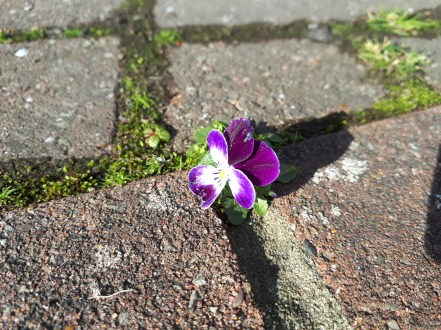
Unsprayed pansies taste great!

Awareness
I want you to become:
Aware of what grows around you.
Aware of how clean your neighbourhood is, or could be.
Aware of how edible plants could be the backbone of urban planning.
Aware of how to (at least partially) feed yourself for free.


20190314_232802.jpg
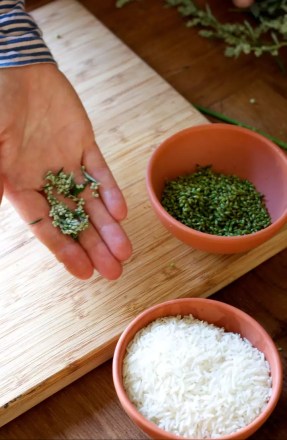
Mugwort flowers and plantain seeds cook well, mixed in with rice (Photo credit: Apartment therapy)

Which Plants?
Think about adding a little something hyper-local, free and special to your breakfast smoothie. Or weave a free and local food into your lunchbox, to dazzle your colleagues at work. I want you to go out, forage something safe and tasty, clean it – and eat it – every day for a week. That’s not asking for much is it? I suggest plants that you can easily ID, maybe stinging nettle, dandelion and bramble buds. Check it’s the real thing (send me photos to check if you like) and then get sensitively plucking.

Identification Help
Need some help with plant ID? Ask me for help via the contact form or why not start with my Dandelion Plant Profile? Send me a quick message (bottom of page) and I’ll send you the Dandelion Profile as a pdf, along with a hello and some encouragement of course! The profile is from my online Urban Herbology Apprenticeship, a course for people who really want to embrace the urban wild. I am taking on a handful of local apprentices this season but the online part of the course is available year round, wherever you live.

magnolia-westerpark-liberation-day-2013
Magnolia flowers

Thinking Food
I suggest that you think of a plant that you purchase and consume very often. Something that’s always on your list and which has probably been grown under greenhouse lights or shipped across at least one continent to reach you. For me, this would be spinach. It’s easy, it’s bland, it’s cheap enough and I buy a big plastic bagful each week. I keep it in the freezer and I throw a handful into my smoothie almost every single day. I barely think about it. Where has it come from? Is it sprayed? What nourishment does it really provide?

Alternatives
So how to replace the spinach? My first thoughts are of stinging nettle tops, full of goodness and growing in most neglected street corners. Dandelion leaves, with there nutrient rich bitter tang, grow close to my local bus stop. Chickweed. That tastes great and grows as a weed, in some pots on my roof. Those three are all low growing plants. Not the best in dirty locations, fine if you have some clean patches to forage from.

20190314_234801.jpg
No dog spray on these leaves! Photo credit: Apartment therapy

Aim High
If you want to play it safer and forage above dog pee height, I suggest looking for Bramble patches and reaching high for some of the new leaf buds. Or Magnolia petals, currently ready to burst open here in Amsterdam. Just one petal will do the trick, there’s no need to take more. Or how about Hawthorn leaf buds? They are easy to spot for some, not for others. Aim for plants which are easy to identify, safe and clean. Always wash your plants at home and remember that birds spray higher than dogs..

Hawthorn Crataegus monogynum
Hawthorn in flower

Build Knowledge
Look up your foraged plants and build up what you understand about them. If you are not confident or experienced enough to eat these plants, at least learn about them. What are the look-a-likes? Are they used as medicines? What nutrients are they thought to contain? How do different cultures eat or utilise this plant?

Keep It Clean
“Hang on a minute Lynn, I’m not eating plants from a dirty patch of land in the middle of my town, just because it’s growing there!”

If these are your thoughts then great! Come on in and join the challenge! You have even more to gain from learning about your immediate environment and how we should improve it. We should be living in spaces that are clean enough to eat from. If we are not, something needs to change.

Whatever the situation around your home, there will be ways to edible-ise it. Maybe you request seagull proof flaps, on local street bins to stop the litter being thrown out by birds each morning? Maybe you could encourage some changes at work or school, in where the canteen sources it’s ingredients from? Maybe you could ask the owner of that vacant lot, if you and some friends could grow veg there for a season?

Improvement in urban conditions doesn’t usually happen spontaneously – We need to make it happen.

Nettle and Sweet Woodruff
Stinging nettles and Cleavers

Voluntary Hardship
At least for 7 days*, let’s take away the convenience of being able to add a handful of supermarket spinach leaves to the morning smoothie and let’s think of some alternatives. Let’s go a little further for our green leafy friends. Let’s not get sick: Pluck safely, cleanly and wisely. Don’t pluck if you are unsure – But let’s learn!

Urban Herbology’s 7 Day Challenge is an opportunity to re-calibrate how we think about food. Are you in? If so scroll down, complete the contact form and I’ll send you a couple of messages to see how you get along (I don’t spam people). Or simply keep in touch with the post comments.

bramble-bud
A tasty bramble bud

Take action
Right now, think of a food which you can switch for urban wild edibles.
Tell me in the comments below, or via the contact form, what you plan to do.
Ask me for the Dandelion Profile sheet and learn more about these plants.

Stay in touch and send me any images of your foraged finds and meals. It’s just 7 days!

It’s only 7 days* – You can do this!
Together, we can make urban living cleaner, safer and more tasty!

*Needless to say (but I will), I hope you will enjoy this challenge immensely and will make ethical urban foraging a habit 🙂


← Back

Thank you for your response. ✨