I was day dreaming about being in India this afternoon and rustled up a really tasty drink which helped to transport me back to Mysore. It cleaned the cobwebs from my mind and got me back on my Yoga mat. You may like to try it…
Lynn’s Ginger Pineapple Cobweb Cleaning Lassi
1 cup Goat’s Yoghurt
4 Pineapple slices (fresh or canned in pure juice)
1 teaspoon honey
1 teaspoon dried or 1/2 teaspoon fresh grated ginger
Adjust the quantities to suit your taste buds and mental cobwebs.
Simply blend all the ingredients together and drink!
I’m afraid the photo is not mine as my lassi tasted so good I drank it all before I could reach for my camera.
Lassi is a traditional yoghurt based drink from India, there are lots of variations. If you request lassi in a restaurant you will be asked if you’d like it “sweet or salty”. My version is definitely sweet and the ginger gives it quite a kick. Have a look at the Wiki Lassi page for more inspiration.
Fennel (Foeniculum vulgare) is a Mediterranean hardy perennial herb which is easy to grow, particularly in relatively dry soil. It has been used since ancient times, being found amongst the burial effects of Pharaohs and being highly prized by ancient Romans. Anglo Saxons revered it as one of the nine sacred herbs and believed it could ward off evil. The Ayurvedic health system sees Fennel as being perfectly balanced in terms of pitta, vata and kapha doshas. There are many different varieties and in many countries such as Greece it grows wild as a very successful “weed”. Fennel makes a very unusual pot plant, if you have the vertical space. It can quickly grow up to 1.5m high with delicate feathery leaves, a bulbous base and large umbeliferous flower heads. All parts of this herb are aromatic, tasting of anise, and can be very useful. The “seeds” are actually fruit. Fennel is often useful during breastfeeding but shouldn’t be used in quantity during pregnancy.
Uses of Fennel
Obesity – Pliny, herbalist of ancient Rome was very enthusiastic about Fennel’s ability to ease hunger during times of fasting and encouraged his contemporaries to eat Fennel and to drink Fennel tea in order to cure obesity. Apparently chewing Fennel seeds to help weight loss is quite popular in modern day Greece.
Breast health – Fennel can help to increase milk production in nursing mothers and to soothe painful pre-menstrual breasts, due to its diuretic properties.
Menopausal symptoms – a useful tea for fluid retention and anxiety. It has been found to have an oestrogen effect. If taken in excess it can cause the return of periods.
Digestion – Fennel may help when digestive problems are caused by anxiety or some form of tension. It helps relax the system, to gently release trapped gas and to make rich foods easier to digest. Colicy babies are often given a little cooled fennel tea to help with trapped gas, or the mother can pass on it’s helpful properties via her milk. Infants should only be given a couple of teaspoons of cooled tea.
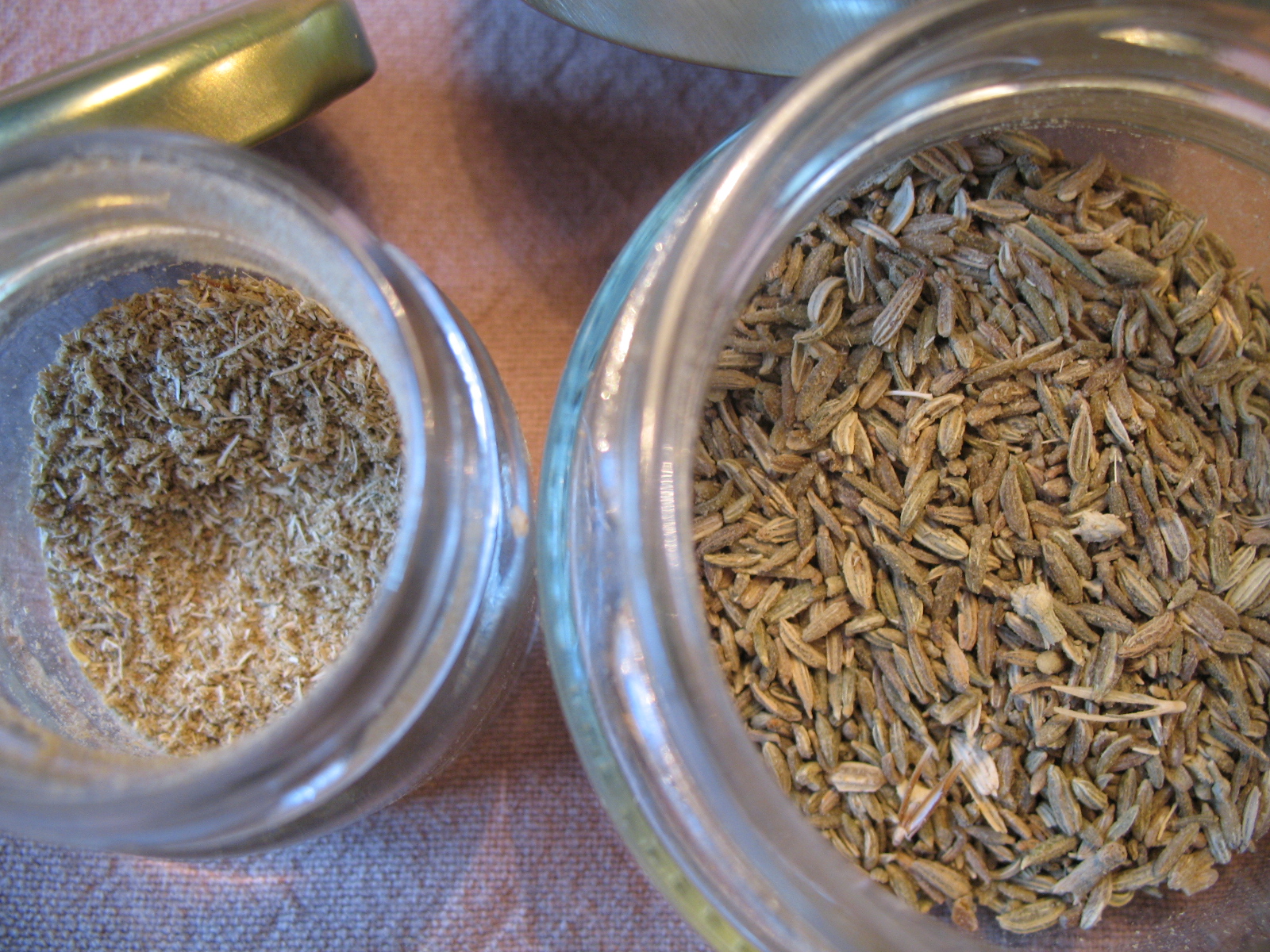
Cough – Inhalation of honey cured Fennel smoke may help to cure persistent coughs. Crushed Fennel seeds can be gently heated on a hot plate or charcoal incense brickette, the fumes can help to loosen the chest and lungs. It is quite easy to crush them with a pestle and mortar. Alternatively a herbal smoking mix, containing honey cured Sage and Fennel can be burned to release the healing vapours of Fennel. More details to follow.
Eyes – Some people find that fennel lotion, made from cool water as described below, makes is effective remedy for sore, tired eyes. It may be used to saturate cotton pads to use as a compress or as eye drops or an eye wash. If you try this ensure that the tea is extremely fresh and contains no bits which could irritate the eye. Drinking fennel tea is also thought to strengthen eyesight.
Breath freshener – Chewing fennel seeds, particularly after a rich meal, is a useful way to aid digestion.
Joint pain – Massage with Fennel infused oil often helps to ease the pains of arthritis and rheumatism.
Anxiety or mild depression – Massage with Fennel infused oil or gently inhaling the smoke of burning crushed fennel seeds can lift the spirits and relax tension.
Fennel tea
This can be prepared using either chopped dry or fresh leaves or crushed seeds. Use 1/4 to 1/2 teaspoon of crushed seeds per cup of boiling water. Crushing the seeds makes a much more potent tea. This can be done with a pestle and mortar, a manual coffee grinder or by gently bashing the seeds with something such as a rolling pin. Allow to infuse for 15 minutes. If using leaves, infuse 2 – 3 teaspoons in a teapot of boiling water for 5 minutes.
Eye lotion
Boil a cup of water and allow to cool before infusing half a teaspoon of crushed seeds for one hour. Strain carefully. Can be used in an eye bath, as drops or to soak cotton pads.
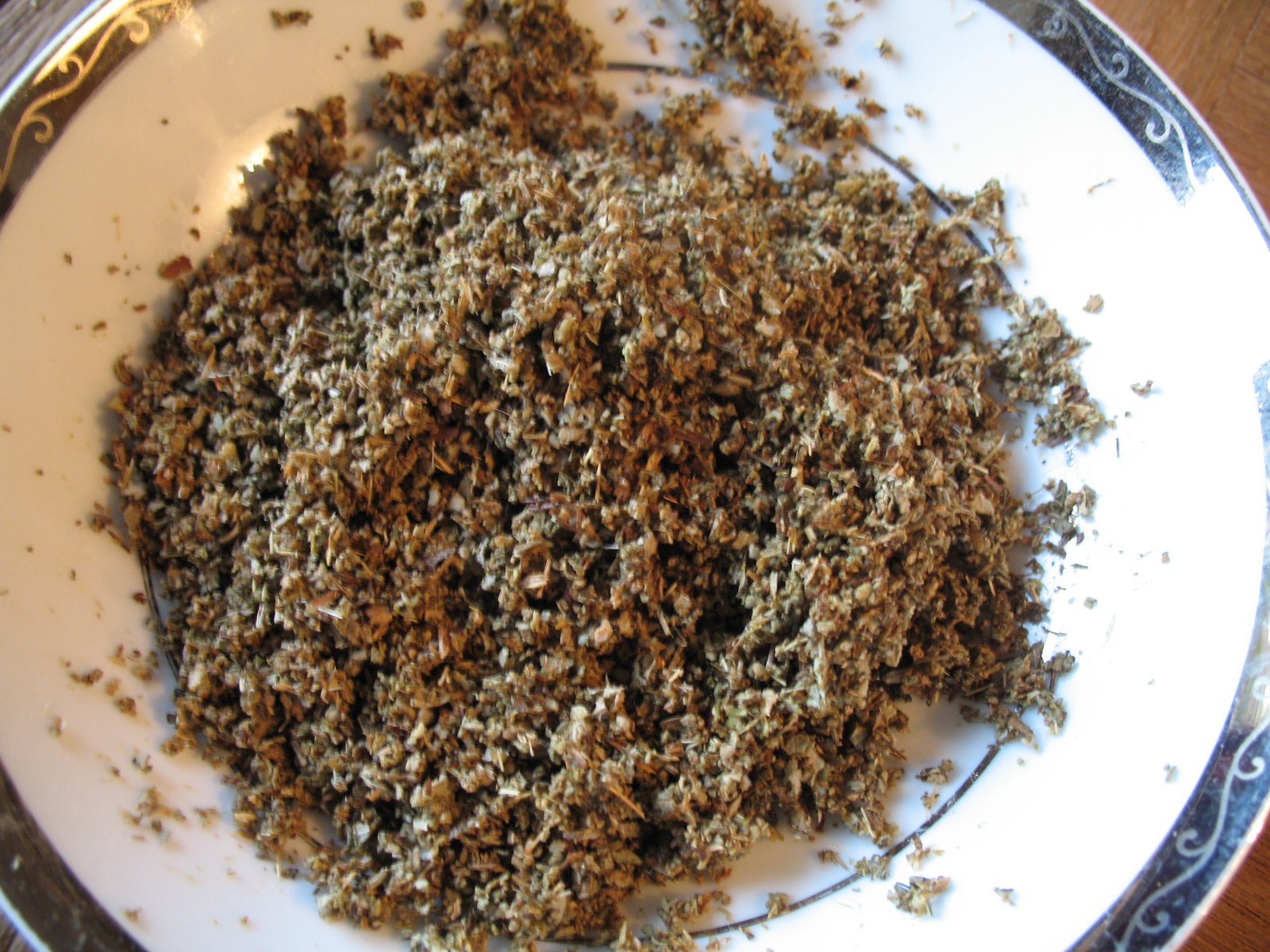
Honey Cured Herbal Smoke Mix Mix 1 tsp honey with 4 tsp water and add gradually to a 15g dried copped sage and 2 tsp of powdered fennel seeds. Rub the liquid into the herbs until they are all slightly damp. Lay out in a shallow dish and leave for a few days, turning occasionally, until the water has mostly evaporated and the herbs feel dry enough to burn. Store the mix in an airtight container.
I love the uplifting citrus scent of fresh Lemon Balm (Melissa). In the spring and summer it smells and tastes magical; I eat leaves straight from the plant whilst gardening on the roof, add them to salads and ice cubes and frequently drink it as a tea. Lemon balm tastes great alone or in combination with other herbs, particularly mints. In the autumn and winter I use it dried, it smells good but quite different and has several really useful applications. I made a lip balm containing Melissa this weekend, to help fight off cold sores. I find it works a treat and thought it was time to share a few of this herb’s properties and uses.
The Latin name Melissa means honeybee and this herb is very attractive to bees. It has been planted near beehives since the time of ancient Greece as it encourages bees to return home. The herb is a member of the mint family and has long been associated with love, friendship, health, healing, success and good cheer. It was the main ingredient in Carmelite water and has a reputation for relieving symptoms of mild depression.
Lemon Balm grows very well in almost any soil, does well in pots and can be divided to make extra plants throughout spring, summer and early autumn. It is a hardy herbaceous perennial, a pretty variagated variety is available and it makes a great urban herb.
Melissa can be used to:
Cool. It can induce a mild perspiration so is sometimes useful taken as a tea when feverish with colds or flu. In hot weather its cooling properties are also welcomed.
Scent. The fresh lemon odour makes Melissa valuable dried in potpourri, as a breath freshener and when the leaves are bruised it can really lift spirits.
Flavour. The lemony fresh leaves can be chopped into salads, ice cubes, mayonnaise, white sauces, sauerkraut, custards, jellies, fruit drinks and wine cups.
Lemon balm can also be used to create wonderfully aromatic vinegars, alone or in combination with herbs such as Tarragon. They can be used in delicious salad dressings, marinades and sauces.
Relieve cold sores. Some commercial cold sore preparations contain lemon balm but it is easy and cheap to make your own balm. Recent scientific research has also found that preparations containing Melissa can reduce recurrence of cold sores and can shorten the duration of attacks.
Calm and soothe. Lemon balm may be helpful to those suffering from grief, mild depression, anxiety, tension and sleeplessness. It can help digestive problems caused by these issues and many find it works as a relaxing tonic. Recent scientific research has also found it to be useful in managing agitation in Alzheimer’s patients.
Relieve headaches. A tasty remedy for simple tension headaches it to soak a handful of freshly picked leaves in a glass of wine for an hour, or drink a tea made from the dried leaves.
Relieve chronic bronchial catarrh. Lemon balm tea can help to ease symptoms.
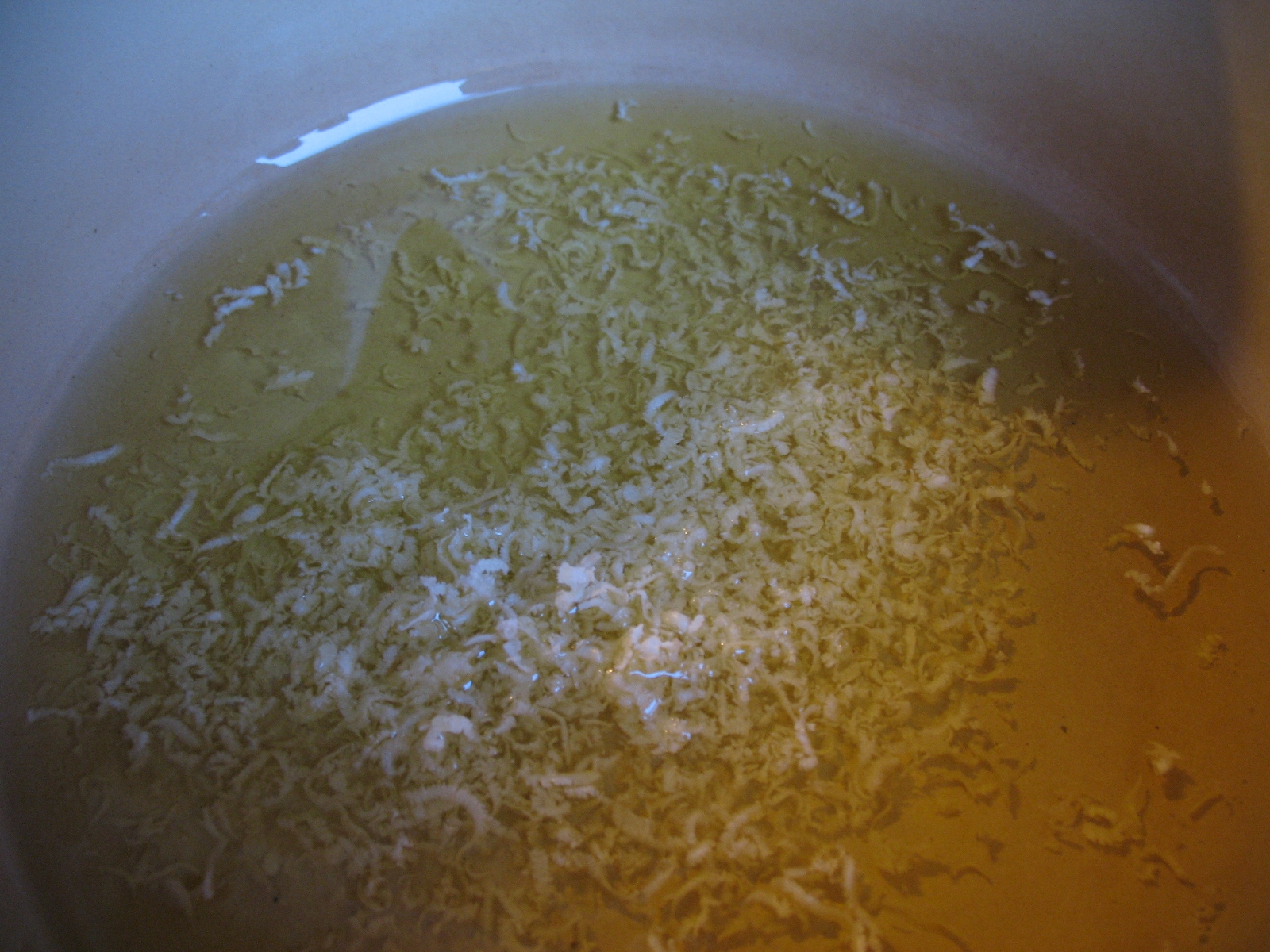
Warm very gently as you dissolve the grated beeswax, I stir with a clean finger to check that the temperature remains really low.
Ensure you test the consistency and adjust it accordingly, with more wax or more oil, before pouring into small pots. Lip balm for cold sores shouldn’t be too firm as application may be painful.
When I use a pot of balm to treat a cold sore, I tend to throw away any remainder when the sore is healed. This reduces the risk of using contaminated balm once the skin is healed.
I recently bought a wonderful second hand copy of Herbal Remedies: A practical beginner’s guide to making effective remedies in the kitchen. It contains instructions on several traditional herbal remedies that many modern herbals omit. One, which I read with interest, is Vinegar & Brown Paper, as featured in the nursery rhyme Jack and Jill. Apparently it is quite an effective remedy for sprains, bruises and sore joints. It made me think more about the virtues of vinegar. So here are few preparations which you may like to try.
If you like investigating this sort of thing, you may be interested in the Urban Herbology Apprenticeship Course. The course covers foraging, crafting herbs, fermentation and nature celebrations, among other topics!
Vinegar and Brown Paper This traditional remedy (taken from Hedley & Shaw’s book) is said to relieve swollen aching joints and limbs. I have not yet tried it and am very interested to hear from anyone who does! Why not let me know in the comments or contact boxes below.
To prepare:
1. Cut 5 or 6 pieces of brown (packaging) paper, just big enough to fit over the affected area.
2. Place in a saucepan and cover with Sage vinegar (read on for how to make this).
3. Simmer very gently for about 5 minutes, until the brown paper becomes soft and has absorbed some vinegar, yet is not broken down.
4. When cool enough to safely handle, place the brown paper on the affected area and hold it in place with cling film (not too tight).
5. Cover with a roller bandage and leave in place for 4 hours. Hedley & Shaw recommend reapplying fresh vinegar and brown paper twice daily.
Ramsons – Wild garlic (Allium ursinum)
Herb vinegars
These are prepared in a similar way to tinctures but vinegar is used as a carrier for the herb properties, rather than alcoholic spirits. Many herbs can be easily preserved in vinegars, a few favourites are Rosemary, Sage, Tarragon, Chamomile and Parsley but why not try wild herbs such as Chickweed, Catnip, Lemonbalm, Motherwort, Ramsons or Hyssop? Dried or fresh herbs can be used but vinegars are a great way to preserve a glut of fresh herbs so that they can be used throughout the darker months.
Vinegar, particularly apple cider vinegar, is beneficial in its own right. It helps to build bones and has the ability to extract more minerals (such as calcium) from herbs than water. So preserving herbs in vinegar can provide a mineral rich preparation which is also very tasty and can be used in a variety of ways. They can be used in salad dressings, taken a tablespoon daily in a glass of water as a tonic, added to green vegetables and beans whilst they cook, used a flavouring in food or used in specific remedies. Adding a splash of vinegar to the cooking water of green vegetables dramatically increases available calcium.
To prepare, completely fill a glass container of any size with chopped fresh herb and then fill it completely again with vinegar. Seal (not with a metal lid), label and allow to sit (macerate) out of direct sunlight for between 2 and 6 weeks. After this time strain and bottle the herb vinegar in sterile dry containers. Use plastic lids or waxed paper held in place with strong rubber bands. For advice on sterilising see the post on Cough Syrup.
If you prefer to measure your herbs and vinegar there is a traditional recipe which recommends adding approximately 25g dried chopped herb or 50g chopped fresh herb to every 600ml of vinegar. Pure malt vinegar, apple cider vinegar or white wine vinegar can be used.
Sage (Salvia officinale)
Herb Vinegar Hair Rinse When my sister and I were children, my mother would add a little lemon juice to our final hair rinse. It makes hair shine beautifully and is a natural conditioner (shampoos are slightly alkaline, conditioners slightly acidic). Vinegar hair rinses work in the same way and can be very beneficial to the scalp. I like to use apple cider vinegar when my scalp feels overloaded with hair products; it feels cleansing, cooling and calming. Surprisingly it doesn’t make hair smell of vinegar.
To prepare simply add 1 tablespoon herbal vinegar, apple cider vinegar or fresh lemon juice to about 250ml water. Pour the rinse over washed hair and massage into the scalp. Leave on for about 5 minutes and then rinse with plain water.
Sage vinegar is thought to darken hair,
Chamomile vinegar to lighten hair,
Parsley vinegar to relieve dandruff,
Rosemary vinegar to condition dry or falling hair
There are dozens of other uses for vinegar, I’d love to know of any which you or members of your family have used. Get in touch through the comments or contact boxes!
28/12/24 A recent comment from Val who says: My mother taught me the old fashioned remedy for a bad temperature.:- Soak a strip of brown paper in vinegar and apply to the forehead. As the paper dries the temperature decreases. Tried and tested.
I thought I’d add a quick post about how to source beeswax as I found it difficult to find when I first moved to Amsterdam. It’s an incredibly useful product and buying it from beekeepers who work in a natural and sustainable way can help to support their work and thus the dwindling bee population. I use it for candle making and when concocting herbal salves, ointments or lip balms so I keep a few kilos in stock. If you are only planning to add it to ointments occasionally, you will not need to buy much and a small block may last you for years.
There are lots of small scale Beekeepers (NL: Imkers) in the Netherlands and most are happy to sell fairly small amounts of beeswax to private individuals. They generally sell the wax as a “cake” which is a brick or cone shaped block containing about 1Kg of beeswax. Most often the wax I buy directly from beekeepers contains a few extra bits and pieces such as bee wings. They are easy to spot and remove if you don’t want them in your products but they don’t seem to have any adverse effects if left in. Local beekeepers seldom alter the colour of their wax, this is another advantage of buying from them. You can order beeswax from several herb and candle maker suppliers online, sometimes it is sold in pellet form which is really easy to use and sometimes it is available in different shades. Since learning about the impact that intensive beekeeping can have on the bee population, I now prefer to buy unadulterated beeswax locally and from well managed sources.
How to find a source of beeswax in the city:
Visit the farmer’s markets and ask the candle makers or honey sellers if they can sell you a block of beeswax or if they can suggest a local source. You may need to order it from them. I find the honey seller at Noordermaarkt very helpful.
Ask furniture restorers if they can sell you a block of beeswax or if they have a local source.
Try health food shops; you could purchase a single pure beeswax candle to grate into ointments. Not as economical as buying a whole block but it could be useful.
Contact the beekeepers directly.
Here are a couple of organisations who try to work with bees in a sustainable way, reducing the stress they are under and thus increasing their resilience to pests and diseases such as Varroa mites:
Natural Beekeeping Network Friends of the Bees
Get an urban beehive? Permaculture Magazine published a useful article about beekeeping in issue 38. Here’s a link to a text only version of the article. They have published others on the topic including a step by step guide on how to build your own hive. I don’t quite have space for a hive at the moment but city bee hives can be very successful. In some countries urban dwellers are not allowed to keep bees, in others they are welcome. Today I found a very interesting blog by a secret urban beekeeper in USA. There is a lot of interesting information online for those who are interested.
Bijenpark Amsterdam is an organisation that promotes Amsterdam beekeeping. They are based on the city outskirts, I’m not sure how they manage their bees but they may be a very useful contact.
Ointments, salves and lip balms are extremely easy to make from cold or heat infused herbal oils. You simply add a small quantity of beeswax, solidifying the oil the extent you need. The more beeswax you add, the more solid the result; salves are very soft, ointments are a little firmer and lip balms are firm enough to retain their shape when moulded into a stick.
Before I learnt how to make ointments with plant oils and beeswax I made them using Vaseline. Although I find Vaseline is drying when used repeatedly for a long period of time, using it as a base is straightforward. The Vaseline method saves making an infused oil to start with and provides a more waterproof barrier on the skin as it is not easily absorbed. Vaseline will only produce a salve or ointment consistency but can also work very well as a lip balm, especially in the winter.
I sometimes buy purpose made small amber glass pots but mostly I sterilise and reuse tiny jam and mustard pots, pesto jars or the tiny preserving jars shown in the photos which hold about 100ml. Smaller pots are better unless you know you will use the contents quickly. Whichever containers you use, ensure you can easily reach inside.
Here are the two methods, both of which work well for small or large quantities. Use the contents within about three months but be aware that the contents can become contaminated easily. If you notice that the colour, smell or texture changes or anything else makes you suspect contamination, stop using and make a fresh batch.
How to make salves, ointments or lip balm from infused herb oils
Materials: Cold or heat Infused herb oil
Beeswax (pellets or “cake”)
Saucepan
Low heat source (candle or stove)
Spoon/chopstick
Glass storage containers and well fitting lids – very clean and dry
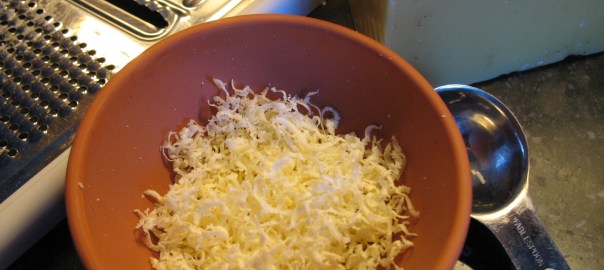
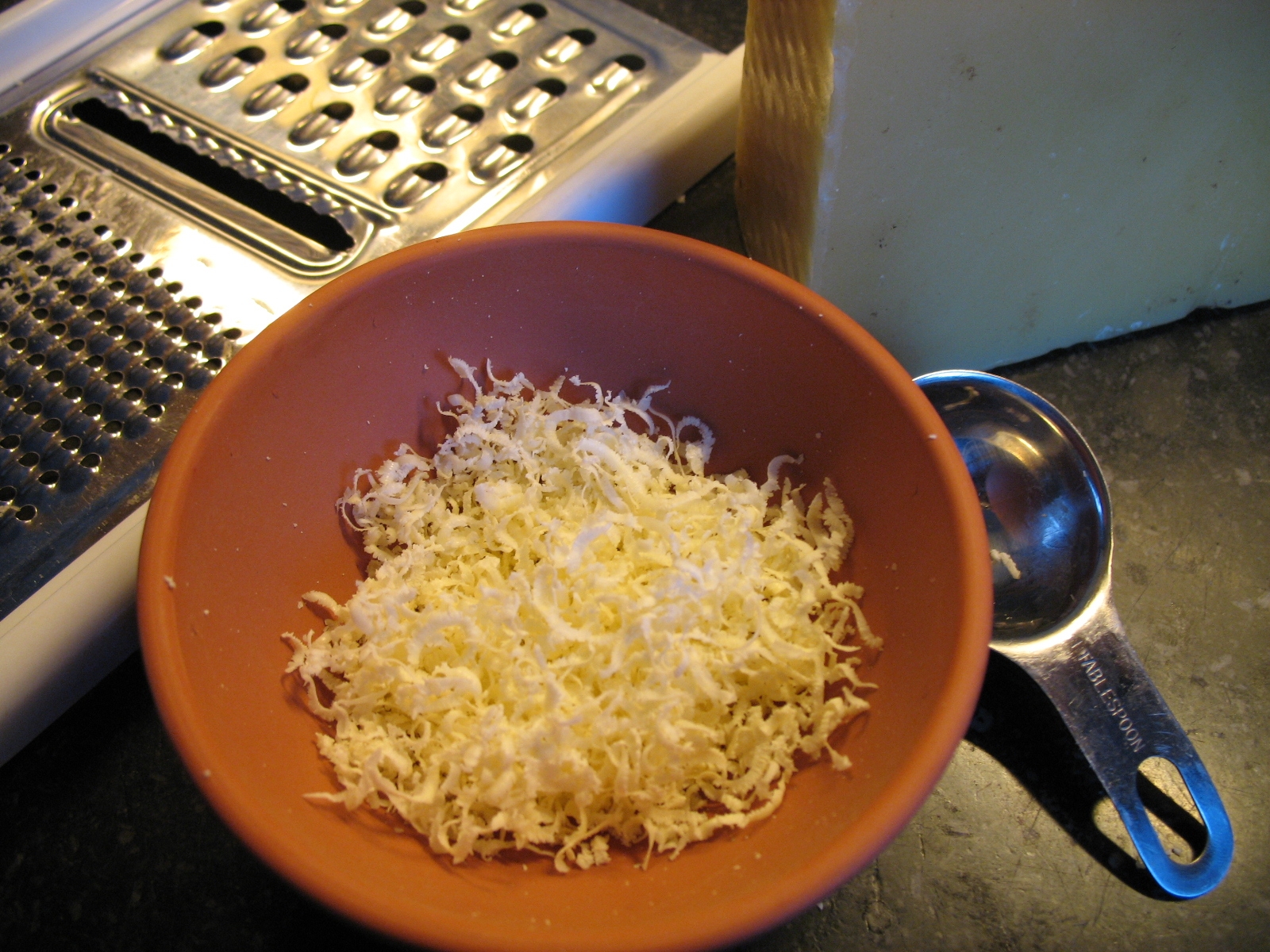
(also a Cheese grater, if you are using a cake of beeswax)
Method
Measure volume of the infused oil you are using and pour it into a clean saucepan.
Grate beeswax – For every 30ml of oil you will need about 1 tablespoon of grated beexwax (or pellets).
Add the grated beeswax to oil, in the saucepan.
Heat the oil and wax very gently over a low heat source, stirring constantly, until all of the beeswax has dissolved.
Check the consistency of your salve/ointment/lipbalm by putting a few drops onto a cool surface such as a saucer or metal spoon. It will solidify very quickly. How does it feel? If it is softer than you need, add a little more beeswax to your oil, if it is too hard add a little more infused oil or plain vegetable oil.
If you have added more oil or beeswax, continue heating until dissolved.
Remove from heat and pour into clean, dry glass storage containers.
Label and allow to cool.
How to make salves, ointments or lip balm with Vaseline
Materials Vaseline
Dried or fresh herb (finely cut)
Jelly bag or muslin
Rubber gloves
Saucepan
Jug
Glass containers and well fitting lids – very clean and dry
Method
Melt the Vaseline over a low heat, in the saucepan.
Add 60g dried herb or 150g fresh herb for every 500g of Vaseline.
Simmer the Vaseline herb mixture for about 15 minutes, stirring constantly.
Pour into the jelly bag and wear rubber gloves to squeeze the hot herb infused Vaseline into the jug.
Dried or fresh herbs are used to make heat infused oils. Depending upon the herb, they may be used in remedies such as ointments, or as culinary oils. Any plant parts can be used but this method is particularly useful for extracting oil-soluble ingredients from dried roots. The method is far quicker than that for cold infusion as the herbs are simmered in the base oil and there is less likelihood of microbes entering the oil during fabrication. Jars and bottles do need to be carefully sterilised however. As with the method for fresh herbs, there is no need to measure accurately or produce vast quantities of infusion but it is wise to record how much herb and oil you use, for future reference. Heat infused oils should last for about a year but they are best used within 6 months.
The photos show dried wild crafted Calendula being infused.
I used 50g Calendula with about 600ml olive oil for this infusion.
It yeilded about 560ml of infused oil. That’s enough to make a about 8 – 10 salves. With denser herb material far less oil would be required.
Materials:
Heatproof glass bowl and saucepan, set up as a Bain Marie (or use a double boiler)
Dried herb – chopped
Vegetable oil (olive oil is my preference but you may like to try coconut oil, almond oil, peach kernel oil)
Wooden spoon or chopsticks
Jelly bag, muslin or tea towel.
Jug
Sterile storage bottles and lids or corks
Method:
Place the chopped herbs into the glass bowl.
Cover them with oil; enough to form a 2cm clear layer above heavy herb material such as chopped roots, or enough to allow the herb material to move around in the oil, if using light material such as petals.
Heat the bain marie until the water is boiling and then simmer gently, with a lid over the glass bowl, for about 2 hours. Stir the oil-herb mixture from time to time and check that the pan does not boil dry.
Remove from the heat and allow the oil-herb mixture to cool enough to handle comfortably.
Pour through the jelly bag or cloth, into a clean dry jug.
Squeeze, wring and press out as much oil as possible, through the jelly bag. It helps to wear rubber gloves for this stage.*
Pour into sterile dry storage bottles or jars (preferably dark glass).
Seal with screw caps or tightly fitting corks.
Label and store in a cool place.
*After making infused oils, I sometimes hang the jelly bag under the bath tap and fill the bath through the “used” herbs. Of course this is only suitable for some of the herbs, Chamomile and Calendula are particularly suitable.
This is how I make cold infused herbal oils. Infused oils are very useful; they are sometimes used directly (as with Calendula oil) or may be used to make ointments and salves. Generally I infuse a single herb, blending the finished product with other infused oils if required, but you can try infusing two or three herbs together. I wouldn’t advise this for beginners as you should first understand how the herbs will interact. This method is straightforward, I have tried other oils and techniques but this method gives reliable results. Quantities are not specified; simply harvest as much fresh herb as you wish and choose a jar (or jars) which you can comfortably pack them into. Generally I make a litle more but I often use tiny pesto jars to make small quantities of infused oil, they hold around 100ml. That’s enough to make several ointments or will last a while for massage.
This method is based upon the one advised by Susun Weed in several of her books.
Harvest fresh herbs on a dry and sunny day.
Don’t wash the plant at all. Inspect your harvest and discard any diseased or soiled parts. If the plant is dirty simply scrub it clean with a stiff, dry brush.
Coarsely chop the herb.
Fill a dry, sterilised jar with the chopped herb.
Slowly pour olive oil into the jar, whilst using a clean chopstick, skewer or knitting needle to release any air bubbles and allow the oil to reach all layers of the herb material. Mould is likely to grow in any air spaces within the jar so take your time to get this right.
Fill the jar right to the top, covering every part of the herb.
Again check that there is no trapped air. If necessary release air with the chopstick and top up with oil.
Seal the filled jar with a well fitting cork or screw on a lid.
Label the jar: Name of the herb, herb part used (flower, root etc), type of oil used, and the date. Label the lid also, in case oil seepage makes your jar label illegible.
Leave the jar for six weeks, at room temperature in a place where any seeping oil will not cause a problem. Moldiness may occur if herbs are left to infuse for longer.
N.B. Some herbs release gas as they infuse, causing bubbles in the oil. This is not a problem and does not indicate spoilage but it may force some oil out of the jar, so be prepared! Chickweed, Comfrey, and Yellow Dock produce quite a lot of gas as they infuse. The gas will force some oil out of even tightly sealed jars. If corks pop out the oil may become rancid.
Decant the infused oil by carefully pouring out the oil into clean, dry containers, leaving the spent herb material in the jar.
More infused oil can be extracted from the spent herb. Put small handfuls of it into a clean kitchen towel or cotton cloth and wring out the oil.
Leave the decanted oil to sit for 4 -7 days while the water within it (which is from the fresh plant material) settles to the bottom of the container.
Carefully pour off the water-free oil, into clean, dry containers. Leave the water and a small oil layer, which is touching the water, behind. Any water will allow mould to grow.
Store the herb infused oil at cool room temperature or refrigerate.
Remedies for mould problems:
Mould will grow in air spaces and where there is water in your oil.
If it grows at the top surface of the oil it is often possible to scoop out all traces of mould and then to top up with oil.
Mould may also grow up the inside surface of the jar or as a few colonies throughout the oil. This can happen if the jar was not completely dry to start with or if it is left in too sunny or warm a location. Prevent this by drying jars in an oven for a few minutes immediately before using and storing in dark spot. If the problem occurs the preparation may be salvaged by carefully pouring the oil and plant material into a completely dry jar, discarding any mould colonies.
If mould grows throughout the oil it is probably due to wet plant material being used. Saving the preparation is impossible. Discard and start again.
Using olive oil as a base for infused oils helps prevent them becoming rancid, at cool room temperature, for several years. Where they are likely to become warm, try adding the contents of one or two vitamin E capsules to the final decanted oil. Tincture of Myrrh or Benzoin can be added to ointments or salves (made from infused oils). Use about ten drops of either tincture per ounce of oil.
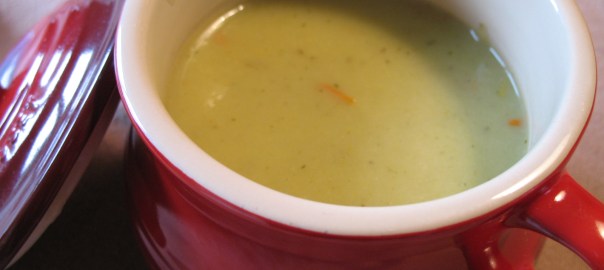
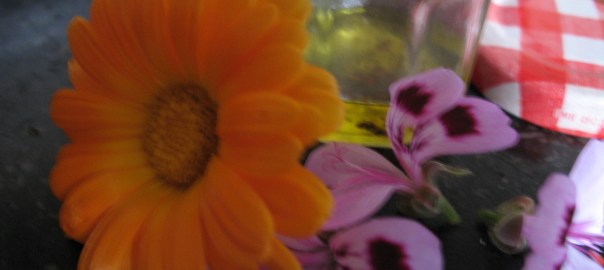
I often use fresh petals to garnish soup; they are almost always available on my balcony, they look so pretty and their intense orange colour encourages appetite. After writing about uses for Calendula, I thought I should make more of an effort to use the dried flowers in my food. Adding dried Calendula flowers to soups, or broths, was seen as essential to Old English cooks. They apparently felt that a broth without pot marigold was not a real broth, so that’s where I decided to start!
My Leek, Potato and Calendula soup requires about 5 dried Calendula organic flower heads. If you have dried petals, rather than flower heads, then those will also work well. Calendula flowers can taste quite bitter if infused for too long, so I added them to the soup just 5 minutes before the end of cooking and ensured that the leeks were thoroughly cooked at the start, to add a little sweetness. Calendula flowers are most likely to work their magic if some of their astringency is allowed to shine through, so don’t try to mask their taste completely, enjoy it.
Ingredients (Serves two) 2 long, thin leeks
4 medium potatoes, peeled and roughly chopped.
5 Dried Calendula officinalis flower heads (or 3 heaped tsp dried petals)
Vegetable stock (optional)
Olive oil for sweating leeks
Water
Clean and trim the leeks.
Slice the leeks and add to a pan with well fitting lid.
Add a little olive oil and allow them to sweat gently over a low to medium heat, stirring occasionally.
When the leeks are very soft add the chopped potatoes and enough water to amply cover the vegetables.
Add a vegetable stock cube or 2 tsp bouillon powder if desired.
Bring the vegetables and water to the boil and then simmer for about 15 minutes, until the potatoes are thoroughly cooked.
Add the Calendula flowers or petals and simmer for a further 5 minutes.
Remove from heat.
Remove any hard flower parts (the stalks and flower centres) before liquidising the soup.
Calming, cooling, cleansing. Calendula officinalis (Pot Marigold, NL: Goudsbloem) is one of the easiest herbs to grow and perhaps one of the most useful to Urban Herbologists. It is a hardy annual which does very well in containers, can flower throughout the year and self seeds readily. It is beautiful, tastes good and has gentle astringent, anti-inflammatory, cooling, detoxifying and antiseptic actions. If you only have space to grow one herb, this has to be one to consider. Many of the remedies mentioned here are very easy to make, if you prefer to buy them from a reliable source, I recommend Weleda products (some links are included in the list). N.B. Calendula is not to be confused with French marigold (Tagetes patula). Calendula is very gentle but when trying a new herb it is always wise to use very small quantities at first or to do a skin patch test.
43 uses for Calendula
Medicinal uses
1. Sprains – make a compress from infused flowers.
2. Gum infections – Mouthwash from tea or a few drops of tincture in water. 3. Sore throat pastilles – Powdered dried flowers, blended with honey. 4. Mastitis & sore nipples –Calendula Cream can help strengthen nipples and prevent mastitis in nursing mothers. 5. Cold sores – Calendula salve is helpful to many cold sore sufferers. 6. Acne – Lotion made from Calendula tea can help speed healing and reduce scarring. 7. Nappy rash – Infused oil, lotion or Calendula Cream can prevent and speed healing. 8. Athletes foot – Calendula cream or infused oil, anti fungal. 9. Ring worm – Calendula cream or infused oil, anti fungal. 10. Period pain – Many women find regular use of Calendula tea helpful as a menstrual regulator. 11. Digestive inflammation – Calendula tea can often gently reduce inflammation. 12. Scar reduction – Often Calendula Oil, cream or salve can help to reduce existing scars and prevent scars. 13. Lowering mild fever – Drinking Calendula tea at first signs may help. 14. Skin softening – Massage using Calendula infused oil. 15. Eczema – Calendula infused oil or cream often calms red, hot eczema conditions. 16. Dry chapped skin – Calendula salve or infused oil. 17. Varicose veins – Calendula salve or cream. 18. Chillblains – Calendula salve or cream. 19. Post operative recovery – Calendula tea. Gentle, cooling, nourishing, speeds healing, reduction of scarring.
Culinary uses 20. Herbal ice cubes/wands – Freeze petals in ice cubes for summer drinks. 21. Salad flowers – Pretty and tasty, sprinkle on top. 22. Soups – Add dried or fresh flowers or petals to soups. An ancient broth without Calendula was incomplete, hence the name Pot Marigold. 23. Saffron colour substitute – The taste is different but the colour is very similar. 24. Risotto – Adding whole petals livens up the appearance of risotto.
25. Soft cheese – Blend in whole or chopped fresh petals. Previously used to colour cheese yellow.
26. Yoghurt – Mix in fresh petals or spinkle on top.
27. Butter – Mix in finely chopped fresh petals.Can be frozen.
28. Omelettes – Add fresh petals for colour and taste.
29. Cakes – Use calendula butter or add fresh petals to cake mix.
30. Milk dishes – Add to rice pudding, custards and similar dishes.
31. Sweet breads – A little like saffron. 32. Vegetable bouillon – Add to mixes of dried herbs and vegetables. 33. Source of Vitamin A
Other uses
34. Fabric/Wool dye – Boil flowers, yellow dye. Suitable mordant is alum. 35. Pot pourri – Whole dried flowers retain colour and mild scent. 36. Alter decorations – Used since ancient times to adorn spiritually significant objects and buildings. 37. Skin toner – Cooled tea. 38. Eye make-up remover –Infused oil. 39. Face cleanser – Infused oil or cream. 40.Lip balm – Soothing and calming, beeswax and infused oil. 41. Hair rinse – Tea, to brighten blond hair. 42. Companion planting – Useful for deterring pests in organic gardens. 43. Year round colour – The Romans noted this plant tends to be in bloom on first day of each month (calends), hence the latin name.



 . It contains instructions on several traditional herbal remedies that many modern herbals omit. One, which I read with interest, is Vinegar & Brown Paper, as featured in the nursery rhyme Jack and Jill. Apparently it is quite an effective remedy for sprains, bruises and sore joints. It made me think more about the virtues of vinegar. So here are few preparations which you may like to try.
 ) is said to relieve swollen aching joints and limbs. I have not yet tried it and am very interested to hear from anyone who does! Why not let me know in the comments or contact boxes below.








 can help strengthen nipples and prevent mastitis in nursing mothers.
 , cream or salve can help to reduce existing scars and prevent scars.
 Urban Herbology