Category Archives: Herbs

Herb and Strawberry Tower

image

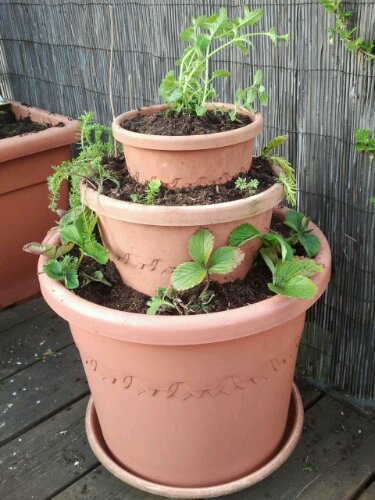
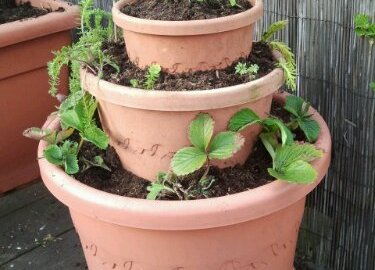
Here’s my latest rooftop planting creation: A simple tower of three plastic plant pots, packed with plenty of molehill soil and organic compost.

The plants used are babies from those we grow already on the roof, except the tiny Wormwood, which I found growing in between street pavers. I planted a mixture of Strawberries, Wormwood, Lady’s Mantle, Strawberry scented Mint, Sedum reflexum and Yarrow. All of these plants are edible and most have medicinal properties as you will see from the links.

This is a simple way to plant vertically, creating herb habitats offering areas of relative shade and wind shelter, little space for weed seeds to settle and it is easy to tend – all very handy on a small plot.

I’ll see how these plants fair and will no doubt add or substitute others as time goes on. It’s my equivalent of a premaculture herb spiral, something I covet but just don’t have space for at home.

image

Here’s the beautiful (and enormous) Strawberry tower at Jeugdland in Amsterdam Oost. I wrote about it last year. Now that would make a fabulous herb tower!

Bug Hostel

image

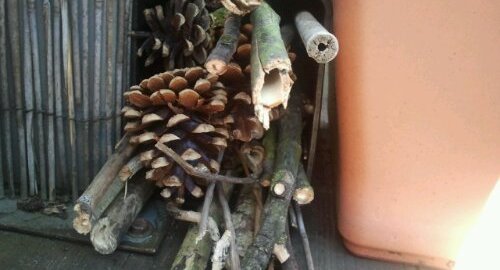
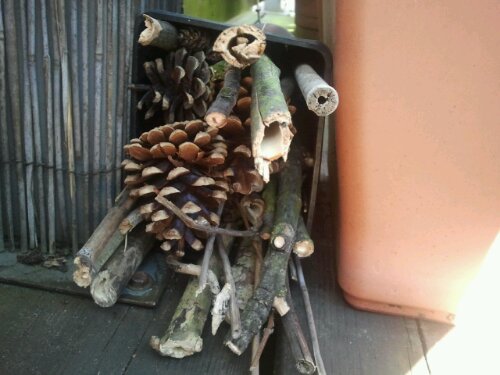
Here’s my first attempt at a rooftop bug refuge. It’s simply a long slim plastic plant pot, stuffed full of dry hollow stems which I found in my kitchen and around the rooftop planters. The stems are from long dead Fig trees, Honeysuckle, Chamomile, Hollyhocks, Clematis, Elder, Reed fencing and a few old and snapped Bamboo canes. I packed it all into place with some dead Apple tree twigs (not hollow but sturdy and available) and also some beautiful Pine and Alder cones, which I collected around town.

Once assembled I wedged it between the roof fence and a Goosberry bush pot. It faces roughly south and is less exposed than most other parts of the roof terrace.

I’m more used to making big wildlife piles in quiet corners of land so I’m sure that I’ll need to improve on this a lot. But for now it offers a place for native bees, ladybirds and other useful wildlife to lay eggs and find refuge.

Making Bug Hotels was one topic at this weekend’s River of Herbs meeting. If you’d like the booklet then let me know. For more information about what we did, some useful links and details of how to make well designed bug and bee hotels, see this post on the RiverofHerbs.org website. Encouraging bees and bugs into your herb garden is something not to be overlooked. They help to pollinate your plants, keep aphids in check and generally keep your plot (however small) healthy.

Herbal Moon Gardens

Last month, I asked my apprentices to think about planting a herbal moon garden, in whatever space they can find. I finally got around to making my own last night.

The idea of a moon garden, for me at least, is to welcome the moonlight into a peaceful outdoor space. Moon gardens catch the moonlight with plants and reflective objects. They are spaces to meditate or just sit at night whilst able to see and smell beautiful herbs. I like to know where the Moon is in its monthly cycle and creating a space to contemplate the moon is a good way to keep that connection. Here’s a link to previous UH information about gardening by the moon.

Colours
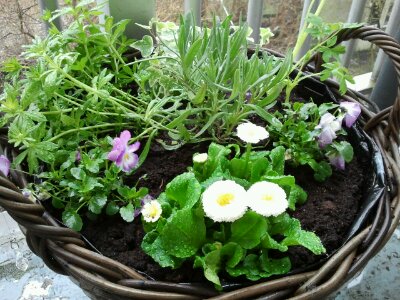
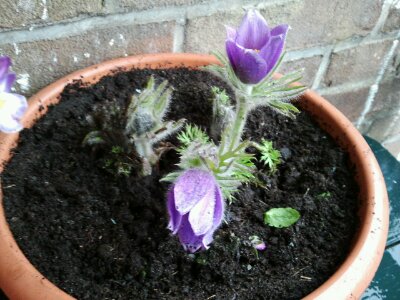
Most gardens are planted with daylight in mind, this is of course understandable. I still needed to consider the amount of sunlight in my chosen location but when selecting plants, I looked for colours that linger as the sun goes down. Silver and white flowers and foliage are generally the last ones you will see as the sun sets completely. Blues and violets are the next colours to fade and are associated with spirituality and intuition.
wpid-2013-04-11-09-22-20

Location
Choose somewhere safe and accessible to you at night and where plants will grow! Preferably select someplace where you can see the moon as it charts its path across the sky. This is not always possible of course. Try your best for a moon view but above all aim for somewhere that is relaxing in the evening and nighttime. I chose the sheltered upstairs balcony of my home. I can always get to it, plants grow there, it often provides a glimpse of the moon and is a little further away from barbecuing neighbours and signs of active daily life. My balcony gets some sun but faces North-East. It becomes quite windy up there, especially in the winter so I’ll try to provide extra protection for the plants as the year moves on. All of my plants are in pots, due to my home being an above ground apartment, so I must also be able to water and feed the plants.
wpid-2013-04-11-09-22-53

Moon Garden Herbs
I tried to find herbs with silvery leaves as well as white, purple or violet coloured flowers. But my main aim was for a succession of flowers and of course I wanted only edible and medicinal plants. The herbs I chose should provide a succession of colour from March to September. Later in the year, I’ll see how the plants have managed, will move some away and add others to fill gaps in the flowering year.

Crystals, Light, Shapes
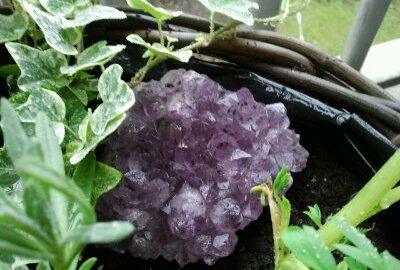
I have added a few crystals to the balcony, to catch the moon light. Also a couple of pretty candle holders to produce extra light when I want it. The shapes I have added remind me of the moon. So far I have a woven willow ball, a little star decoration, some amethyst and quartz crystals. I’ll add more as time goes on but for now I am pleased to have created an edible and medicinal herbal moon garden which I enjoy glimpsing during the day and sitting in at the night.

Now I know that not all of you will be limited to creating a moon garden in a pot, balcony or other small space. I also know that you may be far more creative than me! So he are a few links which may inspire you to get out your gardening tools and get planting a moon garden…

Images of moon gardens
Plants that give scent at night
Moon garden herbs
365 Frankendael day 355

I met the gardener who looks after Park Frankendael today. He’s happy with our little Elder babies and suggested another location for additional planting. He also taught me about the the Primrose species which live in the park. I’ll order some seed of those species soon and will be bringing on Primrose and Violet plants to add to the park at suitable locations.

One of the Elder babies is in the middle of this photo.

image

The Comfrey (Symphytum uplandicum x) plants are looking great today.

image

As is Ground Ivy (Glechoma hederacea), in flower in some situations.

image

Love your Elders!

Love Your Elders – Plant Your Elders!
Sunday 7th April 11.00-12.30

Time to join me to either plant your Elder cuttings from last year, or to learn how to take cuttings and propagate this medicine chest of the European hedgerow. Native Elder (Sambucus nigra, NL:Vlier) grows easily and offers familiar flowers and berries each year. But all parts of the shrub have medicinal, magical and culinary uses. Learn which parts of this beloved urban herb are safe, which parts are toxic and how to make simple remedies, tasty concoctions and fibre dyes from each.
Park Frankendael

As a regular city forager, I think it’s vital to give something back to the land which I harvest from. Of course there are other ways to show gratitude the the Earth but I find that one of the most powerful ways is to add more of the native plants which I use.

€10 per adult
Free for apprentices
€5 if you bring along a rooted Elder baby from last year
Or no cash exchange for a few nice herb seed packets

Includes handout
Please contact me directly (lynn.shore@gmail.com) if you would like to come along.

If you can’t come but want to know how to grow Elder, here’s a link to instructions I wrote last year. Let me know if you need any tips.

365 Frankendael day 327

image

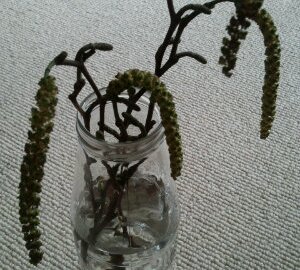
Walking home from work today, I found some stunning catkin laden branches, lying beneath a street tree. The male catkins of this tree are very long and very colourful. I decided to take some of the fallen branches home. I then removed most of the catkins (to preserve the energy expenditure of the branch) and split it up into manageable pieces. Some of the lower bark from each branchlet needed to be scraped back and then each was placed in a vase of water. I have hopes that a few of the small branches will send out roots and become new plants.

The street tree that these branches came from is an Italian Alder (Alnus cordata), apparently a popular street tree due to the catkins, its overall beauty and vigour.

It’s possible to find beautiful cones, inconspicuous female flowers and the enormous male catkins, as well as large leaf buds, all at the same time. I was pleased to see that today. Alder is the only deciduous tree to bear cones.

Alder is linked to much folklore and tradition. It’s a wonderful tree with many uses. Look up Glennie Kindred, particularly her Earth Wisdom book, for lots of information about this tree (and others). It produces several beautiful dyes. The leaves are usefully made into a cooling, soothing poultice or compress for swellings. Much like Plantain (Plantago sp), the leaves can cool and soothe the weary feet of travelers, by simply placing them inside of footwear.

Wild Garlic Mojo / Pesto

image

People tend to call herbs blended with pine nuts and cheese, Pesto. I know of another herb blend called Mojo, from holidays in Tenerife. Green mojo is similar to pesto but has more kick to it due to it containing garlic and coriander and they don’t add pinenuts, basil or cheese generally. I began turning today’s Wild Garlic harvest into a sort of pesto and it turned out far more like spicy Mojo. So I’m calling this Wild Garlic Mojo, because if you know both you’ll find this far more akin to Mojo than Pesto. I also like the name as the garlic properties certainly get your mojo up and running!

Wild Garlic Mojo
Take one handful of ethically harvested wild garlic leaves. Place in blender.
Add 250 ml best quality Olive oil, juice of half a lemon,
pinch of quality sea salt,
handful of freshly grated parmesan cheese.
Sprinkling of pine nuts.
Now blend to a fine consistency which should be very easy to pour. Mojo is runny.

Store in sterile glass containers and use as a spicy, aromatic, digestive dressing for grilled cheese, meat, tofu etc or as a useful cooking seasoning.

image

Mojo originates from the Canary islands and should have heaps of colour, flavour and punch. This has them all.

New Events

Please check out the a Urban Herbology events page for details of my forthcoming herbal forays in Amsterdam.

Love Your Elders  (Sunday 7th April)

365 Frankendael Urban Herb Walk (End April/Start May)

Embrace Your Weeds (June)

As well as details of the new Apprenticeship group and River of Herbs.

I’m also planning a spring picnic in the park for people who have helped me during the  365 Frankendael project and a street herb walk in Bristol, later in the year.

Contaminated Marshmallow Root

Update: Government tests show the Jacob Hooy batch of Marshmallow Root (sold from September 2012 to now) contains ATROPINE. They ask that this message be spread to people who are likely to use the root, either loose, in bags, or in mixed blends from Jacob Hooy. Many people will have it on their shelves unopened and should be warned. It will be announced online and in newspapers today. Jacob Hooy have the batch numbers. Contact them if unsure of safety of batches you have. Contact below number about poisons, contact me or the link below to report any problems you may have had with the root over the past 4 months.

One of my apprentices purchased Marshmallow root (Althea officinalis, Heemstwortel) from a local herb outlet in Amsterdam this weekend and spent Saturday night in hospital, along with her boyfriend after they made a straightforward milk decoction of the root and suffered the following symptoms:

Delirium
Irregular heart beat
Blurred vision
Dilated pupils
General malaise
Confusion
Loss of memory
Some nausea
Lack of bodily coordination

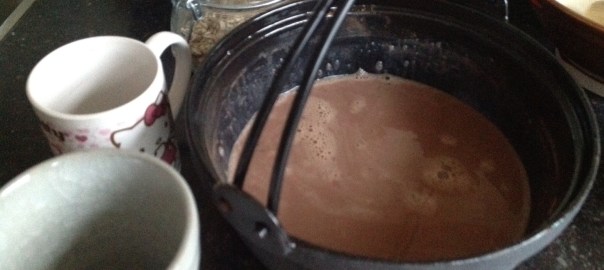
They are now at home recovering further from a marshmallow hot chocolate that gave more than they anticipated.

After investigation it appears that they are not alone. Someone else, completely unrelated, purchased the same herb from a different shop and had the same symptoms this weekend. Marshmallow root is seen as a safe herb, apart from potentially interfering with blood sugar levels in those with diabetes, it has no history of toxicity. The batch of herb appears to be contaminated and the Dutch food safety agency is now on the case and looking for the original source, what the contaminant actually is and how it came to be in the shops.

Please, if you have any at home which you have purchased recently in the Netherlands and have not yet tested, wait with using it until the above questions have been answered. I love this herb and eat it and decoct it regularly as part of my diet. My toddler also enjoys it now and again. I know many of you also like to use it in your families in similar ways.

Here is a link to the form that can be used to contact the Dutch food safety agency directly if needed:

http://formdesk.minlnv.nl/kcdv/Warenklachten_vragen_formulier_v5

If you are worried about poisoning at any time, here is the number for the Dutch Poisons Helpline:

030 274 8888

They would like to know urgently if anyone else has experienced similar problems after using the root. I’ll put my marshmallow root recipes back on line when the issue is resolved.

Earth Pathways

image

I gave an Earth Pathways 2013 Diary to each of my apprentices at the end of last year. It’s a rich, inspiring and beautiful publication, created by a wise group of environmentalists, artists, writers and activists. The diary contains key information and creative ideas for urban and rural herbologists alike. I highly recommend it.

image

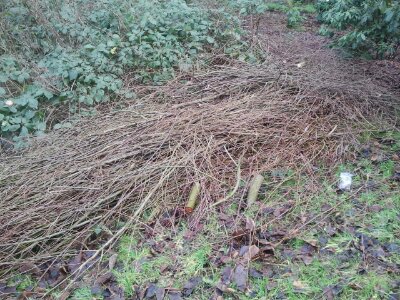
Last week, I noticed that the willows of my local Amsterdam park had been coppiced. So, I took my secateurs back to the park and “harvested” a small bundle of fresh withies from the pile I found on the ground. This made little impact on the pile, which had clearly been left to fill the gap in a bramble thicket, beside a small lake.

image

Page 60 of the Earth pathways diary contains a description by my mentor Glennie Kindred, of how to turn willow or dogwood stems into a useful herb drying rack. It took about 40 minutes of peaceful bending and weaving, with my two year old playing broomsticks around me, to create my version of the willow rack. I’m pleased with it and imagine it threaded with flowers and least stems in a grew months time. Because my withies were quite short, I made a double outer “circle”. This strengthened it considerably and it resulted in a pleasing teardrop shape. For now it hangs on my living room wall and reminds me of my years living in Somerset. Willow weaving seems just as satisfying in the middle of a city.

image

I love handling willow and using it as a herbal ally. I find far less taste of salicylic salts, in the tendrils at this time of year but it’s gentle, flexible spirit shines through and I’m sure it will impart something special to my drying herbs come spring and summer. Thank you Glennie and Earth Pathways, for your continuing inspiration!

image