Category Archives: 365 Frankendael

365 Frankendael day 108

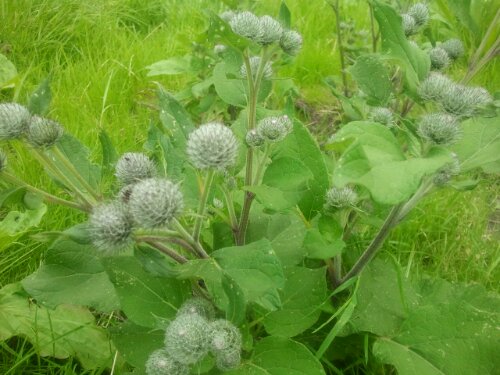
I carefully walked a long Frankendael hedge and woodland today, hunting for Sloes on Blackthorn trees and shrubs. My wander was fruitless in one way – not a single Sloe to be found and yet very fruitful in others:

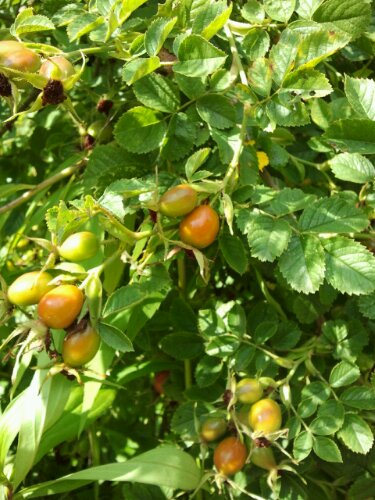
Here is a woodland wild rose, already covered in very dark, almost ripe hips.

The following rosehips are more the norm. In a sunny location, this shrub flowered later than the one shown above and hence it ripens hips later. They are well on the way though.
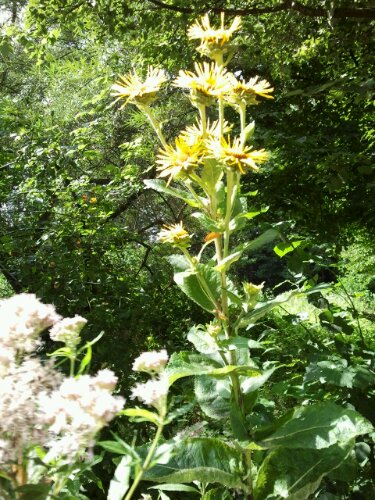
Here’s a Jerusalem artichoke plant in full bloom. I wonder if this park has tried the Sarphatipark method of using it to smother chopped down Japanese knotweed?
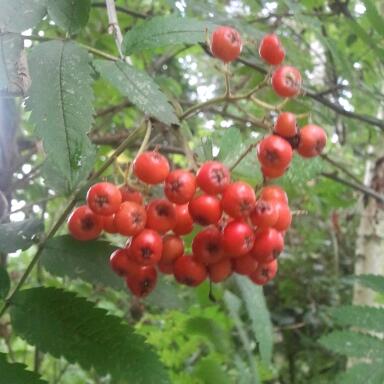
Here is Rowan, ablaze with ripe orange berries. There are many uses of this fruit. Here’s a particularly tasty one.
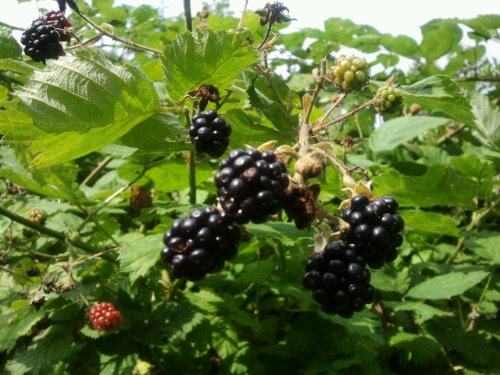
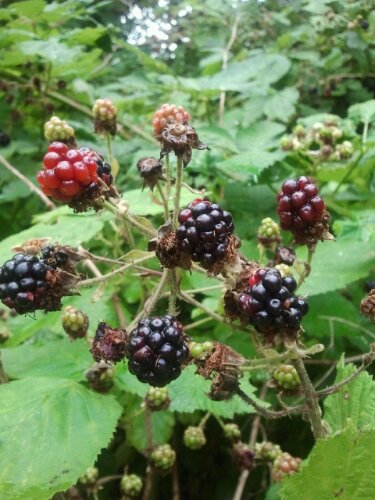
More ripening and ripe Blackberries, this shrub is one of several within the park.
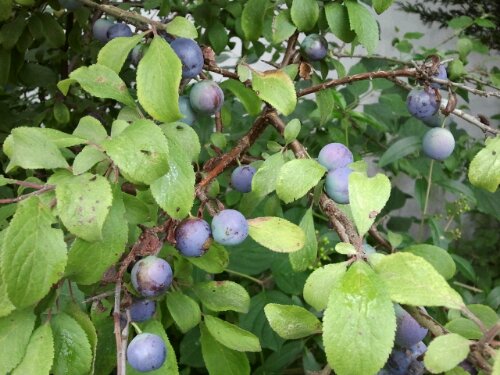
And here are the Sloes which I eventually found. My daughter wanted to go to our closest playground all along. When I gave up my Sloe hunt and returned there, we found a huge Blackthorn absolutely laden with fruit. I harvested as many as I could manage, all of which popped off the tree without any effort. Traditionally Sloes are harvested late, after the first frost but this usually means I miss the chance to harvest more than a few fruit. This year, for a change, I am harvesting as and when I see the fruit become ripe enough (fully coloured and very plump). I am scoring them with a sharp knife before freezing them. When I have about 500g, I’ll heading out for a bottle of Gorden’s Gin or similar, will combine the berries with some sugar and the gin and will leave it for as long as possible to infuse that unique sloe flavour into the sweetened spirit. There’s nothing quite like it and I am very excited to have found an inner city Sloe hot spot!
365 Frankendael day 107

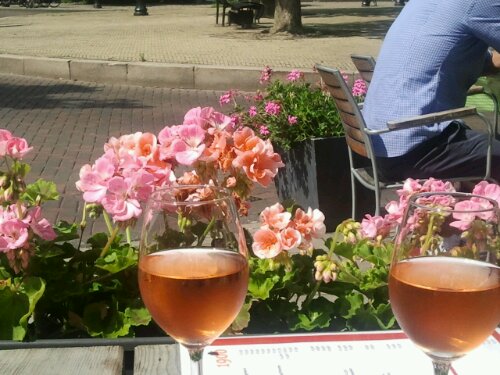
Edible Geranium flowers at a street cafe in Oost Watergraafsmeer.

image

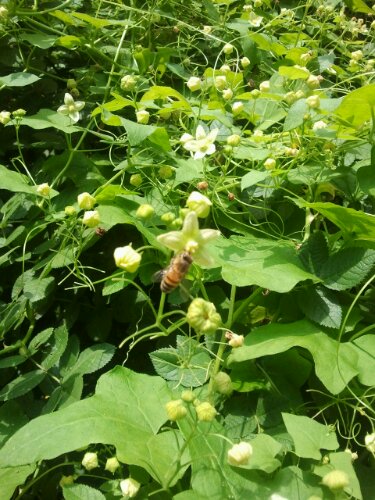
Buzzing honey bees on flowering White Bryony (Bryonia alba) which is poisonous but clearly valuable to city wildlife.

image

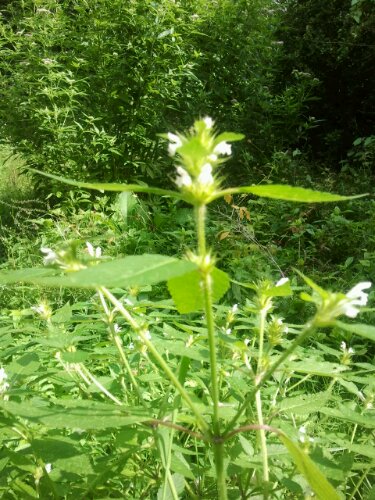
Common Hemp Nettle (Galeobdolon tetrahit), in flower, prickly, square seemed labiate and easily identified. Edible and medicinal. This plant is an annual so if you harvest any leave the flowers intact to seed. Here’s a link to some basic information about the plant.

image

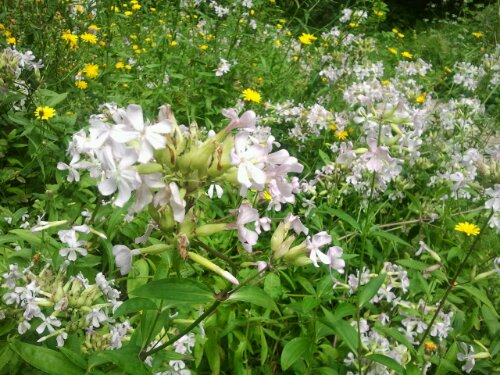
Lastly today, a mini meadow of Soapwort (Saponaria officinalis) again, in Park Frankendael.

image

365 Frankendael day 106


Blackberries are now ripe enough to harvest in many scrubland locations. These were on the Hugo de Vrieslaan and they tasted great! The bramble season will continue for several weeks. The plants cunningly open their flowers gradually, allowing for birds to strip all the ripe berries one day only for more to be available, just a few days later.

Here is Wild Parsnip. The roots (which I wouldn’t forage for ecological and social reasons) are edible but the foliage is definately not and can make unwise foragers very ill.

These Elderberries are not yet ready to harvest and could give you a very sick stomach if you tried them now. They need to become a deep purple black colour. Some birds have begun stripping the elderberries from plants just as they turn pale red. I don’t notice that usually, perhaps it’s because so little fruit has ripened on the trees in general this year. Whatever the reason, I’m sure that when the mass of elderberries become ripe, there will be enough for everyone who fancies cooking them.

365 Frankendael day 105

I was on my way to meet a friend this lunchtime and didn’t want to arrive empty handed so stopped off at Park Frankendael to collect a little food for her. Both plants have been shown here many times but they still taste good and are still in season.

image

Firstly that delicious Copper Beech Hedge (Fagus sylvatica) that wraps around restaurant de Kas. Only the very young leaves are easily palatable and a good way to harvest them is by pinching the twiggy stem with finger and thumb mail. If the stem doesn’t break of instantly you are trying to harvest to fat along the twig. The best way I know to cook them is in a little olive oil and water with a clove if garlic. Summer covered for ten minutes and serve as a bitter side dish our unusual starter.

image

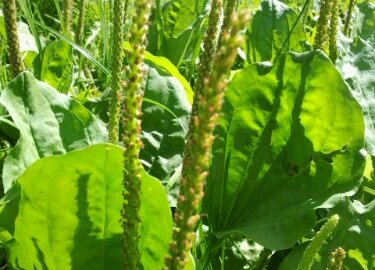
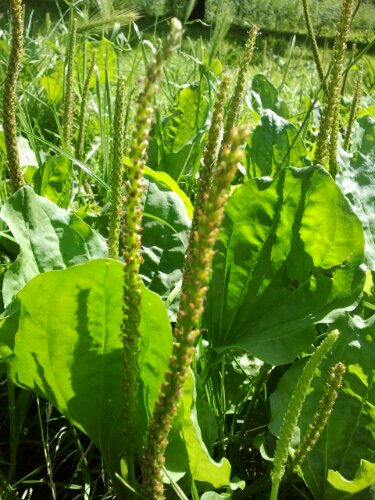
Next up is Plantain (Plantago major), rather than those lovely big leaves, try the seed stems. The easily removed seeds make a welcome green addition to boiled rice, quinoa, amaranth etc. Just add the clean seeds at the start of your regular grain cooking.

365 Frankendael day 104

To preserve a little energy I’ve decided to only post photos and the names of herbs shown, on moon days. That’s each full moon and new moon. I’m sure I won’t be able to hold back with a few extra bits of information, but I’ll try.

Today is a full moon…


Bamboo (young shoots edible)


Birch copse.


Indian balsam (Impatiens grandulifera) Flowers taste like lettuce.


Russian comfrey (Symphytum x uplandicum).


Sweet woodruff (Galium odoratum) Vanilla scented when bruised.

365 Frankendael day 103

I walked to the local Intratuin garden centre today, to buy a few edible houseplants. Intratuin is on the edge of Park Frankendael. My mission was fruitful; a small banana plant, a Tea plant, Coffee and an Orange. I hope that I’ll be able to provide these plants with the conditions they need to thrive. Will be harvesting just a few young tea leaves in a week or so, if all goes well. I tweeted a photo of the Tea plant (Camellia sinensis) this afternoon, if you’d like a look…


On the way, I found this lovely patch of Garlic mustard (Alliaria petiolata), close to a road so not my usual harvesting location but dry as a bone and bearing thousands of ripe seeds. I stripped about a hundred seeds from the plants in no more than two minutes. It barely made a dent in the number of seeds availableon and as I collected, many were blown away by the wind. I secured my seed harvest within a fold of purse fabric and continued my journey to the garden centre.

Now is a great time to look out for seeds ripening on your favorite plentiful city herbs. I’d love to know if any one else has been quietly collecting a few local seeds. If so, what catches your eye, how are you storing them and what do you plan to do with them?

Hollyhocks are next on my list of sought after seeds. They seem to germinate very easily in the sandy Amsterdam ground, can be used to produce useful home remedies and I think that they are amazingly beautiful.

365 day 102 Sarphatipark

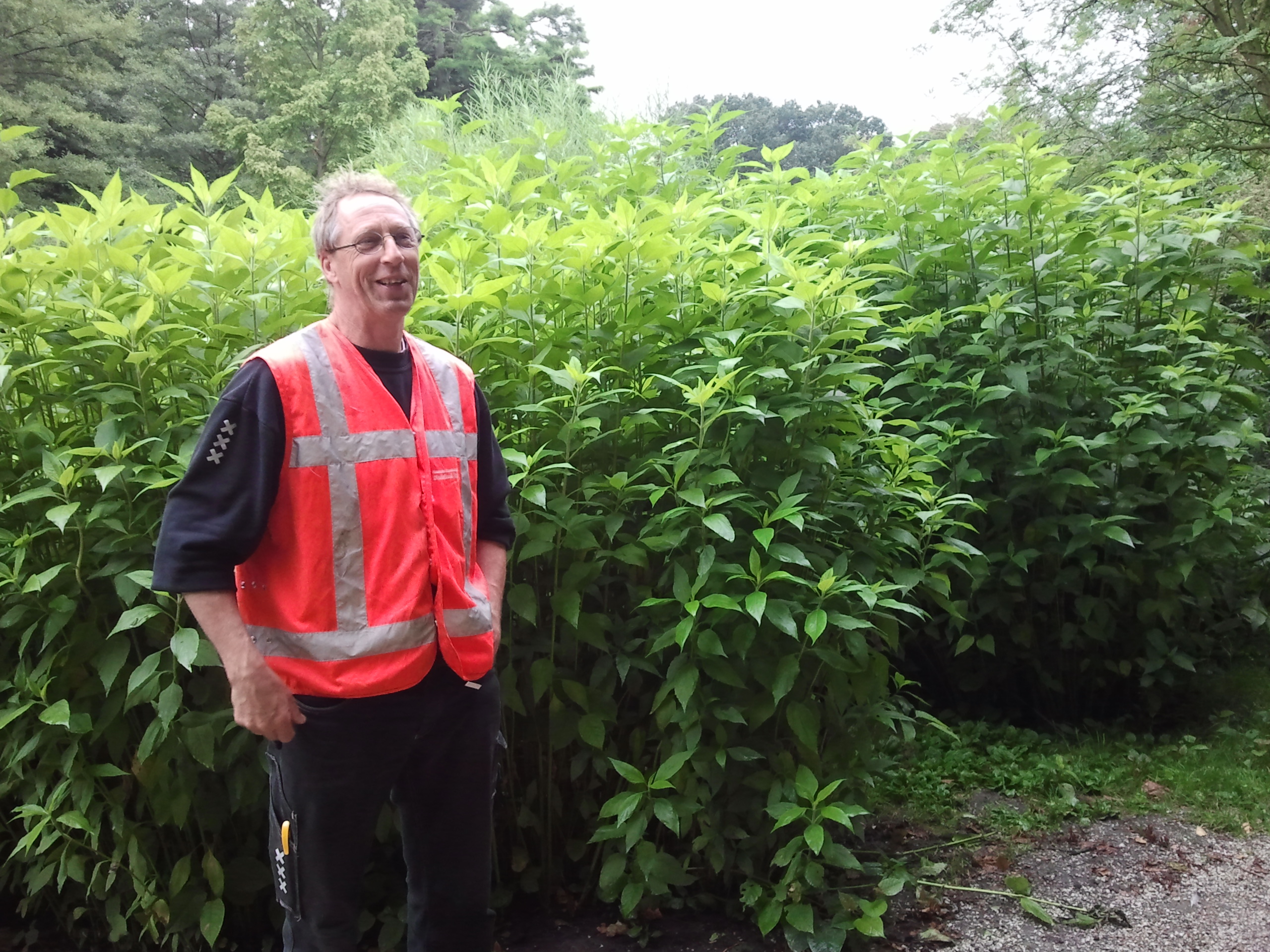
Thanks to the watertolerant group who joined me to herb walk in Sarphatipark today. We found lots of useful herbs and also interesting park workers who told us how the park is maintained by a dynamic group of volunteers and is trying innovative edible approaches to eradicate Japanese knotweed. Above is a park warden, pictured by the enormous Jerusalem artichokes which are being used to keep knotweed at bay. When the invasive plant is removed, the ground can quickly turn into a home for other unwelcome invaders or can see the return of knotweed. Using Jerusalem artichoke, another rapidly growing and spreading plant, can provide tasty tubers and quash the knotweed. So far so good!

I was also reassured to learn that the Ginkgo trees I’m so fond of in parts of Our Zuid are indeed female and yield plentiful Ginkgo nuts. Amsterdam is fortunate to have such edible plant loving folk in its green spaces team.


The plants I remember finding today are listed as tags to this entry. The spreading soft leaved plant which looked quite like Agrimony but wasn’t, was indeed a cinqefoil, called Silverweed previously called (Potentilla anserina) but now reclassified as Argentina anserina . It is shown above and it is edible. If you were on the walk and can remember other plants which I have missed from the tag list then please let me know.

Thanks again to everyone who joined me. It was a real pleasure to walk around with you. If you signed up but were not brave enough for the wet weather, remember there are always trees to shelter under next time 🙂

365 Frankendael day 101

Busy day today and a walk in Sarphatipark tomorrow so here’s a very quick post…


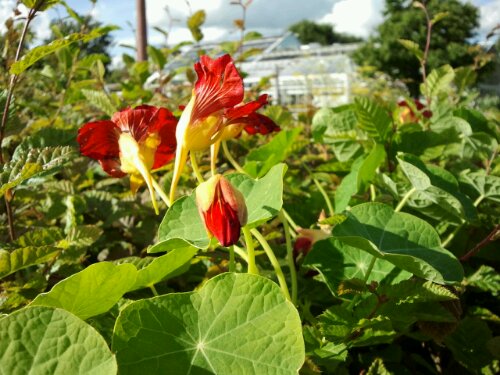
What a beauty and so tasty! Nasturtium escaping from the beautiful kitchen gardens of de Kas restaurant, in park Frankendael.

Ground ivy, deliciously minty everygreen of shady places.  Harvest leaves now to dry and use later if you wish but it is best used fresh as the flavour quickly dries away.  And being an evergreen you can intheory, harvest it every day of the year!

Fraunhofferstraat Needs Urban Herb Meadows!

image

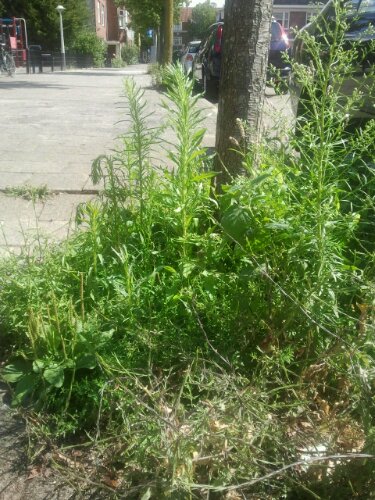
This street is adjacent to mine and it contains lots of neglected but fertile treepits. Several of them are next to a children’s playground so no one claims them or takes an interest in them. I think these pits could be great as a starter project for the River of Herbs.

They need clearing of the weeds, some edible which have now set seed. Then I’m thinking of sowing some herb seed and planting some small evergreen and perennial herbs that I have surplus on my roof.

When planted I’ll stick a label in there, saying in some way that the tree pits are part of the River of Herbs and the plant species are edible or medicinal but are also for bees and other insect pollinators. That part needs some planning but I hope you get the idea.

So, what do you think? Would you like to help? Do you have other ideas or know of other possible Urban Herb Meadow locations?

365 Frankendael day 100

For the past 100 days, I’ve been going to Park Frankendael, Amsterdam to photograph and document some of the useful, edible and medicinal herbs growing there. Parks are amongst the best places for urban foragers and this one gives an indication of what can be found all over the city, along streets, canals, against houses, in hedges and amongst offices.

I hope to go on holiday quite soon and want the project to go on without gaps. So if you would like to send me a photo of any herbs you find in Amsterdam, I’ll gladly check their identity and publish the photos with credits here. All of my photos are taken in and around Park Frankendael but during my holidays, photos from anywhere in Amsterdam are fine and I’ll be very grateful of you’re involvement.

Please send your urban herb photos to Lynn.Shore@gmail.com with you’re name, the location of the plant and the date you photographed it. If you know the name of the herb, in English, Dutch or Latin, then that would also be helpful. Send them anytime from now.

So what have we got on Day 100?
Plantain (Plantago major, NL Weegbree) with towering seed spikes, very tasty, nutritious and soothing to the gut when cooked in rice, quinoa or similar. It is easy to harvest too, simply pick a few spikes and use a thumb nail to strip the seeds from the spike. Wash them and cook, that’s it.

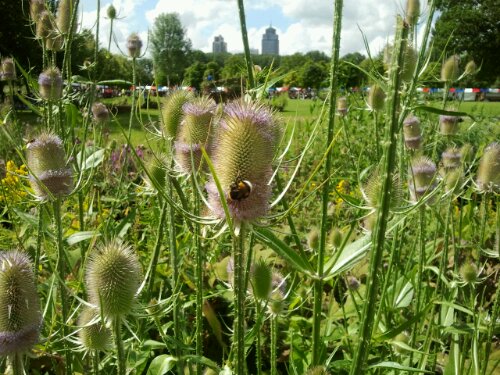
Here is Teasel in flower, offering food for insects and candy to the eyes of thousands of Amsterdammers, attending today’s Puurmarkt in the park. Behind the Teasel you may see Goldenrod and Rosebay willowherb.

Here is a small but second year Burdock, having a second attempt at flowering in the park orchard after being mowed down a few weeks ago. No good for harvesting but a great indicator of where to find medicinal first year Burdock plants, now and next year.

Here’s a Gingko biloba tree. Those easily identified fossil like leaves, can be best harvested when they start to tinge with yellow, for drying and using as a circulation boosting tea. The circulation enhancing action gives this herb a reputation as a good one to help improve memory.

I know of dozens of street Gingko trees in Oud Zuid, close to Beethovenstraat particularly. I’m sure there are more areas with lots of them in the city. Someone who recently joined an urban herb walk told me that she is currently harvesting and drying the leaves, to help her during periods of study.

Loads more herbs in the park and city today. The above is just a taster. Please feel free to send me what you find, as and when you like.