Category Archives: Projects

365 Frankendael Day 73

Lots of beautiful flowering herbs in the park again today. My camera kept taking over exposed photos so here are the passable ones…

Mallow (Malva sp.), full of slippery soothing mucilage and goodness. This is a nourishing and useful herb to grow. I tried it several years ago in one of my Permapots and although the plant faded away during a harsh winter, the seeds pop up every year and provide me with some tasty leaves. There are perennial varieties, I need to identify the one in this photo properly but all are useful and edible. There are masses of these plants along side some roads at the moment. The flowers look quite striking as they are much larger than those of most wild herbs.

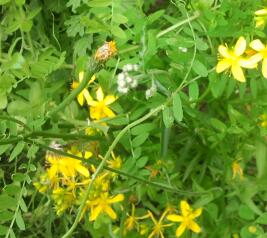
St John’s / St Joan’s wort (Hypericum perforatum), with it’s sunshine filled flowers and leaves which can be turned into a mood lifting tincture and muscle soothing oil. I use the infused oil as a very effective sun protection lotion. I have very fair skin and it always works. It also helps to sooth sunburn when that does arise. Susun Weed pioneered this use of the herb, I am very grateful as I really dislike lots of the chemicals in commercial sun lotions.

I’ve had my eye out for this herb little beauty for a long while and finally I found it in flower today – Selfheal (Prunella vulgaris). A herb with lots of history and a multitude of uses.

Lastly today, Agrimony (Agrimonia eupatoria). Panacea of the ancients, now used mainly as a remedy for the pain of stomach acid indigestion and gall stones.

Canalside Herb Walk

Walk with me along Central Amsterdam canals and the Amstel. Find and learn about how to identify, harvest and safetly use many common plants, for food and simple remedies.

Inner cities are often thought of as fairly plant-barren areas but in fact they often have a richer variety of plants than many countryside areas. Amsterdam centrum certainly has lots of foragable plants and I’d like to show you some of them.

We’ll begin on the Magere Brug and walk along, seeing what we can find, probably towards Plantage Middenlaan and de Hortus Botanicus area.

You can bring your bike along with you but I think that walking along will be simpler and you’ll have a greater chance to touch and photograph the plants.

By learning about the plants during this walk, you’ll build your knowledge of the edibles which may grow near your home. I don’t expect you’ll usually want to harvest and eat herbs from busy streets but you will learn how to find them in clean locations and how to welcome them, when they find their way into your balcony and front door planters.

Booking is essential, if you would like to join me. Please contact me directly via lynn.shore@gmail.com or via the meetup group.

Cost – €8 per person.
Maximum 12 walkers
Start location – Magere Brug (Skinny Bridge, over Amstel, by Kerkstraat).
Timing: 13:00 – 15:00

365 Frankendael day 72

We had a lovely long walk in the park today so lots of photos, lots of plants and lots of harvesting for tinctures, drying food and more.

The plants shown below are:
Tansy,
Meadowsweet,
Feverfew,
Mullein,
Mock strawberry,

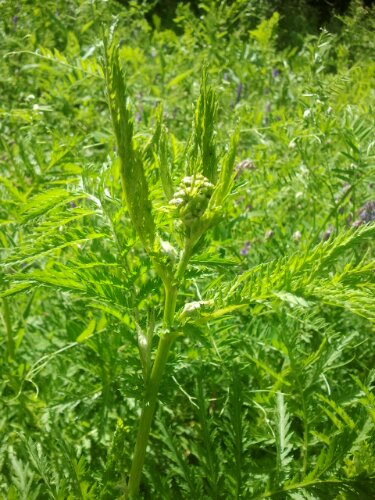
Here is Tansy (Tanacetum vulgare), a powerful herb which is immediately apparent if you pick and smell a leaf. I harvested some pre-flowing tops today, to make a simple moth repellant for my wardrobe and a tincture in case of use through the year. Tansy is very strong and not to be used casually. It has many modern and historical uses including being a potent insecticide, anti worm medicine and more. It can cause contact dermatitis so it is not one for the cut flower vase. I like this herb a lot but treat it with lots of respect.

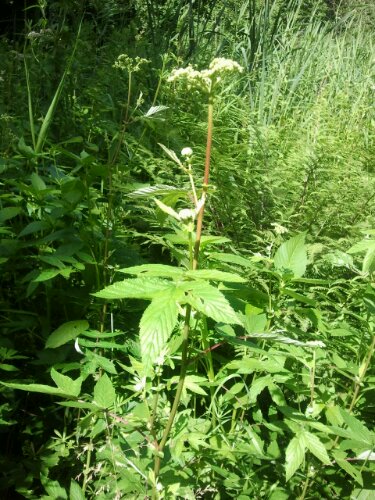
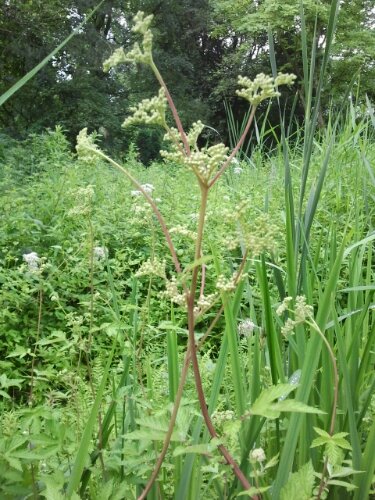
Meadowsweet, Filipendula ulmaria is another herb I gratefully harvested today. It makes a good stomach medicine, as a tea or tincture. It can help with stomach ulcers, general stomach upsets such as gas and can help calm excess stomach acid. It contains salicyclic acid, the derivative of Asprin and should be used with caution by those taking Asprin as it will increase the dose present in the body. It is interesting to note that unlike Asprin, which can cause gastric bleeding, Meadowsweet has a soothing effect on that area of the body. Another example of how taking a chemical out of its natural plant environment changes it’s affect on the body. Meadowsweet is traditionally harvested now, just before the flowers open. Finally I found some that had just bloomed in the Frankendael ponds. I harvested some pre-flowering tops, have tinctured a couple and am drying the rest. By harvesting very gently and not to low down the stem I get stronger tinctures/ tea and also allow the plants to have another go at flowering this season.

Next is Feverfew, Tanacetum parthenium, a traditional remedy for migraine. I tried it several years ago, hated the taste and didn’t really notice much effect but I simply ate a few leaves between bread. I don’t suffer from migraines these days but if they return ill try a tincture of this pretty little plant and keep trying for a while. The taste of herbs is important in their effectiveness. Taste is the first part of digestion. It primes the internal organs for the food or medicine that is to come. Bear this in mind if you like to take your herbs packed up tastelessly in capsules. Feverfew is currently adorning many pavement cracks, untended planters and road verges in Amsterdam.

Next is the spectacular flower spire of a Mullein plant. I collect individual flowers throughout the flowering season and add them to a small pot of olive oil. It makes a handy ear treatment.

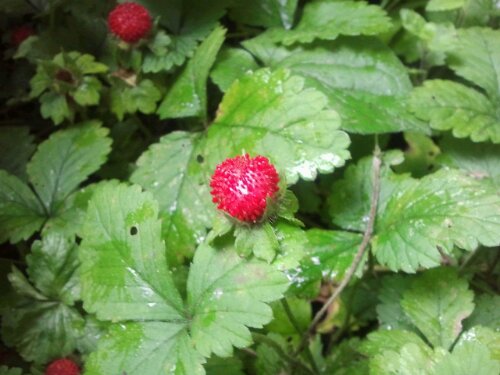
Next are the delightful edible not-strawberries of Potentilla indica, sometimes called Mock Strawberry. I picked a handful with my little girl and we will cook them up with some fallen apples from the public mixed fruit orchard in Park Frankendael. On the recent Greenpeace walk one of the participants told me that her Dutch mother-in-law likes to harvest these almost tasteless fruits and preserve them in vodka. She likes the taste it makes as a drink. Maybe I’ll try adding them to a Rum Pot this year.

Here’s the little orchard.

365 Frankendael day 71

Meadowsweet, buds still developing. I’ve been waiting for them to open into almond scented flowers for several weeks now. Still good for harvesting. Delicious as a tea and beneficial for stomach disorders and pain relief.

Here is my favourite tonic herb in flower: Leonurus cardiaca, Motherwort. My park harvested tincture is developing nicely on my kitchen shelf at present. So easy to make and so little of the herb had to be harvested. I used part of this plant for my tincture and there’s no evidence left to see, just a healthy and beautiful plant for everyone to enjoy.

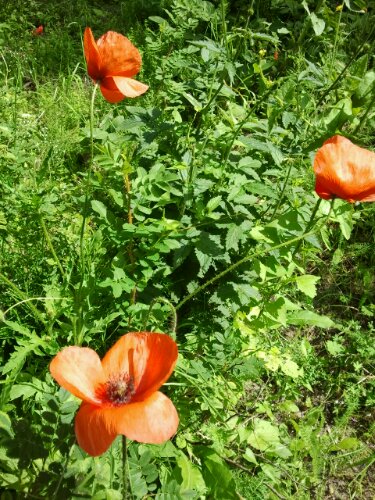
Next is another pain reliever, but far too potent for me: Poppy, Papaveraceae sp. On a recent meetup group Lime harvest, a member told me how her French Grandmother used to swear by a cough syrup which she brewed down from poppy flowers and sugar. Isobel has made this her self and says it’s beautiful, works a treat but has an unfortunate blood pressure altering effect so she had to stop using it. Not so surprising as the poppy family is the source of morphine. I heard of another contemporary Poppy remedy this week on the Green Peace Walks I led. Boiling up the flowers in water, a decoction, as a heroine substitute! This was witnessed by a walker and not made by any of the Greenpeace walkers, I hasten to add. Not really my cup of tea, but certainly a useful last ditch pain reliever if ever there was an urgent need. The dosage of herbal remedies is often quite a fine art. The amount required for a medicine like effect, depending upon time of harvest, freshness of herb etc. That’s why I stick to mainly tonic herbs, they can be taken for a reasonably long period without negative effects building up and they work more by supporting health rather than suppressing illness. I think that Poopy remedies must be particularly subject to this variation and are thus seen as unsafe by almost everyone. A lot of people enjoy the seeds as a bread ingredient. By harvesting seeds from small patches of Poppy such as this one, the chance of Poppy plants next year is greatly reduced.

Next today is Veronica, also called Speedwell. I have never used the plant but it’s a useful and very beautiful one. I’m not exactly sure of the genus of Veronica but its similar to Veronica spicata.

There was more mowing going on in and around the park today and also I noticed that a sprawling poisonous White Bryony had been carefully removed, from the Juniper bush I watch it climb. Perhaps also by the maintenance team? This poisonous plant remains and does look rather lovely: Birthwort.

Here is Teasel, now with fully formed and about to bear a pretty ring of tiny flowers around those distinctive flower heads. This plant shows much promise in the treatment of Lyme’s Disease. I like to drink from the water collecting leaf joints, on dewy mornings.

There were so many other plants around today but not enough time to write about them. I also met Joop, looking for the Spoonbill and a freindly local woman, also taking photos of plants, who has a children’s clothing range inspired by the nature in park Frankendael. What a lovely idea! Sorry, I forgot to ask her name, if she reads this perhaps she’d like to email me or place a comment below.

365 Frankendael day 70

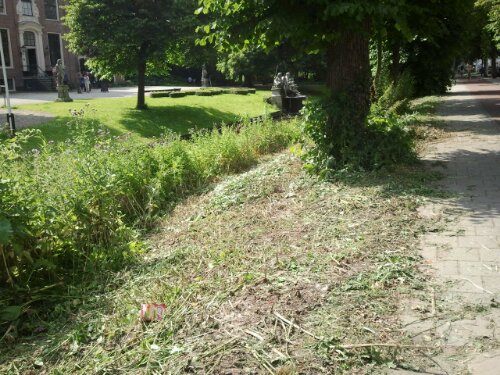
Today the council mowed many of my favourite herb-filled verges, in this part of Amsterdam. Often I worry about harvesting from such verges, trying to do it in a way that leaves no obvious trace. Then this happens and I stop worrying quite so much. The time chosen does allow for many herbs to seed beforehand but not all of them. Those beautiful Burdock plants were just a few weeks away from seeding and Mugwort was at it’s most beautiful and useful phase. At present, most people don’t know about those plants and they would soon have looked too straggly for many. The poison Hemlock which I watched for weeks, was cut to the ground in this mowing. Just before the seeds matured, so I see that as a positive thing. I’m also very appreciative that the green verges are managed so that they look very attractive for most of the year and thus are welcomed in the city.

Near the garden centre entrance of the park, mowing also occurred today but a healthy strip of growth was left. Here are photos from that area. Firstly Hedge Woundwort,


Stinging nettle
, setting seed,

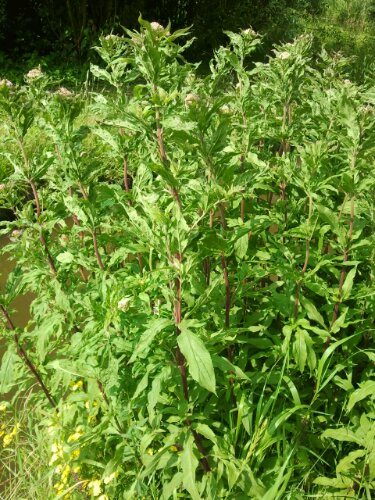
Hemp Agrimony,

and Cleavers, in flower,

365 day 69 Green Peace Walks

I’ve given myself a day away from Park Frankendael. I led three Herb walks in Amsterdamse Bos, for staff of Green Peace and wanted to share a photo of a plant from that location instead. Around 60 members of the staff joined me to look at some herbs found there and in central Amsterdam.  As ever I learned some interesting uses for plants from those attending, such as rubbing nettles on sore muscles, to increase the local circulation. Also that burned Chicory is still sometimes used to bulk up coffee before trading it internationally and how baking powder makes a good vegetable cleaner. Very interesting people. Thank you all for a lovely day!

So here’s my urban herb photo of the day, a lovely patch of Enchanters Nightshade (Circaea lutetiana) does grow plentifully in Frankendael and I identified it there yesterday but here’s some in de Bos. I hope you don’t mind the venue switch for today…

I found a lovely clump of Gypsy wort, growing on the edge of the canoe lake and am intrigued to know more about it’s uses and name. That plant also grows thoughout the city so I’ll have a hunt for it very soon.

365 Frankendael day 68

The battery in my camera was flat today so I picked a sprig of this plant to help me identify it at home. I’ve been seeing lots of it in shady areas recently, I find it very pretty but it doesn’t small familiar when picked and it reminds me of poisonous Dog’s Mercury (Mercurialis perennis), whenever I see it.

I identified it using three field guides as an edible wound herb called Enchanter’s Nightshade (Circaea lutetiana), known a Groot Heksenkruid (large witches herb) in Dutch. It is in the plant family containing Evening Primrose and Rosebay Willowherb, which are also edible and available at present. The Latin name arises from the Ancient Greek witch/enchantress Circe, who is said to have used the herb frequently in her potions. A nice tale. If this side of the plant’s history interests you, perhaps scroll through this link for further details. The common English name is somewhat confusing, this plant is not related to the poison containing Nightshade (Solanaceae) family.

I need to find out more about it but this evening, will be sampling a tiny amount of Enchanter’s Nightshade, well cooked in a pasta based potion, to check I react favourably to the herb. Hopefully all will go well and I’ll be able to point it out on the Green Peace walks tomorrow.

365 Frankendael day 67

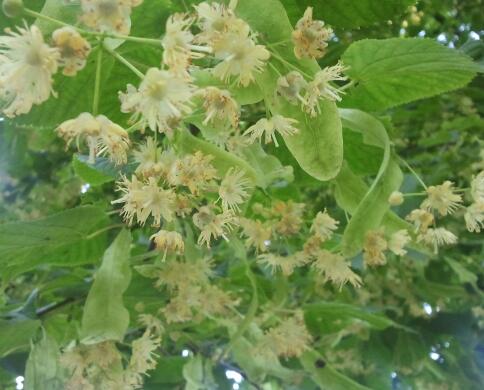
Today I cycled along the Lime tree lined route from home to Amstel Station. So many of the tree canopies along that road are within grabbing height from my bike. Some of the trees are still preparing to open their delicious flowers, others are in full, fresh bloom and still others are setting seed and thus carry fading blooms. These should be avoided by foragers as they are past their best tastewise and may even cause ill health. They also are not stable for drying and I wouldn’t want to preserve them by tincturing or other methods.

The photo above shows a just-fading cluster of Lime tree (Tilia sp.) flowers. Notice the colour of the stamens, stigmas and petals. Fresh, bursting-with-sweet-glutinous-goodness Lime flowers are a crisp, pale cream colour. Those past their best are at first pink/beige then brown. You should be able to see all of these in the photo. If you want to forage Tilia flowers, choose only those in clean locations (well, as clean as possible) which are either about to pop open or are recently open and very fresh looking and tasting.

Here is a link to Linden Schnaaps (basically a very quick tincture).

365 Frankendael day 66

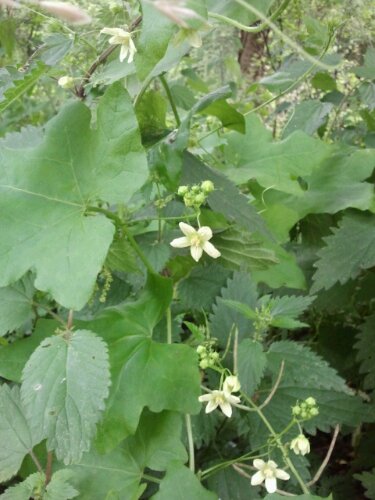
Here is beautiful and extremely poisonous native climber called White Bryony (Bryonia alba), which I noticed today in a shady Frankendael hedgerow, growing over some Stinging Nettles. This is a new place for me to spot the plant. It also luxuriates throughout the woodland quarter of the park, where I see it a lot. It grows all around the city and thrives with something to scramble up and over, so it is often found against fences, hedges and shrubs. At the moment, whilst in flower it is even easier to identify.


Above is Yarrow (Achillia millefolium), flowering all over the city at present. A very useful and tasty herb. Known as Nosebleed in some parts, it has the ability to staunch or start bleeding. Not one for pregnancy or infancy. A prized women’s herb.

I thought I’d take this photo today to show how easy it can be to confuse plants. It shows Pensylvannian Pellitory (Parietaria pensylvanica) my neighbours’ dog’s favourite, growing beside a seed-setting White Deadnettle ( Lamium alba). Both are edible and both are, amongst other things, both are diuretics. Do you know which is which?

Lastly today, here is a sure sign that the main Garlic Mustard (Alliaria petoilata) season is coming to an end. Today I spotted lots of very yellow looking plants, putting all their remaining energy into seed production, rather than those delicious leaves. So if you have a penchant for this plant, now is the time to harvest from the small, younger plants . Please remember to leave the plants with plenty of foliage and the seed pods intact. That way, hopefully we can all benefit from a good crop next year.

365 Frankendael day 65


Today has been busy, with a brief Lime Blossom meetup and a poorly cat being taken to the emergency clinic, so just a very brief post today…
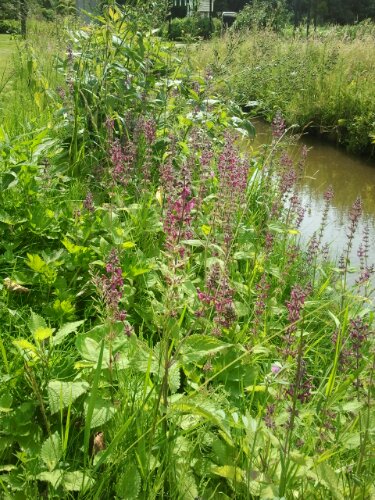
Above is a photo of Hedge Woundwort (Stachys sylvatica). A member if the compare family, with very strongly smelling foliage which I have mentioned previously. It makes quite a good tea and can act as a digestive, I use it now and again to help digest rich meals but am not a big fan of the pungent angel. It was historically a wound herb, as the English name suggests. It can be made into a poultice, historically with vinegar and used to help reduce inflammation and speed wound healing. This plant grows plentifully on the waters edge in various parts of Park Frankendael. However, due to today’s cat adventure, the photo was taken at the shaded edge of a children’s playground, two blocks from the park.

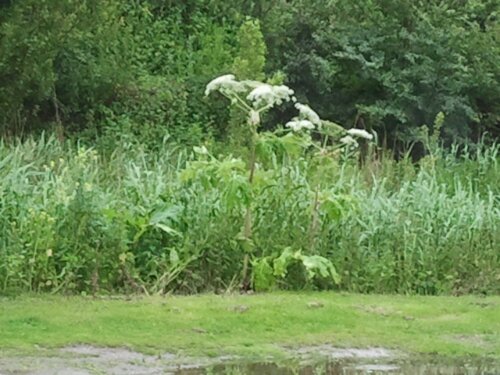
Secondly a photo of an magnificent Carrot family plant called Hogweed, taken through the Animal Clinic window on Isolaterweg. I’ve seen this amazing plant in many city locations recently and want to mention it briefly today. Obviously I was more interested in my cat when I spotted this one so didn’t measure it or get my field guide out but it is most likely either the toxic, irritating Giant Hogweed/Wild Rhubarb or the closely related Common Hogweed which some foragers, not myself, are rather fond of eating. River Cottage country living guru, Hugh Fernley Wittingstall, apparently loves eating the young tender shoots. Look on the River Cottage website and forum for lots of ideas, if this plant interests you.