Tag Archives: Dandelion

365 Frankendael day 132

Redshank (Polygonum persicaria)

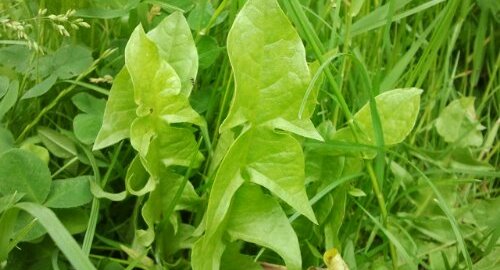
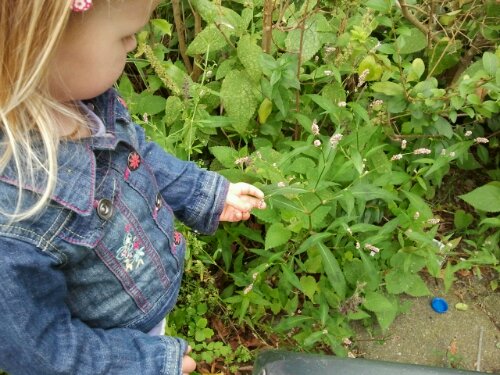
Here’s a plant my daughter found today, next to bike racks on the Hugo de Vrieslaan. It’s  an edible herb called Redshank (Polygonum persicaria). Often, it has the splotchy arrow sort of mark on the leaves, sometimes not. The surest way to identify it is by the flower and there are plenty of those around at the moment. Here’s a closer photo which we took today:
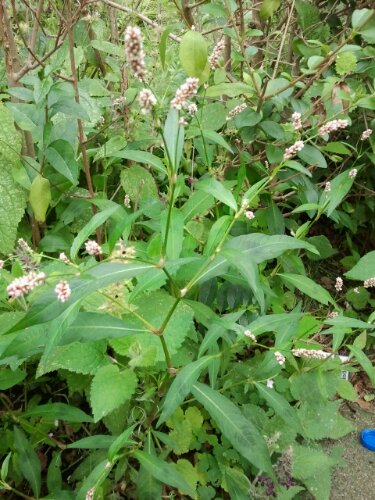
Redshank (Polygonum persicaria).

And here’s a short video from YouTube which may help you to identify it.

Next is a hearty Dandelion. There are so many around at the moment, I think they prefer the weather a little cooler and wetter. I was reading yesterday that Susun Weed likes to keep a stock of around 200 cooked greens portions in her freezer, ready for winter. I’m guessing that Dandelion is on her freezer list. I haven’t done that my self, I just eat it when it’s around, but will give it a try. Not 200 portions, I’ve only space for around three but its worth a go. On a side note, I bought a delicious jar of Morvan Pissenlit honey last week, Pissenlit literally means wet the bed and is the common name of Dandelion in France. The name is given due to its potent diuretic properties. The honey is exceptional. I must have another spoonful now!
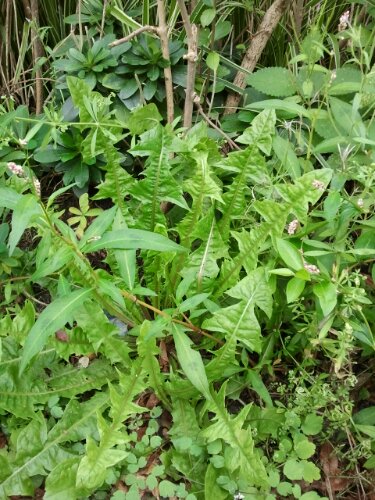
Dandelion (Taraxacum officinale)

I forget to mention this little beauty yesterday, Skullcap (Sculletaria altissima), in the woods of park Frankendael. It is in flower again! A second wave of flowers often graces strong perennials, when they have been cut back prematurely. Whatever the reason, I’m so pleased to see these pretty pain relieving flowers again.

Skullcap (Sculletaria altissima)

Autumn is on its way, you can smell it in the air. A blue moon tomorrow night so I’ll be looking for hazelnuts and not writing much tomorrow – just photos and names. Happy foraging!
365 Frankendael day 116

A quick tram stop hunt for herbs today as I ran the Honey and Herbs workshop this afternoon.

Here’s a lovely little Hazel tree growing in the lowerparts of a beech hedge.

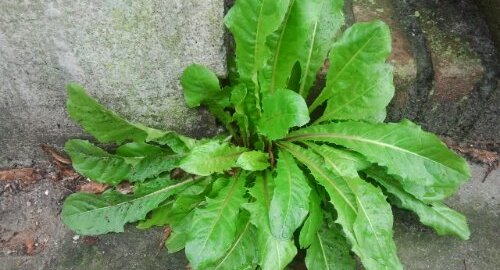
Here’s a very vibrant Dandelion (Taraxacum officinalis agg.) growing in a dirt filled pavement crack above a bridge.

I harvested lots of Plantain (Plantago major) today, from close to de Kas restaurant. I’ll be dressing the leaves as I haven’t had time to make a succus with it and I don’t want to waste them.

365 Frankendael day 55

Today we did a Herb Sit, rather than a Herb Walk. It’s amazing what you can sometimes find when you simply sit still and take a close look at what’s around you…

Here’s a Ribwort (Plantago lanceolata), with a small Dandelion (Taraxacum officinalis agg.) plant and some Field Horsetail (Equisitum arvensis) growing just behind it.


Above is a feather leaf of Yarrow (Achillea millefolium).


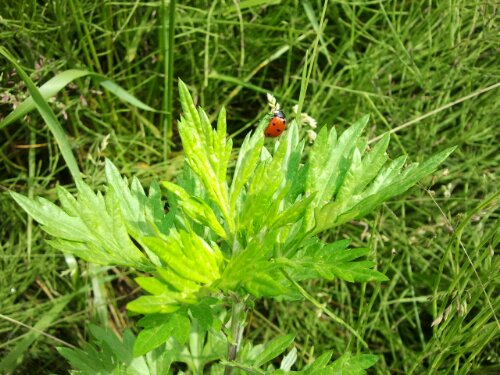
The tip of a young Mugwort (Artemisia vulgaris) plant featuring a Lady Bird.


Above, a not so clear photo of Salad Burnet (Sanguisorba minor).

We also found several types of clover and other legumes, within an arms reach of where we sat. I need my better camera to take decent photos of those. Here are the leguminous plants that we found and were able to identify today:

Red clover (Trifolium pratense)
Zigzag clover (Trifolium medium)
White (Dutch) clover (Trifolium repens)
Lesser Trefoil (Trifolium dubium)
Bird’s-foot-trefoil (Lotus corniculatus)
Please be aware that Bird’s-foot-trefoil is not a clover and is poisonous and should not be eaten. It has some historic medicinal uses. The clovers are edible. The flowers and leaves are tasty in salads and Red clover has many medicinal uses.

365 Frankendael day 54

Today, I went out to the park specifically to find Dandelion flowers. I wanted to try a recipe from The Kitchen Witches Cookbook which features closed Dandelion flowers opening up into a sea of cooked egg. After meeting Joop Eisenberger, who was trying to make one of his beautiful photos of a Lepelaar (Spoonbill), I had a good look around. However, it seems I had left it too late or the day was just too over clouded to open up the flowers. I found just a few flowers but took advantage of finding the plants and harvested a handful of Dandelion leaves. All will be eaten this evening. Notice how the exaggerated leaf teeth point down towards the ground?

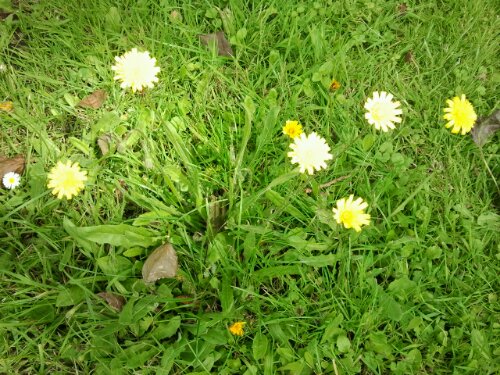
One Dandelion (Taraxacum officinalis agg.) look a like is flowering quite prolifically in the park today. It seems to be Common Cat’s-ear (Hypochoeris radicata) or Lesser Hawkbit (Leontodon taraxacoides). I’ll need my Field guide and magnifying loupe to hand, to decide which but either way they are both edible and not just a pretty distraction to the Dandelion forager! They are both hairy, whereas Dandelion is always smooth. Dandelion is always very bitter and these two are almost always not bitter. The leaves and roots of the Hawkbit and Cat’s ear are generally the interesting parts for foragers.

Here on my photo you may be able to see that the plant has leaves quite like Dandelion, has stub ended petals on dandelion like heads and it’s spend flowers tip down towards the ground like Coltsfoot.

365 Frankendael day 41


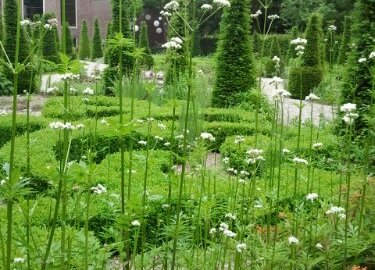
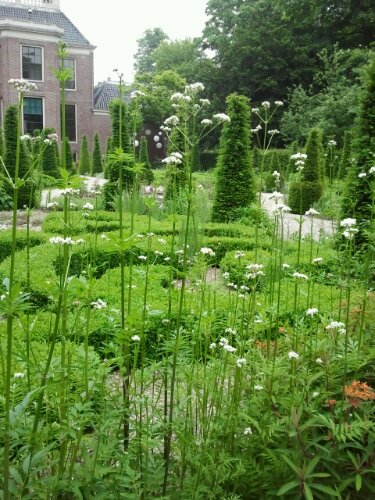
Today a lovely scene, if you like tended gardens, of the old partitioned garden at the back of Frankendael Huis. I really appreciate how the gardeners allow the plants to spill out here and there and especially so with the stunning Valerian officinalis which is shown here. Valerian medicine is traditionally focused on the roots but the flowers are also useful and have more subtle effects than the other parts of the plant. I have a big Valerian plant on my roof and this weekend, harvested every third flower cluster, for drying. Doing so leaves the beautiful appearance and special scent almost intact, for everyone else to enjoy.


Here is a photo Stinging nettle (Urtica dioica), NL: Brandnetel, in bloom. Now is not at all the time to harvest this wonderful tonic herb but I took the photo to illustrate the difference between the plant and other look a likes, such as Lamium alba, White Dead Nettle, shown yesterday.


Here is a photo of a plant that I want to learn more about, creeping along the ground rather like a Strawberry with similar leaves and runners. Growing amongst it, with purple flowers, is familiar Ground Ivy (Glechoma hederacaea) which is edible, useful and tastes minty. I have been watching the Strawberry look a like, in several shady parts of the park, for several weeks. Today it is coming into flower, yellow flowers, so I now remember that the plant a little better. It is a member of the Cinquefoil (Potentilla) family, I’ll have a closer look tomorrow to find out which. I brought a sample home but my cat ate it in seconds – maybe that should tell me something!? Strawberries are members of the Fragaria family.


Not one to eat until next Spring, here is an update of how Ramsons (Wild garlic, NL: Daslook) look at the moment. Not very tasty but the seed heads are developing well.


Next, and again for future reference, the closest Sweet Chestnut tree to my home. Totally unrelated to Horse Chestnut, far more tasty but possibly less interesting for herbalists.


Lastly today, an enormous Dandelion(Taraxacum officinale), two 50 cm long leaves of which, are destined for my plate this evening…

365 Frankendael day 36

Today again, is quite hot so the translucent and spiky Teasel (Dipsacus spp.) foliage does not have pools of water at the leaf bases.  Teasel shouldn’t be harvested at all, due to it’s wildlife benefits. But the pools of water which accumulate within them can be useful.

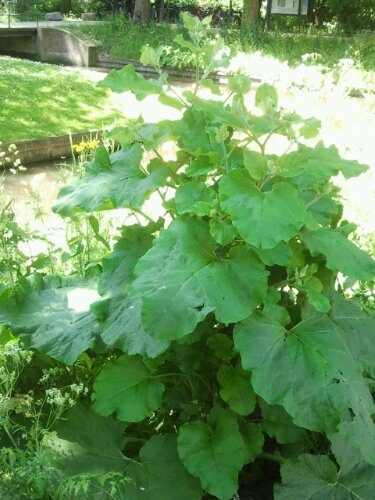
Here is a Burdock (Arctium lappa) plant preparing to flower.

Restaurant De Kas has a lovely herb and vegetable garden wrapped around it, within park Frankendael. Obviously it’s not for public harvesting but the fresh young leaves on the Copper Beech hedge around that garden, may look quite tasty to some.

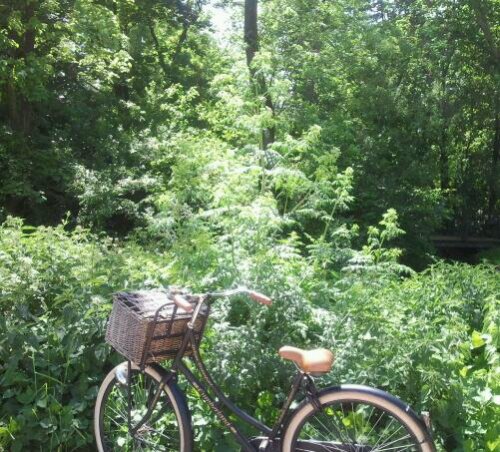
Here’s the Poison Hemlock (Conium maculatum) on the outside edge of the park, which I found some time ago. It now towers above my bike and it’s flowers are almost ready to open. Quite an imposing sight, close up.

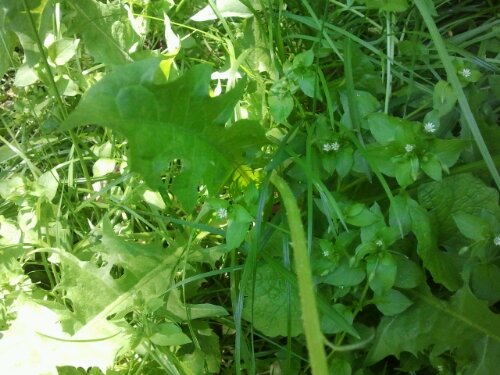
Lastly today, two plants which I underuse from wild Amsterdam. If you have access to clean sources of Chickweed or Dandelion, they may be useful to you. There are many look a likes for both plants. Those for Chickweed are generally edible to but those for Dandelion are mostly not and some are poisonous.

Chickweed (Stellaria media) has a line of tiny fine hairs running down the medial line of the stems. Dandelion leaf teeth point downwards, but you need to have your guide book with you for this as any other edible plant, until you are totally secure about it’s identity. Here’s a nice link if you are interested in Chickweed and Dandelion in particular.

Easy Dandelions


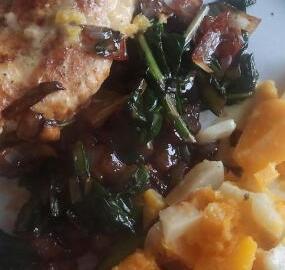
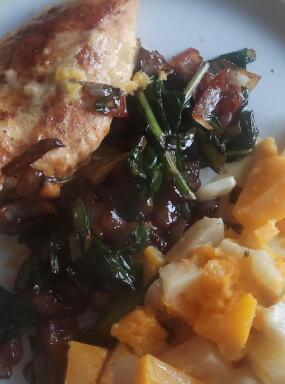
Here’s our dinner this evening.
Between us, as a side dish, we enjoyed the leaves of two large dandelions (Taraxacum officinale) picked from Ben & Riny’s garden a couple of hours ago.

After a good rinse, I roughly chopped the leaves and simply added them to the pan juices after frying chicken and eventually an onion. I added a slosh of the vegetable cooking water, from the celeriac and pumpkin you can also see in the photo. that just loosened things up a little and helped to stop the dandelion from frying. The result was very tasty indeed and rather healthy!

The root came up easily, from one of the plants so I’ll add that to a soup tomorrow.

365 Frankendael day 10


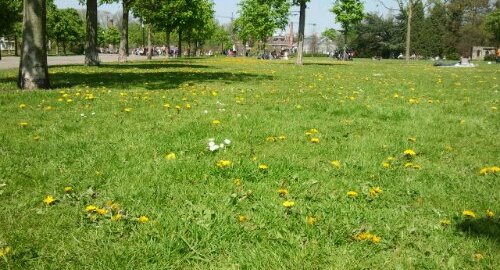
Today is Queen’s Day in the Netherlands and the sun has finally come out to play! Amsterdam is awash with orange people so what better herb to look at than Dandelion.

Dandelion is another foragers favourite and another much misunderstood and maligned herb. Yesterday I surprised a few friends by picking a dandelion, plucking it’s petals and eating them. I was quite surprised that they didn’t know anything about the plant, but I guess to most it is just a pretty weed. There are so many uses for this herb, it’s so prolific and so associated with folklore.

Not much time to write today but please see the link to a previous Urban Herbology post for further information and useful links.

365 Frankendael day 3

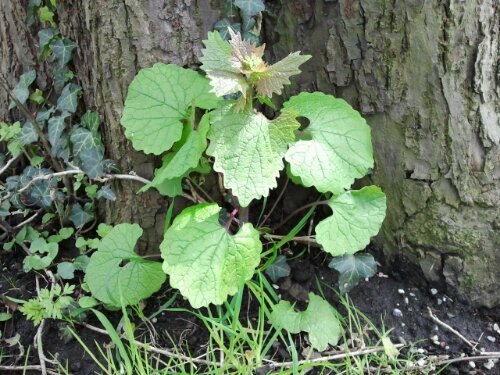
Garlic mustard (Alliaria petiolata) is featured today. I wouldn’t say it is plentiful in the park but I noticed lots of plants, particularly at the base of large tree trunks and along the edges of woodland and hedges. It is just in flower at the moment, so very easy to identify, not only by the distinctive smell of garlic when the leaves are bruised but also by the tiny white flowers at the top of the plant. Garlic mustard is a favorite amongst foragers and can grow up to 120 cm in the right location.

This plant is a biennial and can provide year round nutritious greens, for salads or the cooking pot. All parts are edible. Even the roots can be eaten, they should be harvested just before flowering, but of course removing the whole plant will limit the foraging potential the following year as the plant will be unable to spread by seed.

I see lots of garlic mustard growing around Amsterdam. You are very likely to find it along the edges of canals, hedges and overgrown areas. Now is the best time to identify it.

Other plants, calling out to me today are:
Coltsfoot – starting to open its seed heads which have been turned down towards ground since last week,
Nettle – tops are ripe for harvesting at present, I used plantain to rub away the sings as I forgot my gloves again today!
Mentha x peperita blue balsam – no flowers until later in the year but the spicy, pungent burnt spice aroma of stroked leaves is ummatched.
Celandine – It carpets parts of the woodland area almost year round but it easiest to identify when it burst into flower, to announce the spring. The last few flowers remain now, especially beneath the trees of the Lime avenue. If you don’t know how to recognise this useful woodland herb, learn now as the foliage is so useful at most times of the year.

Coltsfoot: A look-a-like not to be coughed at

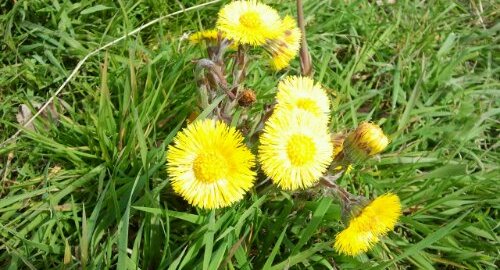
I found this cheerful looking Coltsfoot (NL: Klein hoefblad) plant in Frankendael a couple of days ago and thought it was time to look at some look-a-like plants which herbal foragers should be aware of.

Coltsfoot (Tussilago farfara) and Dandelion (Taraxacum officinale), which people often confuse it with, are both members of the same plant family (Asteraceae).  Both herbs are useful but Dandelion is generally the plant which herbal foragers are after. It is such a well known bitter herb and has earned an enduring place in the sophisticated kitchens of many cultures.  Coltsfoot flowers (if enough of them were to be gathered) can be used to make a traditional children’s cough remedy. However there are many who now avoid internal consumption of Coltsfoot, due to the discovery that it contains certain liver toxins called Pyrrolizidine alkaloids.

Many herbs contain small amounts of potentially harmful chemicals but when they are ingested as plant rather than separated chemical they tend to have a quite different effect on the body.  One tip for herbal foragers, who are concerned by toxicity, is that generally flowers contain less volatile and active ingredients than other parts of a plant.  Thus a flower remedy, made from Coltsfoot, should contain less alkaloids than one made from the leaves and roots.

Link to Susun Weed’s video, showing how to identify, harvest and make Coltsfoot honey cough remedy.

How to differentiate Coltsfoot from Dandelion:
1. The solid & scaley Coltsfoot stem is quite different to the smooth & hollow stem of Dandelion.
2. Both being members of the Asteraceae family, their flowers are similar but Coltsfoot flowers bloom on stems before the leaves have grown.  With Dandelion, the obvious, downward toothed leaves develop well before the flowers appear.