All posts by Lynn

Unknown's avatar

About Lynn

Learning

Magnificent Magnolia

Magnolia is a tree which I fall in love with again, every year. Everything about it enthralls me. From the graceful angles of the branches, the bark, exotic blooms to the glossy evergreen leaves. A huge magnolia in bloom is a show stopper. One such tree arches quietly over the terrace behind Huize Frankendael, in Amsterdam east. Hundreds of visitors must walk beneath it without giving the tree much thought, until in March or April it explodes into bloom. There is no other tree that I would rather sit beneath and gaze up through than that magnificent magnolia in spring!

FB_IMG_15516484401208236.jpg

Edible and Medicinal Magnolia Petals
The flowers of Magnolia trees are edible and medicinal. In traditional chinese medicine, Magnolia flowers are known as Xin yi hua and are associated with the lung and stomach meridians. I enjoy eating them fresh plucked each year and happily report that they taste fragrant and spicy. I can also report that when I eat Magnolia petal, my sinuses become clear, quite like magic.

Imagine a slightly rubbery super sized rose petal which clears the sinuses a little, when you bite into it and you are getting close to the mouth feel and flavour of a magnolia petal. I like them very much and because a little goes a long way with these large petals, I can certainly recommend them to other urban herb lovers. As you may know, via my apprenticeship and walks, I teach how to harvest interesting herbs in towns and cities, in a safe and ethical way. This entails taking only a little, leaving no trace and really make the most of the harvest. Do contact me if you would like to know more – This is my passion!

Medicinal Bark
Fairly recent research suggests that Magnolia bark extract can help with oral health, stress reduction and several other disorders. In traditional medicine it is reportedly used as an antibacterial, anti-inflammatory, anticancer agent, in the treatment of Alzheimer disease, depression, diabetes, and menopause. All Magnolia species varieties are considered to possess the same medicinal qualities and there are apparently no known side effects – although we know that someone somewhere, could be allergic to the plant, so please be cautious. Magnolia Bark Extract is widely available for sale and Magnolia bark is an ingredient in many traditional Chinese medicines including Hsiao-cheng-chi-tang, Wuu-Ji-San, Heii-san, Shimpi-to, Hangekouboku-to, Masinin-gan, Sai-boku-to, Syosaiko-to, Irei-to and Goshaku-san.

Japanese traditional medicine also prizes both the bark and flowers of Magnolia. Bark harvesting is not something suggested for the urban forager because it certainly leaves a trace and it is certainly not ethical.
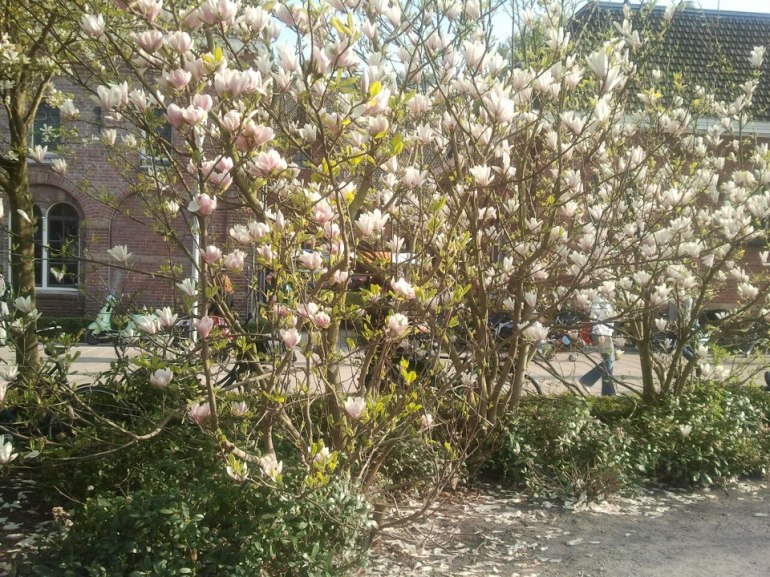
magnolia-westerpark-liberation-day-2013
Magnolias in Westerpark

Stealthy Petal Plucking
When harvesting from perhaps the most beautiful of city trees, one would perhaps look both foolish and anti-social to pluck entire flowers. So I suggest that you don’t. Instead, I recommend that when stumbling upon a prime Magnolia specimen in bloom, and feeling the urge to eat it, you do the following:

1. After checking for unwanted observers, wander nonchalantly up to the tree. Are the blossoms within your reach? If not move on to another.
2. If so, reach up as if to smell the fragrance of a prime bloom, pull it gently to your nose with one hand, whilst deftly plucking a single petal from its base, with the other hand whilst simultaneously inhaling the spicy aroma.
3. Tuck the plucked petal in your pocket as you gently release the bloom with your other hand.
4. Move along to another flower, as if to compare its scent with the previous bloom. Repeat steps 1 to 3 until you have harvested three or four petals.

A magnolia flower can miss one petal without much issue. If two or more petals are plucked from one bloom, evidence of foraging shows and that is not the plan. So one petal from a flower, move to another, one more petal and so on. When you have three or four petals, you are done. That is enough to make something very tasty and useful and you will have increased your stealth foraging skills..

Magnolia flower
Untouched – Delicious

Favourite Trees
I tend to forage a handful of petals each year, from 6 favourite Magnolias which are dotted around east Amsterdam. They are all growing in public spaces so stealth foraging is required. I don’t harvest from them if other people are around because apart from it just looks silly. I also limit myself to plucking a petal from two flowers per tree. I first wrote about my love of Magnolia petals on 2012. Since then urban foraging has increased in popularity so I also am careful to only pluck from Magnolias which seem not to have been visited by other foragers.


Magnolia Petal Recipes
Things that I like to do with a precious handful of magnolia petals. I hope that you have a go and let me know how you get on in the comments.

Magnolia Petal Pickle
They can be pickled, old English style by simply filling a small jar with fresh petals and then completely filling the jar again with rice wine vinegar or apple cider vinegar with a little salt and sugar to balance the flavours. I don’t add sugar or salt so I guess my version is simply Magnolia petal vinegar – I don’t mind because it tastes good 🙂

Fermented Magnolia Petals
You may like to ferment them using a little salt and water, in the style of Sandor Katz.
I prefer to lay them in my handy small Japanese vegetable press. I then sprinkle with a pinch of salt and apply the gentle but consistent pressure of the Japanese press for about 3 hours. This produces a very light ferment and it draws out some of the water from the petals (which tastes good too). You can leave the pressure for a lot longer if you prefer, winding the contraption every few hours to ensure the petals are in fact under a little pressure and to encourage the process.

Magnolia Petal Honey
When I first tasted a Magnolia petal and felt its clearing effect on my sinuses, I decided to transfer the petals’ properties to honey. This is soooo simple to make. It creates something which my family and friends find delicious and I hope you will too. If the honey turns you off, try Agave syrup. It works very well but in my experience is less spreadable (being rather runny).

magnolia honey
Magnolia petals infusing in honey

How to Make Magnolia Petal Honey (or use Agave syrup)
1. Gather your petals.
2. I rarely wash magnolia petals because I only harvest clean looking ones, which are from way above the ground but unsoiled by birds. You may like to wash yours. If so, then dry them off.
3. Tear the clean, surface dry petals into a sterile small glass jar. I use dishwasher cleaned pesto jars for this sort of thing.
4. Covered completely with runny honey. Use a chop stick or knitting needle to loosen trapped air bubbles. You may need to release the air and top up with honey several times. The jar should be filled to the brim with honey. The air bubbles won’t all leave the honey but prodding with chopsticks, helps them to escape and thus reduces the risk of contamination.
5. When no more air bubbles are escaping and no more honey needs to be added, close the jar tightly with its lid.
6. The constituents of the petals will infuse into the honey over the following days and weeks but the honey will take on a delicious Magnolia aroma and taste within a few hours.
7. Eat in any honey way (smear on bread, add to smoothies, mix with a little vinegar for an elixir, etc) you choose or take a teaspoon now and them to help soothe anxiety, sore throats or respiratory congestion. I don’t bother to strain this honey as I like the petal crunch. You could strain after 6 weeks if you preferred. It seems a waste of those petals though.

Please note that the herbal honey may start to ferment after a while, due to the high water content in the petals. Keep an eye on the jar, if it starts to bubble, the lid must be loosened to avoid pressure building up and the glass jar exploding. Storing it in a cool dark location will help to preserve its shelf life. Eating it all up will also avoid the problem 🙂


I hope that you get a taste for Magnolia petals this year and have a try at infusing them in honey, agave syrup, vinegar, vodka or olive oil. This herb is so beautiful, so giving and so tasty – it would be a pity to miss the fun completely wouldn’t it? I was looking at my favourite Magnolia at twilight this evening. It will open its blooms very soon and I will be waiting and thanking it for every petal.


Do you like it?
Please do add a comment about your magnolia experiences at the foot of the page or fill in the contact form. I would love to hear how you get on with magnolia and what else you are keen to learn about!


Learn Urban Herbology
If you want to learn more about foraging and using herbs in towns and cities, take a look at my apprenticeship course. I have helped hundreds of wonderful people learn about Urban Herbology over the years and I would love to help you on your journey!

A walk alongside the Wye

Last week, I visited my family in the UK. My parents live in Chepstow and my Dad is a great walker so one afternoon, the two of us headed out to a beautiful spot along the Wye valley, just off the Offas dyke trail at Lancaut Lane, a few miles north of Chepstow.

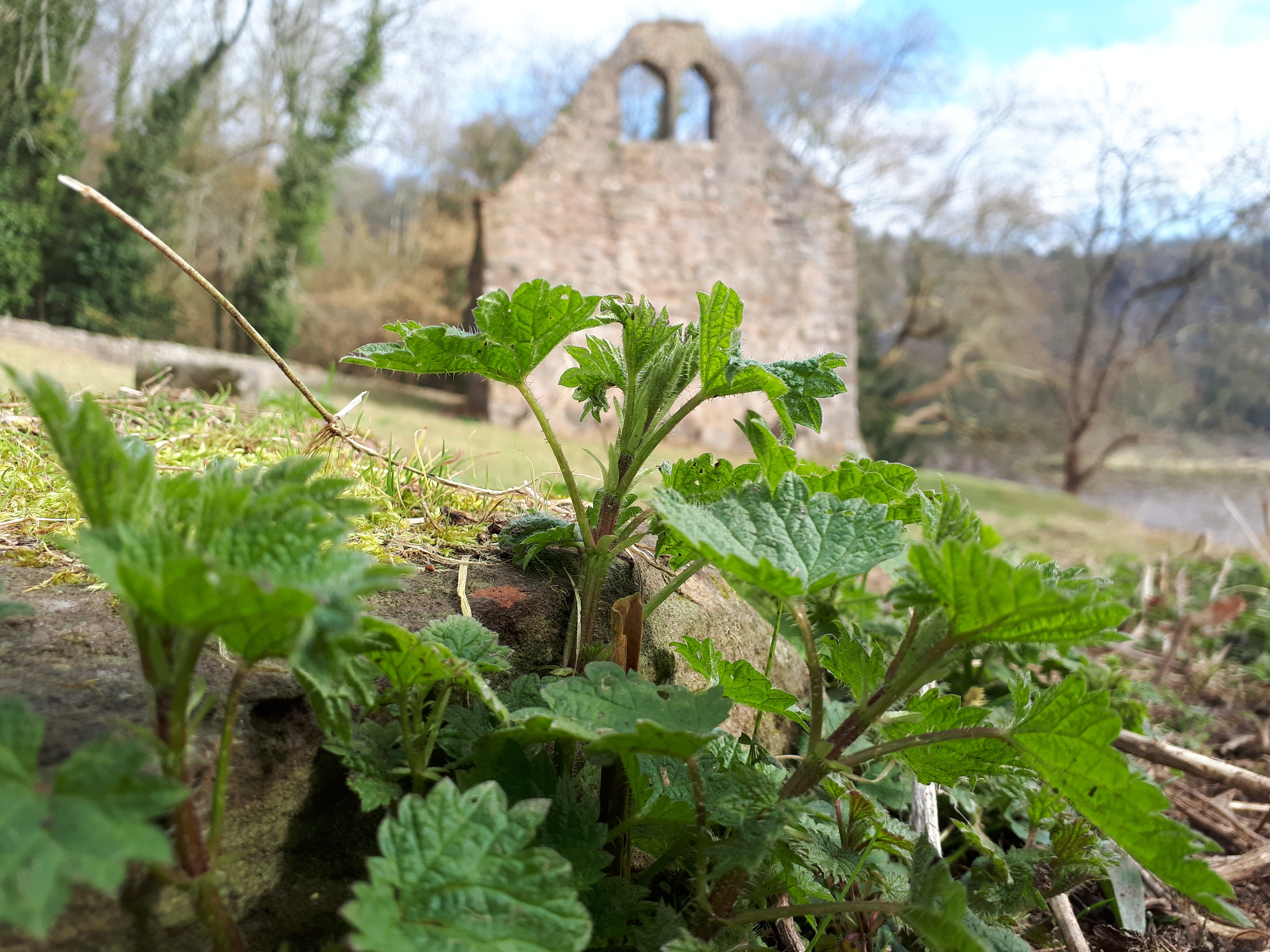
It is the site of an old village, of which the only remains are derelict lime kilns, some interesting earth mounds, stones and a beautiful ruined church.

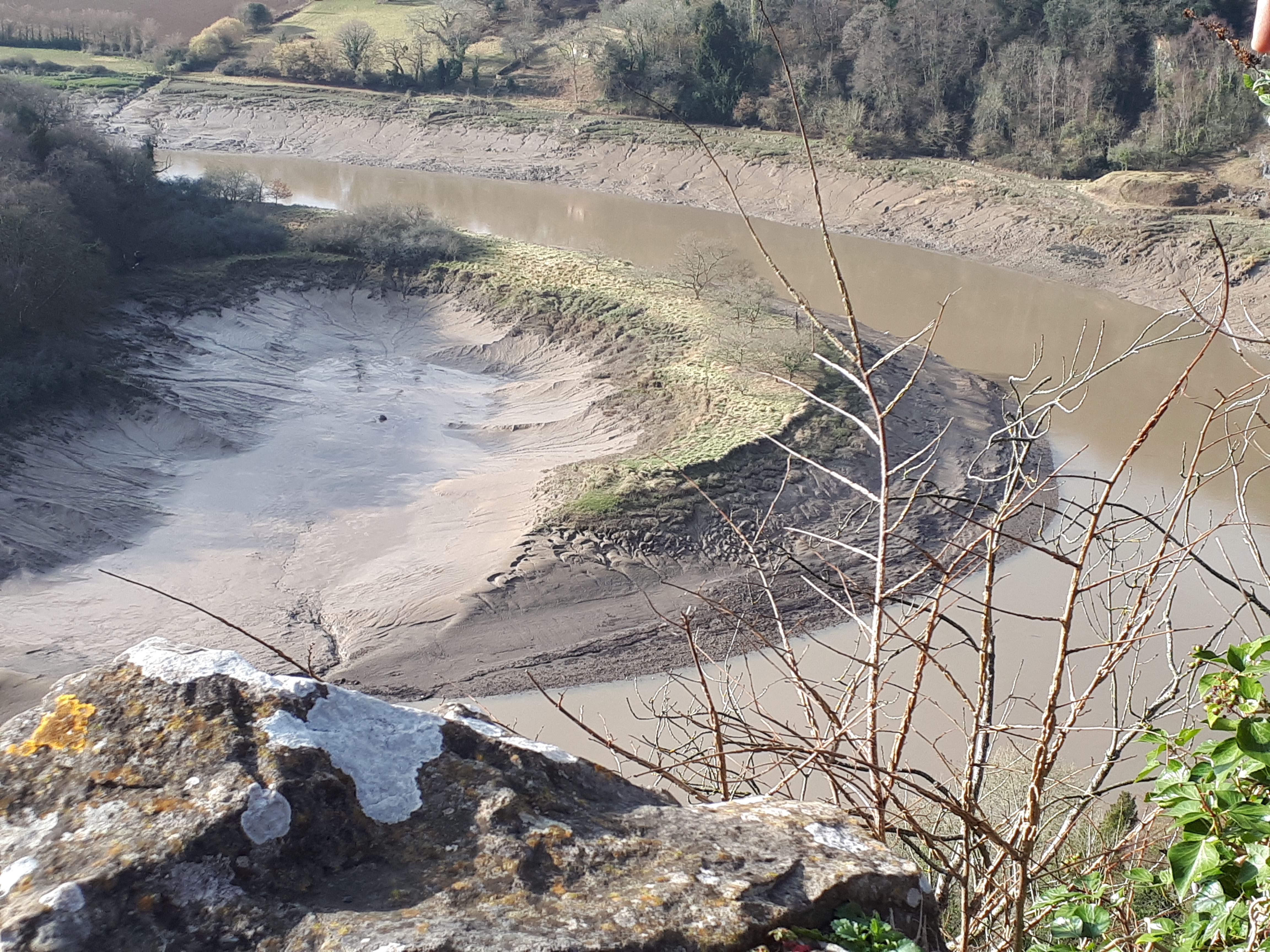
The setting is outstanding. The ruined church is found down a steep winding path from the road, in a clearing, close to the banks of the River Wye, as it makes a sharp bend beneath steep raw cliffs. It’s a lovely walk, with wild flowers, catkin-laden hazel trees and greenery all around even in February.

St James’ Church, Lancaut is now cared for by the Forest of Dean Buildings Preservation Trust. It was still used monthly until the 1830’s and there’s a displayed photo as you approach, of the walled graveyard and already ruined church, completely packed with church goers. I imagine that those monthly services were quite something!

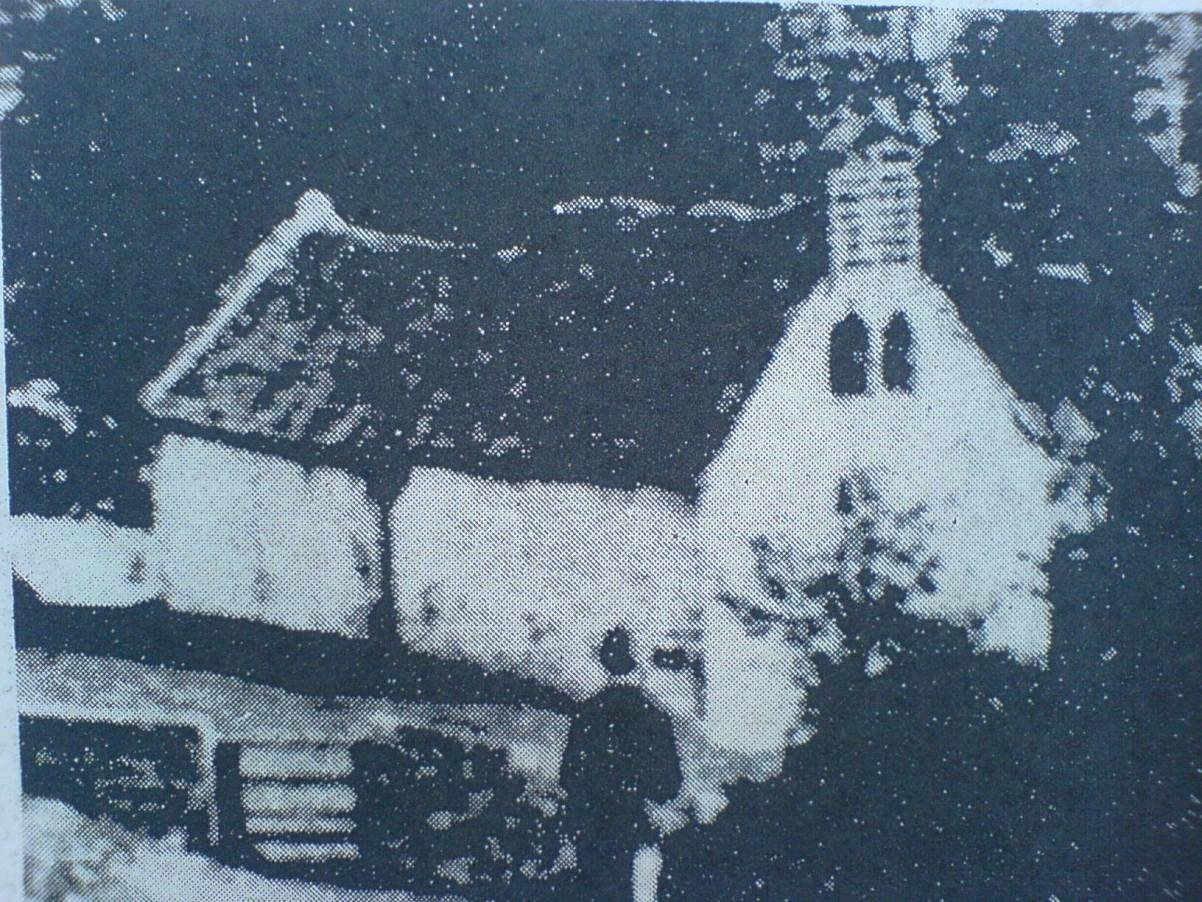
Dad found this informative blog post, written 12 years ago by Mercurius Politicus. It traces the history of the location and is certainly worth a read. Here’s a pre-1865 photo of the church, taken from that website.

We loved looking at the old gravestones, a couple of which are now used to mark the graveyard boundary. Within the church can be seen two very interesting headstones from the 1600’s which show a heart in the middle of the text. Other engravings around the church seem to match this flowing, curvaceous style. It is quite beautiful. Can you see the ladybirds on this headstone?

We spent some time sitting a top a mound, watching the River Wye flow strongly by, spotting plants, observing birds feeding in the mud on the opposite river bank and wondering if two distant rock climbers would really make it to the top of a cliff face.

I made a podcast whilst walking around the church, looking for signs of the herb Elecampane. If you’d like to listen, click the link. My Dad features quietly here and there, as the guest Yorkshire accent. I must take a second microphone next time 🙂 We talk about Bramble buds, Hazel, Elecampane, the beautiful views and such like.

Episode 3 – Walking around St James’ Church

We found some lovely plants on our walk including the catnip in the photo below, apparently scampering up an exterior wall. The plant doesn’t look much in February, the dead flower stems gave it away, but it will be stunning in a few months time.

I definitely plan to return to this place. It’s a real treasure. The area is part of a nature reserve and is registered as being of Special Scientific Interest. It is said to be home to over 300 plant species so a visit when more of them emerge from the ground is needed.

The derelict church is now used as a place of worship once or twice a year by Tiddenham parish. It is easy to find from the road and has a strong pull.

I’d be very interested to hear in the comments below from anyone who frequents the place or has tales to share about it. Perhaps you’ve worshipped there or have actually found the elusive Elecampane of the monks?

Edibles at Bristol Harbour

This week, I am with my family in the UK. We began the visit on Tuesday with a stroll around the harbour area of my birthtown Bristol.  What a pleasure to be there! In addition to the whole harbour area being very spruced up since I lived there, the weather is exceptional for this time of year; beautiful sunshine,  stunning skies and it is warm – well for February anyway!

IMG_20190219_173938_517.jpg
Leucanthemum vulgare (dog daisy, about to flower)

After a peek at the SS Great Britain, visiting a great whole food store (which sells oxalis tubers to eat!) and filling our bellies with fish and chips at Wrapping Warf , we wandered around the Arnolfini and Watershed areas.

20190219_124115.jpg
Ship shape and Bristol Fashion – I loved growing up in this city and I love to come back and visit!

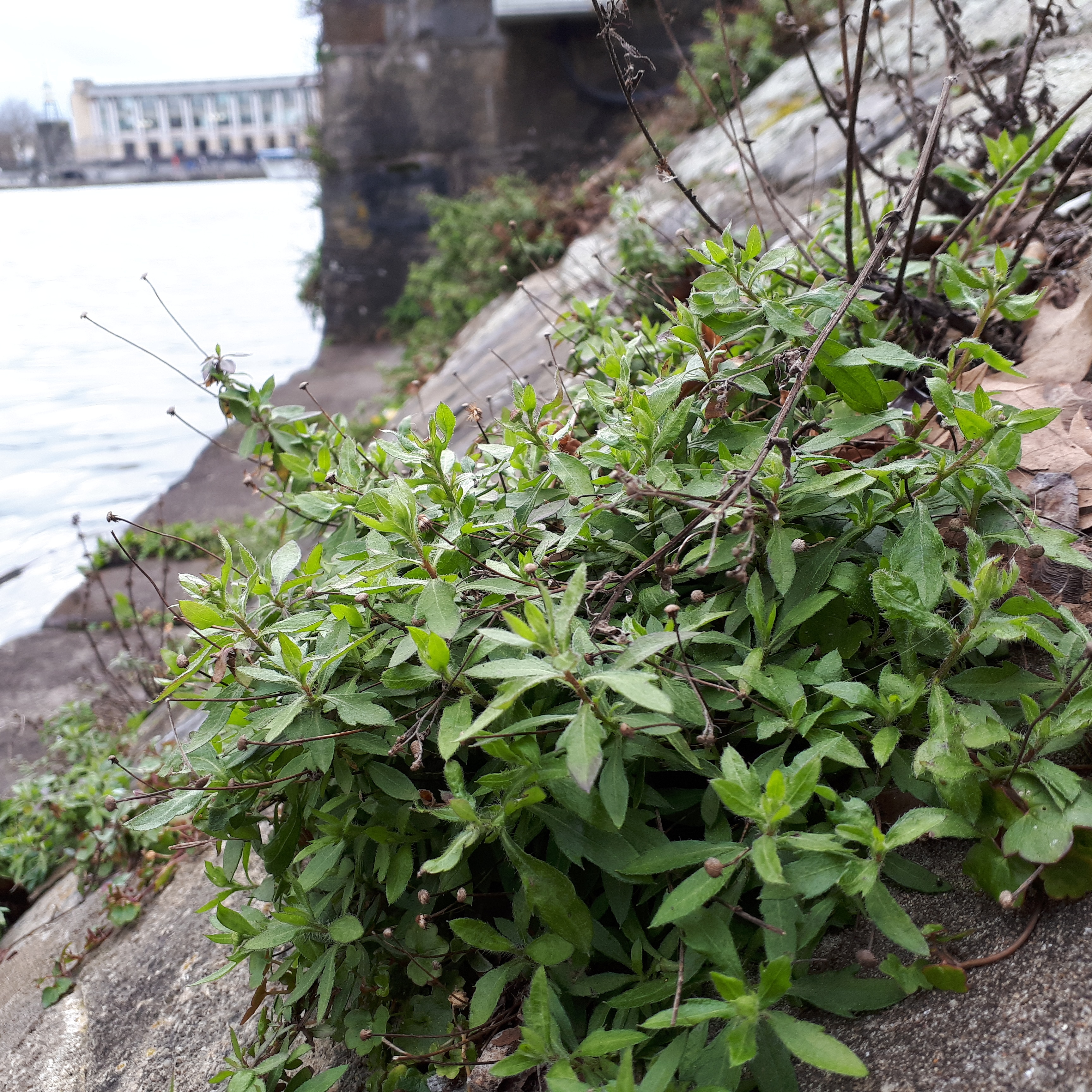
I took a few snaps of edibles which I noticed along the way. The place is very tidy, and popular so most of the plants that I found are resilient perennials. Just look at this little beauty: Ivy Leaved Toadflax (Cymbalaria muralis), sometimes called the Climbing Sailor which makes it so suitable for this nautical location!  What lovely geranium-like rubbery leaves. I do enjoy a nibble on this sort-of-cress-tasting-plant when I find it growing abundantly.  Today was neither the time nor place so the plants spotted in Bristol, carving out a quiet existence in the ship shape hustle and bustle, were left in peace.


IMG_20190219_174138_032.jpg
Climbing sailors – Cymbalaria muralis

Now, along this old railway track – a remnant of the old coal dock, I did find a lovely (if small) selection of urban edibles including Herb Robert (Geranium robertum), Chickweed (Stellaria media) and Mugwort (Artemisia vulgare).

20190219_123602.jpg
And here some of what I believe is Common Mouse-ear (Cerastium fontanum). Very pretty, clustered chickweed-like flowers, bouncing in the breeze, a top leafless stalks. I find this a stunning little edible. Darned tasty (if a little hairy on the tongue) and very fertile. So, if you can access one in a location that it flavours, you will not go hungry.


IMG_20190219_174408_139.jpg
Mouse-ear

The only place that I found around the harbour which was worthy of some urban herb harvesting was on the sloping path that runs towards the little ferry (to the SS Great Britain). There is a quiet green patch, full of brambles, stinging nettle and other lovelies. The plants are starting to build their foliage now so best left for now but in a month or so, that patch should be brimming with nettle tops and bramble buds. I find Bramble leaf buds a great source of fruity-tannic flavour, vitamins and minerals. By shrewd nibbing-out of buds, you can control the growth of a bramble patch in seconds whilst building up an interesting wild tea in your caddy.

So that was my little February Bristol Harbour edibles wander.  I am in Chepstow now, thoroughly enjoying the sounds, sights, taste and company. Will try to make a compilation of Chepstow forage-ables, before the week is out.


Want more?
If you want to learn about the edibles growing near you, how to ID, safely & ethically forage and how to include them in your life, take a look at my course. I would love to help you along your urban herbology journey!
 

Foraging Wild Garlic

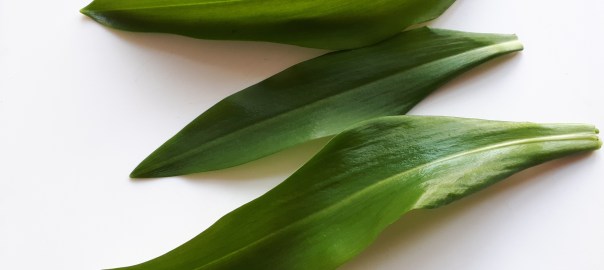
Three beautiful blades of Wild garlic / Ramsons / Daslook (Allium ursinum), plucked from the River of Herbs orchards in Park Frankendael today. I made some pungent daslook sauce from these, by blending them with olive oil and a little apple cider vinegar.

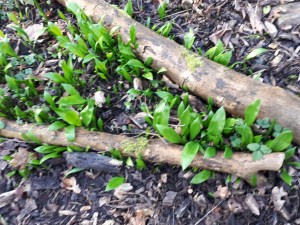
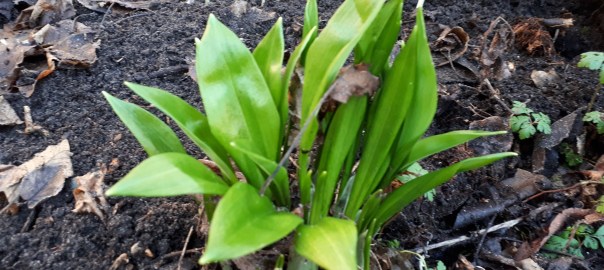
And here are a couple of year old wild garlic bulbs which I removed from the orchard path. The reason for this is discussed in the podcast. Have a listen and let me know your uses for the plant and if you have had any success growing it. The paths are edged with fallen branches. In this photo you can see how the plant spreads into the paths.

I only forage wild garlic when there are huge swathes of it and the leaves are a few inches long.

I’m off to make some dinner using a little of that sauce now. Perhaps you would like to listen to my latest podcast, about ethically foraging Wild Garlic and how to use it.

Join the team!

I want to share this post from the River of Herbs with you today. The team of volunteer gardeners needs enriching! Please share with green fingered friends or come along yourself 🙂

Lynn's avatarRiver of Herbs

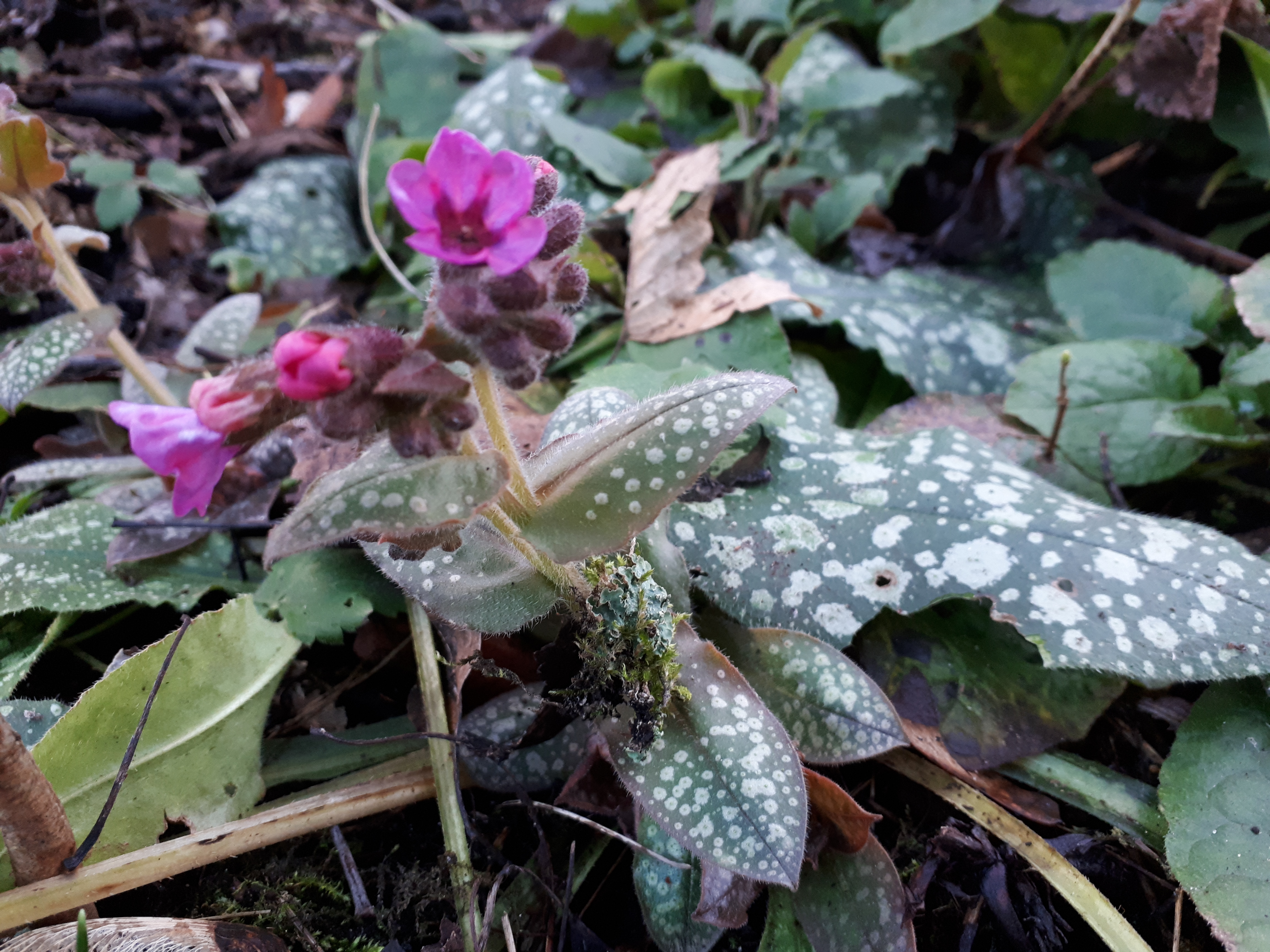
lungwort.jpg

We are urgently looking for volunteers to join the River of Herbs orchards team – would you like to join us?

Because our numbers have dropped recently due to changes in volunteer work days, we now have a tiny team and we need to expand!

Could you spare a couple of hours a week to help with light gardening with this friendly group?

We work organically, along Permaculture principles and in harmony with the local ecology and landuse partners

The orchards house old fruit trees and were set up as ethical foraging gardens in 2014 by Lynn and a fabulous team of enthusiastic nature lovers.

The four orchards are full of beautiful edible herbs, mushrooms, fruit trees and bushes and countless wildlife.

We like to experiment with interesting plants, share food from our foraged harvest and generally have a good time together.

Regular gardening restarts on

Monday 4th March,

10.00am.

View original post 26 more words

Imbolc Foraging Podcast

I am working on the Urban Herbology courses at the moment. As well as creating a lot more content and member forums, I am adding podcasts and videos to the units of study. I am having a lot of fun with it!

Here is a short podcast made today, in Park Frankendael. I had a 10 minute wander in one of the Orchards and found some tasty treats.

To book a place on my next walk or workshop, see my events page.

Early Spring Apprenticeship Workshop

Monday 18th February 2019

10.00 – 13.30

Amsterdam

This workshop is open to my apprentices (from my online/blended course and past apprenticeship groups).

Early spring is a great time to forage, craft and plan new growth for the year ahead. This workshop is a chance to share time together, explore urban nature, talk over issues and build Herbology crafting skills.

Cost €50

We’ll meet at my home (in Amsterdam Watergraafsmeer, near Park Frankendael) and then work inside and out. Light lunch, infusions and teas provided.

Please email me as soon as possible to book your place.

If you would like to join the workshop, you must be a past or present student of my apprenticeship course (either on the full course or studying module by module).

Details on how to join the course.

Metamorphosis

Taking a break from offering workshops and walks, over the past year, has allowed me to concentrate on other things. I thought that it was about time to share some of these with you. One has been taking on a promotion at the British School of Amsterdam, where I work. This development has provided me with the challenge I have been looking for and it feels great!  If you are interested in what keeps a (happily) school bound urban herbologist entertained, read on…

Bansuri

Time has also been freed up for me to finally learn to play the beautiful Bansuri which I brought back from India 13 years ago.  Kees van Boxtel in Haarlem, has become my teacher and what a wonderful teacher he is! His website shows details of upcoming concerts and other interesting things. If you like classical Bansuri, I suggest following his YouTube channel. I can’t write much more about the bansuri – you need to hear it and feel it. It is a very basic feeling. Kees comes to Amsterdam in March (the 3rd I think, at Noorderlicht) if you are interested to see him play there.

20171222_145931_0011217370638.jpg

Moss

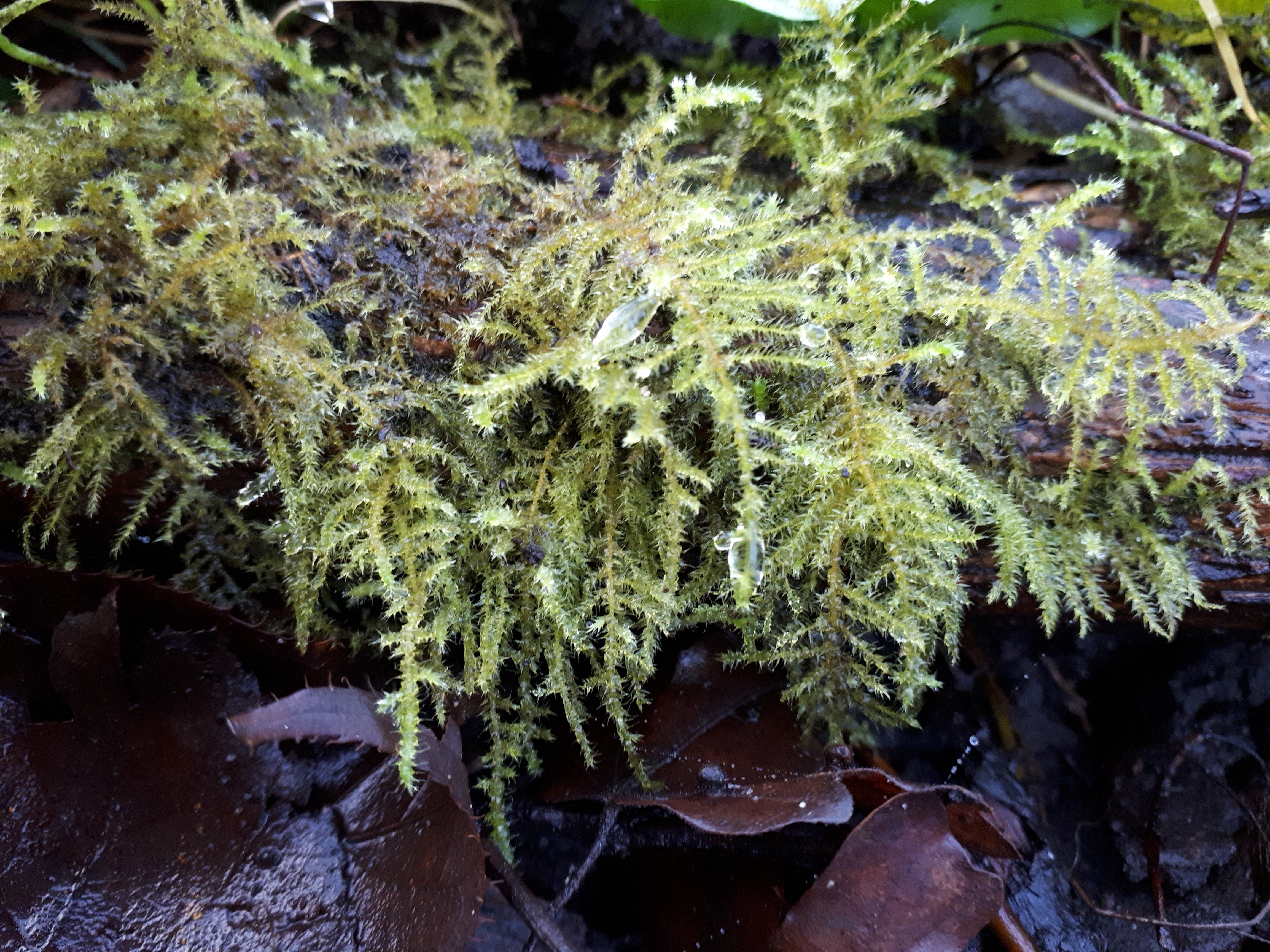
My moss love has grown to incredulous heights.  Have you spent time moss watching lately? I thoroughly recommend it if not and if you have, how did it make you feel? Did you have a hand lens with you or are your eyes sharp enough to focus on the many intricate details of the moss structure and glistening water droplets caught therein? Moss watching and moss care gives me a deep sense of calm and greater connection with the world around me. One of the most wonderful things about moss watching is that it can be done in so many places. Moss takes up only a little space, if you want that. It does need care but this is easy to learn and becoming tuned in to adopted moss, tunes you in to the developing seasons and weather.

See the source image

Open water swimming

I want to train to swim the 2km Amsterdam City Swim, late summer this year. Hoping to rope in a few colleagues and friends to join me.  Fancy joining? Sign up has not yet begun, so there is time to think about it and dust your wetsuit off.

Sun Hive
Photo credit: Natural Beekeeping Trust


Apicentric beekeeping

I love honey, don’t eat much of it but I do use it to make medicinal herbal infusions and elixirs and I find it one of the best things in life – on a great many levels that I won’t get into here and now. I have long been a proponent of not keeping honey bees in the city, especially Amsterdam, because we have so many here. It seems that every year more and more very well intentioned hobby beekeepers train and set up hives in Amsterdam and I know they are well intentioned, but have not been interested. I have focussed on the wild bee population, increasing forage plants for them in urban spaces and encouraging others to use those plants ethically and to grow them.

Sun Hive
Photo credit: Natural Beekeeping Trust

However, my sister gave me a Christmas present – Do/Beekeeping. The secret of happy honey bees. By Orren Fox. It is a great read, by a young and enthusiastic American beekeeper. He writes about classic beehives, with such passion and respect for the bees that I decided to delve deeper. I am ready to sign up to train as a bee keeper – learn the rules, join a group, share a hive I hoped…  But the more I think of those cuboid bee hives, the less natural I find them and the less I want to proliferate them. I know there are the Warre hives, people who leave most of the honey in there rather than feeding the bees sugar water over winter, but still. I must learn it but this not going to be the way for me. It is crystal clear. I want to provide gardens for the bees, all the bees and offer more natural homes for the bees who want to move in with me.

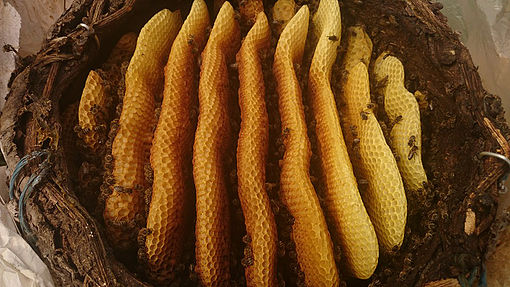
Exquisite Comb
Photo credit: Natural Beekeeping Trust

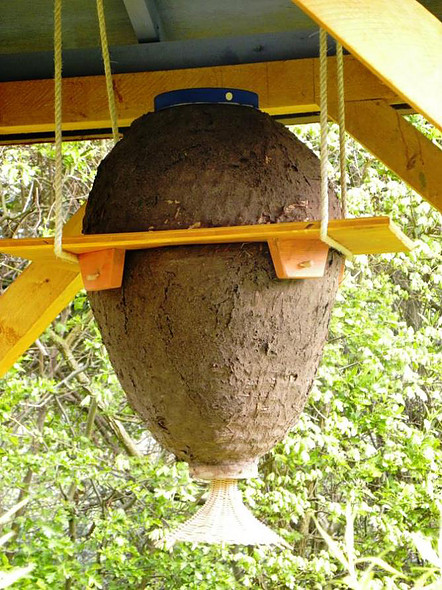
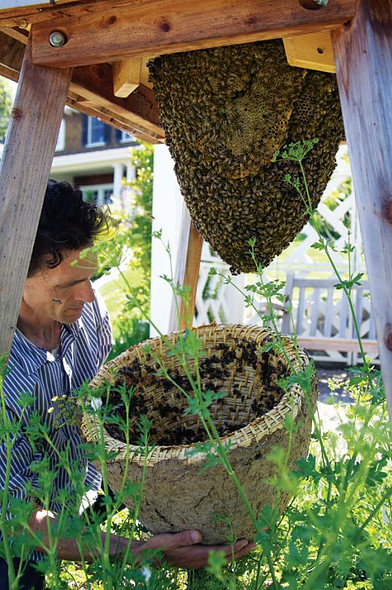
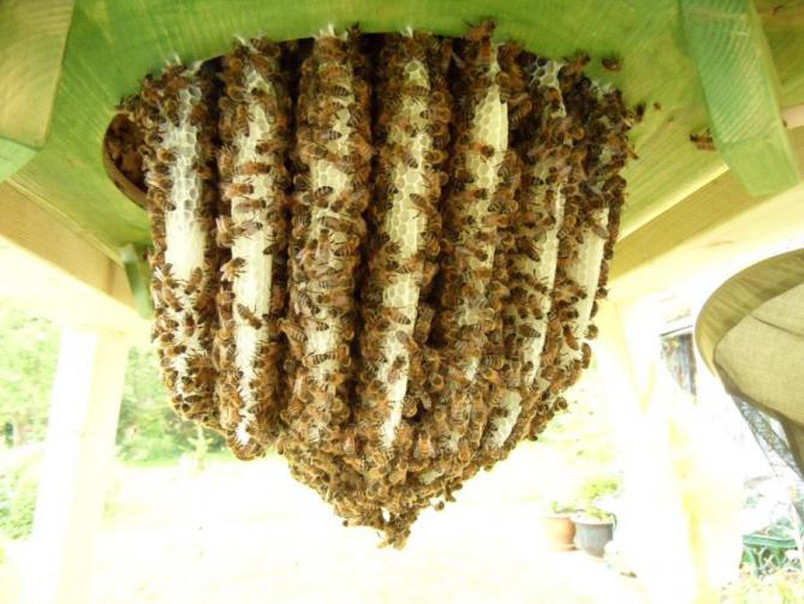
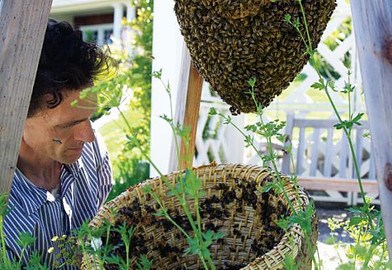
So I started to research skeps – those classic honey pot round top cone shaped natural material structures used in the middle ages. It is decided (if you don’t me, I am like that, if the feeling is so strong and clear, I must do it), I am going to make one this year, or a few, from willow harvested from my Amsterdam volkstuin garden. I will craft at least one skep, cover it with clay and find suitable places to set them. When I am able to harvest, I shall place another skep on top, let the bees move and then take a small amount of honey comb.  Sounds simple… There’s a long way to go until I have all the skills needed, but I can see those bees and smell that honeycomb already, so I am half way there.

Photo credit: yovenice.com

Then (of course) I wanted to go further back, to the most basic type of beekeeping that I could imagine. Bees in trees. Just doing there thing in hollowed out spaces and being very healthy. An old friend, Maurice Marssen was/is interested in a project where swarms would be moved in to special hollowed out tree stumps, to be merely observed now and then, but I couldn’t find his number or email so I kept on looking..  This led me to the Natural Beekeeping Trust, based in the UK. What a great, well intentioned and internationally minded organisation! I am in! If you like the thought of tree hives, watch the inspiring video on this info page, by one of the trustees. They produce a quarterly magazine all about very natural beekeeping, called Natural Bee Husbandry. There is a link to something called a Sun hive, developed by a German man. It has lovely features, allowing some honeycomb harvesting without grubs inside the comb (by excluding the queen from one area of the double skep style hive) and the form is said to reflect that of naturally built honeycombs.  Also a wonderful video page including a video about a couple living in Snowdonia who have been monitoring wild honey bees in trees and have been experimenting with not treating half their cuboid hives with chemicals against the dreaded Varroa. The video is called “Has Varroa lost its bite”.  I again want to move to Snowdonia (of course).

Photo credit: Natural Beekeeping Trust

So now, I am signed up for a local conventional Imker/Beekeeper course to build skills, experience and get connected with local beekeepers. I am heading off to my volkstuin to weave a skep from homegrown willow, am dreaming up more massive flower gardens to satisfy the needs of more native bees and low intensity relaxed honeybees and am keen to meet others with apicentric interests. I’ll update now and then on my progress and hope to hear from anyone out there who is in a similar frame of mind!

If you fancy seeing what happens when the lid is raised from a Sun Hive...


Imbolc

It’s time to slowly come out of hibernation and soak up the sensations of early spring. Walking around town today, the smell of rising sap was palpable! Bulbs are up, the weather is mild and I feel happier to pluck. Imbolc is upon us.

I find this a very exciting time if year. Nature is always full of promise but faith is needed as this time of the year. How will those plants rise above the cold ground and swell? How will those bugs find the energy to buzz around us again?

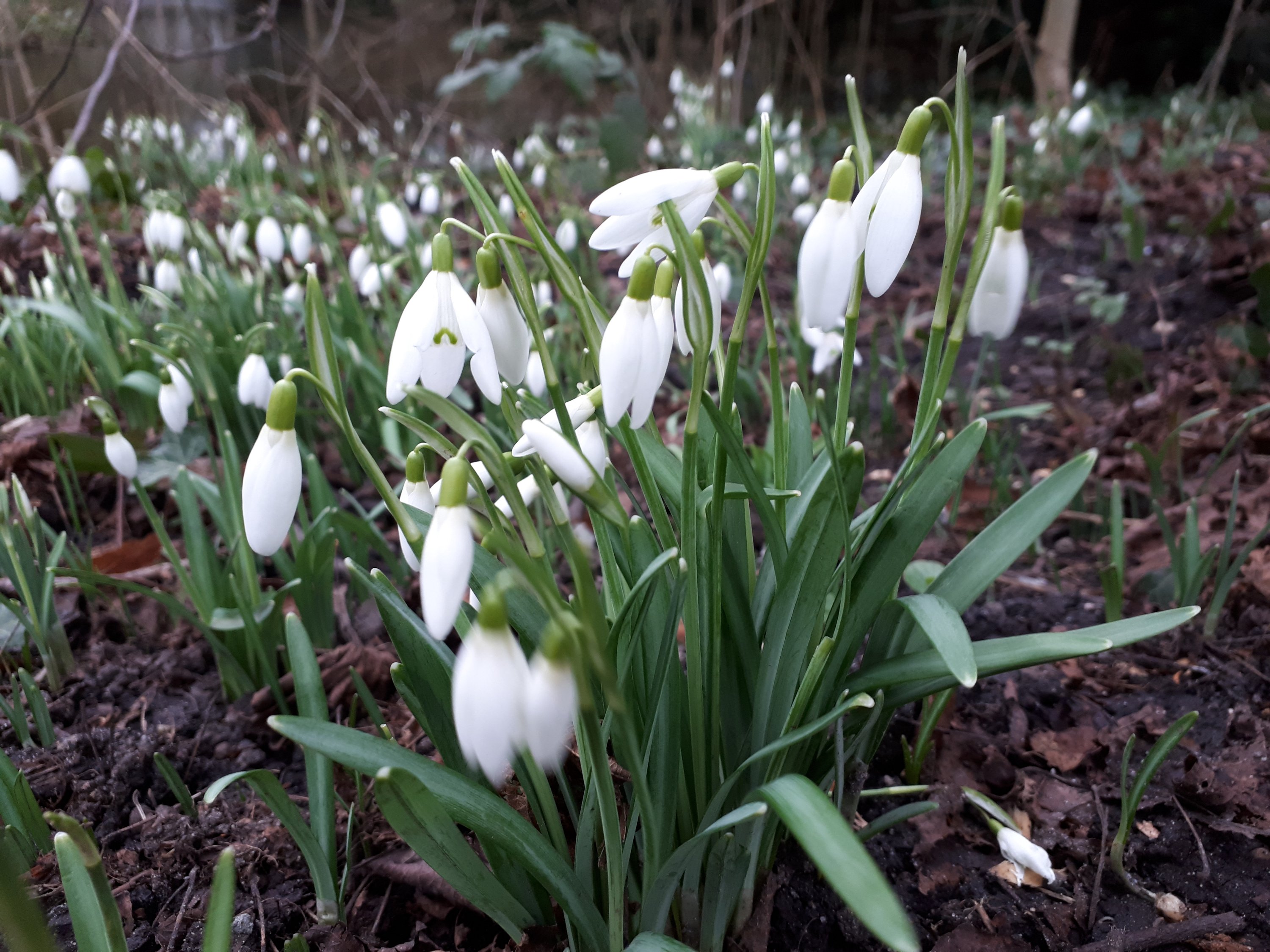
From Imbolc until midsummer, nature seems to gradually build up to a frenzy of activity and productivity. This time allows us to see how plants look as they rise out of the soil. We can see the first true leaves of cleavers, the cold tolerant blades of wild garlic and the irresistible (non edible) dancing snowdrops.

I’m soaking up every ray of sunshine this Imbolc, the bright moonbeams of the blue moon and most of all the sights and sounds of emerging plants.

What is delighting you this Imbolc?

Midwinter moss watching

The shortest day is just behind us and the weather in Amsterdam is mild, dark and misty.  I’m looking forward to longer, brighter days.
It’s pleasant to reflect on life and be able to forage at this muddy time of year.  I’m foraging a little when the urge strikes me but not much. The plants really need a rest and I do too.

Mosses, liverworts and lichens are catching my attention these days, far more than anything else. Some are edible (in theory) and many have a multitude of uses. For me, they represent calm; deep, earthy, cool, calm  I’m enjoying looking at them a lot. Sometimes through a magnifying lens, or through a camera but mostly just by getting up close, tuning into these ancient simple plants, looking closely at how they do things and smelling the air around them. And don’t they just smell great!

I’ve developed such a love of these green beings that I am planning space for them in my garden, rather than herbs.  I’ve also been making moss gardens in old bonsai pots. My next workshop will be about kokedame (moss balls with plants growing in them). It’s a quietening phase.

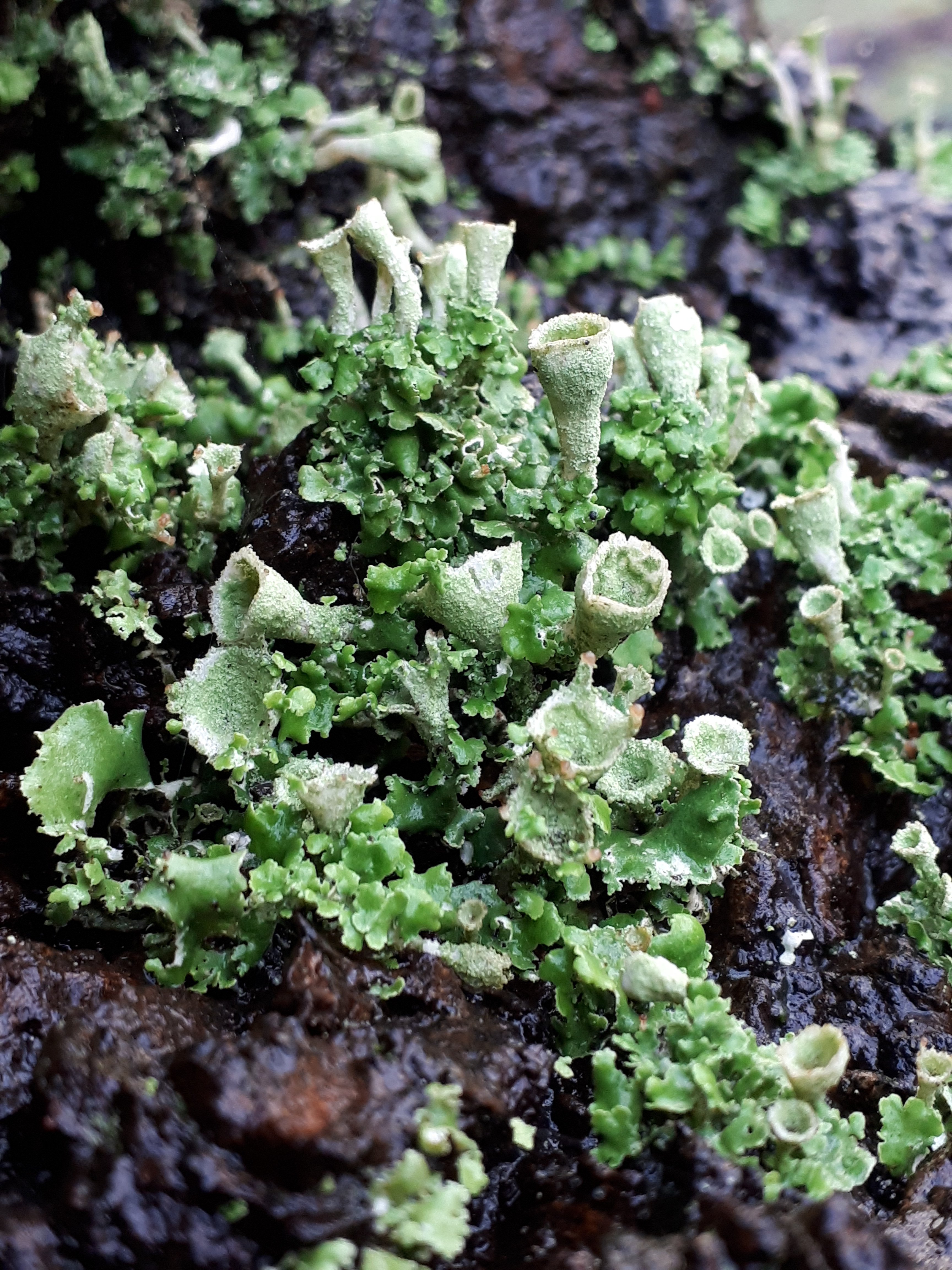
Here’s a lichen, with wonderful spore trumpets, growing crustily on an old cherry tree in Frankendael. Such a pretty life form. I could study it all day!

If you also share this love of small green simple plants, I’d be delighted to hear how you celebrate them.