All posts by Lynn

Unknown's avatar

About Lynn

Learning

Ginkgo Harvesting in Amsterdam

image

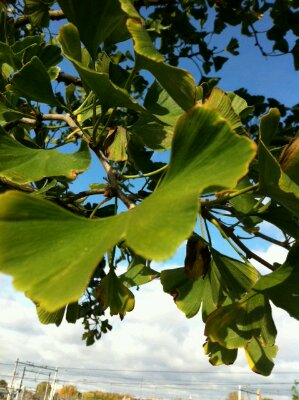
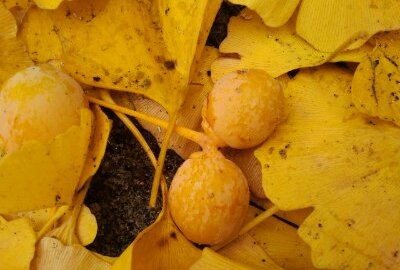
For some years, each autumn, I have trudged through putrifying Ginkgo fruits, fallen amongst fossilesque golden Ginkgo leaves, on Albrecht Durerstraat in Oud Zuid, Amsterdam. It is where I work and is a street that the local council chose to line with this amazing tree herb, many moons ago.

Ginkgo biloba is a fascinating plant. Often known as the Maidenhair tree or the living fossil tree, it is incredibly resilient to damage and pollution and is well suited to the urban environment. It has been long revered by traditional Chinese and Japanese medicine and apparently has many uses, particularly for the circulatory system.  This is apparently the most adulterated herbal extract that people buy. Most people seem to take the extract to improve their circulation, for cold hands and feet for instance and to boost their memory. Be aware that there is much conflicting evidence about the effectiveness of Ginkgo for memory loss and demetia. As ever, treat all claims with caution and if trying something new, be very cautious. Here’s a summary of the current research.

image

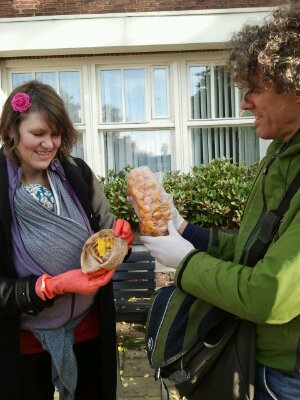
This lunchtime I was joined by 5 adults and two snuggly wrapped babies, to harvest some Ginkgo nuts which have dropped onto parked cars and the pavement.  The flesh (sarcotesta) around the nuts is HIGHLY TOXIC, containing the same chemical as poison ivy. Anyone wishing to harvest, should avoid touching it.  The chemical causes a very serious skin reaction and requires prompt hospital treatment.  Likewise, because Ginkgo acts as an anticoagulant, if you are already taking drugs which act to “thin the blood”, you should avoid the herb and consult your doctor for advice, if you really think it could be of benefit to you.   If you are allergic to aspirin or nuts, this is also a herb to avoid.

Please follow the instructions in this link if you want to know how to prepare the nuts. Note the rubber gloves and photo of blistered eyes, on that website!

By removing these smelly fruits from the pavement we are sparing the local residents from some nasal pollution and are harnessing an urban resource that people in some other countries would be very envious of.
image

So if you want to join me and a few others on Friday at 12:35 or on Tuesday at 12:45, please come equipt with a pair of rubber gloves, a couple of sturdy plastic bags and perhaps a spoon or chopsticks, to pick up the fruit.  Much of the current harvest has already been swept into the gutter but this is still fair game for the well prepared forager! We’ll be meeting outside of the AKO newsagent, on the corner of Beethovenstraat and Gerrit van der Veenstraat (trams 24 & 5). I’ll be wearing my yellow raincoat and rubber gloves 🙂
A Witch’s Dozen – 365 day 192

Thank you to everyone who braved the autumnal weather and joined me this evening for the Witch’s Dozen herb walk through the woods of Park Frankendael and the gathering afterwards in Merkelbach. Ten weatherproof women and two mini foragers, joined me for a seasonal walk through the woods as day turned to dusk then night. Merkelbach was a lovely place to end the full moon day.

Here’s my photo of the day, a little shaky and wet after the Witch’s dozen walk. I hope it gives the idea anyway.

image

Flying ointment recipes were mentioned. I found many different recipes whilst researching for the walk but the one written here, seemed the best without being full of plants which we all know are highly toxic. Traditional recipes seem to have included herbs such as belladonna, datura, mandrake, opium poppy, water hemlock, monkshood, foxglove, Balm of Giliad (balsam of poplar trees), calamus root, cannabis, clary sage, dittany of Crete, mugwort, tansy, wormwood, and yarrow.

If you’d like to seriously look into the magical tradition of flying then perhaps take a look at this blog entry by The Witch of Forest Grove. It is nicely detailed.

I’m not one for the seriously toxic ingredients so kept hunting until I found the following recipe. It was posted on the wisewomanforum by a woman called Lady Belladonna in 2004 and she seemed to have had fun with it. All the ingredients grow locally although vervain probably resides indoors at this time of year in Amsterdam. I can’t recall where she said that she got the recipe from or if she concocted it herself, so I’m calling it…

Lady Belladonna’s Flying Ointment

1/4 cup grated beeswax
1/4 cup olive oil
1/4 tsp. of each of the following herbs, dried:
cinquefoil
vervain
mugwort
thistle
1 tsp ash (recipe called for chimney soot – LB used her own mix of ash from a marijuana joint mixed with a dried leaf of Diviner’s Sage – “more fun getting this together than cleaning out a chimney!”)
1/2 tsp of benzoin powder
1/2 tsp of clove oil

Combine the beeswax and olive oil in a double boiler and melt over low heat. Finely powder the herbs in your mortar and pestle. When beeswax and oil is melted, add in the herbs, benzoin and clove oil. Stir clockwise, empowering with your intent or saying whatever charm or spell you wish. LB also added a couple drops of sandalwood oil for the fragrance. Simmer gently for about 10 minutes, strain through cheesecloth into a heatproof jar, and let cool.
Apply and Fly!

365 Frankendael day 189

Thank you to Dana who kindly sent me photos of herbs she found on Prinseneiland yesterday. They look beautiful! It’s years since I went for a wander around that neighbourhood, one of the prettiest in Amsterdam. Must do it again sometime soon.

image

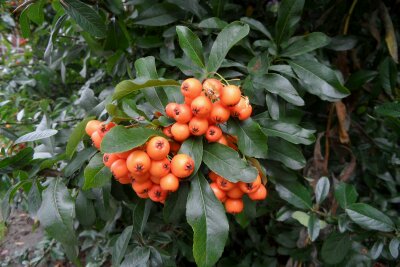
Sea Buckthorn (Duindorn), makes a fabulous honey syrup as Katja, one of my apprentices showed me recently.

image

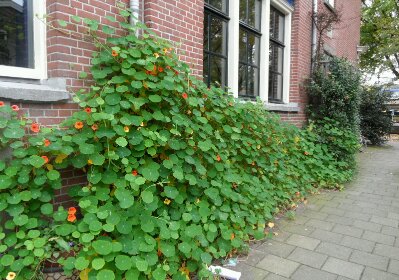
Nasturtium, peppery, delicious and abundant!

image

Gallant soldiers, potatoes combine well with this little herbal beauty.

image

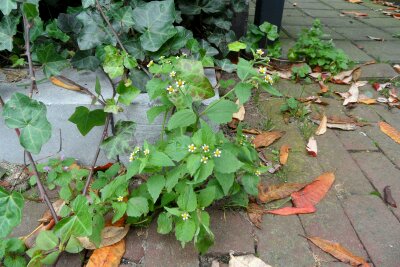
Fat hen (yum!) and Greater Celandine (external use with caution, toxic internally).

image

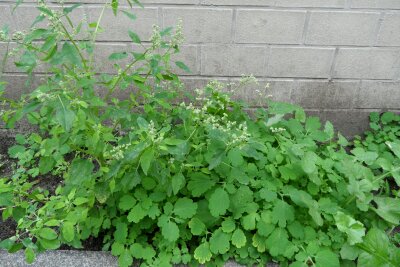
This one looked like Lady’s mantle at first glance of the photo but I see that Dana labelled it Common Mallow, which looks like the correct id. Both edible, one (LM) glimmers when water hits it,  as the Latin name explains and it tastes terrifically bitter. The other, mallow, tastes gooey finally and has leaves that are not so spectacular when wetted by dew or rain.

Thank you Dana!

365 Frankendael day 187

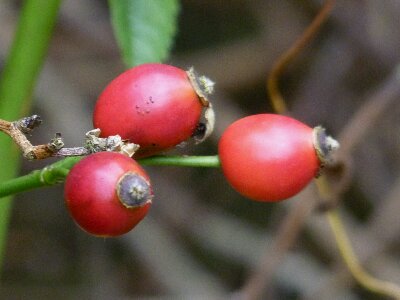
Beautiful Roses, still in bloom and edible if unsprayed and growing in clean locations, here in Amsterdam.

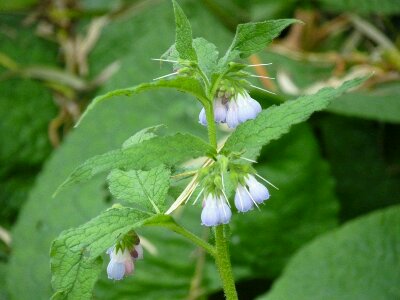
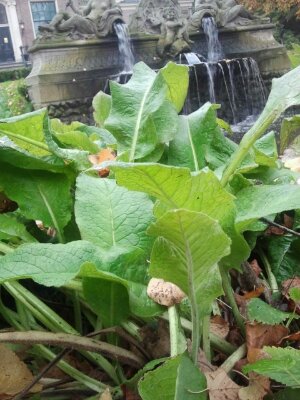
Next is Russian Comfrey (NL: Smeerwortel, Symphytum uplandicum x) which I picked a leaf from today. Am currently brewing a tea from it ready to feed to my houseplants.

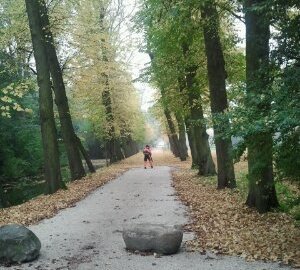
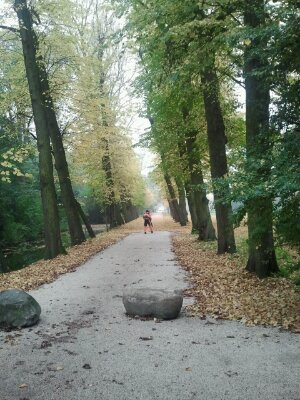
And lastly, the Park Warden blowing leaves from beneath the Lime tree avenue (NL:Linden, Tilia sp.)  in Park Frankendael.  Today seems to be Amsterdam leaf drop day, they are thick along the pavements and streets. Time to make the most of the beautiful autumn colours.

365 Frankendael day 186

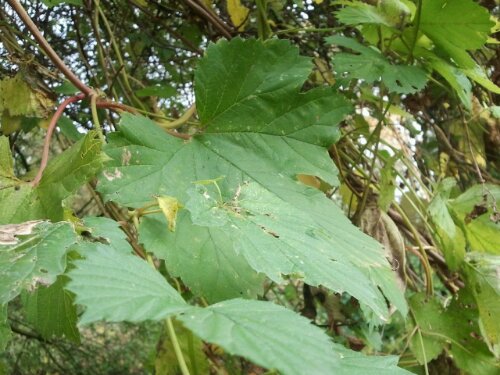
Some Hops (Humulus lupulus) today,

image

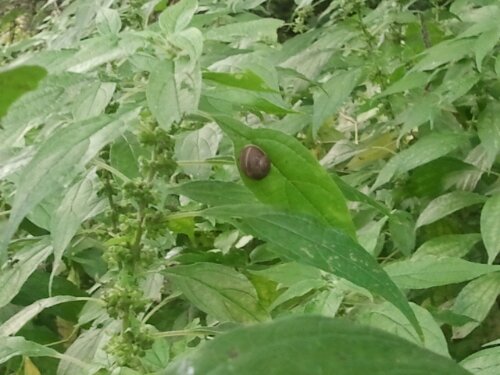
Along with Pennsylvania Pelitory (Parietaria pensylvatica).

image

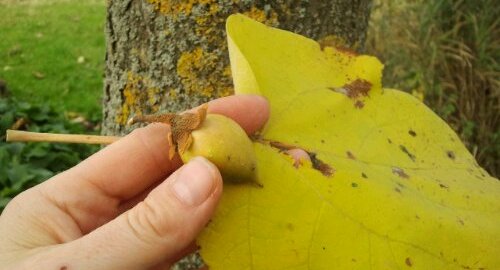
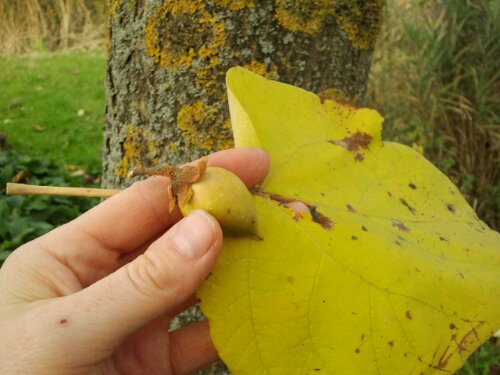
I was back at the mysterious “French nut tree”, in the park also today. I’d thought it may be a member of the  Pistachio family but my tree identification book tells me it’s not. I’m still clueless as to it’s real identity and whether it’s edible our not. Any ideas?

image

The leaves are heart shaped, wooly on both sides (particularly beneath but a little on top) smooth edged and my full hand span across. The fruit has a five pointed calyx and it tapers to a sharp point at the end of the fruit. The one I picked today is a little sticky on the outside.

365 Frankendael day 185

An early start for me this morning. Cathy Leaung kindly invited me onto her morning radio show – The English Breakfast. So off to the Salto studios I went and had a very enjoyable time, sharing Mugwort Bread, Hawthorn Elixir, Four leaves ointment and Rosehip Honey with Cathy and her co-presenters.

Here’s a link to the interview. You may need to turn the sound up a little, to hear me clearly as I kept turning away from the mic to speak to the co-presenters. The link will remain active for a month or so.

I have given them a voucher to give away in a competition, for a free Herb Walk with me, either the Halloween walk or a private one. Names will be pulled from a hat at the end of today. You need to look at my post from yesterday (21st October 2012) and tell English Breakfast Radio which herb I was talking about in that post, via their Facebook page.

On the way home I found the following herbal lovelies…

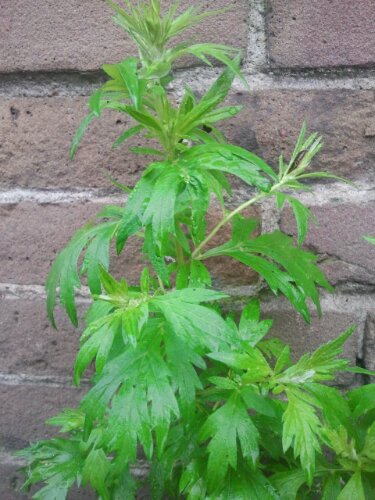
Mugwort (Artemisia vulgaris)

He is the underside of the Mugwort leaves, beautifully silvery.

Here’s a pretty, poisonous but useful Greater celandine (Celidonium majus).

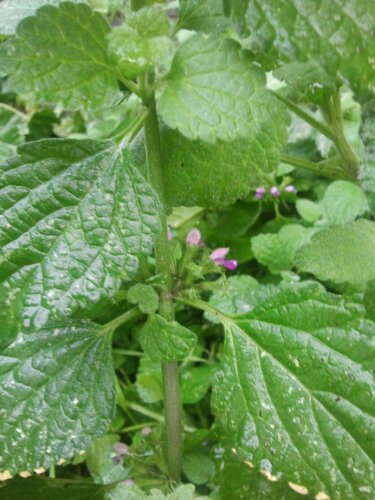
And lastly a beautiful labiate which I need to properly identify (was in a rush to get home from the interview). I think it is most likely to be Black Horehound (Ballota nigra).
image