All posts by Lynn

Unknown's avatar

About Lynn

Learning

365 Frankendael day 146

In case you haven’t noticed, city nut foraging season is upon us.

I passed by Oosterpark today and noticed a middle aged chap, ferreting around in the undergrowth at one corner of the park, with his young son calling directions to him from outside of the fence. Ah ha Hazelnuts!, I thought and I was so not disappointed when I dived into the same bushes!

During a five minute squirrel-style frenzy, in the soil and dry leaves, I managed to amass a few dozen prime city Hazelnuts (Nl: Hazelaar, Corylus avellana) Delighted, is an understatement! Spurred on by my success, i took a quick tram ride home and sped to a copse of Hazel and Beech at the bottom end of Pythagorasstraat. That spot is a local’s favourite; There is a well trodden path into the copse and a scarcity of nuts but none the less, I didn’t go home empty handed! Later today, I’ll probably toast them all, add some to a hor chocolate and add the rest to Frank’s muesli tub. They should last a couple of weeks in that.

If you’ve never toasted Hazelnuts yourself, and if you like the taste of chocolate, then I implore you to have a go. Buy some from Odin or your local grocery store or better still, get outside and forage a handful yourself. Lear how to identify the tree and get hunting beneath them and I the branches. Green and brown hazelnuts are just fine but the free ones need to be used almost instantly whereas the others should keep up to a year, if stored properly.

How to toast hazelnuts
1. Once dusted off a little, crack them open and discard the shells (return them to the forage spot if possible). Some shells may be empty – hedge blanks. It’s a pity if you find only those.
2. Spread the nuts on a baking tray and give them just a glance of olive oil. To do this you can pour a little into a corner of the tray and toss them all around until they glisten or brush them with a little oil.
3. Set in an oven which has been preheated to about 180°C, leave them to cook for about ten minutes.
3. Remove from the oven (as with all nuts, watch out for explosions, maybe cover with a clean tea-towel as you maneuver them from the oven. Let them cool before using or eating.

The smell in your kitchen should be sweetly, nuttily, mouthwatering after that short time and if you are anything like me, I doubt that many of the toasted nuts will actually make it to a muesli bowl. Lots of recipes make good use of Hazelnuts, both savory and sweet. I think that in combination with chocolate they are at there best. So for me that could mean simply smashing a toasted nut and crumbling it over a hot chocolate or to garnish a chocolate dessert. Or it could mean incorporating it into a dish. Nut roasts are a good way to use up heaps of nuts but I rarely have heaps and I like them to last a while rather than being wolfed down in one sitting. Sprinkled over a bowl of homemade pumpkin soup is another easy way to incorporate them.

You can also make Hazelnut milk for the fresh nuts, as described in the River Cottage Handbook no. 7 Hedgerow, by John Wright (see books page). Soak a handful of shelled fresh nuts in water overnight, rinse and blitz in a liquidiser with about 400ml water or skimmed milk. Strain through a cheesecloth or similar.

365 Frankendael day 145

image

Just an autumn photo of a Hugo de Vrieslaan today. Late to work, lots to do.. I just thought it looked nice to see the Lime leaves (Tilia spp.) beginning to fall. There’s still time to harvest a few fresh green leaves if you’d like a stock for winter infusions and other Lime medicine. Lots of the local Limes have enormous burrs on their lower trunks, each offers hundreds of leaves in an unusual location and making it easy to harvest a handful. So there’s no need to shin up a 50 foot tree trunk.

Workshop: Growing Exotic Herbs

image

I’m running a workshop with Suzanne of City Plot (an urban farming collective), this October. Well show you how to cheaply spice up your house plant collection with unusual, tasty and useful exotic herbs such as Ginger, Papaya and Tamarind. What better way to increase your homegrown herb supplies, create a talking point and cut down on food miles!

Suzanne will teach you how to grow the plants from scratch and how to maintain them whilst I’ll show you how to use the exotics to make home remedies and tasty food items.

image

Join us:
Sunday October 14th,
11.00am-1.00pm
Proef restaurant
(garden/inside depending on weather),
Westerpark, Amsterdam.
Cost (including all materials) €25
Max 10 places

Currently 4 places left.

You are welcome to book with me directly, with
Cityplot directly or via the Meetup group.

We’ve chosen this venue because the organic restaurant garden is planted and maintained by Cityplot. It’s a very interesting and inspiring place for city gardeners!

image

Booking requires pre payment which is totally refundable if you cancel up to 24 hours before the event. If you cancel later than that and we find a replacement, you’ll also receive a full refund.

We very much hope to see you there!

365 Frankendael day 144

image

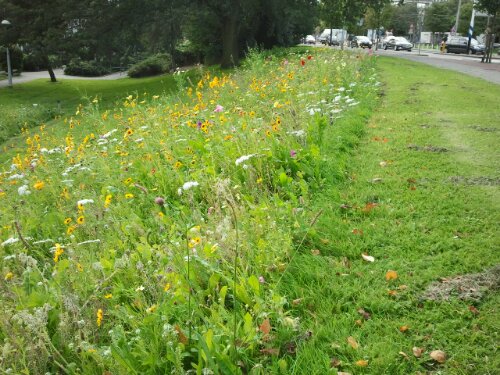
This is a small wildflower meadow that was sewn this year near Amstel station, along side Hugo de Vrieslaan. I’m sure they used the same seed mix a for the latest meadow in Park Frankendael, which is just a stone throw away. So many delicious herbs in there but of course they were not planted with foraging in mind, these are for beauty and local insects.

365 Frankendael day 143

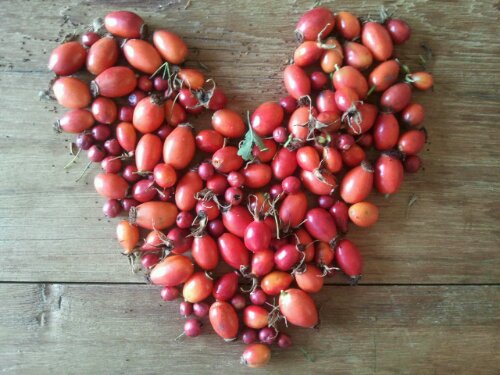
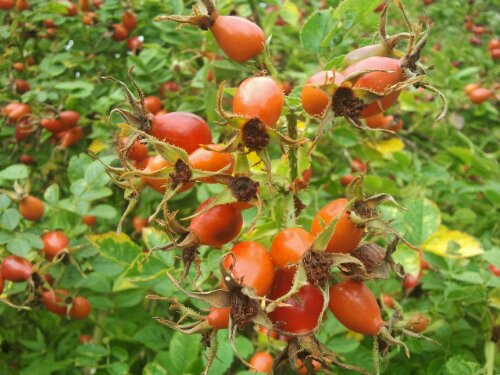
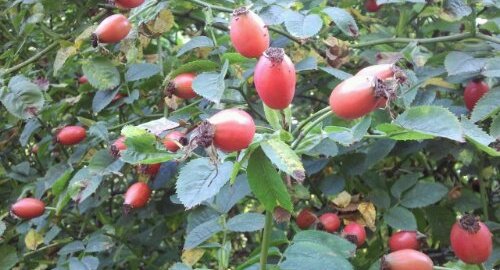
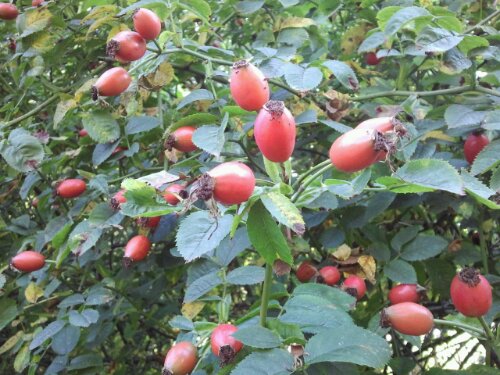
Today, more Rose hip harvesting. Without trying to sound corny, this really does seem to be a good year for the roses! I’m making the most of it by topping up my Rose hip honey infusion jar.

image

There are lots of Rose shrubs with green or very pale yellow orange hips at the moment. This shows that the Rose hip season should be around for a while yet.

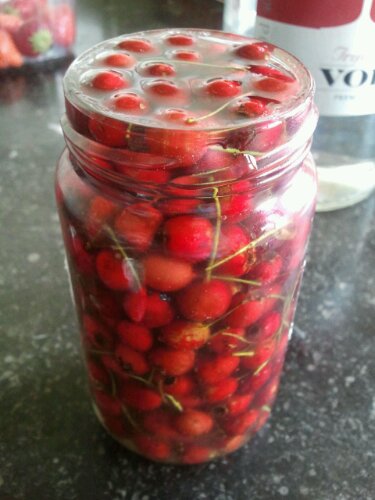
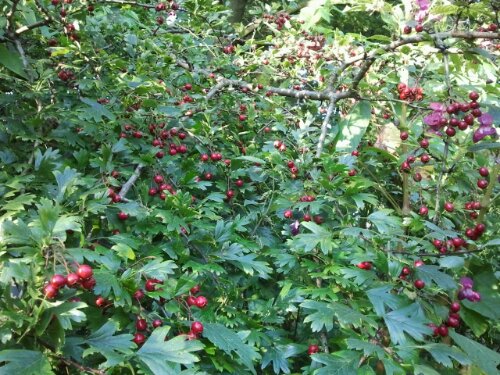
I’m setting up a jar of Hawthorn berry elixir today, so also picked some more of those heart warming and toning berries to add to the mix.

image

To make an elixir, which is simply a preserve made of herbs in some sort of alcohol and sugar, all you need do is the following:

1. Place enough berries (clean, ripe and dry) to fill your jar, into a bowl. 2. Pour over enough honey so that,  with a little stirring, every berry can be coated in sweet goodness.
image

3. Now pour that sticky berry-honey mix into your sterile glass jam jar.
4. Put your chosen strong alcoholic spirit, Brandy and Vodka being the classic choices, into the jar.
5. Poke around a little, with a chop stick or clean knitting needle, to dislodge any trapped air bubbles. Make sure it’s filled right to the top of the jar.
image

6. Leave to sit and infuse, with a tight fitting lid on, in a quiet spot and out of direct sunlight, at room temperature, for about 6 Weeks, or as long as you can bear to wait.

image

7. When it comes to maturity, you simply take off a teaspoon of tasty elixir at a time and slurp it down, or you may like to strain off the berries (save and use them for fabulous desert topings although the stones need to be removed before eating) and store the elixir in a suitable sterile bottle (e.g. a used flip top Grolsch bottle or similar, is perfect).

Hawthorn is a renowned heart tonic.

Processing Rose hips

image

Rose hips are plentiful at the moment. They are nutritious and medicinal. All clean, unsprayed and legally obtained rose hips can be used to make immune boosting preparations. But this is often easier said than done. They are full of itchy, hair covered seeds. These need to be removed before the Rose hips can be ingested.

One way to do this is to make your syrup, or whatever else you choose, and then strain out the seeds and hairs before the final storage.

Another way, is to remove them at the start. It is fiddly but it works and is worth the effort, especially if you’d like to make a cold uncooked preparation, such as Rose hip honey. I also think it makes the harvester/forager quietly aware of each hip and that is a good thing, on many levels.

Here’s how I do it.

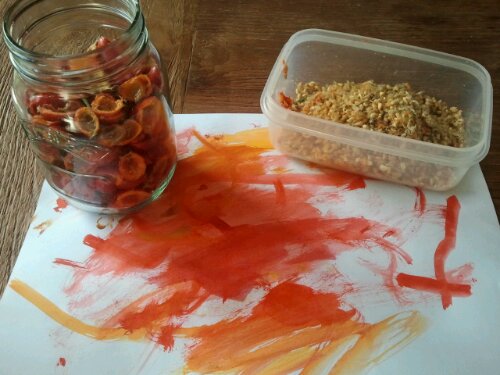
1. Cut a hip in half. Out is best to harvest them before they become soft and pulpy, but when they are fully coloured.
2. Scoop out all of the seeds and most of the hairs, using a strong thumb nail or a blunt ended knife. Quirk through all your hip harvest in this way. Place seeds in a container to return to the harvesting location and the deseeded hips in another.

image

3. When all of the hips are deseeded, place them in a bowl and fill it with water. Swill them around a little, to release the hairs and other unwanted particles.
4. Strain in a colander, whilst swilling around in more water.
5. Lay the washed hips out on a clean dry tea towel (or a dehydrator) and allow them to surface dry. I like to use another teatowel to dry of the tops and then I tumble them around now and again, on dry sections off the teatowel, to speed up the process.

image

6. Wash your hands, arms and wherever else three hairs contacted you, with cold water. They come off easily but may tickle for a long time if you miss an area.
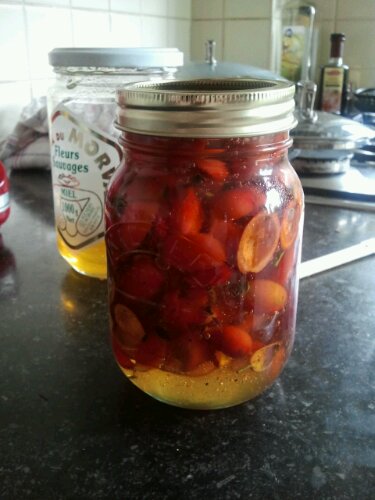
7.Use as described in your chosen recipe. I simply pack mine into a jar and pour in honey, at this point.

image

OTOPIA Street Herbs Walk

This coming Saturday, 15th September 2012, I’m offering two street herb walks out of the OTOPIA festival at OT301.  The walks are almost fully booked. If you would like to try to join, please see the meetup group or email me directly (lynn.shore@gmail.com).

For those who asked, here’s a few links and info about the venue and the festival itself.  I can’t find much about the day programme online so will contact the organisers for a link. I know the theme is about promoting alternative ways of living in the city – hence they asked for my walks. The day programme is free and my walks are €3 each for attendees (they are subsidised by the event organisers). The times are 1.30 and 3.30 pm. Each will last an hour and you’ll get a handout.

It’s a very raw, urban building that will greet you when you arrive at Overtoom 301. It’s used for lots of dance, music, theatre etc events. The walk will obviously be outside and will be along the streets. I won’t go into the Vondelpark as that’s too obvious; We’ll look at real street herbs, pavement gardens, plants growing up houses, in street cracks etc. If you bring a trowel I’m sure you’ll be able to get a free edible street plant or two, to pot up at home or relocate to a tree pit near you 🙂

http://www.facebook.com/OT301Adam
http://www.last.fm/festival/3349459+Otopia+Festival
http://ot301.nl/page=site.home

365 Frankendael day 142

image

Today I harvested Rose hips from the park and after dinner I’ll be setting up a big jar of Rose hip honey. They are just perfect, on many Rose shrubs, at present. Packed with Vitamin C, cold infusing them into honey is a good way to capture their healthy properties. If you try it, remember to deal with the itchy irritating pips, which reside in the hips.

Rosehip Honey Recipe
Simply slicing each hip in two and scooping out the pips and hairs is enough. I then pack then into a jam jar, pour in honey, to the brim, poke around with a chopstick to release taped air, top up with honey if necessary, seal the jar and leave for as long a you can stand!

image

Here’s Hawthorn, also perfectly ripe. I’ll set up a tincture for these I think.

image

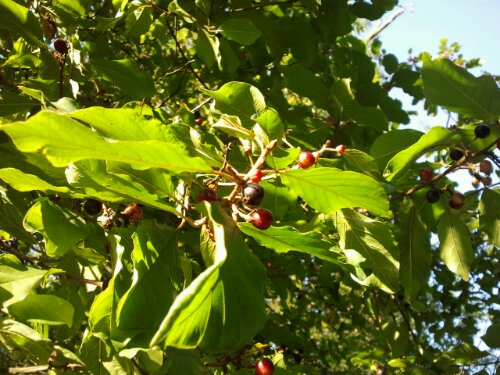
Here’s Cherry Laurel. More on this another day. Perfectly ripe today, also.

It’s been a great day for harvesting! What have you been collecting and making?

Amsterdam Oogst at Tolhuistuin

image

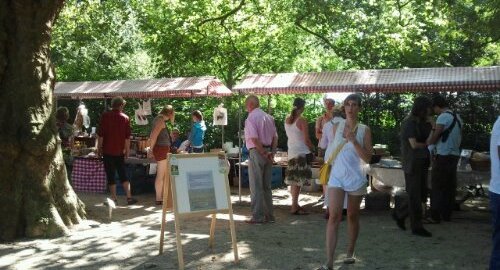
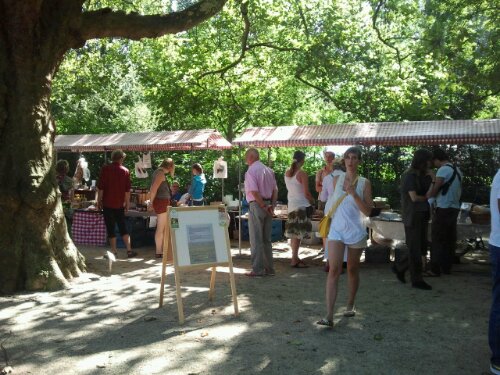
Today I led a small group around the garden at the Tolhuistuin, just over the ferry in Amsterdam noord, by the floating globe. There’s a small festival going on there today, called Amsterdam Oogst, organised by Cities and hosting a local produce market, some mellow music, a herb walk from me, lots of lovely food and a very pretty, shady garden – prefect on this beautiful day!

image

So what did we find today? It’s quite an old garden with winding paths and mature trees and shrubs. We found lots of Elder, some Roses with beautiful ripe hips, Daisy, Lime trees (there are lots of interesting trees there), Hawthorn, Walnut, Plantain, Watercress which seems to have self seeded in a damp grass area, Feverfew and several other wonderful herbs.

image

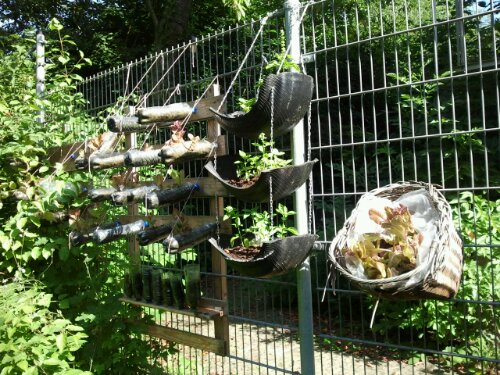
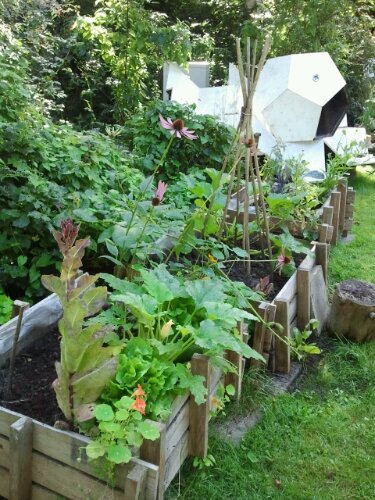
The garden also has lots of interesting new things going on, such as this wall of bottle planters and an area of raised vegetable beds. There is also a plan to have an amazing mushroom forest there. I can’t wait to see it!

image

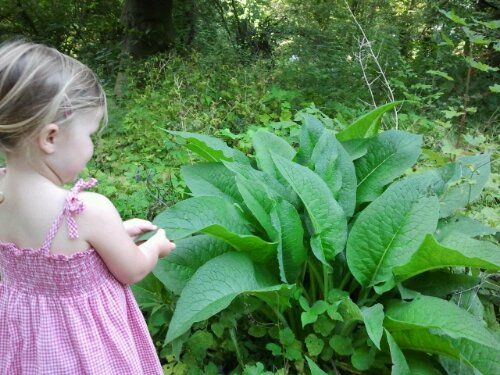
For those who came on the walk particularly, here’s a photo taken today in Park Frankendael of my little girl and a Comfrey plant. They are not an urban myth 😉

image

365 Frankendael day 141

image

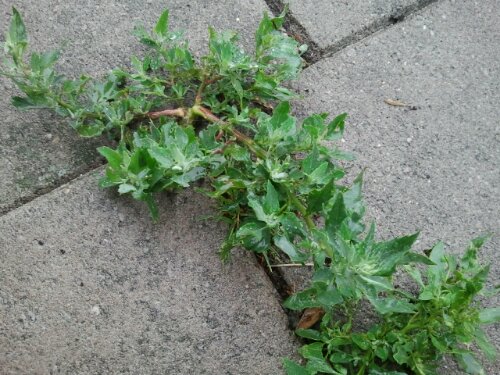
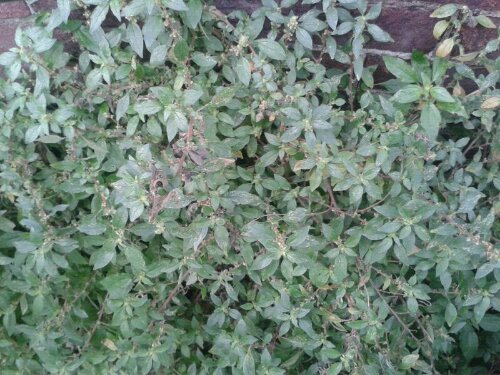
Today a photograph of Pelitory of the Wall (Parietaria officinalis), taken by Elodie den Otter, outside of a yoga studio in Amsterdam. This is a really useful little herb which really is well adapted to growing out of wall cracks and between paving stones. It is useful as a urinary system tonic and has many historic and contemporary applications. Please see my post on day 63 about sister herb, Pensylvania Pelitory, for further information about the two plants.