All posts by Lynn

Unknown's avatar

About Lynn

Learning

Flevopark Strawberries

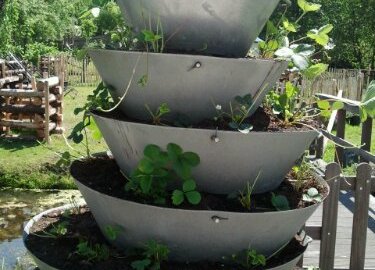
Last weekend we visited the children’s farm on the edge of Flevopark. There is a lot of planting going on there and they are using some great Permaculture style ways to increase productivity and reduce consumption. Here are two which really caught my eye..

A Strawberry planter, much better than the conventional ceramic pots which dry out in no time and cost a small fortune. I think it looks stunning.
image

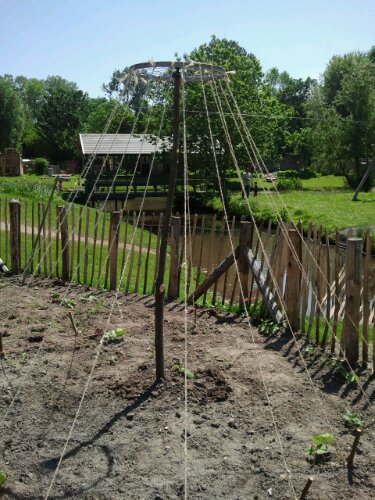
A runner bean frame which has an old bicycle wheel at the top.
image

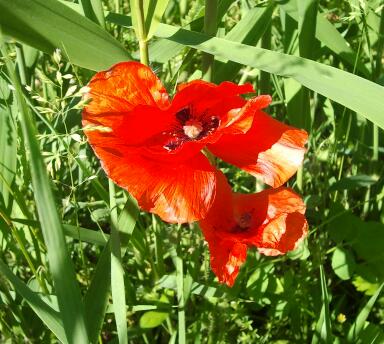
The kinderboerderij is a very special place. Here’s a nice mix of some sort of brassica, poppy and other herbs, growing in the controlled wild of the area. They just looked so pretty…

365 Frankendael day 43

Today I have had a closer look at two herbs which I spotted earlier this week. A Member of the Potentilla genus, a Mint and also graceful Angelica.

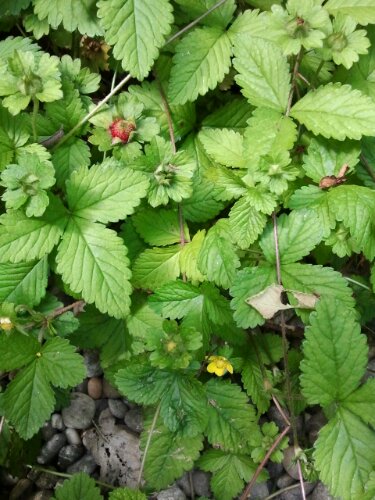
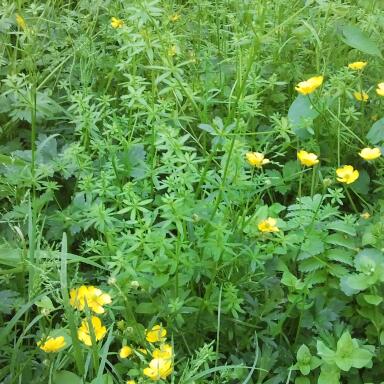
Firstly the pretty Strawberry look-a-like Potentilla. You may remember that my cat ate the last sample I brought home. Today, I had a closer look at a sample leaf, flower and stem, before he had a chance to devour it. And of course I had a good look at it in the park itself. It appears to be Potentilla anglica. It has yellow petals, so is definitely not the white flowering Strawberry (Fragaria vesca) or edible (but not so tast) Mock Strawberry (Potentilla sterilis). It creeps along the ground by use of runners and the trifoliate leaves have tiny hairs on the undersides of the ribs and veins. The leaves all arise in clusters, at intervals from those runners. Creeping Cinquefoil (Potentilla reptans) is very similar but doesn’t have trifoliate leaves. Some of the flowers have already set fruit, with seeds on the outside just like strawberry. This is shown in the photo below.

Next up is the mystery Mint, growing in one of Frankendael’s woodland ponds. It is difficult to tell for sure, which member of the Mint genus this is because it is not in flower yet. I will keep an eye on it as the summer arrives but currently suspect that it is Water mint (Mentha aquatica). It is clearly a Labiate, having square stems and opposite leaves without stipules. This Mint is downy, certainly smells of mint and the leaves are between 1.5 and 4cm long with blunt tips and teeth. It is also growing well in water. There are more factors to help decide which Mint this really is but for now, that’s the best my trusty Field Guide and I can do.

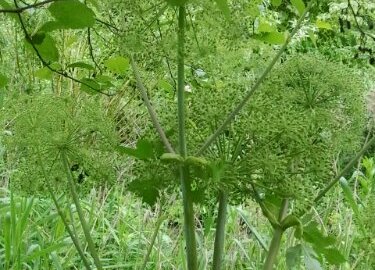
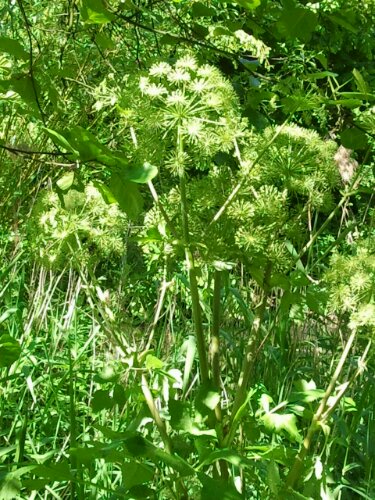
Lastly today, majestic Angelica (Angelica archangelica). Lynne Dunston from the Meetup group sent me a gorgeous photo of an Angelica which she spotted on a visit yesterday (I’ll post that separately). It reminded me to come and check on the enormous sister plant in Frankendael today (photo shown here). Seeds are now developing well on its Pom Pom like flowerhead. I was reading a lot about this plant a few days ago and although I won’t be touching it at all, this biennial can be made to act as a perennial by simply cutting it almost to the ground before it sets seed. It then is forced to have another go at seed production next year. It also has a multitude of quite fascinating, historic medicinal and culinary uses. Whole communities in Southern France, at least, relied on this plant for their wealth. I’d love to test out some of the recipes and ideas I read about but this wonderful lone specimen, just has to be enjoyed by as many woodland walkers as possible.

365 Frankendael day 42

Today a post about one plant, my favourite, Elder (Sambucus nigra).

This wonderful ancient healing plant, which has been steeped in mysticism and folklore for millennia, is producing flowers that cheer up almost every hedgerow in town, right now.

Where you find one Elder shrub, you are likely to find others close by. It springs up in the most unexpected places and is a true survivor. It has bumpy, brittle, crooked branches, smelly leaves and phenomenal frothy flower heads, stacked all over the plant. They remind me of small terraces, tilting in almost the same direction, all over the shrub.

This photo shows one of many Elder shrubs, along the Hugo de Vrieslaan hedgerow which provides a boundary for Park Frankendael. Now the flowers are mature and plentiful.

I’ve talked about this plant quite a lot previously, Google Elderflower recipes and you may be amazed by how many people like to eat this flower. Remember to avoid eating the leaves amd twigs, they will likely make you ill. I was refreshing my knowledge of the plant this evening by reading Wild Man Steve Brill’s book, Edible and Medicinal Plants. He talks about an American cousin of our local Sambucus nigra, called Sambucus canadensis and I was surprised to learn that the stems and leaves can sometimes yield cyanide, when a bitter alkaloid and glycoside within them change. So definitely parts of Elder to avoid in your diet!

One piece of Elder history I want to mention today, is how ancient Christians were irritated or threatened by the Elder Mother cult in Europe. The Elder mother was/is said to live within the Elder bush. You should ask her permission to harvest from her tree, should never burn her, should never chop her down, without asking her to leave. Ancient Europeans revered the Elder, welcoming and encouraging it to grow near their homes. the Elder mother protected homes from fire and lightning, kept your cattle safe and of course provided simple medicine for your whole family. This folklore helped to make the shrub commonly available for all manner of uses. In an attempt to rid communities of their attachment to the Elder Mother, the plant became embedded in the most negative ways, within Christian stories. Judas was said to have hanged himself from an Elder and Christ was said to have been nailed to an Elder cross. But of course this couldn’t be true due to the brittle nature of the tree. The tree was also much associated with witchcraft and yet was also said to protect you from witches. It seems that everyone had something to say about this shrub which points to it having had many uses.

I’ll be harvesting some more Elderflowers tomorrow, probably to be broken up and sprinkled into a light batter, some to be added to general cooking (we had it on baked fish last week, very good and interesting), some to make a face wash and some to be dried for use as a fever remedy when needed. I also fancy making some Elder leaf infused oil this weekend, for external use in an ointment. It is often useful on bruises, sprains and chilblains.

Love Elder and she will love you back, but be gentle with her and ask (and listen) when you’d like to take some of her gifts. She has many, many gifts and is not to be overlooked or underestimated.

365 Frankendael day 41


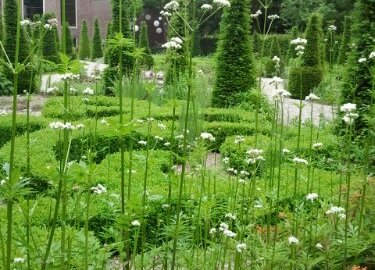
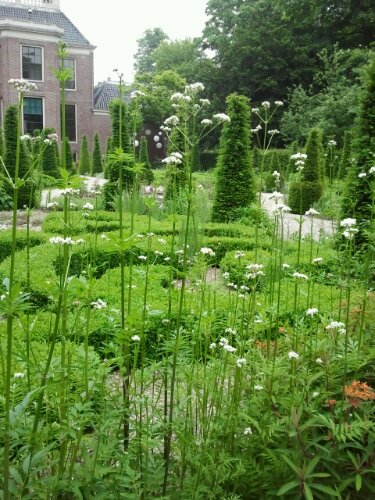
Today a lovely scene, if you like tended gardens, of the old partitioned garden at the back of Frankendael Huis. I really appreciate how the gardeners allow the plants to spill out here and there and especially so with the stunning Valerian officinalis which is shown here. Valerian medicine is traditionally focused on the roots but the flowers are also useful and have more subtle effects than the other parts of the plant. I have a big Valerian plant on my roof and this weekend, harvested every third flower cluster, for drying. Doing so leaves the beautiful appearance and special scent almost intact, for everyone else to enjoy.


Here is a photo Stinging nettle (Urtica dioica), NL: Brandnetel, in bloom. Now is not at all the time to harvest this wonderful tonic herb but I took the photo to illustrate the difference between the plant and other look a likes, such as Lamium alba, White Dead Nettle, shown yesterday.


Here is a photo of a plant that I want to learn more about, creeping along the ground rather like a Strawberry with similar leaves and runners. Growing amongst it, with purple flowers, is familiar Ground Ivy (Glechoma hederacaea) which is edible, useful and tastes minty. I have been watching the Strawberry look a like, in several shady parts of the park, for several weeks. Today it is coming into flower, yellow flowers, so I now remember that the plant a little better. It is a member of the Cinquefoil (Potentilla) family, I’ll have a closer look tomorrow to find out which. I brought a sample home but my cat ate it in seconds – maybe that should tell me something!? Strawberries are members of the Fragaria family.


Not one to eat until next Spring, here is an update of how Ramsons (Wild garlic, NL: Daslook) look at the moment. Not very tasty but the seed heads are developing well.


Next, and again for future reference, the closest Sweet Chestnut tree to my home. Totally unrelated to Horse Chestnut, far more tasty but possibly less interesting for herbalists.


Lastly today, an enormous Dandelion(Taraxacum officinale), two 50 cm long leaves of which, are destined for my plate this evening…

365 Frankendael day 40

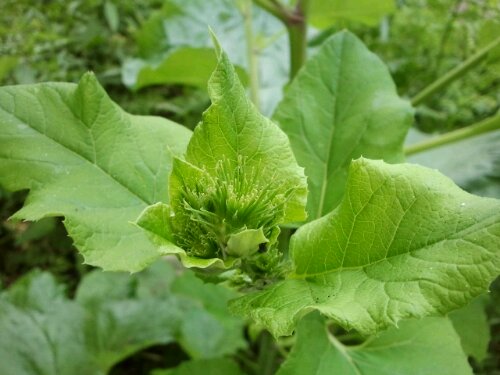
Burdock (Arctium lappa)

Today, many Burdock plants (Arctium lappa) are easily identified because their flower heads, or burs (which give the plant it’s common English name) are developing at the top of the plants. I’ve not really noticed them at this stage, before this year. They look very stately at the moment because the stems are growing fast so the large leaves are clearly separated. Burdock is a biennial plant, flowing during its second year. The roots are the part of interest to herbalists and those are only useful when harvested from first year Burdock plants. So although harvesting of Burdock roots should occur in the autumn, now is a great time to identify Burdock which is not flowering, is in its first year and may be of interest. Here’s a link to a Susun Weed article about Dandelion and Burdock.
Elder (Sambucus nigra)

Here is a little Elder (Sambucus nigra) shrub, growing at the base of a tall park side tree, on the Middenweg. Not a great location for harvesting the flowers. At this height you may also better understand why Ground Elder (shown yesterday in flower) is so named. Fortunately, although both are edible (at least in part), the flowers look quite different, one is a shrub and the other is clearly not.

White Dead Nettle (Lamium album)


Next, a lovely White Dead Nettle (Lamium album). This member of the mint family, which looks very like Stinging Nettle but is totoally unrelated, is still in flower and yielding a tiny sip of sweet nectar, if you pluck a flower and suck its base. This can also be done with Honeysuckle. However the Honeysuckle species is seen as poisonous and White Dead Nettle is edible. The whole plant may be enjoyed and benefitted from. This plant is good cooked like spinach.Here’s a nice recipe from a lovely blog about wild food called Eat Weeds.

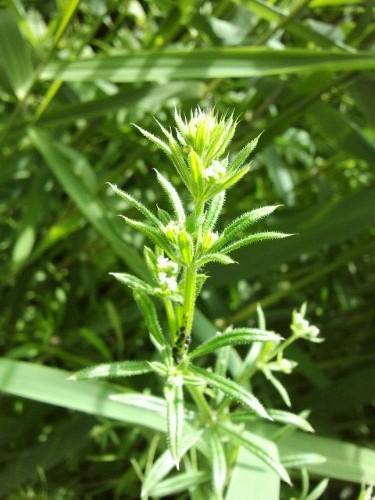
Cleavers (Gallium aparine)

Lastly today, Cleavers (Galium aparine) with flower buds clearly developing. It may still be used a tonic herb when freshly juiced or made into a tincture.

365 Frankendael day 39

Today some photos without much comment or translations…
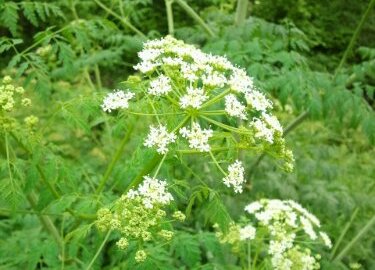
Firstly the flowers of that Poison Hemlock on the Middenweg. It’s carrot family flowers opening to the sun today.

Next, some lovely Meadowsweet foliage.

Next Ground elder, just coming into flower. Another member of the carrot family but with completely different and easily recognisable leaves.

Here is Red clover. Perfect for harvesting, if you can find it growing in a clean spot.

Lastly today, a sign that tasty berries are not too far away; A Bramble (NL: Bramen) just opening it’s first flowers of the year.

Conium maculatum on the Middenweg.

image

The Poison Hemlock (Conium maculatum) alongside the Middenweg and Frankendael, has had something of a growth spurt over the warm weekend. It is just opening it’s flowers and is spilling onto the pavement. It should not be touched. It smells a little mousy and unpleasant so I really hope that deters people from picking the flowers or worse.

I tore a large branch from it yesterday but it needs to be carefully removed and disposed of. Composting won’t make it safe and burning it needs to be done in a controlled environment as the fumes can cause very serious effects.

It’s been reported so I’m very hopeful that it will be removed very soon. It’s a very handsome, imposing plant, but very harmful and is growing too well, in rather an unfortunate spot.

365 Fraendael day 38

The weather is unusually warm again today, which has causes Chickweed to shrivel up and die and Poppies (not edible, but poisonous, a historically useful medicinal herb) to flower.

Here is Ribwort (Plantago lanceolata), discretely in flower amongst long grass.

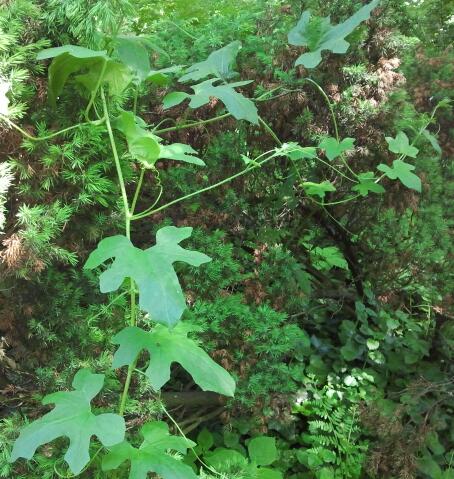
Poisonous White Bryony, looking as though it fancies strangling the Juniper bush.

Motherwort flourishing, still at a useful stage for harvesting and tincturing.

Hedge bedstraw. Looking similar to Cleavers.

Angelica archangelica, with it’s out-of-this-world flower heads, towing over the other pond plants.

Watermint, or at least a mint species growing in water, will decide which soon. Low growing still, building its strength in readiness to flower.

Thank you! 365 Frankendael day 37


A big thank you to all the lovely people who walked from Amstel Station to Park Frankendael, with me today, looking at Urban Herbs along the way. The Sun shone, Elder bloomed, Garlic Mustard lingered, Mugwort shimmered and Poison Hemlock (NL: Gevlekte scheerling) stood guard over the park.

At the end of the walk, two of our group ran off to help a man who had fallen from his bicycle. He had a bleeding nose and a graze. Lynne and Olga hunted for Plantain and Yarrow and sorted him out – What quick learners!

I’m looking forward to learning more about Aloe vera & egg shampoo, Danish Hawthorn recipes and more, from some of the walkers.

The photo (courtesy of Frank de Graaf) shows us gathered at the end of the walk, near useful Willow (Salix), Meadowsweet (Filependula ulmaria) and Poisonous Euphorbia.

I hope that everyone has fun, safely foraging for herbs and making good use of them. I also hope that we will have the chance to meet again, perhaps to take a more leisurely look in the woodland area of Frankendael.

The next Urban Herbology Walk will be in Frankendael Park and a very small stretch of the street beside it, rather than a roadside walk, it will be on Friday 8th June 2012.

Here are links to some information about wild carrot and wild parsnip for those who were asking about those plants.

8th June 2012 Urbanherbology Walk – Park Frankendael


There is a lot of interest in wild plants at the moment. Perhaps because there is so much green around us, here in the city. To help more people appreciate some of the edible, medicinal and interesting herbs, growing within the city, I’m offering another Urban Herbology Walk, on Friday 8th May 2012, from the main gates of Frankendael Park.

The walk will start at 11am and every one interested in finding out about wild herbs, which can be found in central Amsterdam, is welcome to subscribe.

My previous walks have been great fun to organise and very well received.  We will take a relaxed look at the bounty of midsummer herbs to be found in and around the park. The walk will last about 90 minutes and will probably end at the lovely cafe/restaurant Merkelbach, situated just inside the main entrance of the park.

Cost per participant will be €8. Maximum 10 places. Previous walks have been oversubscribed, it is essential that those wishing to join me book ahead. Please email Lynn.Shore@gmail.com or call me on 0627 596930.

During the walk you will…
Receive a useful handout, to refer to after the walk
Learn how to find and identify some safe, useful, local herbs,
Learn how to harvest with respect for the environment,
Learn how to use herbs safely in several different ways,
Receive some tasty Urban Herbal recipes.

And of course you will get the chance to meet other folk who like to know a little more about what’s growing beneath and above them!  If it sounds interesting to you then please contact me.