All posts by Lynn

Unknown's avatar

About Lynn

Learning

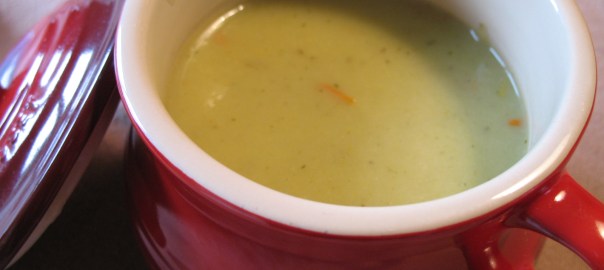
Leek, Potato and Calendula soup

I often use fresh  petals to garnish soup; they are almost always available on my balcony, they look so pretty and their intense orange colour encourages appetite.  After writing about uses for Calendula, I thought I should make more of an effort to use the dried flowers in my food.   Adding dried Calendula flowers to soups, or broths, was seen as essential to Old English cooks.  They apparently felt that a broth without pot marigold was not a real broth, so that’s where I decided to start!

My Leek, Potato and Calendula soup requires about 5 dried Calendula organic flower heads.  If you have dried petals, rather than flower heads, then those will also work well.  Calendula flowers can taste quite bitter if infused for too long, so I added them to the soup just 5 minutes before the end of cooking and ensured that the leeks were thoroughly cooked at the start, to add a little sweetness.  Calendula flowers are most likely to work their magic if some of their astringency is allowed to shine through, so don’t try to mask their taste completely, enjoy it.

Ingredients
(Serves two)
2 long, thin leeks
4 medium potatoes, peeled and roughly chopped.
5 Dried Calendula officinalis flower heads (or 3 heaped tsp dried petals)
Vegetable stock (optional)
Olive oil for sweating leeks
Water

  1. Clean and trim the leeks.
  2. Slice the leeks and add to a pan with well fitting lid.
  3. Add a little olive oil and allow them to sweat gently over a low to medium heat, stirring occasionally.
  4. When the leeks are very soft add the chopped potatoes and enough water to amply cover the vegetables.
  5. Add a vegetable stock cube or 2 tsp bouillon powder if desired.
  6. Bring the vegetables and water to the boil and then simmer for about 15 minutes, until the potatoes are thoroughly cooked.
  7. Add the Calendula flowers or petals and simmer for a further 5 minutes.
  8. Remove from heat.
  9. Remove any hard flower parts (the stalks and flower centres) before liquidising the soup.
  10. Serve warm.


43 Uses for Calendula (NL:Goudsbloem)

Calming, cooling, cleansing. Calendula officinalis (Pot Marigold, NL: Goudsbloem) is one of the easiest herbs to grow and perhaps one of the most useful to Urban Herbologists. It is a hardy annual which does very well in containers, can flower throughout the year and self seeds readily. It is beautiful, tastes good and has gentle astringent, anti-inflammatory, cooling, detoxifying and antiseptic actions. If you only have space to grow one herb, this has to be one to consider. Many of the remedies mentioned here are very easy to make, if you prefer to buy them from a reliable source, I recommend Weleda products (some links are included in the list). N.B. Calendula is not to be confused with French marigold (Tagetes patula). Calendula is very gentle but when trying a new herb it is always wise to use very small quantities at first or to do a skin patch test.

43 uses for Calendula

Medicinal uses
1. Sprains
– make a compress from infused flowers.
2. Gum infections –
Mouthwash from tea or a few drops of tincture in water.
3. Sore throat pastilles – Powdered dried flowers, blended with honey.
4. Mastitis & sore nipples – Calendula Cream can help strengthen nipples and prevent mastitis in nursing mothers.
5. Cold sores – Calendula salve is helpful to many cold sore sufferers.
6. Acne – Lotion made from Calendula tea can help speed healing and reduce scarring.
7. Nappy rash – Infused oil, lotion or Calendula Cream can prevent and speed healing.
8. Athletes foot – Calendula cream or infused oil, anti fungal.
9. Ring worm – Calendula cream or infused oil, anti fungal.
10. Period pain – Many women find regular use of Calendula tea helpful as a menstrual regulator.
11. Digestive inflammation – Calendula tea can often gently reduce inflammation.
12. Scar reduction – Often Calendula Oil, cream or salve can help to reduce existing scars and prevent scars.
13. Lowering mild fever – Drinking Calendula tea at first signs may help.
14. Skin softening – Massage using Calendula infused oil.
15. Eczema – Calendula infused oil or cream often calms red, hot eczema conditions.
16. Dry chapped skin – Calendula salve or infused oil.
17. Varicose veins – Calendula salve or cream.
18. Chillblains – Calendula salve or cream.
19. Post operative recovery – Calendula tea. Gentle, cooling, nourishing, speeds healing, reduction of scarring.

Culinary uses
20. Herbal ice cubes/wands – Freeze petals in ice cubes for summer drinks.
21. Salad flowers – Pretty and tasty, sprinkle on top.
22. Soups Add dried or fresh flowers or petals to soups. An ancient broth without Calendula was incomplete, hence the name Pot Marigold.
23. Saffron colour substitute – The taste is different but the colour is very similar.
24. Risotto – Adding whole petals livens up the appearance of risotto.
25. Soft cheese –
Blend in whole or chopped fresh petals. Previously used to colour cheese yellow.
26. Yoghurt –
Mix in fresh petals or spinkle on top.
27. Butter –
Mix in finely chopped fresh petals. Can be frozen.
28. Omelettes –
Add fresh petals for colour and taste.
29. Cakes –
Use calendula butter or add fresh petals to cake mix.
30. Milk dishes –
Add to rice pudding, custards and similar dishes.
31. Sweet breads –
A little like saffron.
32. Vegetable bouillon – Add to mixes of dried herbs and vegetables.
33. Source of Vitamin A

Other uses
34. Fabric/Wool dye –
Boil flowers, yellow dye. Suitable mordant is alum.
35. Pot pourri – Whole dried flowers retain colour and mild scent.
36. Alter decorations – Used since ancient times to adorn spiritually significant objects and buildings.
37. Skin toner – Cooled tea.
38. Eye make-up remover – Infused oil.
39. Face cleanser – Infused oil or cream.
40. Lip balm – Soothing and calming, beeswax and infused oil.
41. Hair rinse – Tea, to brighten blond hair.
42. Companion planting – Useful for deterring pests in organic gardens.
43. Year round colour – The Romans noted this plant tends to be in bloom on first day of each month (calends), hence the latin name.

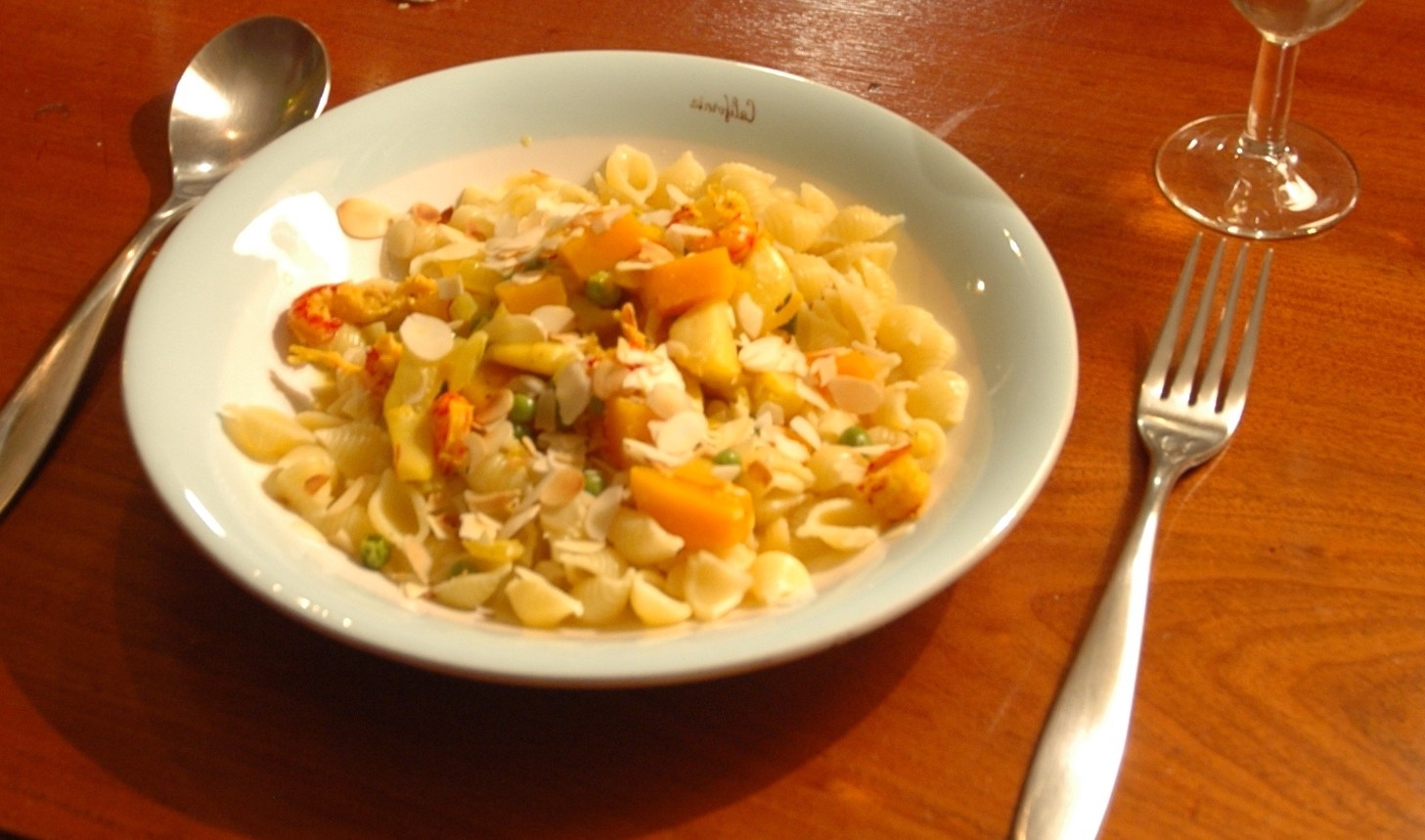
Pasta with Pumpkin, Sage, Saffron, St. Jacques Scallops and Crayfish.

This is a delicious recipe which uses sage and saffron to bring out the flavours of pumpkin and shellfish.  It has been sent to me by Elodie, from Amsterdam who I hope will be regularly contributing recipes.

Pasta with Pumpkin, Sage, Saffron, St. Jacques Scallops and Crayfish.

Serves 4
Ingredients

400 – 500g dried pasta shapes
1/4 small green or orange pumpkin (approximately 250g), seeded, peeled and diced
1 fish stock cube
1 medium onion
4 St. Jacques scallops (Coquilles), finely sliced or diced
10 – 12 Crayfish (Rivierkreeften)
Handful of frozen or fresh peas
1 garlic clove, peeled and sliced, chopped or mashed (depending upon strength preference)
5 sage leaves
2 saffron strands
1/2 cup almond flakes
Tablespoon cream / creme fraiche
Dash of Thai fish sauce (optional)

  1. Cook diced pumpkin in a little water until soft (approx. 5 minutes),  set aside.
  2. Make a cup of fish stock using the stock cube and boiling water, keep it ready.
  3. Cook your pasta of choice whilst preparing the sauce as follows.
  4. Dice onion and fry in a little olive oil until golden.
  5. Add saffron and garlic to the pan and cook gently.
  6. Add sage and peas.
  7. Add the crayfish and a little of the fish stock ( keep the rest so you can add more if required).
  8. Add a tiny dash of Thai fish sauce, if you happen to have it.
  9. In a separate pan fry the Coquilles St. Jacques in a little oil, until thoroughly cooked. Try a little piece to make sure the scallops are not under-cooked.
  10. In the same pan gently fry the almond flakes until light brown. Reserve the almonds separately.
  11. The minute your pasta is cooked and drained, stir the pumpkin, St. Jacques and cream into your sauce.
  12. Pour the sauce over the pasta and sprinkle with the almond flakes.
  13. Add salt and pepper to your own liking.

This is an excellent dish using the seasonal Pumpkin and Sage in a slightly different way!

Bon Appetite !

Cough Syrup

This cough syrup recipe was kindly sent to me by Louise from Thornbury, South Glocestershire, UK.  She has been making it since attending a herbal remedies course in Bristol a few years ago. The recipe is taken from Hedley & Shaw’s book, Herbal Remedies: A practical beginner’s guide to making effective remedies in the kitchen

Louise says that… “It’s really good stuff and clears a heavy cold in a matter of days.  I always keep a bottle handy in the fridge and it keeps for ages.  I have even given some to colleagues in work.”

The combination of herbs is said to be soothing, antiseptic, antibiotic and expectorant.  The aim of the syrup is to thin out mucus and help open up the bronchi.  It is recommended by Hedley & Shaw to help relieve deep restless chesty coughs, tightness from colds and sore throats.

I made a batch this week, it tastes wonderful. There are several ingredients but all are easy to obtain and the method is really quite simple.  Some of the ingredients contain strong volatile oils so this syrup should be taken in small quantities for a short period of time and should not be used by pregnant women.

Sterilising storage bottles

Remember that your storage bottles need to be sterile, to prevent contamination and prolong the life of your potion.  This is best done just before you set to work with the herbs as if left until the last minute there may no time to do it properly.

  1. Clean the bottles/jars thoroughly with hot soapy water and a bottle brush,
  2. Let them drip dry
  3. Sterilise them (with lids/caps off and the openings facing upwards) in a warm oven (about 110 oC) for about 10 minutes.   Beware that plastic caps or lid liners will melt and burn if left in too long.
  4. Turn off the oven and leave them in there whilst you make the potion and get ready to pour.  If you need to leave them waiting in the oven for a long while, loosely fit the caps/lids when cool enough to handle, to prevent contaminants getting in.Some people find that cleaning them on a hot dishwasher cycle also does the trick.

Cough Syrup
(Makes approximately 350ml)
Not suitable in pregnancy or for babies

Ingredients
15g dried thyme (NL: Tijm)
8g dried sage (salie)
8g dried chamomile (kamille)
2 teaspoons fennel seeds (venkelzaad)
1 teaspoon aniseed (anijs)
20 cloves (nagelkruiden)
2 garlic cloves (knoflook teentjes)
Pinch cayenne pepper (cayenne) or ground ginger (gember)
900ml water
450g locally sourced honey

Method

  1. Put water and chopped herbs into a pan and bring to the boil.  Cover with a tightly fitting lid.
  2. Turn down the heat and simmer for 20 minutes.
  3. Cool a little, strain through a fine mesh seive, pressing with a clean wooden spoon to extract the goodness.
  4. Discard the herb and keep the liquid.
  5. Return to the heat and simmer slowly, uncovered until reduced to 200ml (making a decoction).
  6. Add 450g honey, dissolve and simmer for a few minutes, stirring all the time, until of a syrupy consistency.
    DO NOT OVERHEAT as the syrup will burn.
  7. Cool a little before pouring into sterilised bottles.
  8. Label (date made and contents) and keep refrigerated to avoid fermentation.
    Best kept in a corked dark glass bottle, as a screw topped bottle may explode if fermentation takes place.

    Legal Disclaimer: The content of this website is not intended to replace conventional western medical treatment. Any suggestions made and all herbs listed are not intended to diagnose, treat,cure or prevent any disease, condition or symptom. Personal directions and use should be provided by a medical herbalist or other qualified health care practitioner with a specific formula for you. All material on this website is provided for general information purposes only and should not be considered medical advice or consultation. Always check with your personal physician when you have a question pertaining to your health and health care.

Wild Herb Walk

The first Urban Herbology Wild Herb Walk will take place on Friday 12th November. It will be in Frankendael Park, Amsterdam.  I have emailed those who have already contacted me, with the meeting time and location.  If you would also like to join us then please email me or send a reply to this post.  I am really looking forward to seeing everyone and having a relaxed look at some of the herbs which are still available in the park.

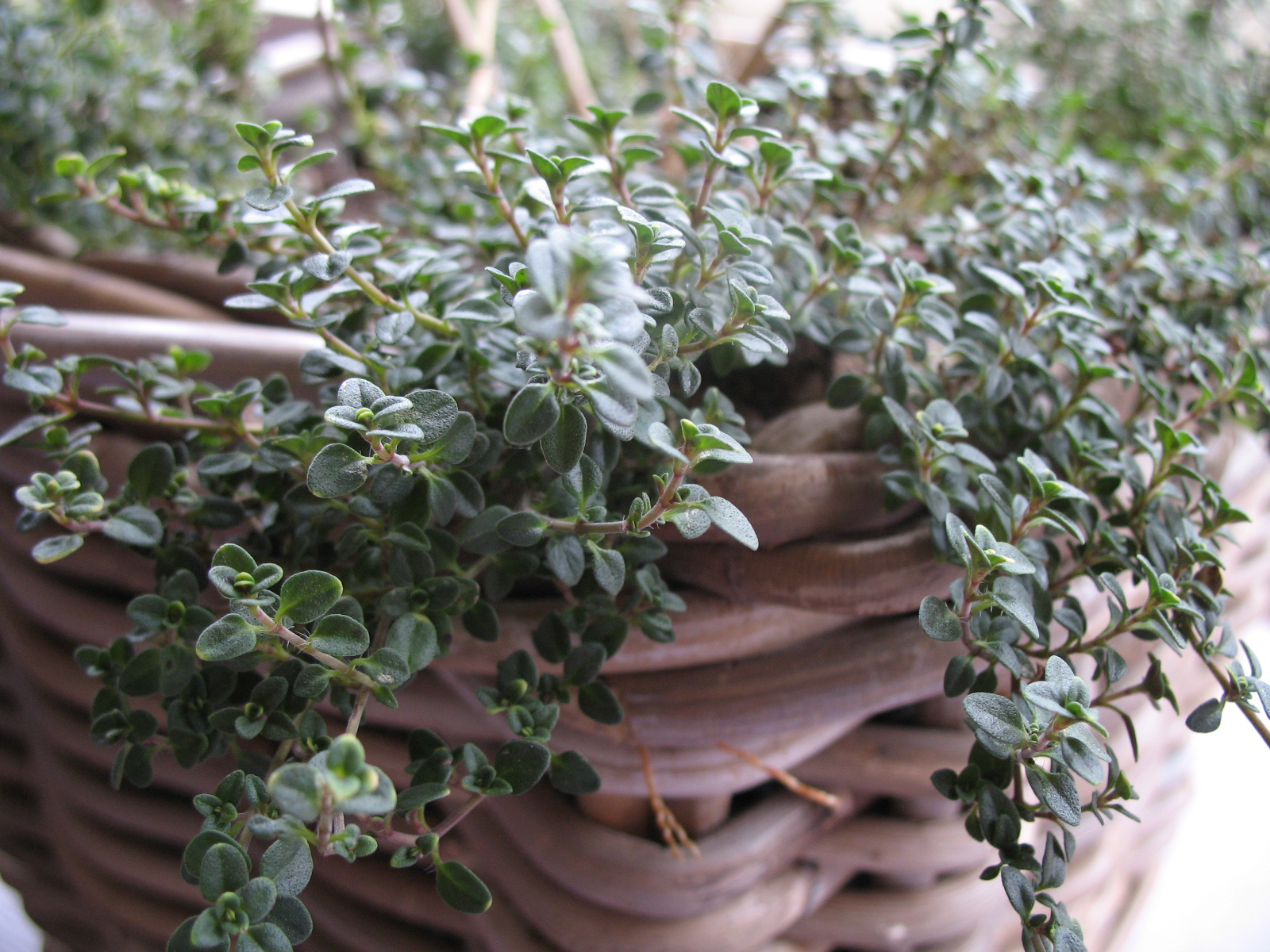
Thyme (NL:Tijm)

Evergreen hardy perennial Thyme (Thymus spp.) originates from the Mediterranean, has a great number of medicinal and culinary uses and is easily grown in containers, making it ideal for the Urban Herbologist.  It is a strong herb containing volatile oils and should be avoided by pregnant women and used sparingly by others.

Growing Thyme in Containers
There are a vast number of Thyme varieties, each having a slightly different scent, appearance and flower colour. Thymus vulgaris is the Common Garden Thyme. All Thyme varieties have relatively shallow woody roots and form a soil covering carpet.  A healthy plant can be easily “split” to give you many new plants for free.  Being a Mediterranean herb, it does well in poor soil and should be allowed to dry out between waterings.  Thyme will quite rapidly use up the nutrients in soil, so do re-pot every year or so to encourage healthy growth. The leaves of Thyme  develop a more intense flavour and scent when grown in strong sunlight although dark leaved varieties can thrive in fairly shady locations.

This year I am experimenting with Lemon Thyme (Thymus citriodorus) grown in a container, around the base of a Lemon Verbena.  I bought one small pot of organic Lemon Thyme from my local garden centre and split the plant into four before re-potting.  Lemon Verbena is quite a tender deciduous shrub so drops its leaves in winter and needs to come inside to survive. Thyme is winter hardy but has the same watering requirements as Verbena so they should do well together.  I’m also hoping that Thyme’s shallow roots won’t out-compete the Verbena, when spring arrives.

Historical uses
Since ancient times Thyme has been prized for its antibacterial and anti-fungal properties.  It was used widely in combination with other herbs for; embalming, temple incense, nosegays to ward off disease, room purification and even to induce visions of fairies.  The Romans used it to add an aromatic flavour to cheese but generally ancient people used it medicinally.

Culinary uses
These days Thyme is best known as a culinary herb, it has a strong, pleasant flavour and reportedly has good antioxidant properties. Many stews, salads and sauces are enhanced by adding a little Thyme. Chicken and fish dishes are particularly well suited to it. Because of its strength I far prefer Thyme as a culinary herb, adding it to food more regularly when the cold and flu season is upon us.  If you like the taste of lambs liver, try cooking it with a simple sauce made from softened onion, garlic, chopped tomato and thyme.

Thyme remedies
Some people find Thyme tea a useful hangover remedy but it is more widely used as a throat gargle or mouthwash to help with sore throats or gum infections.  Thyme has expectorant properties so Thyme syrup or honey may be useful as a cough remedy.  However due to the strong volatile oils in this herb, it shouldn’t be used regularly as a tea, syrup or in any other concentrated form.

Thyme tea
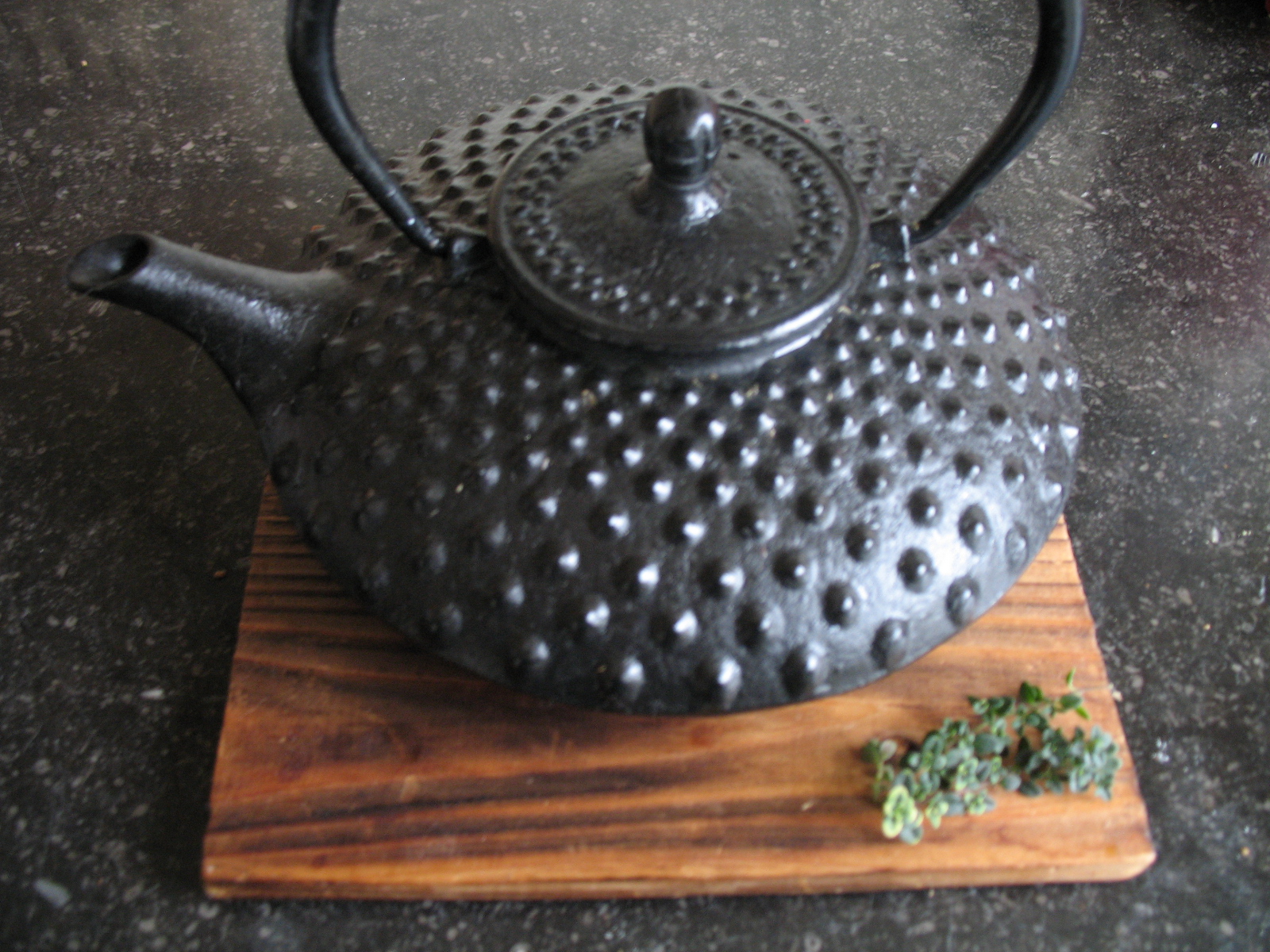
To make tea from Thyme simply add a few fresh or dry sprigs to a 2 cup teapot (maximum 1/2 teaspoon of dried chopped Thyme, or 1 teaspoon fresh chopped Thyme), fill with boiling water and leave to steep – but only for a short time.  Check the taste and appearance after just five minutes, that should be enough to release some oils and impart a good flavour.   If you cannot seed oil droplets on the surface of the tea then you may like to leave it to steep a little longer, perhaps another five minutes but be cautious with this herb.  It is strong and the volatile oils are unsafe in concentration or when used regularly.

Legal Disclaimer: The content of this website is not intended to replace conventional western medical treatment. Any suggestions made and all herbs listed are not intended to diagnose, treat,cure or prevent any disease, condition or symptom. Personal directions and use should be provided by a medical herbalist or other qualified healthcare practitioner with a specific formula for you. All material on this website is provided for general information purposes only and should not be considered medical advice or consultation. Always check with your personal physician when you have a question pertaining to your health and healthcare.

Wild Herb Walk in Amsterdam

I am organising a Wild Herb Walk in Amsterdam, this November. If you are interested in coming along, please contact me so I have an idea of the amount of interest.

This will be a relaxed walk, in an easily reached location, learning how to identify, gather and use some common medicinal and food herbs which grow wild in the city.  Many beautiful, interesting and useful herbs are available at this time of year so why not join us, learn a little about them and get to know a few other UrbanHerbologists at the same time?

Further details will be posted soon.  Please get in touch via email or in reply to this post if you are interested.

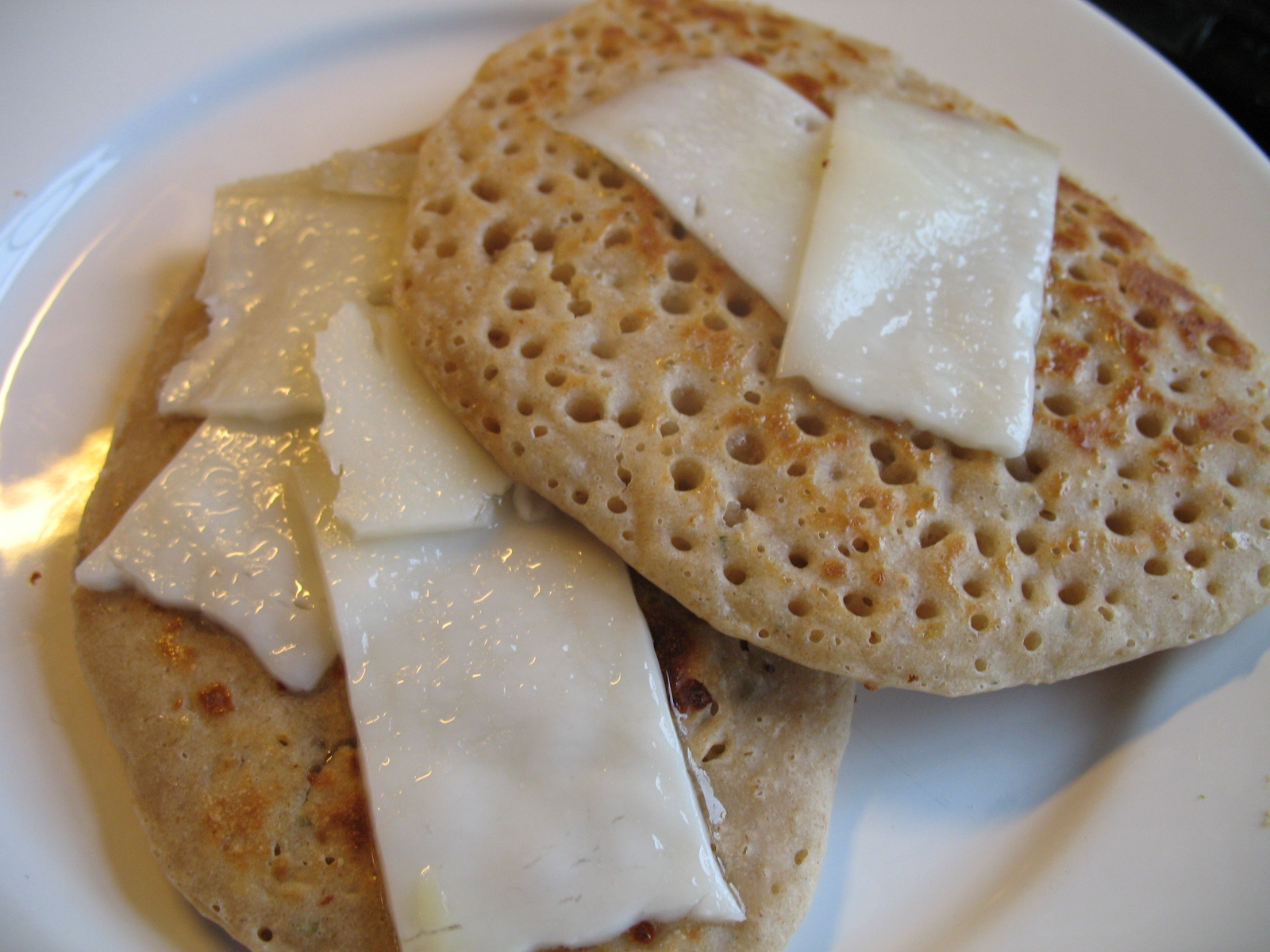
Wholemeal Sage & Parmesan Crumpets

Crumpets (English muffins to Americans) are a delicious comfort food and should be served hot, topped with butter, honey, melted cheese or jam.  Usually crumpets are made with plain flour and are cooked in metal rings so that they become 2 – 3cm deep bread honeycombs.  I prefer to eat crumpets with a savoury topping so have created this sugar free recipe which includes fresh sage, Parmesan cheese and wholemeal flour.  Fresh sage (Salvia officinalis, NL: Salie) is readily available throughout the year, has many medicinal uses such as relieving cold symptoms and goes wonderfully well with Parmesan.

The crumpet batter can alternatively be poured from a tablespoon onto the cooking surface to make a thinner version, which is quicker to cook and could be called savoury Pikelets.  If you try this method cook the first side until the top appears to be dry, then flip them over and cook for a further minute or two.

Wholemeal Sage and Parmesan Crumpets
(makes 16 – 18 with rings or 36+ if poured)

Ingredients
300ml milk
300ml water
425g strong wholemeal flour
45g freshly grated Parmesan cheese
1 tablespoon finely chopped fresh sage
1 1/2 teaspoons salt
2 teaspoons fast action dried yeast
(plus a frying pan or griddle, four metal biscuit cutters or small flan rings* and oil)

N.B. A bread maker may be used for steps 1 – 3. Simply add all ingredients to the bread pan with paddle attached and run the dough program straight away. Check after 1 hour and remove when you see the batter is full of bubbles.

  1. Warm the milk and water in a small saucepan, over a low heat.  Don’t let it get hot as that will kill the yeast which you will soon add, lukewarm is fine.
  2. Put the flour, chopped sage and Parmesan in a large mixing bowl and stir in the yeast and salt.
  3. Add the warm milk and water to the flour mixture, little by little as you stir, to form a smooth, thick batter.
  4. Cover the bowl with a clean tea towel or cling film and leave at room temperature for between 60 – 90 minutes, until the batter has expanded and is full of bubbles.
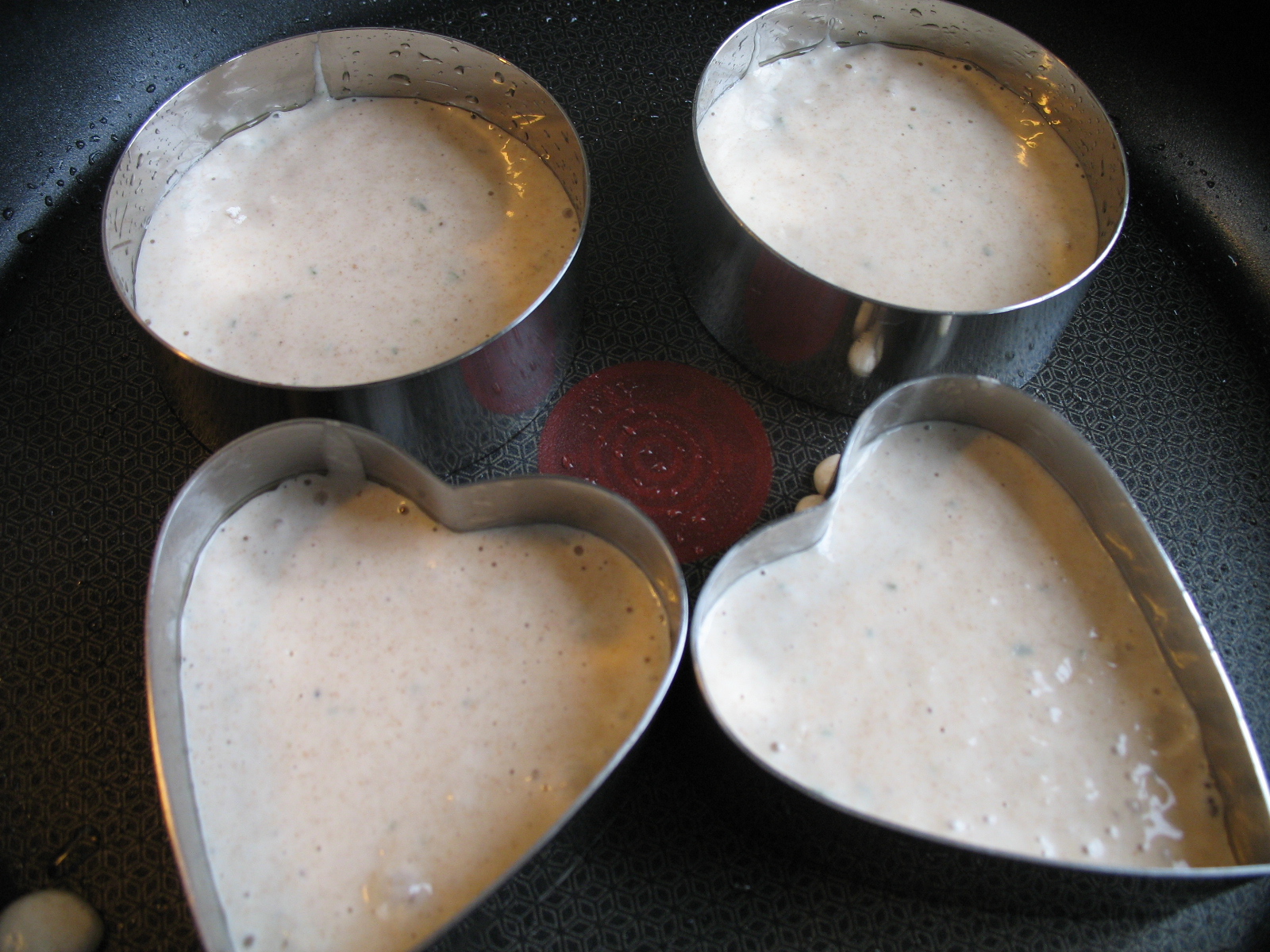
  5. Lightly oil the inside of the metal rings and the frying pan or griddle surface, then gently heat the pan/griddle.
  6. Place the rings on the griddle or frying pan and spoon about 1cm depth of batter into each ring.  N.B. The batter will further expand as it cooks so adding a greater depth will only result in overflowing rings or crumpets which are uncooked in the middle.
  7. Gently cook until the batter has bubbled and the top of the crumpets looks dry (about 5 – 8 minutes)
  8. Loosen the edges of the crumpets with a small sharp knife before removing the rings and turning the crumpets. Cook the other side until golden brown.
  9. Clean and re-oil the pan/griddle and rings before cooking the second and subsequent batches.

The crumpets can be reheated in a toaster or under a grill.  If your crumpets turn out too thick and are undercooked in the middle, you can slice them in half through the middle and finish them off under the grill.

*If you don’t have small flan rings or biscuit cutters you can easily use clean tuna cans or something similar.  Remove both ends with a can opener and use the can as a ring.

Saving Herb Seed

Buying seed is a recent thing.  Most gardeners used to routinely save seed from their best annual and biennial herbs and vegetables.  Seed saving is an easy and beneficial thing for Urban Herbologists to do, here’s why and how:

Why save herb seed?

  • It saves money and increases self sufficiency.
  • Saved seed is well adapted to your location. It has survived the local weather, soil type and pests.
  • You can save from plants with interesting characteristics.
  • Saved seed can be shared and swapped.
  • It increases plant variation, increasing the local gene pool and biodiversity.


How to save herb seed:

Plants use different methods to spread seed far and wide to new and favorable locations.  Most rely on the wind, animals, water, gravity or an explosive force to disperse their seeds.  The method your chosen herb uses will dictate how you should set about collecting its seed.

  • Sew your annual or biennial herbs as usual.
  • Select a few of the strongest plants for seed saving.  Use the other plants of that type for your herbal needs.
  • Grow the seed savers on to maturity. Allow them to flower and for their bare seeds or fruit to develop freely.
  • Mature the seed.  Allow it to ripen and dry on the plant as much as possible.
  • Collect the ripe fruit or seeds before they disperse naturally. This may involve:
    Shaking ripe, dry seed-pots into a paper bag (Nigella),
    Pulling dry seeds out of dead flower heads (Calendula),
    Cutting off dry seed heads (Allium),
    Cutting off ripe but unexploded pods (Legumes, pea family),
    Cutting off and into ripe fruit and scooping out the seeds (Rosa)
  • Clean the seeds. This may involve sorting or sieving seeds from plant debris or removing a soil covered outer layer (garlic).
  • Dry the seeds. Seed allowed to dry on the plant, in warm dry weather, may be enough. For better results also lay them on a sheet of kitchen roll or newspaper, in a dry room for a few days.  Seed collected from wet fruit needs extra care.  Super dry rice can be used to effectively suck moisture out of seeds. I’ll post an easy method for this later this week.
  • Pack and label your seeds when you are certain they are bone dry.  I use ordinary envelopes or small glass jars.  Label the name, date and where you collected the seeds from on the packet.
  • Store your seeds in a relatively cool, dry and dark place.  Some take storage further by freezing their seed, this can prolong their viability by several years, if done with very dry seed. My freezer is otherwise occupied.
  • Share and Grow on your saved seed.  Don’t forget to plant your seed the following year. It may keep for longer but reduce the risk of losing your seed stock by growing some of your saved seed and then repeating the cycle.  You are likely to save far more seed than you need so consider sharing or swapping seed with other Urban Herbologists.

If you are thinking of collecting and saving seeds from the wild please don’t. Wild annual herbs rely on seed dispersal for their survival.

Kew Millenium Seed Bank provides a wealth of information about why global seed saving is important and how they manage their collection.  The Real Seed Catalogue and similar organisations, can help by providing “real seed” to get you started.  Seed collected from the plants you grow from “real seed” will be viable and reliable, unlike that from many hybrid varieties often sold by the large seed companies.  Hybrids often yield sterile seed or nonuniform seed.

Ginger roots!

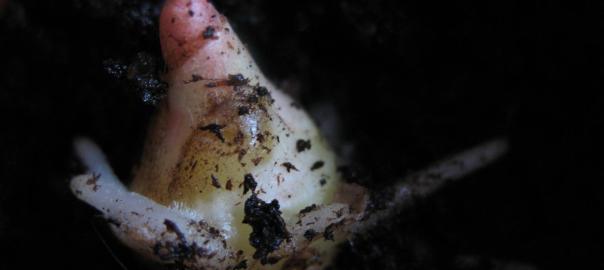
ginger-roots1There is life in my airing cupboard…  The ginger rhizome I wrote about on Monday has sprouted lots of strong roots, after just 4 days!  Each bud has started to look shoot-like, become slightly pink and sent out between 6 and 10 healthy roots.  I am delighted with this first attempt at growing one of my favourite exotic herbs.

The pot is now in a bright but cooler room so I hope that it will continue to do well.  The soil has been moistened a little more and I shall leave the plastic bag on for a couple of days, to ease the transition from the toasty warm airing cupboard.  I have high hopes of honey, ginger and lemon using my ginger plant, ths winter.  Perhaps that’s a little ambitious!