Category Archives: Herbs

365 Frankendael day 201

image

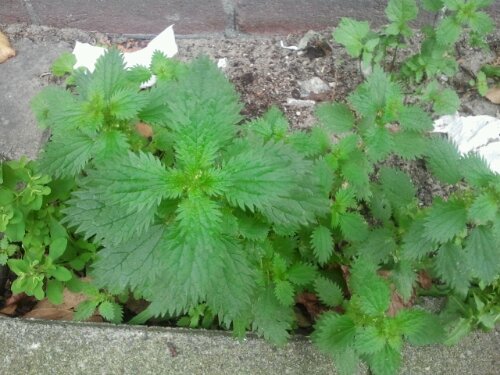
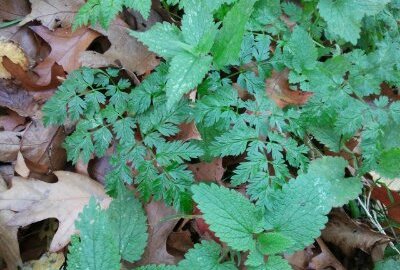
Here are two interesting plants; Stinging nettle (Urtica dioica), edible, nutritious and a useful tonic for the body. The other feathery looking foliage belongs to Fools Parsley which could give you quite an uncomfortable digestive system if you were to eat it, perhaps mistaking it for something such a Sweet Cicely. On an Urban Herbology walk last year, I was told about a group of young Amsterdam children who had a lovely woodland walk with a guide and foraged their dinner. Unfortunately they harvested and ate Fools Parsley, mistaking it for Wild Carrot. They all ended up in the local hospital’s casualty department with dreadful stomach pains and more. Apparently all was well in the end but I’m sure they wouldn’t have wanted that.

There are so many noxious close relatives of Fools Parsley (such as Poison Hemlock, Conium maculatum) that it’s just not worth foraging anything that resembles it – unless you REALLY know what you are doing.

More Ginkgo Harvesting!

image

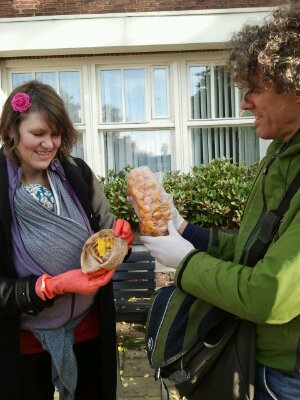
Today I was joined by two more groups of eager urban foragers, to harvest some more of the strange fruit which currently fall on several Amsterdam streets.

We harvested from Albrecht Durerstraat mainly. Although the enormous glut of fallers from last week, had already been removed by the council street team, we still found several bags full. There are many fruit left on the some of the female trees, it’s not to late of you want to try and haven’t yet had a chance.

image

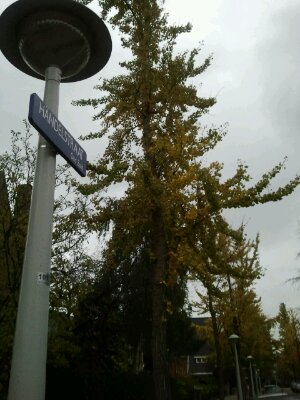
On my way home from work I noticed more streets which are home to Ginkgo biloba trees. This photo is of Handelstraat. I didn’t walk the street to see if it houses any fruit bearing females. Jennie Akse, who came along today, told me about a lovely female Ginkgo in Beatrixpark which is shedding fruit on the grass.

There are many places to harvest at the moment. People have asked if I know of any Ginkgo on Amsterdam West and I don’t. Of you do, please let me know.

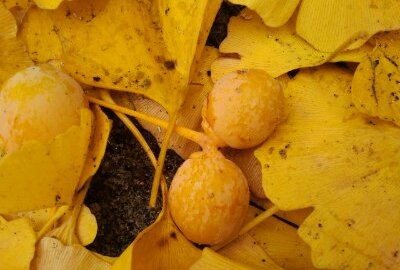
Here’s a link to my post on how to safely harvest and prepare the fruits. It’s the nuts that foragers are after, the soft fruit part is toxic.

Apple of Peru, Shoofly plant, Nicandra physalodes

image

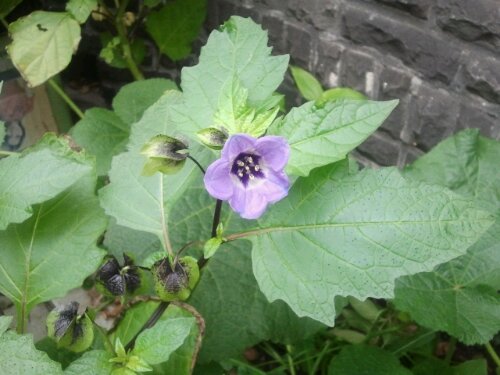
Here’s a lovely photo which Elodie sent me today of a plant which grows well in Amsterdam. Apple of Peru, Shoofly plant (Nicandra physalodes) is a member of the Nightshade family (Solanacaea) and is somewhat poisonous. It is said to be useful as an insect repellent. I saw some seed heads from this plant at the seed swap yesterday but couldn’t remember the name. The seed heads look like pretty lanterns but the tell take tomato truss like arrangement of the fruit and the kinks in the truss stem, told me instantly that it was a nightshade.

I’m not a big fan of Nightshades but they do have many uses. Not that all Nightshades are poisonous, but all contain quantities of chemicals which should be avoided in excess. Some members of the family are packed with the toxins (such as Belladonna) so just a berry or leaf would give that excess and could kill. Others have it in quantity within the green parts alone and the fruits can be eaten occasionally (such as aubergine and tomato). Others are somewhere in between (such as Bittersweet and Black nightshade). It seems that Apple of Peru is an in between nightshade, though I won’t be testing that. It looks and feels very poisonous to me but is very pretty so it’s easy to see why it has survived.

Ginkgo Harvesting in Amsterdam

image

For some years, each autumn, I have trudged through putrifying Ginkgo fruits, fallen amongst fossilesque golden Ginkgo leaves, on Albrecht Durerstraat in Oud Zuid, Amsterdam. It is where I work and is a street that the local council chose to line with this amazing tree herb, many moons ago.

Ginkgo biloba is a fascinating plant. Often known as the Maidenhair tree or the living fossil tree, it is incredibly resilient to damage and pollution and is well suited to the urban environment. It has been long revered by traditional Chinese and Japanese medicine and apparently has many uses, particularly for the circulatory system.  This is apparently the most adulterated herbal extract that people buy. Most people seem to take the extract to improve their circulation, for cold hands and feet for instance and to boost their memory. Be aware that there is much conflicting evidence about the effectiveness of Ginkgo for memory loss and demetia. As ever, treat all claims with caution and if trying something new, be very cautious. Here’s a summary of the current research.

image

This lunchtime I was joined by 5 adults and two snuggly wrapped babies, to harvest some Ginkgo nuts which have dropped onto parked cars and the pavement.  The flesh (sarcotesta) around the nuts is HIGHLY TOXIC, containing the same chemical as poison ivy. Anyone wishing to harvest, should avoid touching it.  The chemical causes a very serious skin reaction and requires prompt hospital treatment.  Likewise, because Ginkgo acts as an anticoagulant, if you are already taking drugs which act to “thin the blood”, you should avoid the herb and consult your doctor for advice, if you really think it could be of benefit to you.   If you are allergic to aspirin or nuts, this is also a herb to avoid.

Please follow the instructions in this link if you want to know how to prepare the nuts. Note the rubber gloves and photo of blistered eyes, on that website!

By removing these smelly fruits from the pavement we are sparing the local residents from some nasal pollution and are harnessing an urban resource that people in some other countries would be very envious of.

image

So if you want to join me and a few others on Friday at 12:35 or on Tuesday at 12:45, please come equipt with a pair of rubber gloves, a couple of sturdy plastic bags and perhaps a spoon or chopsticks, to pick up the fruit.  Much of the current harvest has already been swept into the gutter but this is still fair game for the well prepared forager! We’ll be meeting outside of the AKO newsagent, on the corner of Beethovenstraat and Gerrit van der Veenstraat (trams 24 & 5). I’ll be wearing my yellow raincoat and rubber gloves 🙂

A Witch’s Dozen – 365 day 192

Thank you to everyone who braved the autumnal weather and joined me this evening for the Witch’s Dozen herb walk through the woods of Park Frankendael and the gathering afterwards in Merkelbach. Ten weatherproof women and two mini foragers, joined me for a seasonal walk through the woods as day turned to dusk then night. Merkelbach was a lovely place to end the full moon day.

Here’s my photo of the day, a little shaky and wet after the Witch’s dozen walk. I hope it gives the idea anyway.
image

Flying ointment recipes were mentioned. I found many different recipes whilst researching for the walk but the one written here, seemed the best without being full of plants which we all know are highly toxic. Traditional recipes seem to have included herbs such as belladonna, datura, mandrake, opium poppy, water hemlock, monkshood, foxglove, Balm of Giliad (balsam of poplar trees), calamus root, cannabis, clary sage, dittany of Crete, mugwort, tansy, wormwood, and yarrow.

If you’d like to seriously look into the magical tradition of flying then perhaps take a look at this blog entry by The Witch of Forest Grove. It is nicely detailed.

I’m not one for the seriously toxic ingredients so kept hunting until I found the following recipe. It was posted on the wisewomanforum by a woman called Lady Belladonna in 2004 and she seemed to have had fun with it. All the ingredients grow locally although vervain probably resides indoors at this time of year in Amsterdam. I can’t recall where she said that she got the recipe from or if she concocted it herself, so I’m calling it…

Lady Belladonna’s Flying Ointment

1/4 cup grated beeswax
1/4 cup olive oil
1/4 tsp. of each of the following herbs, dried:
cinquefoil
vervain
mugwort
thistle
1 tsp ash (recipe called for chimney soot – LB used her own mix of ash from a marijuana joint mixed with a dried leaf of Diviner’s Sage – “more fun getting this together than cleaning out a chimney!”)
1/2 tsp of benzoin powder
1/2 tsp of clove oil

Combine the beeswax and olive oil in a double boiler and melt over low heat. Finely powder the herbs in your mortar and pestle. When beeswax and oil is melted, add in the herbs, benzoin and clove oil. Stir clockwise, empowering with your intent or saying whatever charm or spell you wish. LB also added a couple drops of sandalwood oil for the fragrance. Simmer gently for about 10 minutes, strain through cheesecloth into a heatproof jar, and let cool.
Apply and Fly!
365 Frankendael day 183

A stroll around my neighbourhood, led me to some very useful plants and a poisonous one, today…

Firstly, Annual Nettle (Urticaria urens). Full of nutrients, rather like it’s better known perennial sister but with less ferocious stings. If you are used to seeing Stinging nettle (Urtica dioica) around town you may notice that this annual has more toothed leaf edges.

image

Next is a handsome, deep rooted Dandelion (Taraxacum officinalis agg.)

image

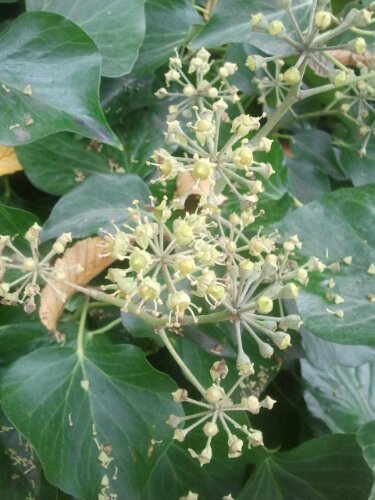
Then a strong, protective Ivy plant (Hedera helix) in full autumn insect feeding bloom.

image

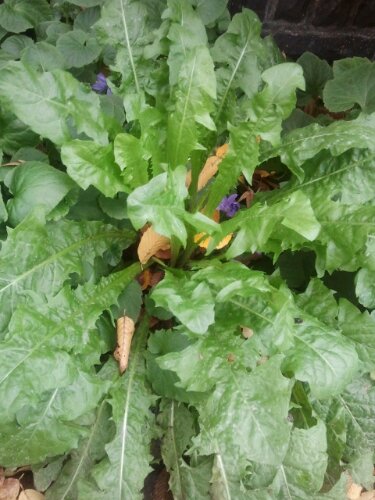
Here is a lively patch of vitamin packed Chickweed (Stellaria media) making three most of a protective playground fence.

image

Here’s a tiny Hollyhock seedling, growing in a pavement crack.

image

I also liked the look of this decorative (and edible) Pansy (Viola tricolor).

image

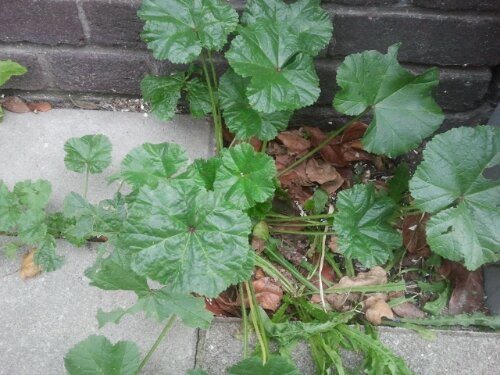
And a lovely nutritious Mallow growing against the building where I live.

image

Lastly a striking plant which I’m quite sure is a poisonous nightshade. This one seems to be used as a decorative addition to pavement garden. I will try to find it’s name but think it is sometimes called Love Apple, Nicandra spp.

image

365 Frankendael day 172

image

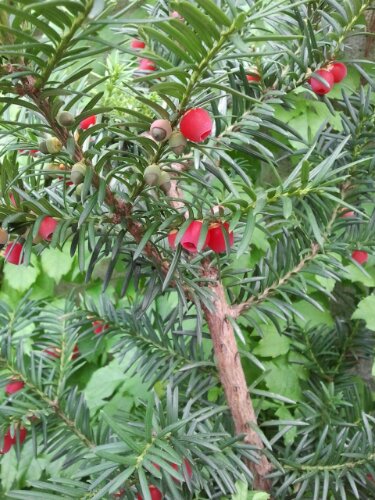
Today I found some beautiful and extraordinary fruit, belonging to a female Yew shrub (Taxus baccata). I never fail to be fascinated by these poisonous wonders. The glutinous (and delicious) fruit flesh is wrapped around a deadly exposed seed. Quite amazing to see!

Yew trees are either male or female. Both are full of deadly toxins – throughout all parts of the tree. Yew has been revered by the British for millennia. Druids apparently built their temples next to them, Christians built churches next to them. It’s very unusual to enter a traditional British church yard and not walk beside an ancient (or young) Yew. I like that.

I was taught the secret of how tasty the flesh of the fruit is, some years ago by a friend who worked with trees. Since then I try to enjoy one or two of those sweet, fragrant, glutinous morsels each year. But it’s not a practice to undertake lightly or ever in the presence of children! The seed must not be broken or swallowed, it is highly poisonous!

In recent decades Taxus baccata has yielded Taxol, a cancer fighting drug, often used to treat some ovarian cancers. Here’s a link that may be interesting about the Yew tree and conservation efforts, in light of this modern use.

Urban Outsiders Exhibition at Huize Frankendael

image

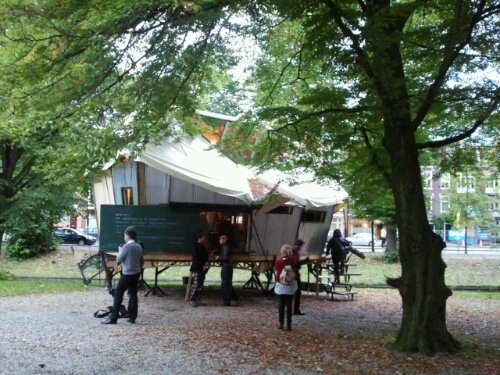
I had an invitation to the launch evening, on Friday, of Urban Outsiders at Huize Frankendael. I managed a quick whizz around the exhibits just before the end of that event. It contains some really beautiful things, from a walk in Permaculture style caravan to illuminated flower pictures, to unusual herb photos to interesting branch sculpture. I’m far more earthy than arty but I thoroughly enjoyed it and will be back to have a slow look inside.

image

I recommend anyone interested in the melding of art and nature to visit Urban Outsiders, at Huize Frankendael by the 4th November. The agenda shows when the exhibition is teamed with other interesting events – such as a breakfast, guided tour and meal.

image

The three outside exhibits can be viewed for free but entry to the house (and I really enjoyed the chance to nose around in there!) is only €3.50 for adults (free for children).

image

I don’t know if the lady in I spoke to in Merkelbach will ever read this but here is one of those Jerusalem artichokes (NL: Aardpeer)