Category Archives: Wild herbs

Lime leaves & flowers – sandwiches, scented water and drying (NL:Linden, Tilia)

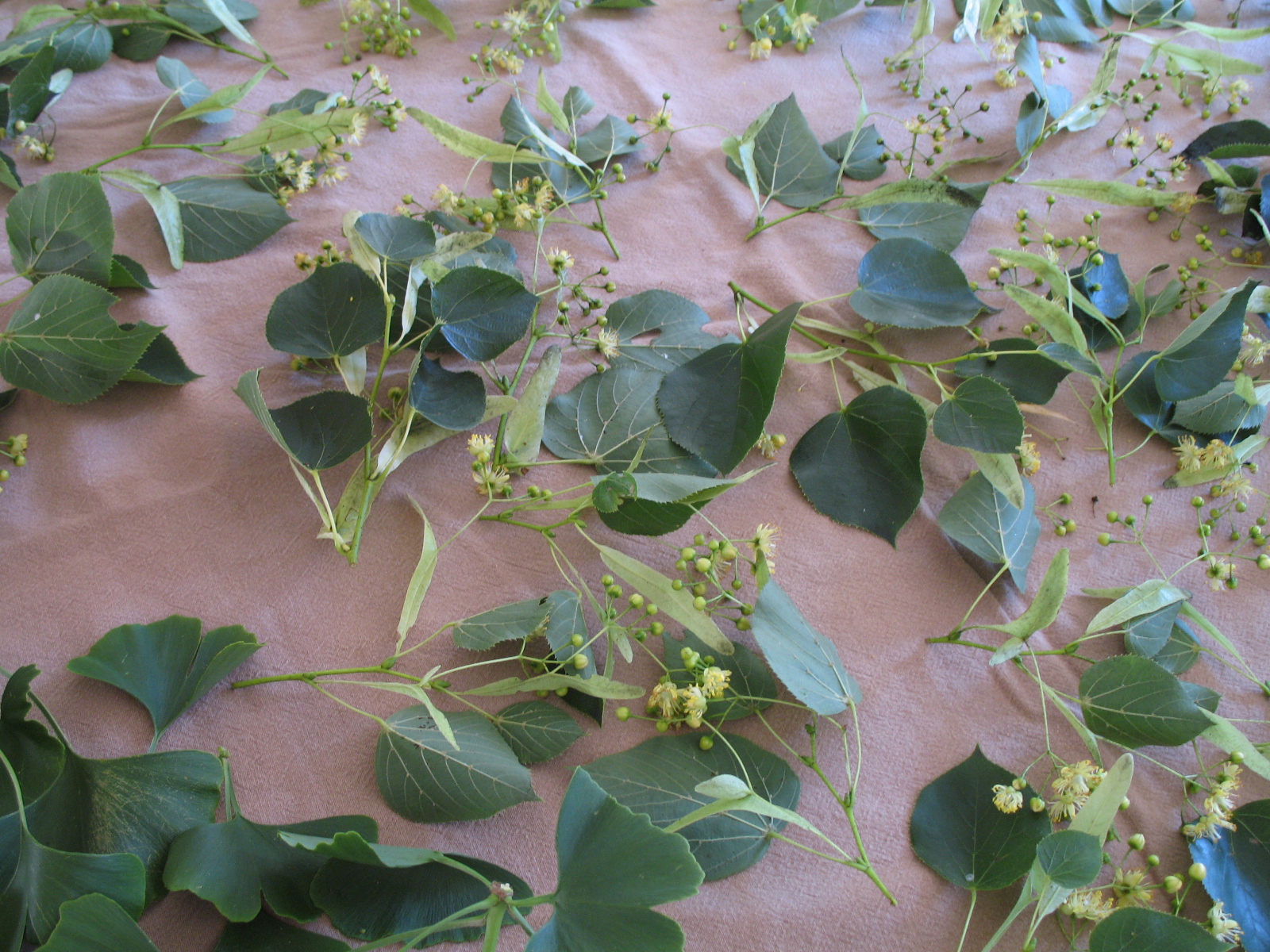
Yesterday I walked to a local public garden and harvested a carrier bag full of leaf and blossom sprigs from Lime/Linden (Tilia) trees.  These trees smell great at the moment. Whole neighbourhoods are perfumed by Lime flowers, loaded with nectar to attract hoards of bees.

If you pluck clean a clean lime flower from a tree in a safe location, you may like to eat it directly. They taste sweet and aromatic with a hint of bitter tannin. The aroma which will fill your mouth, nose and mind is uniquely delicious and has been highly prized, by many cultures, for centuries.  Lime flowers will quickly release a little glutinous, sweet mucilage as you chew.  More details about properties of this amazing tree in the main post on Lime.

So with limited space and time…
How to dry tree leaves and flowers.

  1. Once home, lay out the harvest on a light surface and discard any rough, diseased or otherwise unhealthy looking leaves, flowers or sprigs.
  2. Allow time for bugs to escape and find them a new home if they seem lost.
  3. My harvest was partly covered in a dried black film – originating from greenfly droppings in the canopy – so I then used scissors to separate the flowers from the leaves.  99% of the flowers were unaffected.
  4. Gently but thoroughly wash any dirt or film from the leaves, using cold water.  If you wash the flowers you will loose the valuable nectar and pollen.
    (It was very difficult to remove the black film from some parts so I discarded these and added them to my balcony pots as a mulch)
  5. Dry the leaves with a clean tea towel or muslin.
  6. Lay out the leaves and flowers separately to dry, on clean paper, cloths or trays.
    (I spread my harvest out on my dining room table, with a clean, absorbent, cotton table cloth beneath.  The room used needs to be well ventilated and fairly warm to facilitate good drying)
    This could be done in a very cool oven, I prefer to save electricity and let time do the drying.
  7. Turn the harvest from time to time to allow all surfaces to dry.
  8. If necessary, when the herbs feel dry to touch, move them to a more convenient drying area.
  9. Keep checking and shifting the herbs around to facilitate drying, for as long as it takes them to become completely brittle.
    (The flowers will dry much more quickly than the leaves, which could take 3 weeks)
  10. Inspect again for mould, unhealthy looking herbs.
  11. Store in glass airtight containers.Uses:
    Lots of information is given in the main Lime post but here are couple of others…

    • I couldn’t wait to use some of my harvest so I made Lime leaf, blossom and Amsterdam honey sandwiches for lunch.
    • I also added a few flowers to my cold water bottle this morning.  The water tasted and smelt very fragrant after about an hour.  It tasted far better than any shop bought, flavoured water and had the added benefit of a few cooling, gooey flowers to chew on during my 30 degree Dutch class.  The flowers would also look very pretty in a decanter of dinner table water.
    • Lime is magical – if you have the chance, give it a try!

Thank you!

Many thanks to the lovely people who came out for my second Midsummer Herb Walk, this morning in Frankendael Park.  Yet again, I thoroughly enjoyed sharing information about some of my favourite herbs and as ever I learnt lots of new things from fellow urban herbies.

We found and talked about several herbs which were not on the handouts. Here are a few photos and names to help you learn more about them. If I have forgotten any and you need the details please let me know…

Motherwort (NL: Hartgespan)
Leonurus cardiaca

Feverfew (NL: Moederkruid)
Generally known by the botanical name Tanacetum parthenium

Cleavers (NL: Kleefkruid)
Galium aparine
How to make the juice

Mullein (NL: Koningskaars)
(Verbascum thapsus) – a beautiful “wooly” specimen (as generally used in US and seen in most of the herbals) is currently growing outside the entrance of the Netherlands National Funeral Museum (Tot Zover), within Oostergraafsplaats – next stop out of town on number 9 tram.  We looked at Moth Mullein (Verbascum battaria); not wooly, smaller.  Photo and details of the herb are on the handout.

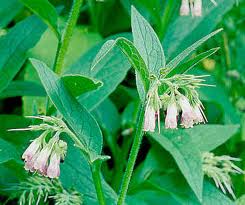
Comfrey (NL: Smeerwortel)
Symphytum officinale

Wormwood (NL: Absint-alsem) – the feathery one which I brought along from my geveltuin.
Artemisia absinthium


Sunday Midsummer Herb Walk, 26th June 2011

Today’s Midsummer Herb walk in Frankendael was super.  The sun came out, so did many beautiful flowers and also 9 other lovely Urban Herbologists.  As several other people contacted me, asking for a weekend walk, I am going to offer the Midsummer walk again this coming Sunday, at 10am.  So…

Join me for another Urban Herbology Wild Herb Walk on Sunday 26th June 2011 at 10:00.

The walk will be in Frankendael Park, Amsterdam, starting at the main (old) gate.  I shall wait just inside the entrance, by the bike racks (entrance in this photo..)

Handouts, including photos, notes and recipes, will be provided.

We will…
Take a relaxed look at useful wild herbs which are plentiful at this time of year.
Share ideas about how to use them in food.
Consider some of the herbal medicine uses.
Talk about some interesting herbal folklore.
Meet others who are interested in herb foraging in Amsterdam.

The walk itself will last for at least an hour and previously we have continued chatting over cups of herb tea and cake in Merkelbach restaurant, which sits within the park.  This Sunday is the monthly organic market called Pure Markt, so perhaps you would prefer to go there afterwards to buy some tasty organic food and drink.

The cost for the walk is €5 per person.
Places are limited to 15 so please do contact me via email if you would like to attend.  The Urban Herbology www.meetup.com group can also be used to sign up for this.

I am really looking forward to seeing everyone this Sunday and having a relaxed look at some of the herbs which are currently available in this beautiful park.

Midsummer’s Day Herb Walk in Frankendael

Join me for another Urban Herbology Wild Herb Walk on, Tuesday 21st June, Summer Solstice 2011 at 11:00 13:30 (Please note, I have changed the time slightly)

The walk will be in Frankendael Park, Amsterdam, starting at the main (old) gate.

Handouts, including photos, notes and recipes, will be provided.

We will…
Take a relaxed look at useful wild herbs which are plentiful at this time of year.
Share ideas about how to use them in food.
Consider some of the herbal medicine uses.
Talk about some interesting herbal folklore.
Meet others who are interested in herb foraging in Amsterdam.

The walk itself will last for an hour or so and previously we have continued chatting over cups of herb tea and cake in Merkelbach restaurant, which sits within the park.

The cost for the walk is €5 per person.  Places are limited so please do contact me via email if you would like to attend.  The Urban Herbology www.meetup.com group can also be used to sign up for this.

I am really looking forward to seeing everyone on Midsummer’s Day and having a relaxed look at some of the herbs which are currently available in this beautiful park.

Beltane Herbs

May Day, also known as Beltane in the Pagan calendar, is traditionally a day steeped in herbal lore. May 1st marks the end of the colder months and heralds the start of summer. It is a fire festival day where fires were burned on hill tops to encourage the sun’s warmth down to the earth. Beltane is half way through the Pagan year, it is strongly linked to fertility and many enduring customs pertain to this.

Not far from my childhood Bristol home, there still stands rather a phallic Maypole, on Iron Acton Common. Villagers will no doubt be dancing around it this Sunday and spectators may not realise that as those pretty ribbons are intertwined around the pole, a symbolic birth canal is being made around the phallus.  That part of the custom certainly passed me by as I enjoyed being an infant school May Queen.   In Minehead, Somerset and several Cornish towns, Hobby Horses (or Obby Osses) will be raising dawn sleepers, with raucous dancing and music over the few days following May Day.   The reason for this also evaded me whilst I lived in Minehead and tried to enjoy a good lie-in. I am pleased these traditions live on.

So back to the Beltane herbal customs and tasty treats…

  • May Dew: At sunrise on Beltane it is customary to rush out into the garden or fields and wipe your face in May Dew, particularly dew gathered on a Hawthorn tree.  This is thought to have magical properties, including the ability to beautify the complexion for the coming year.
  • Hawthorn: This beautiful and helpful herb tree is known by some as the May Tree.  Hawthorn boughs were often harvested at Beltane and the flowers used as gifts and to beautify homes.
  • Herb Gathering: Herbs start to flower a-plenty at this time of year hence Beltane is traditionally a time to go out with family and friends, a simple picnic, a basket and gather some wild herb flowers.  If you like the idea of this, please remember that annuals rely solely on those precious flowers to create seed for next year’s plants. Leave plenty, harvest just a few (perennials) and avoid rare and protected plants.  Try to use the herbs you harvest in some way or give them away to someone in need.
  • Flower Garlands: It is also customary to make beautiful flower garlands on May Day.  Why not choose plentiful daisies and dandelions?  Both are useful herbs, you may like to use when you get home or toss your flower garlands away with a wish, into flowing water.
  • May Bowl:  This is a delicious drink made from Woodruff (Galium odoratum – it looks very like cleavers (Galium aparine) but it is in flower at the moment, looking like swathes of sugary white froth across woodland floors – when you can find it!). Here’s the simplest recipe I know (many variations are available if you have a taste for it):
    8 cups of white wine
    2 cups of fresh, clean Woodruff – chopped, preferably in bud or flower
    1 tablespoon of grated orange zest
    sugar to taste. Pour the wine over the Woodruff and chill in a sealed glass container overnight. Strain off the Woodruff and add other ingredients. Drink in clear glasses, May Bowl is a beautiful pale green color and tastes fragrantly of Woodruff.
  • Oat Cakes (Bannocks): An old Scottish custom is to make a Beltane Oat Cake and to share it between friends who would stand around the Beltane fire and each break off a small peice of the nobbly cake.  They would then cast it over their shoulder whilst saying a line, asking that something precious be protected by something usually linked with it’s destruction (such as chickens or sheep to be protected by the wolves or foxes).
    Here’s a simple recipe (and photo) for Beltane Oat Cake taken from RampantScotland.com. They look very tasty! Traditionally this food would be cooked in the embers of a Beltane fire, a heavy based frying pan or oven will work well instead.

“Beltane Bannocks from Rampant Scotland.com
Ingredients

4 oz (125g) medium oatmeal
2 teaspoons melted fat (bacon fat, if available, butter or ghee will work well)
2 pinches of bicarbonate of soda
Pinch of salt
3/4 tablespoons hot water
Additional oatmeal for kneading

Method
Mix the oatmeal, salt and bicarbonate and pour in the melted fat into the centre of the mixture. Stir well, using a porridge stick if you have one and add enough water to make into a stiff paste. Cover a surface in oatmeal and turn the mixture onto this. Work quickly as the paste is difficult to work if it cools. Divide into two and roll one half into a ball and knead with hands covered in oatmeal to stop it sticking. Roll out to around quarter inch thick. Put a plate which is slightly smaller than the size of your pan over the flattened mixture and cut round to leave a circular oatcake. Cut into quarters (also called farls) and place in a heated pan which has been lightly greased. Cook for about 3 minutes until the edges curl slightly, turn, and cook the other side. Get ready with another oatcake while the first is being cooked.

An alternative method of cooking is to bake them in an oven at Gas5/375F/190C for about 30 minutes or until brown at the edges. The quantities above will be enough for two bannocks about the size of a dessert plate. If you want more, do them in batches rather than making larger quantities of mixture. Store in a tin and reheat in a moderate oven when required.”

Additional note – 1st May 2011 – I made this recipe this morning and added too much butter so I couldn’t form a dough, it became more a crumble. Determined not to waste the mixture, I cooked it gently in a small heavy frying pan and then combined the rich oatmeal with some framage frais, feta cheese and finely chopped tomato.  It became a pate type consistency and was really very tasty.  It was also possible to shape into balls.

Dandelion (Taraxacum officinale, NL:Paardenbloem) – Ways to eat it

Dandelion flowers abound in Amsterdam! Don’t they just look wonderful?  Whether you find this plant a pest or a blessing, those woolly, yellow flowers, atop long toothed leaves, rarely fail to catch the eye and could help to keep you healthy.

Most people can easily recognise Dandelion, it has been used medicinally for hundreds of years and well worth understanding.  Taraxacum officinale is amongst the most common weed-herbs in urban areas.  Those magical clock heads, full of parachute assisted seeds, can spread far and wide from mother plants. It can colonise most urban spaces including balcony and rooftop pots. It loves nitrogen rich soil but can manage in most sunny locations. If you walk through a city park this week I am confident that you will be met by hundreds of cheerful dandelion flowers.

Dandelion is known as a bitter herb but it is also salty and sweet. It works as an internal cleanser. As with other bitter greens, the taste stimulates bile secretion. When first taking or eating this herb it can act as an effective laxative and strong diuretic. It loosens things up as Susun Weed says in her extensive writings on the herb in Healing Wise (also contains lots of recipes not listed here).  Amongst other things Dandelion contains high levels of several vitamins and inulin which can help to regulate blood sugar levels. It is packed with nutrients and is helpful for a great many disorders. Dandelions that are at least two years old contain higher concentration of inulin so are more useful medicinally.

A beautiful dandelion found it’s way into one of my roof terrace perma-pots last year. Its leaves and flowers will be gracing my table in the next few weeks – but how? What to do with Dandelion to  make it taste really good rather than just something that tastes good for you?  Here are a few ideas:

Italian Dandelions
Large Dandelions are apparently only eaten cooked in Italy and are known as Catalogna.  The toughest darker leaves are not eaten and Italian recipes call only for those closest to the heart of the plant.  Puntarelle is a smaller Italian dandelion variety which is sometimes eaten raw, served with oil, salt and pepper. With both sizes, the leaves cut into strips and the Puntarelle may then be soaked in cold water, whereupon they curl up attractively.  Serve dressed with oil, vinegar and perhaps chopped anchovy.

Italian cooked dandelion (From The Silver Spoon cookbook)
Cut the tops of inner leaves into strips.  If you have access to lots of Dandelions, allow about 200g (7oz) per serving. Cook through (15 -20 minutes) in salted boiling water and serve hot dressed with olive oil, salt and vinegar or lemon juice.

Dandelion with garlic and olive oil (From The Silver Spoon cookbook)
Cook 1 kg sliced dandelion leaves in salted boiling water for 15 mins.  Drain and squeeze out as much liquid as possible.  Heat some olive oil in a frying pan and add 4 whole garlic cloves, stirring as they fry gently, to become golden brown but not burned.  Remove and discard the garlic cloves, reserve the resultant garlic oil in the pan.  Add the cooked dandelion strips to the garlic oil and cook on a slightly higher heat for a further 15 minutes, stirring occasionally.  Season to taste with chili powder if desired.

Dandelion with Parmesan (From The Silver Spoon cookbook)
Cook 750g sliced dandelion leaves in salted boiling water for 15 mins.  Drain and squeeze out as much liquid as possible.  Chop coarsely and place in a warm serving dish.  Melt 65g butter in a small pan and when it turns slightly golden pour it over the dandelions. Sprinkle with 4 tablespoons of grated Parmesan cheese and serve.

Other Ideas:
Add chopped Dandelion root to Kitchadi
– Kitchidi is an easy to make, nutritious, easily digested, traditional one pot Indian dish. Lentils and rice are cooked together with some vegetables.  Find a recipe that appeals and add some chopped Dandelion root.

Ayurvedic dark leafy greens
Cook a good handful of Dandelion leaves in boiling water and strain. Perhaps save the cooking water for soup if not too bitter.  Then brown ½ tsp cumin seeds and then add 1 tsp coriander powder to brown lightly (in ghee) in a skillet.  Add to the drained greens and serve immediately.

Dandelion leaf Juice
If you enjoy making fruit and vegetable juices, consider adding a few Dandelion leaves to the mix.

Dandelion and Burdock cordial
There are many recipes online and in traditional British cook books.  Here’s a simple recipe.

Dandelion leaf  and flower salad
I think this speaks for itself.  Simply add a few Dandelion leaves and flowers/petals to salads.  It looks great and tastes far more robust than lettuce.

Dandelion flower fritters/pancakes
Simply add whole flowers or petals to a regular pancake or fritter batter.

Dandelion Flower Pickles
You need to collect tightly closed flower heads for this recipe.  Here’s a very interesting pickle making link.

Dandelion Confiture (Cramailotte)
Thank you Sonja for passing on this idea.  Here’s a link to the recipe in Dutch, others in English can be found online.

Dandelion Root Coffee
Made by roasting cleaned, chopped dandelion root.

Dandelion Wine
Delicious!  Many recipes available, here’s one adapted  from the Self Sufficientish website…

Ingredients:
About a bucket full of dandelion heads
2 litres of boiling water
Juice of 2 lemons
1kg sugar
1 teaspoon of yeast

Method:
Put flower heads within a muslin/jelly bag, in a bucket and pour over one kettle of boiling hot water.
Mash it ( with a masher and within the muslin/jelly bag) to extract all the “juice”.
Allow to cool and filter through more muslin into a demijohn.
Make up sugar syrup by mixing the remaining 1litre of water with the sugar.
Allow to cool again and add the yeast.
Top up the demijohn with water and insert airlock correctly.
Leave to ferment then syphon and bottle.

Dandelion leaf Tea
Used by some to treat various disorders such as eczema and as a general tonic. Chop leaves and infuse as a tea.  Can be taken freely.

Dandelion blossom tea
As for leaf tea.  The petals themselves are far less bitter and more pleasant tasting than the green sepals beneath so perhaps pluck the petals out and use alone.  Can be taken freely.

Dandelion Tincture
Pack a sterile glass jar with clean chopped dandelion herb (all parts) and fill all spaces with vodka.  Leave, sealed, in a coolish place for 4 – 6 weeks.  Strain and take as desired.  Can be taken freely but of course it is mostly vodka.  Most take a teaspoon daily.

Here are a few other online recipes which may be interesting…

Curried Dandelion

Dandelion Fried Rice

Dandelion Columbo

Dandelion Saute

Dandelion Sesame

Dandelion Flower Biscuits

The uses for Dandelion are apparently endless!  I am now off to try it as a skin tonic…

Last Chance Ramson Pesto (Wild Garlic, NL:Daslook)

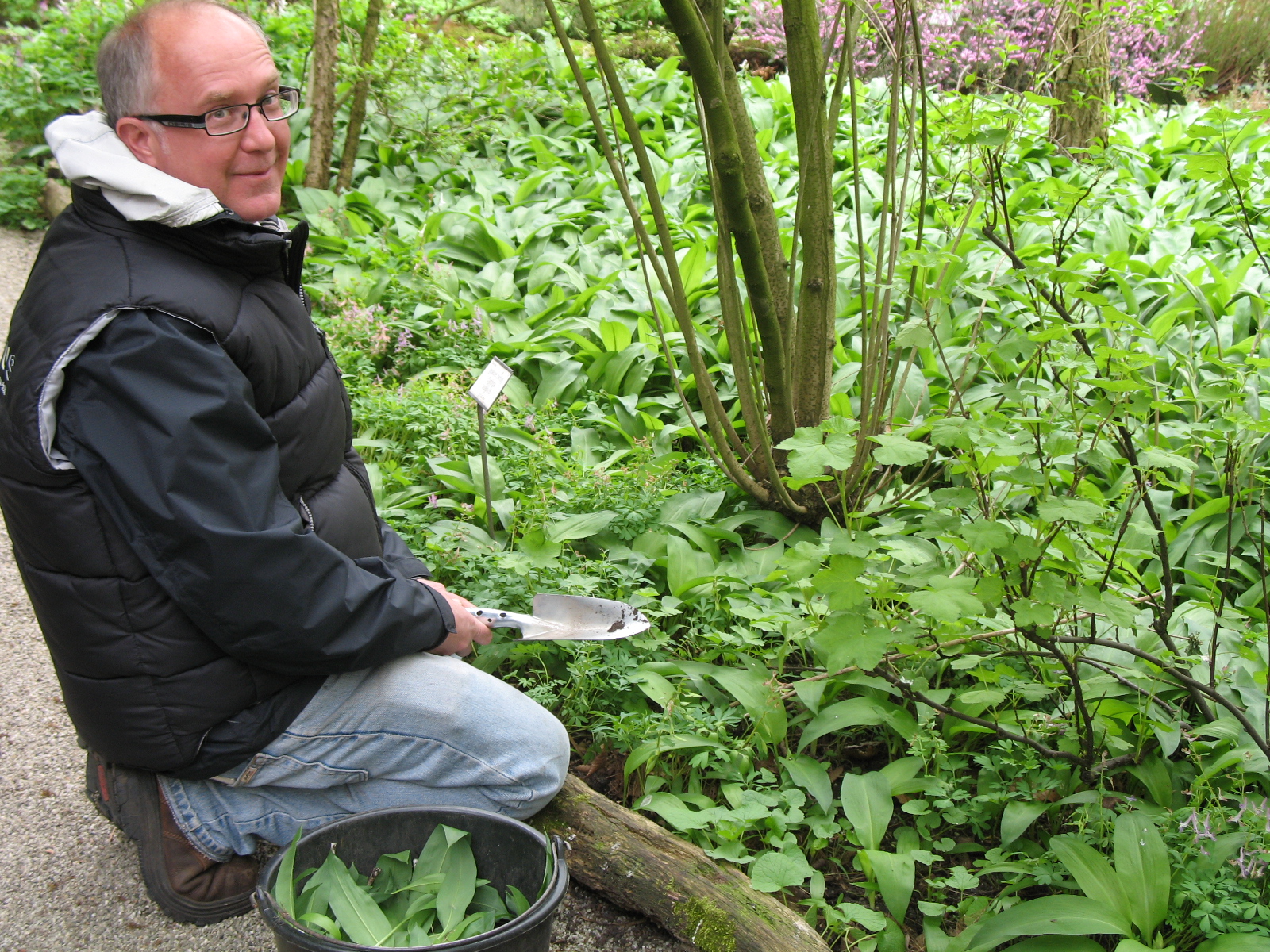
On Thursday I visited my freinds in De Hortus Botanicus and helped them to harvest some Wild Garlic/Ramsons (Allium ursinum, NL:Daslook). It grows vigorously in several parts of the beautiful garden and periodically is removed from paths and areas where it out-competes other plants in the Hortus collection.  I took home a large tub of whole Ramson plants; roots, bulbs, leaves and all.  I made a delicious batch of Last Chance Ramson Pesto.

So why Last Chance, you may ask?  In my local Frankendael Park, the Ramsons are currently in flower so it’s too late to harvest them. Ramsons are still edible when in flower but they taste rather unpleasant. The Ramsons in de Hortus are not yet in flower and they taste great!  In another week or so they too will be in flower and it will be almost another year until they are fit for the plate.  Another reason for my excitement is that I can only harvest Ramson leaves from the local parks.  Harvesting the roots and bulbs would destroy the plants so of course is completely out of the question for wild plants in their natural habitat.

Last Chance Ramson Pesto – vary the proportions as you wish.  Those stated made a good thick paste.

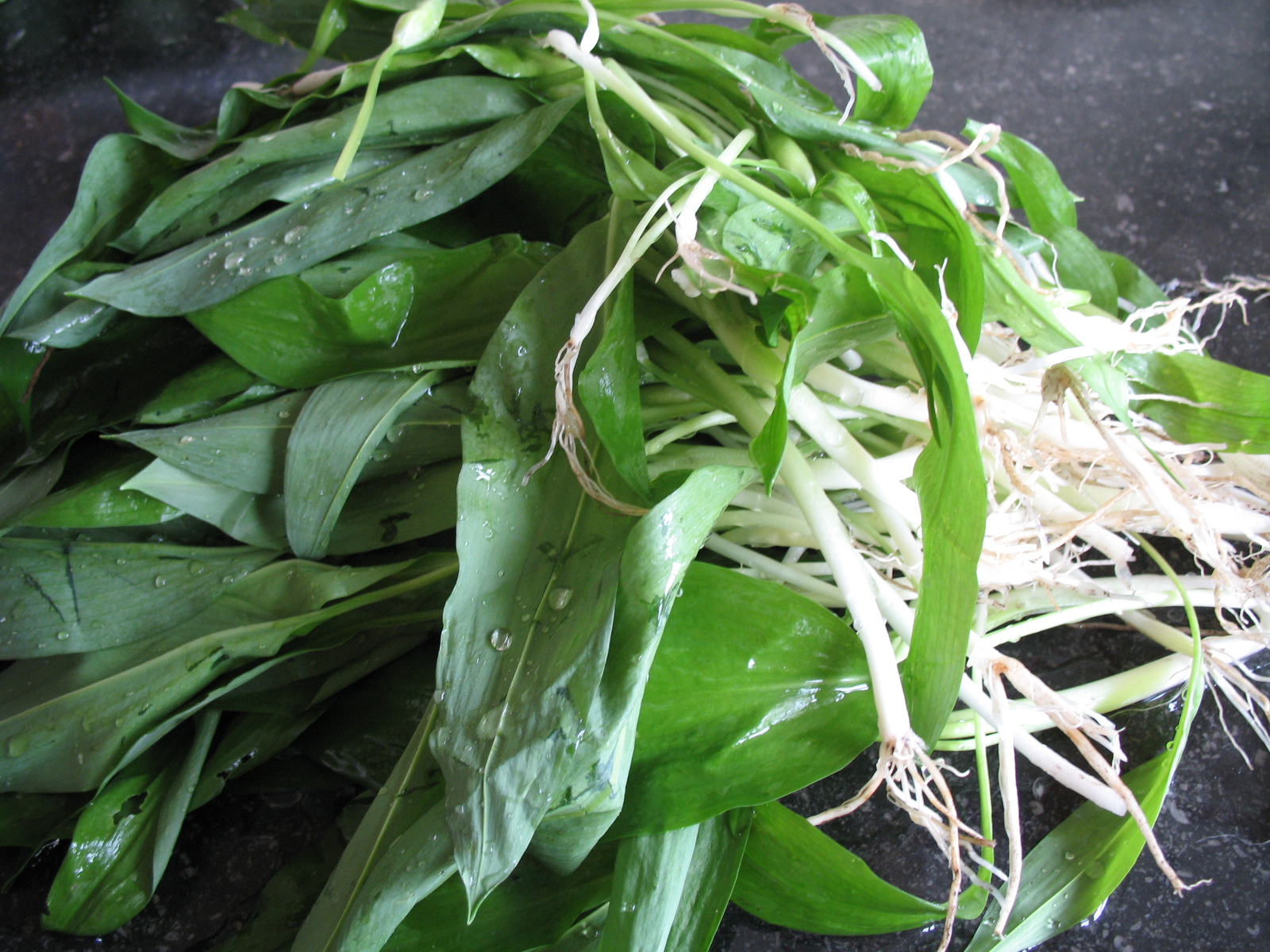
  1. Carefully wash the Ramsons (as you would spring onions), discard any odd squidgy bits from around the bulbs and trim off any really dirty roots.
  2. Roughly chop the clean Ramsons and place in blender.  I had about 150g Ramsons.
  3. Add Extra Virgin Olive Oil to blender. I added about 200ml.
  4. Add finest quality pine nuts (beware cheap ones, many people have a bad reaction to them). I added 50g.
  5. Add a good grating of rock salt and pepper.
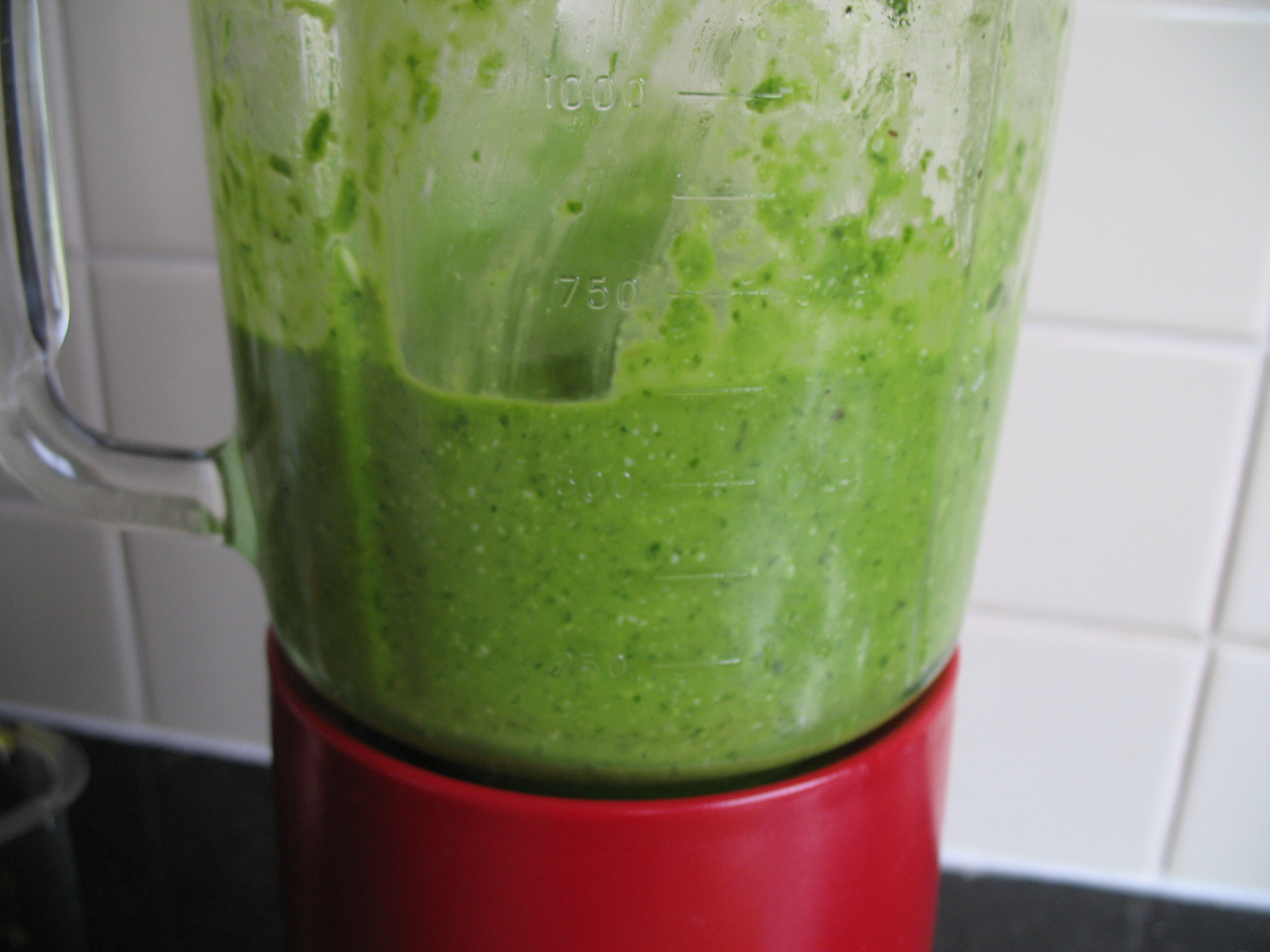
  6. Blend gradually until a thick paste is made.  I needed to interrupt blending several times to scrape down the paste.
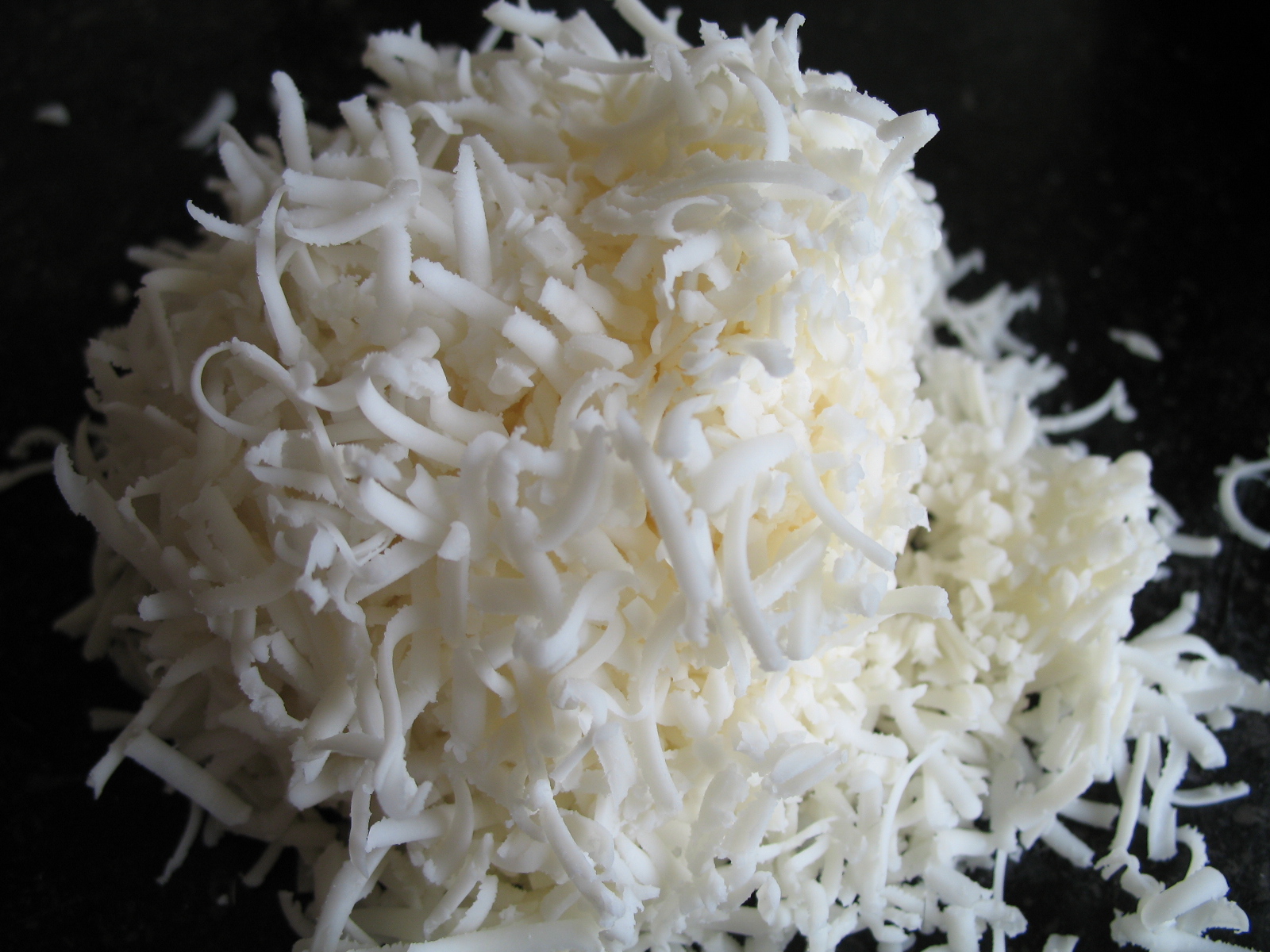
  7. When a homogeneous consistency has been made, add grated cheese and blend a little more to combine and break up the cheese (hard goats cheese for me, you may like Pecorino, Parmesan or similar).
  8. The result should be a paste which is thick enough to dollop into cooking mixes and thin enough to be stirred straight into hot pasta.  Add more Olive Oil or more cheese to obtain a better consistency if required.  I made about 650ml of pesto.  It will keep me going for quite some time.
  9. Store in sterile jars and refrigerate or freeze in ice cube trays.
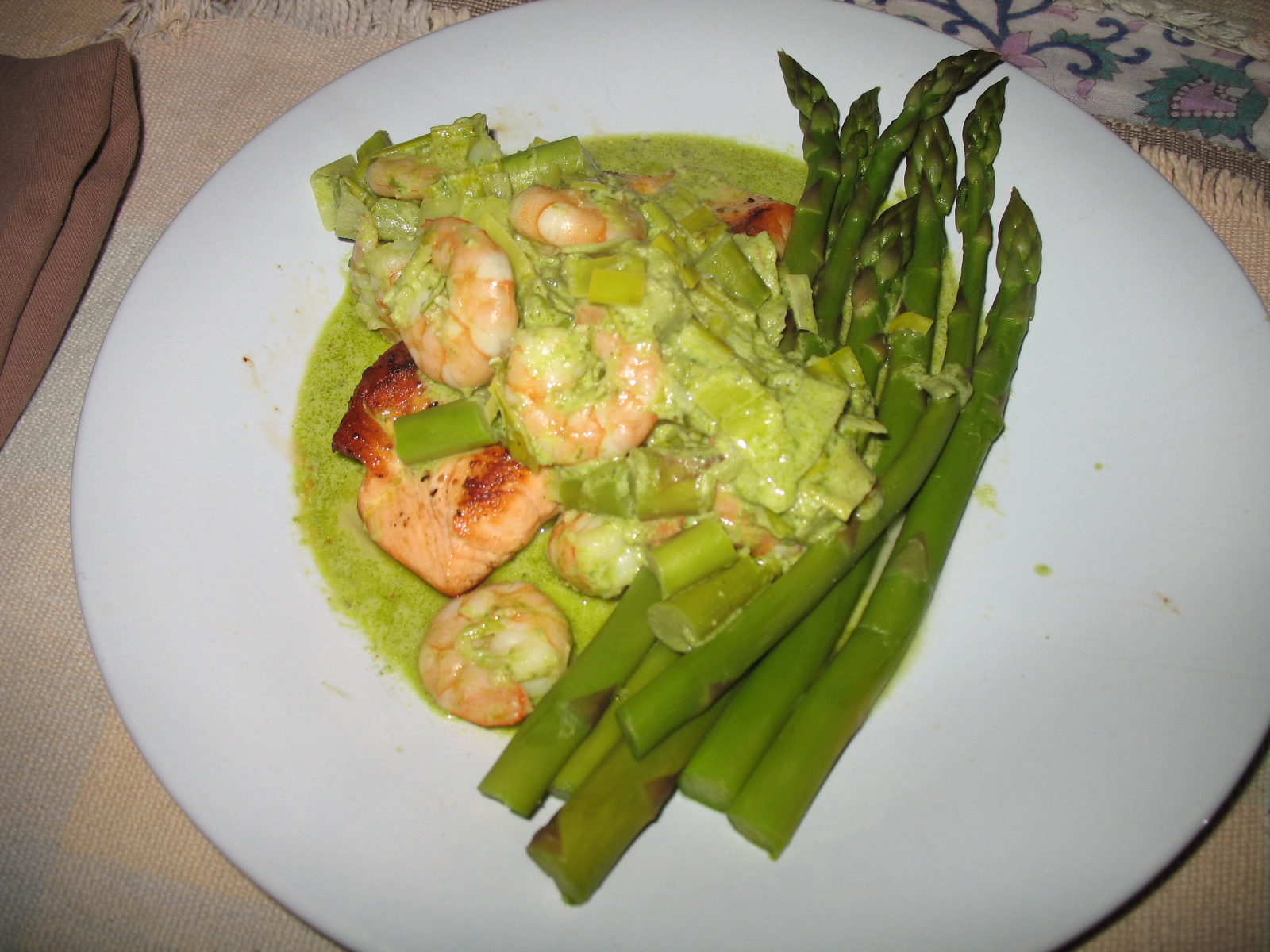
  10. Use as a straight pesto on pasta or as a super garlicy seasoning in other dishes. I added two teaspoons of my pesto to this sauce for salmon and prawns.  It was delicious!  I understand that Michael used it on fresh cheese ravioli and I used it the next day in a risotto.  The list of uses is endless…
Nettle Pasta – Strettine (Urtica dioica, NL: Brandnetel)

I love nettles and I love making fresh pasta. Here’s a little information about nettle and a great recipe which combines the two.

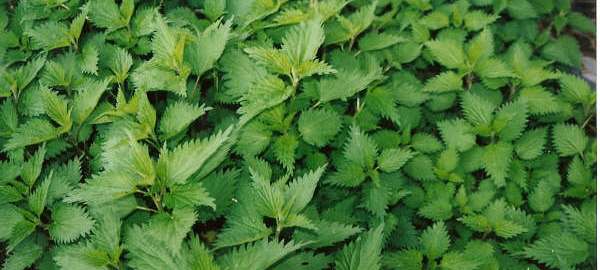
It is best to make use of stinging nettles (Urtica dioica) when they are young (in late March and early April – before they start to flower). I prefer to use them in strong overnight infusions, as a leafy veg in cooking and as a hair rinse.  The resilient perennial Urtica dioica is sure to be found fresh somewhere near you and dried nettle is quite easy to find from herbal suppliers.  It grows well in nitrogen rich soil, is present above ground almost year round but to avoid woodiness only harvest until it comes into flower.

This herb is packed with vitamins and minerals, is extremely nourishing and energises the body and mind. Taken regularly it can build strength in many ways.  I’ll post lots more about nettle in future but for now here’s a link to an informative post by Susun Weed about nettle and how to make effective, strong nettle infusions from dried herb. There are a many recipes available which include nettle, in my experience many are quite bland. However many traditional Italian recipes feature nettle and taste very good.  Here is a simple, tastey combination of pasta and nettle.  Stinging nettle tops are ripe for the picking at the moment, so it’s a great time to try this recipe.

Strettine – Nettle Pasta
120ml nettle purée
360g Italian tipo 00 flour
2 eggs
good pinch of salt
good pinch of black pepper

  1. Make nettle purée as follows: Harvest about 200g of healthy nettle tops, clean them before adding to a pan of boiling water. Boil rapidly for 2 minutes. Strain and place the wet, cooked nettles into a clean muslin, jelly bag or tea towel. Wring out until the nettles become quite dry. Blend the nettle in a food processor until smooth. You need about 120ml of nettle puree for this pasta, freeze the remainder for later use.
  2. Seive the flour onto a pastry board or clean worktop.
  3. Mix the nettle puree, salt and black pepper into the flour.
  4. Form a well in the centre of the nettle-flour mix and break the eggs into this well.
  5. Use a fork to lightly break up the eggs in the well and use it to start working the nettle-flour into the eggs.
  6. Use your hands to work the rest of the nttle-flour in with the eggs.
  7. When all is basically combined, knead the dough with your hands to form a smooth pliable ball.
  8. Wrap with a clean cloth or clingfilm and place in refrigerator to rest, for about 30 minutes.
  9. Now the pasta dough is ready to roll and cut.  Divide the dough into three roughly equal pieces and pass through the rollers of a lightly-floured pasta machine. Work through the machine several times until until you have obtained a smooth and elastic sheet, at least through roller setting number 3.
  10. Pass the rolled sheet of pasta through the tagliatelle cutting blades.
  11. Dry the taglietelle a little by spreading it out on a clean cloth or a pasta drying stand. Allow to dry at room temperature for about 15 minutes.
  12. Cook in salted boiling water for 2-4 minutes, until al dente.
  13. Strain and serve.

Eostre Herb Walk – Flevopark Amsterdam

There will be another Urban Herbology Wild Herb Walk on Sunday 20th March 2011 at 11:00.

This walk will be in Flevopark, Amsterdam, starting at the main gate. The plan is to take a relaxed look at which wild herbs are available at the moment, which will be ready soon and to share ideas about how to use them.  A simple recipe sheet will be provided and €3 will be asked of attendees to help me cover the costs of this blog. Places will be limited.  I previously set up a Meetup.com group, called Amsterdam Urban Herbologists so if you would like to attend you are invited to RSVP via http://www.meetup.com/Amsterdam-Urban-Herbologists/ as soon as possible.  You will need to create a log-in for that site, if you don’t already have one.  If it is too tricky and you would like to come along then please feel free to simply email me at lynn.shore@gmail.com or reply to this post.

I am really looking forward to seeing everyone on Eostre (the Vernal Equinox, when day and night are of equal length) and having a relaxed look at some of the herbs which are currently available in Flevopark.

Imbolc Herb Walk – Thank you!

Just a quick post to say thank you to everyone who came out on this chilly afternoon, to join me on the Frankendael herb walk.  It was lovely to share some of my favourite herbs with  you and also to learn from you.  We looked in some detail at nine herbs which are currently available and also spotted a few others which will be available soon. The herb tea and chat in Merkelbach afterwards also went down a treat!

Links to previous posts about a few of the herbs we looked at today:
Elder, Elderflower tea
Witchhazel
Sweet cicely
Birch oil – how to make cold infused oils
Wild rocket
Rosehip syrup recipes

I will be organising another urban herb walk in March and also a lotions and potions workshop sometime soon. More details to follow…