Extra Date: Saturday17th February, 10.00 – 11.30, Park Frankendael. Amsterdam
This is an event for wild garlic lovers!
Learn how to identify, ethically harvest, craft, eat, grow, use and generally make the most of wild garlic (Allium ursinum) or Daslook, with Livvy de Graaf, assisted by Lynn Shore, professional foraging teacher and herbalist. Livvy, is Dutch-British and has been harvesting and eating wild food for longer than she can remember. She is Lynn’s daughter and certainly knows her way around the woods of Park Frankendael, where this walk will take place. She looks forward to sharing some of her skills with you.
We will be working mainly in the River of Herbs foraging gardens, so unusually, will be able to dig up some of the fresh wild garlic bulbs, to plant elsewhere or for you to cook/preserve at home.
Handout with wild garlic info. and recipes, and a cup of herb tea will be provided. You will learn about and try different preparations from sweet, sour, savoury to medicinal. And will be able to make your own potions/creations at home, using what we forage together and the handout.
Wild garlic emerging from the early spring soil, heralds the start of the main foraging season. As you learn about wild garlic, you will also learn to recognise other amazing wild herbs which are around at the same time.
Please bring along: drinking cup Paper bag (grocery small bag to take the harvest home) pen/pencil to add to the notes. hand trowel / handschep (I will have a couple to share if you forget or don’t have one).
Cost: 15 Euro per person – Payable in advance Please email urban.herbology.lynn@gmail.com and you will receive the bank details for payment. When payment is received your place is booked.
Cancellation Policy: If canceling, for any reason, 24 hours or more before the start of the event – Full refund. If canceling after that time (so less than 24 hours before the start time of the event) you will be refunded only if we have a replacement.
I adore scrolling through fungi foraging photos, always, but especially at this time of year. However, something bothers me about some of the fungi fever photos and I think we can do something about it.
All foragers worth their salt are delicate in their work; they respect and take care with the plants, just harvesting a bit, leaving the patch looking untouched afterward etc etc. They want the plants to survive, thrive and multiply. If for no other reason, this helps ensure that there is plenty to forage next time. That’s great, that’s part of how I teach on my urban herbology walks and courses but I’m seeing a very different impression in many fungi trophy photos.
Are the fungi foragers (who are often experiened and wonderfully ecologically minded plant foragers too) doing the same and being subtle in their work?
I guess so and hope that many fungi trophies that I see posted, simply show happy hunters taking home whole huge polyphores and the like, which have been gathered with great respect for the environment and awareness of how those fungi fit into the delicate ecosystem.
Oysters
Some polyphores can weight several kilos, taste mouthwateringly awesome, can cover a lot of meals, or be prepped and store well over-winter. With such virtues, I completely understand why we want to take the whole thing home. But we also know that fungi spread through hyphae and spores. These fruiting bodies in which we so delight, and may harvest, help ensure that the fungus can proliferate and reach new uncharted territory. They help ensure their survival. And we are wrapped up in their survival. Put simply, fungi make the world go round. Yes they can spread to new territories by stretching their hyphael networks in soil but they fruit for a reason. They fruit to spread far and wide. Just as foragers are guardians of the wild plants, we are also guardians of the fungi
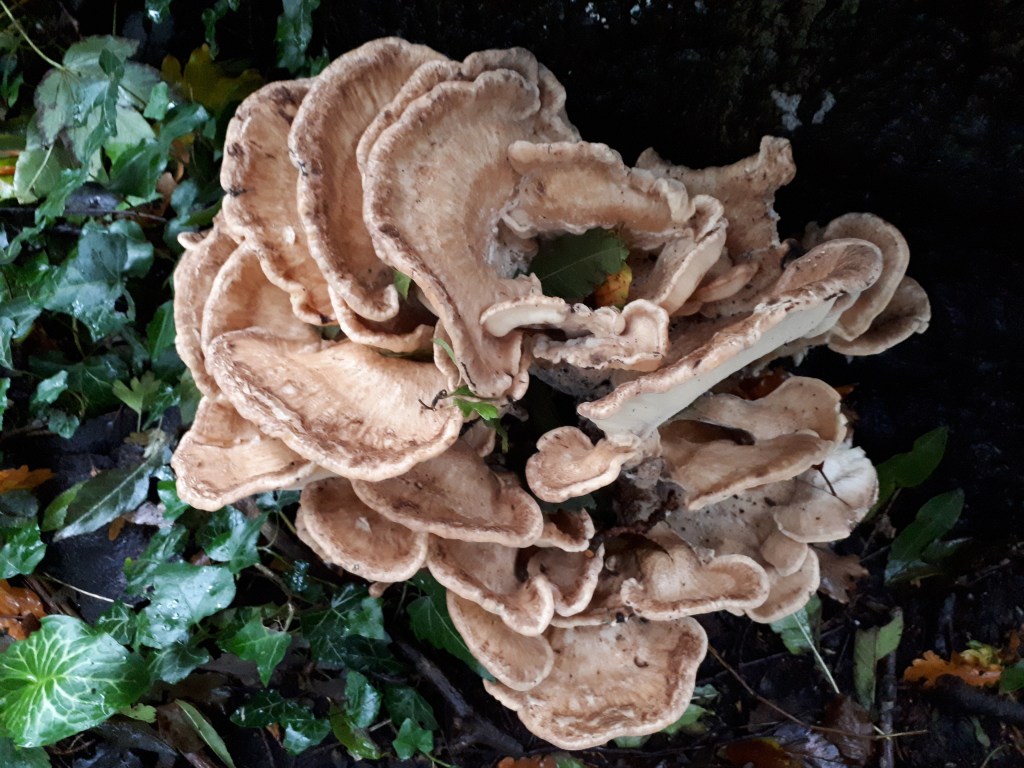
Early stage Giant polyphore fruiting body on Beech.
When I’m lucky enough to find a Giant Polyphore or Chicken Of The Woods developing in a clean enough and accessible spot in Amsterdam, I like to harvest a little when I need it before leaving the polyphore looking untouched so casual foragers don’t copy. When I harvest this way I get fresh mushroom for my family meals for weeks on end. Maybe being able to revisit the spot is a rare privilege and that’s how I can do it this way.
Before today’s harvest.
The beauty in three of today’s photos is one such Giant Polyphore, at different stages of development. I’ve been carefully snapping off a frond from this one, for two or three weeks now, returning every few days when I feel the urge. And with fungi fever in the air, the urge is pretty much a constant! Can you see where I’ve harvested? Hopefully not too easily.
After today’s harvest.
During these weeks, no one has sliced at or whipped the whole thing off the tree, which happens.. So I’m pleased that this fungal fruiting body can ripen and will spread heaps of spores quite soon.
This is the amount harvested today. Plenty for two meals. Teaspoon as scale element.
Maybe we can encourage other fungi foragers to at least comment in their social posts on how they took just a tiny proportion of what was on offer. How about some before and after shots of what and where we harvest? I’m not one to show the precise location of my best finds, I live in Amsterdam so there wouldn’t be much left if I did, but I think it’s possible to make it clear to social media foraging fans that the foraged area (and fungus) looks great after harvesting and that only a little was taken.
I’d love to know what you think about this. Am I being a bit penickety and over-sensitive or do other people feel something similar? Maybe new knowledge that I’m unaware of shows that fungi fruit purely for the pleasure of our human tastebuds and immune systems, and are no longer necessary for their own survival?
Let me know your thoughts and especially tips you may have for reducing the impact of foraging on fungal populations.
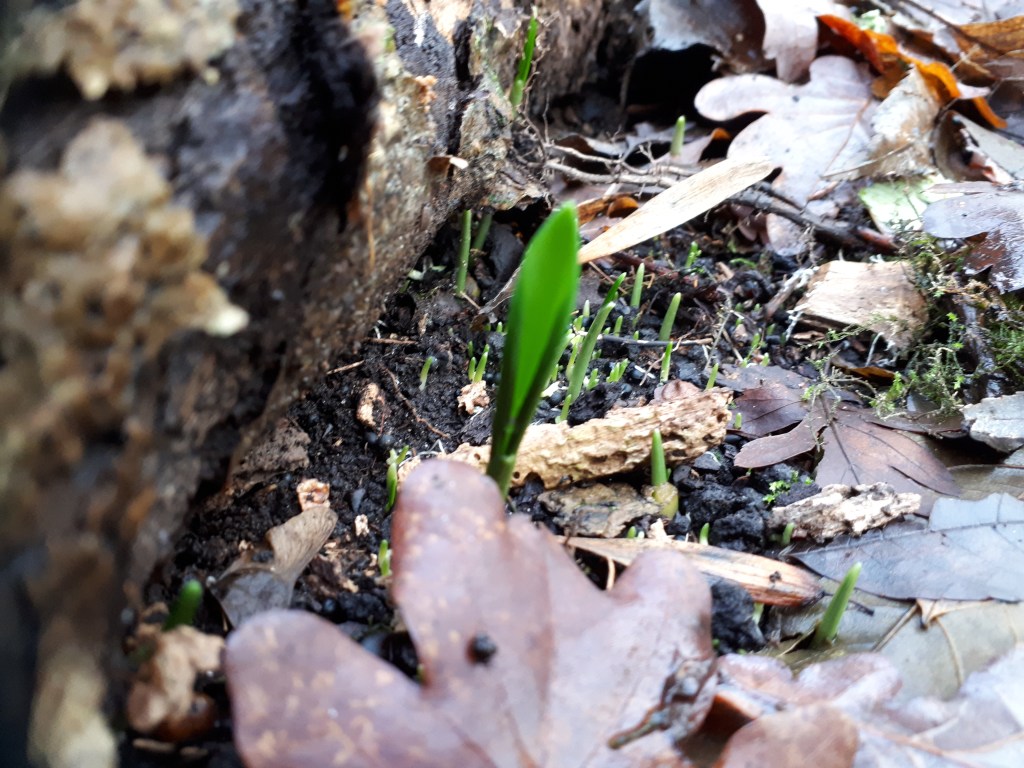
Ate my first wild garlic leaf of the year, whilst leading an Urban Herbology Walk, this morning. It was delicious and I’m now filled with spring fever (and garlic breath ;).
Wild garlic / Daslook / Allium ursinum is always to be found here in January, if you know where to look, but it’s a little ahead of normal. There are also lots of other bulbs pushing up, such as crocus and daffodil and you wouldn’t want to confuse those as they are not to be eaten.
My next public walk is February 9th (a Thursday) and I’ll set another date very soon for my Wild Garlic Workshop. Didn’t do it last year but feels good to offer it again soon.
So, today we all took home some oyster mushrooms and wild garlic bulbs, as well as a selection of edible leaves. Ground ivy and violet leaves being my favourites at present
I made an omelette of Oyster and Wood ear mushrooms, comté and brie. Hard to describe the experience in my body cells, which the wild garlic brings.
I could smell spring yesterday evening, cycling through town, didn’t dare mention it, but today it’s conclusive – Spring has Sprung! Well at least for foragers and those affected by Hazel pollen…
Please remember that you shouldn’t dig out any bulbs or roots, as a forager, unless it’s your garden (or the paths in the foraging orchards). If you’re determined to harvest so early, be sure that what you pick, stinks of garlic. And that you only take a little from a plant, so it can quickly bounce back and grow new leaves. Also keep your harvesting tidy and sharp, so it looks like you’ve never been there.
Happy foraging me hearties – May you be glowing with the chlorophyll, glutamyl peptides and sulfoxides of Allium ursinum, before too long!
Thursday 14th April 2022 Ethical Spring Foraging Walk 10.30 – 12.00 Park Frankendael
Join me for a walk around parts of the best park in Amsterdam! We will look at many different edible and medicinal plants, which grow in and around Amsterdam. Learn how to identify, ethically harvest and safely use the plants for health, connection to place and to increase urban self-reliance, whilst caring for the environment. €15 per person Booking and details on Meetup
Learn heaps about incredible local herbs, how to find them, ethically forage, craft, eat and preserve them. Full details and booking on Meetup [Apprentices free – please contact me directly to let me know you are joining the walk rather than booking via meetup]
Lynn is a professional foraging teacher and forager. Also a qualified herbalist. She is a member of the Association of Foragers.
Here’s a short Urban Herbology post from 9 years ago, about how to make a little harvest of wild garlic go a long way. Click on View Original Post, to open up and see some of the benefits of this herb and a simple way to use it over several weeks. I hope it helps you. If you want to learn lots more about wild garlic, I run workshops about the plant, throughout the season. The next one is on Sunday 6th March 2022. Details are on the events page.
The woodland floor in Frankendael Park is carpeted with flowering snowdrops and the emerging leaves of Ramsons (wild garlic, Allium ursinum). I’m sure snowdrops have their uses but when you find them, Ramsons are an urban herb forager’s dream. All parts of the plant are edible and very useful, though the leaves and flowers are all you should use. The bulbs should be left alone and only pick a leaf or two from any plant. They taste truly delicious – if you like the taste of garlic! They taste best, by far, before the pretty white flowers open and can be eaten from early spring, when the first leaves emerge from the soil.
Ramsons have similar properties to Garlic but are milder in all respects. They are also more tolerable to those you have difficulty digesting other members of the onions family.
It was such a pleasure to take a group of 9 people around the woods for a herbology walk recently. We found a lot of beautiful plants and some delicious fungi. Unfortunately, the second planned walk had to be cancelled as the latest Dutch lockdown restrictions came into effect overnight. I hope that we can schedule some more group walks together very soon. In the meantime, I am able to offer 1:1 herb walks, as during the previous restrictions. The cost for a one hour 1:1 walk is €60. If you would like this, please email me so that we can schedule a time. If you would like to be alerted when the next group walks are set, please sign up to my Meetup group.
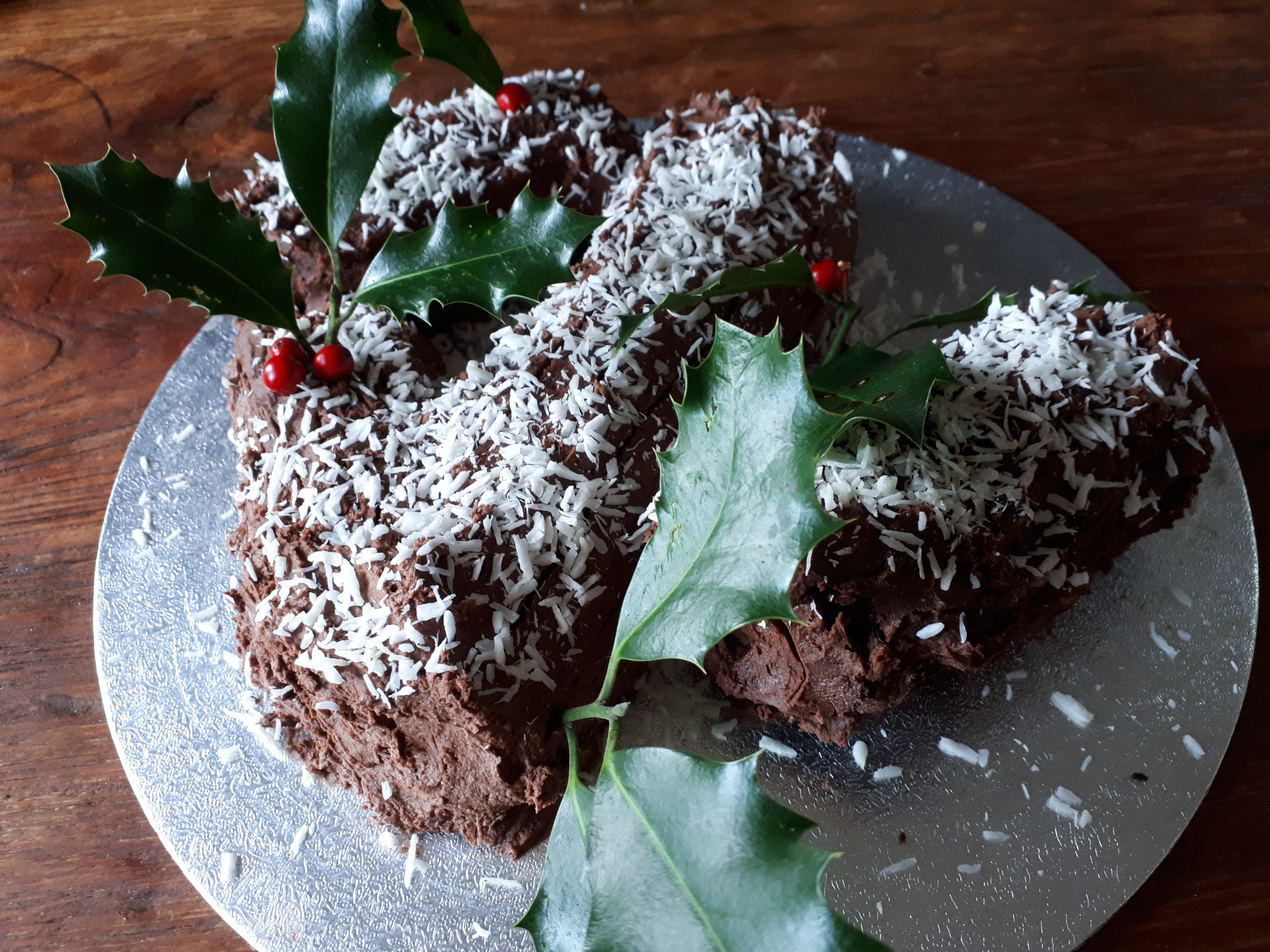
Yuletide 2021 AmsterdamYule log 2021
The shortest day in Amsterdam this year, was relatively cold, bright and delightfully crisp. The drop in temperature showed that Yuletide had arrived and made it easy to identify with the time of natural darkness, inner reflection and allowing things to brew within the inner cauldron. I took a walk through the park, bathed in the sunbeams and enjoyed the shortest day. I also ate rather a lot of this year’s Yule log. Holly and it’s berries (on our cake) are not edible but they certainly belong to Yuletide festivities though. The berries were returned to the local birds when the cake was eaten and the holly leaves are now around our Yuletide candle.
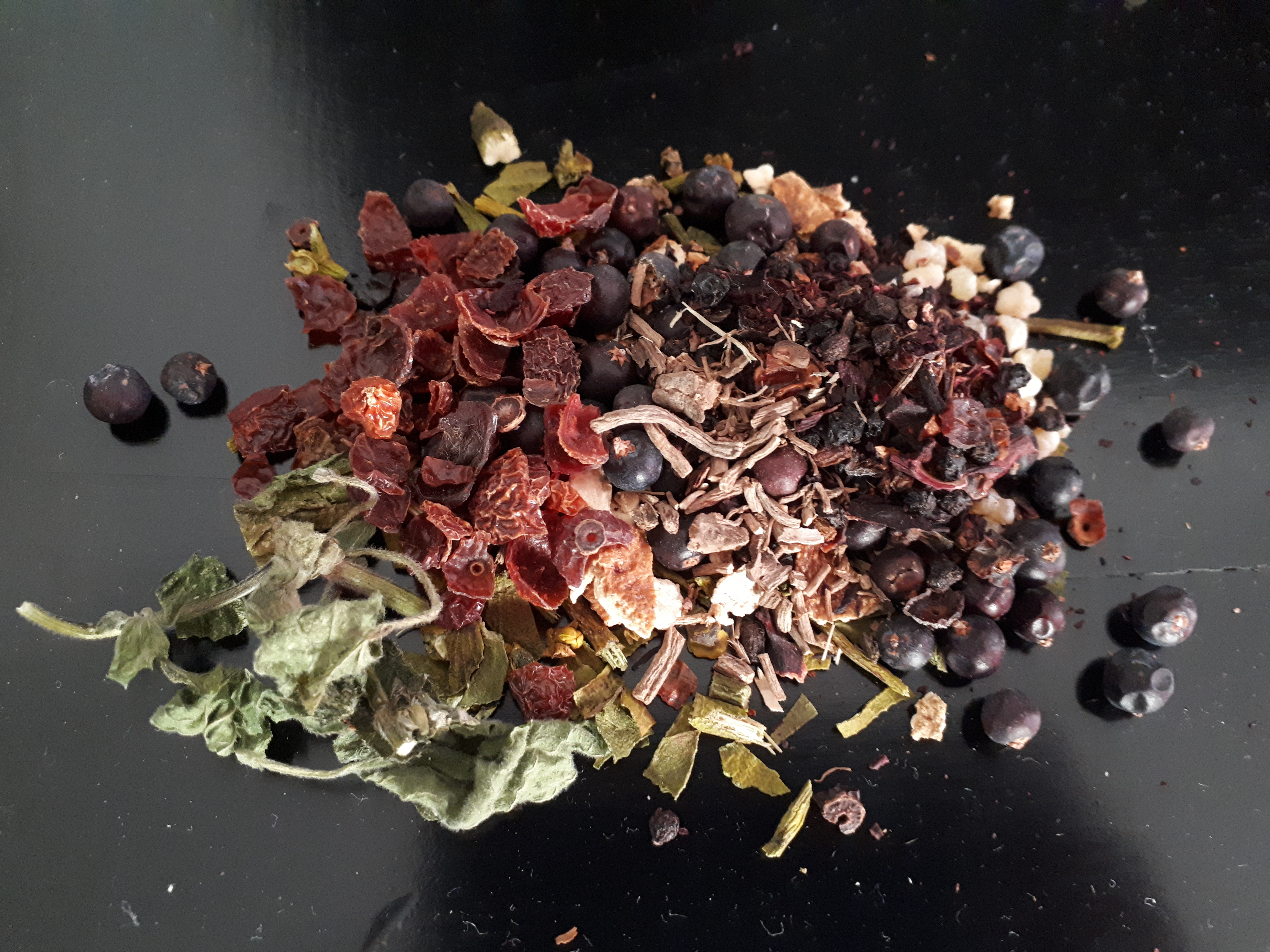
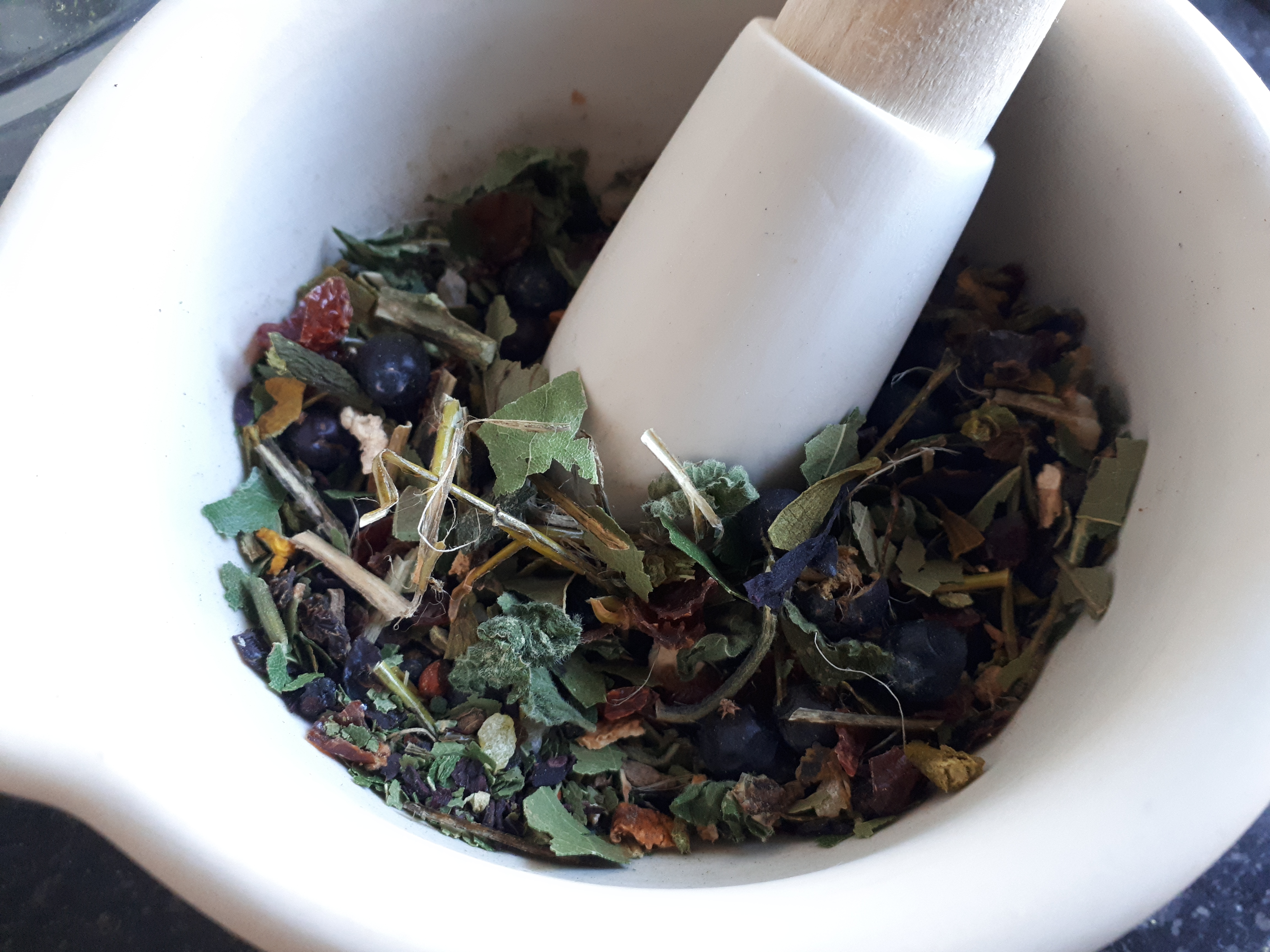
Aside eating chocolate cake, it also felt good to make some incense, so I crafted some from a handful of dried roots, bark, berries, resin and leaves. Incense making is a real multi-sensory pleasure. After grinding the ingredients finely enough, and balancing the scents and colour, I combined the mix with some secret sauce before forming my Yuletide incense and allowing it to prove for a while before use.
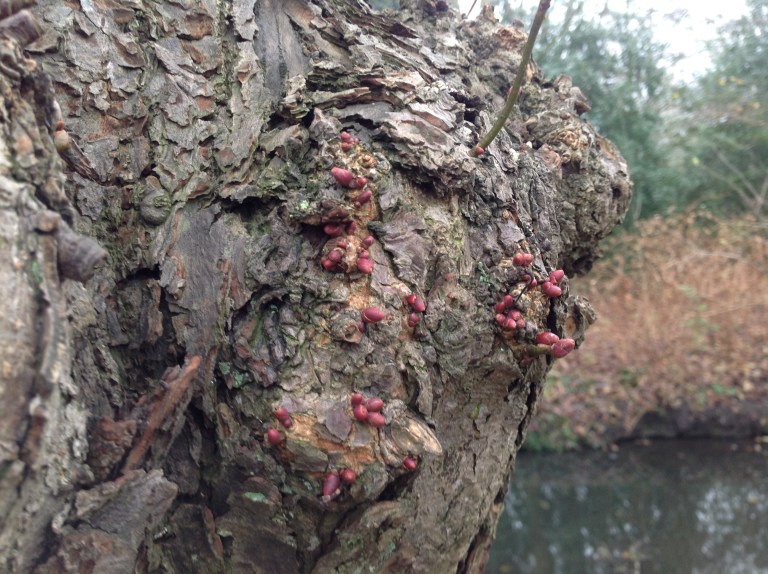
Gelatinous fungi have been quite a foraging feature recently. The weather must have been just right for them. Here is a photo of a bright orange Witches Butter (aside another gelatinous snot-like fungus) and the other two photos are of a fungus, which I am currently trying to identify. It is quite beautiful, with rings, a sort of shag pile velvet atop a sturdy jelly bracket type of body. It is growing along my favourite Wood Ear fungus Elder tree, in Park Frankendael. If you happen to know the name of the fungus, I would also love to know it and share it here. Witches butter (Tremella mesenterica) is (in principle) edible although I find it rather watery and best left on the tree. It apparently feeds on other fungi. I much prefer eating Wood Ears or Jelly Ears (Auricularia auricula-judae). They grow on several tree species, the most reliable being Elder. These are closely related to the mushrooms of Chinese Hot and Sour Soup fame. They are fairly bland, but have substance to them; bound gelatinous substance. With a heavenly velvet outer membrane. They smell of the woods, dry well for storage (in a paper bag) and give a very pleasant crackle sort of experience when bitten into. They also explode (a little) when cooked for long enough. Not to everyone’s taste, but I like them a lot. They also have cardiovascular health benefits.
The Wood Ear tree gives me the feeling that it has not too long left to stand. We have been very fortunate to have such a generous tree close by for the past years. My feeling is also that the mystery fruiting fungi is indicating the beginning of the next phase for this tree.
Tremella sp.Who are you?Look at the underside…
I do hope that you can get out in the fresh air and enjoy Yuletide and I would love to know what kinds of plants, animals and fungi you have been noticing in your area. There is so much to see even in the middle of winter and always something to help us connect with nature. Journey well and see you soon!
Saturday 18th December 2021 13.00 – 14.30 Park Frankendael, Amsterdam €15 per person (my apprentices – free) Booking through Meetup
As we approach the shortest day of the year, I invite you to join me for a wander around the woody parts of Park Frankendael. We will be looking at the edible and medicinal plants which can be found at this quiet time of the year. Park Frankendael is a great place to learn about ethical foraging, to find out what’s “in season”, how and where to find it and how to use it.
The walk will go ahead come rain or shine so please be prepared for that when you book – a great opportunity to get your wellies or boots out if there’s a bit of rain – we will stick mostly to the paths though. I forage in all weather’s but the walk will not happen if we have a storm, because we’ll be in the woods and falling branches are not fun – so keep an eye on your messages after booking, just in case.
[I am a druid, herbalist, teacher, mother and have been teaching ethical foraging in Amsterdam for the past eleven years. Living in harmony with local nature, and helping others to do so, is my purpose. The aim of these walks is to pass on that enthusiasm and some degree of self-sufficiency to you. If you would like to know about my foraging and herbalism experience and the courses that I offer, please take a look at the about page.
It’s week 8 of the Urban Herbology Winter Foraging Challenge! This week I have been foraging Jelly ear fungi from local Elder trees and making orange-jelly-choc’s from them. Delicious! My daughter will show us how to make them on this Friday evening’s zoom, for my course students. Details of the courses are here. Start and stop whenever you like!
Photo credit: Weed fun
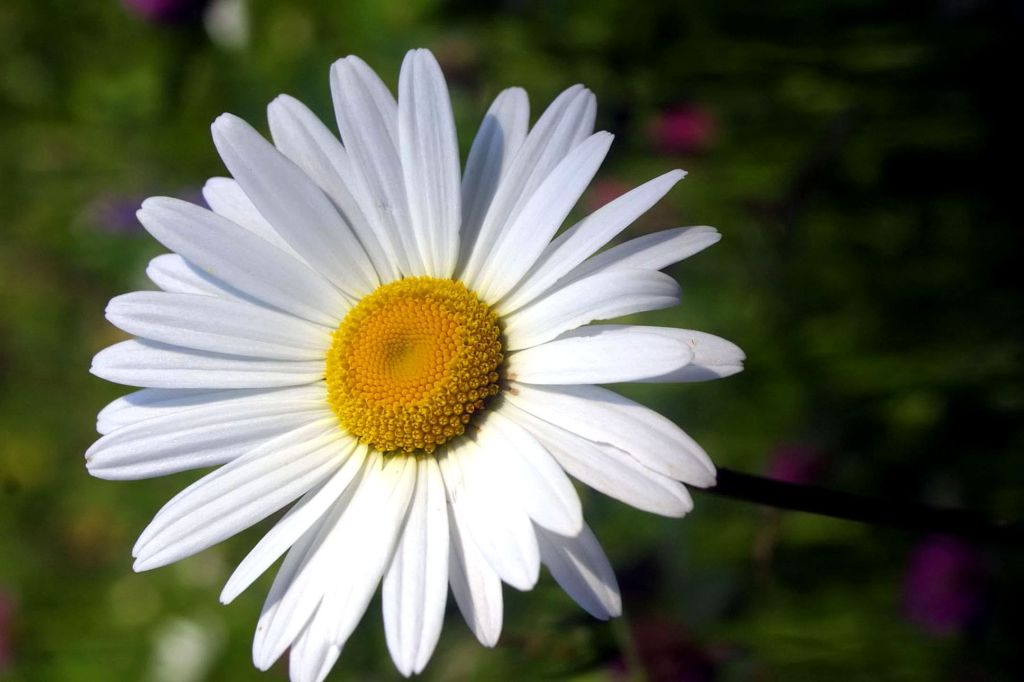
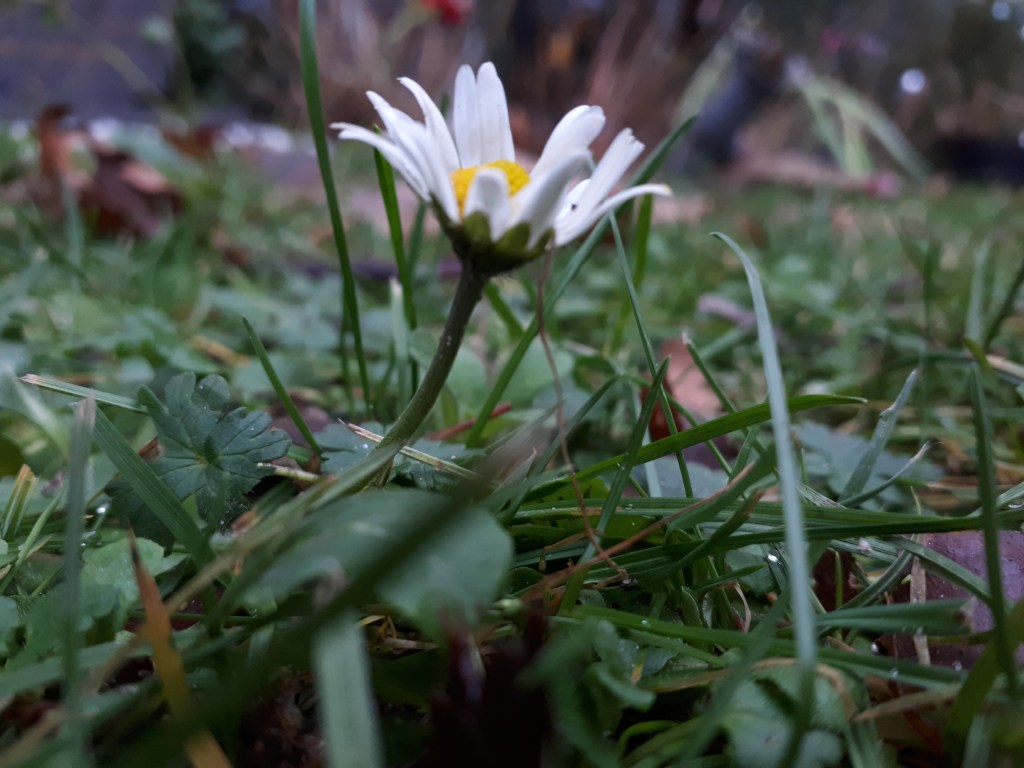
This week’s features winter foraging herb is the humble yet beautiful Daisy (Bellis perennis). You can easily tell from the classic ray and disk flowerhead arrangement, that this is a member of the huge Asteraceae family.
Now, that plant family is one of the most common sources of plant allergen in humans, so go careful with it. It tends to cause contact dermatitis in those who are sensitive and the most notable allergens in the Asteraceae family are a group of chemicals called sesquiterpene lactones. Those secondary plant metabolites are present in the leaf, stem, flower and possibly also in the pollen. Individuals who know they are sensitive to those chemicals, or the Asteraceae family, should steer clear of handling and eating Daisy. People diagnosed with the issue some years ago, may know the Asteraceae family as the Compositae family.
Daisy plant – Perennial, humble, powerful and robust
Bellis perennis is often known as common daisy, lawn daisy or English daisy. The Dutch name is Madeliefje. It is a small perennial herb that is native to almost the whole of Europe. It has a long history of use in folk medicine in the treatment of various diseases, such as rheumatism and as an expectorant. There is evidence that during the ancient Roman times, army field surgeons used to gather up daisies, from along the roadsides, extract the plant juice, and use it to soak bandages which could be used to dress battle wounds. There are many other references to Daisy in old herbal texts.
Pushing up daisies – January cemetery walk, Amsterdam
In homeopathy, Bellis perennis remedy is used for deep wound healing, including post surgical healing. If you would like to make a flower essence, you will certainly catch people’s attention as the flowers of Daisy look so pretty, floating atop a bowl of spring water.
All of the daisies in my muddy, wintery photos today, lack any tinge of pink on the under sides of the petals but that is a common feature for foragers to look out for, when identifying the plant. One old story explains how that pink tinge came about:
“Rose, the queen of the flowers, had a party and all the flowers were invited. One little flower was left out, however – it was shy of its modest appearance and was happy to whisper its congratulations from afar. But the wind carried the flower’s words to the queen, who assured her that there was no need to be ashamed: Its dress was spotlessly white and it had a heart of gold. This made the little flower blush, and ever since then the tips of its ray-florets have been pink.” Extract from Aegean Edibles website – it’s an interesting website to investigate.
Daisy manages very well under frequent pressure. These are along a graveyard path.
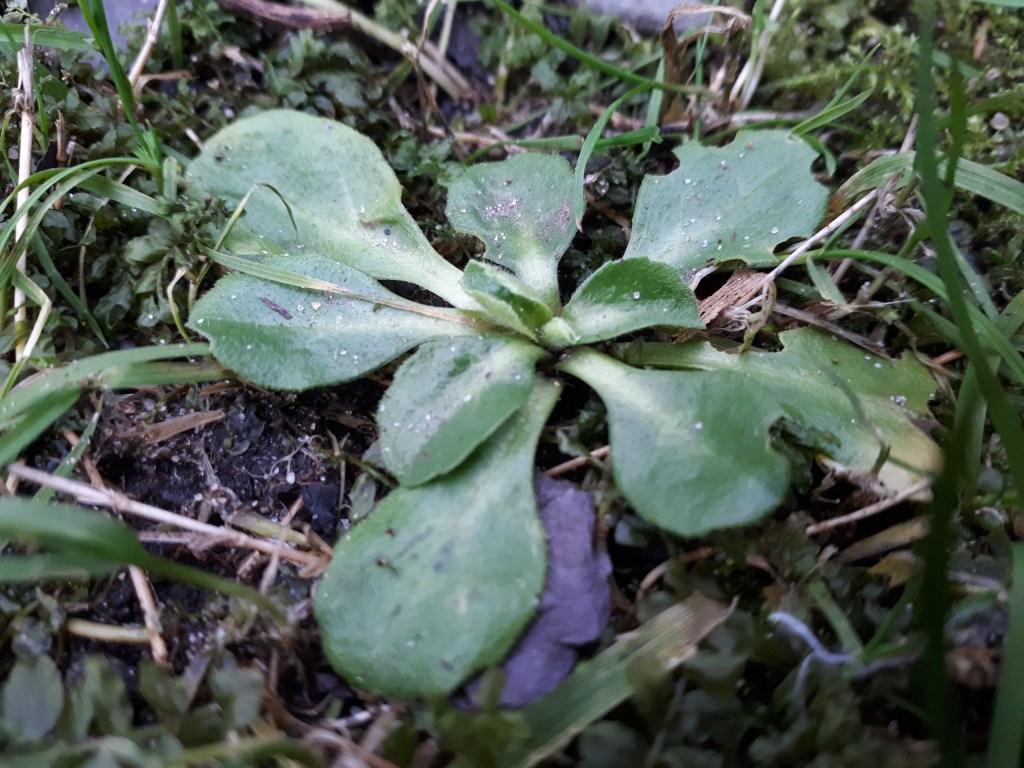
Daisy grows only to a small height of 2 – 3 centimetres, when in bloom and is very tolerant of trampling footsteps, so we often find it growing in lawns, paths and well trodden edges. At this time of year, it stands out to me because it is surviving in quite bare ground and also in ground where only Plantain and Ribwort (Plantago spp.) are usually to flourish. Interestingly, those plants also share some of the therapeutic properties of Daisy. At this time of year though, if we get a cold winter, the plantains dive undergound.
Someone got there first..
Crush a smooth fleshy leaf of daisy, or its flowers or even the underground roots and a pleasant green aroma is released as the sap inside is freed up. Bellis perennis has been found to contain many active constituents, including at least ten different saponins. The active constituents in this plant grace it with many healing properties. Daisy is known to be anti-inflammatory, astringent, digestive, antispasmodic, healing, laxative, purgative, antitussive, demulcent, and expectorant. I consider it a humble, ever giving, herbal medicine chest. There is increasing anti-cancer evidence, for Daisy but this plant shouldn’t be used as an anti-cancer treatment. Chewing leaves for mouth ulcers or making a salve from the flowers and leaves, is more the level of self-treatment that I think about, with daisy.
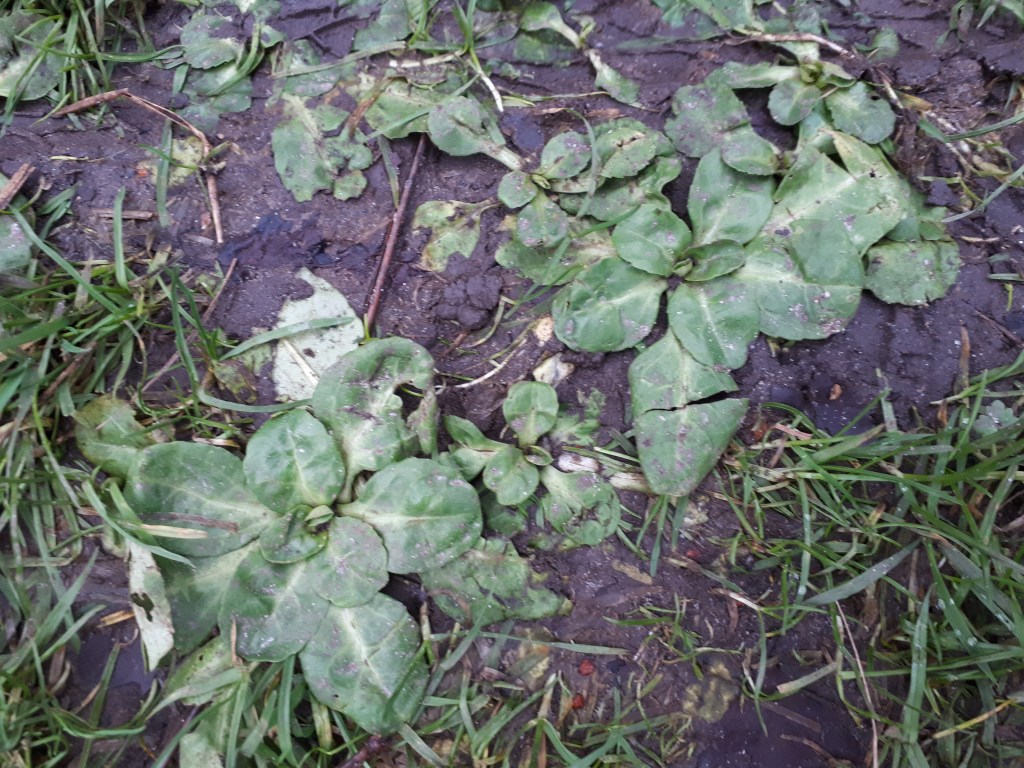
Perky Daisy foliage – January 2021
To eat daisy – eat only a little. This is a potent medicinal herb. You will need to forage in a clean patch of land. And you need to be non-allergic to it (see above note about the Asteraceae family). All this mention of allergies, makes it seem that many foragers will be allergic to Asteraceae plants. The reality is less dramatic than it may sound but we should be aware that it could happen.
There is not much chance of foraging for daisy above dog-pee height, as it grows on the ground but it can be grown in pots and it will grow as easily in clean soil as in trampled doggy spots. It does best in areas where the surrounding plants are not so tall and heavy that they completely shade the daisy out. So low cut grass – lawns – are perfect territory for this humble, edible and medicinal weed.
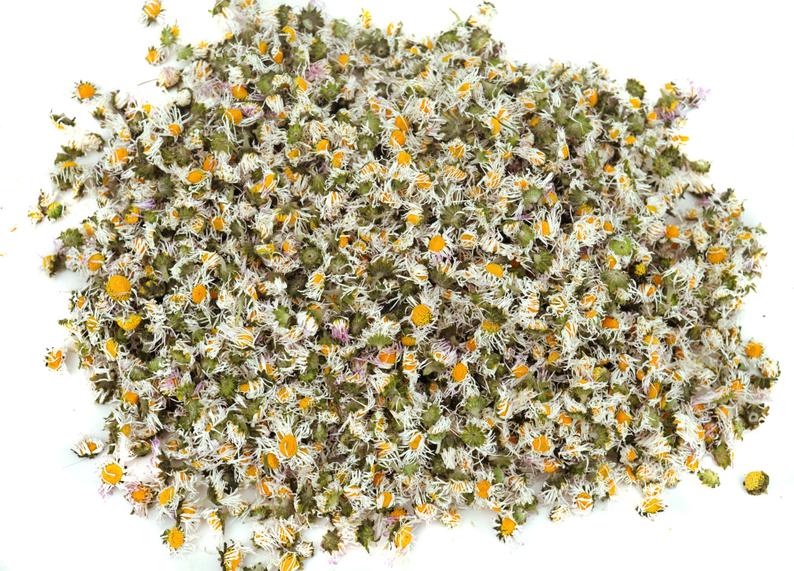
The flowers can be added to soups. The leaves can be eaten raw or cooked. Make sure they are clean, whatever you do with them. I find that the leaves taste pretty good as a salad ingredient, surprisingly good actually. Try the flowers or leaves as a tea. Dry them for later use.
If you don’t fancy your chances with eating daisy, you may like to try making a poultice of Daisy leaves, to use as an astringent, anti-inflammatory wound healer. Daisy is also renowned as an effective agent to calm bruises and to prevent them from forming. You could make an oil infusion and then thicken up the oil with some form of natural wax (beeswax, soya wax etc). Or infuse straight into a butter (literally butter or something more fancy such as shea butter).
Do let me know how you get on with your winter foraging. It is great to feel others are doing similar things!
So we’re now between Christmas and New Year and on week 7 of the Urban Herbology Winter Foraging Challenge! Are you managing to find a little something for the plate each week? I hope so. This week’s urban edible is a really easy to identify member of the Lamiaceae family – Yellow deadnettle or Yellow archangel (Lamium galeobdolon). I would love to know if you find it and make something with it.
Yellow deadnettle
This plant is native to the Netherlands, UK and a great many countries. In Amsterdam, it is found all over town, spreading ground cover in council plantings, parks, woodland, gardens and in random in between places. Yellow deadnettle is easy to identify. It can grow in very shady environments, but also thrives in full sun. Notice the silver white pattern on the upper leaf surface. That pattern does vary between species varieties but the common characterisic is the silver/white.
The stem and leaf arrangement is characteristic of the Lamiaceae family – square stems and leaves in opposite, alternating pairs. Crush a leaf and a pleasant green aroma is released. It has fine (but not stinging) hairs on the leaves and stems so feels a little bit rough, to touch. Later in spring / summer, knee high flower spies develop, displaying whorls of yellow classic mint family shaped flowers. But we are now focusing on plants for winter foraging, so you the plant will need to be identified without it’s blooms.
To eat, Yellow deadnettle is easy. The best parts are the tender young shoots and leaves but winter foragers can’t be quite so fussy and can do really well with sautéed leaves, from the freshest looking specimens. Harvest sparingly from plentiful patches of the plant, in the cleanest places. Wash well, chop and cook. I find they are also an easy addition to stir fries, risotto and pot type dishes as well as smoothies. The leaves dry well and make a pleasant herb tea. All in all, I think that Yellow deadnettle is a real Urban foraging winner and I hope you like it too!
It’s now mid winter in the northern hemisphere and here in east Amsterdam I have been busy with 6 of the Urban Herbology Winter Foraging Challenge. Several people have been reaching out and asking for more suggestions, of what to forage at this time so I am making a video and will post it later this week. Let’s see if anyone can find this little beauty, this week.. Chickweed (Stellaria media):
This is one of my favourite winter foraging plants. It has tiny, fresh green heart-shaped leaves, tiny white star-shaped flowers, a line of single fine hairs down the stem midrib of the plant. Those can be seen only by sharp eyes or through a hand lens so Chickweed identification provides urban foragers a great chance to get their hand lens out and look scientific. Chickweed grows close to the ground, often in convenient clumps from which we can tear off a small handful, without making a visible impact. One key feature of Chickweed midwinter, is that it looks so fresh and verdant. Not much else here looks so bright and pumped full of chlorophyll at the moment. It looks (and often is) far fresher and more full of nutrients than lettuce in the shops and this is my winter salad of preference.
When you tear open the leaves, it smells fresh and does not ooze a white latex sap. If you should find a little plant, looking quite like Chickweed and yet it does ooze white sap, then you have probably stumbled upon Petty spurge (Euphorbia peplus). Please don’t eat it at all and be sure to wash the sap from your skin as it is a classic garners skin irritant.
The photos this week are of a lovely clump of Chickweed which grows in one of my balcony plant pots – so nicely away from dogs, walkers and road spray. I didn’t plant it, it simply found the place and grows really well there. We get a few city birds which settle on the balcony railing to eat found seeds and bugs so perhaps one of them dropped the seed a while back. In any case, I welcome Chickweed and add a spring or two to my food, a few days a week. And in case you are wondering, yes Chickweed is a favourite of birds. They are sometimes found having a nibble. Always wash your foraged finds well, harvest ethically and very lightly and enjoy the bounties that urban nature provides!












 Urban Herbology