Category Archives: Projects

Processing Rose hips

image

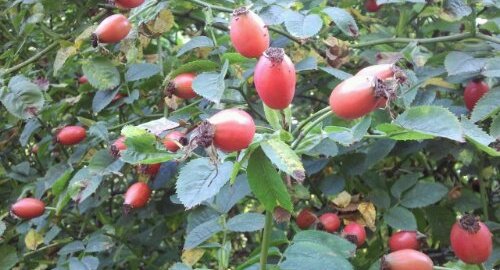
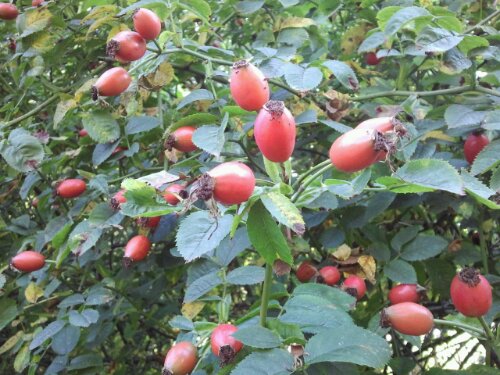
Rose hips are plentiful at the moment. They are nutritious and medicinal. All clean, unsprayed and legally obtained rose hips can be used to make immune boosting preparations. But this is often easier said than done. They are full of itchy, hair covered seeds. These need to be removed before the Rose hips can be ingested.

One way to do this is to make your syrup, or whatever else you choose, and then strain out the seeds and hairs before the final storage.

Another way, is to remove them at the start. It is fiddly but it works and is worth the effort, especially if you’d like to make a cold uncooked preparation, such as Rose hip honey. I also think it makes the harvester/forager quietly aware of each hip and that is a good thing, on many levels.

Here’s how I do it.

1. Cut a hip in half. Out is best to harvest them before they become soft and pulpy, but when they are fully coloured.
2. Scoop out all of the seeds and most of the hairs, using a strong thumb nail or a blunt ended knife. Quirk through all your hip harvest in this way. Place seeds in a container to return to the harvesting location and the deseeded hips in another.
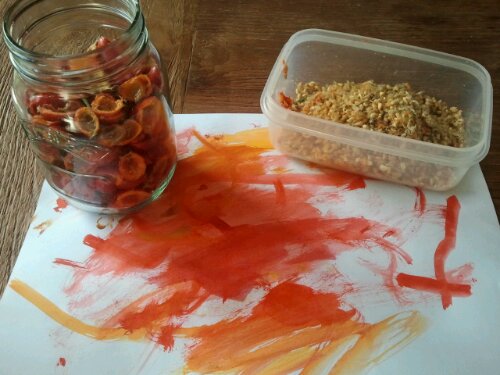
image

3. When all of the hips are deseeded, place them in a bowl and fill it with water. Swill them around a little, to release the hairs and other unwanted particles.
4. Strain in a colander, whilst swilling around in more water.
5. Lay the washed hips out on a clean dry tea towel (or a dehydrator) and allow them to surface dry. I like to use another teatowel to dry of the tops and then I tumble them around now and again, on dry sections off the teatowel, to speed up the process.

image

6. Wash your hands, arms and wherever else three hairs contacted you, with cold water. They come off easily but may tickle for a long time if you miss an area.
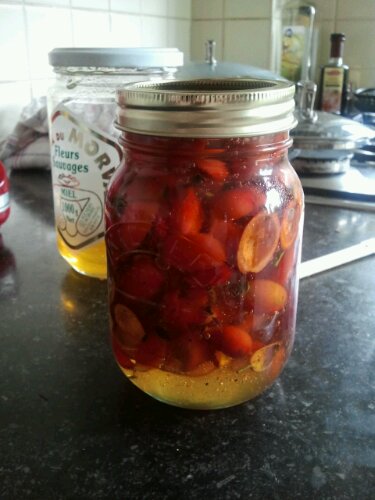
7.Use as described in your chosen recipe. I simply pack mine into a jar and pour in honey, at this point.
image

OTOPIA Street Herbs Walk

This coming Saturday, 15th September 2012, I’m offering two street herb walks out of the OTOPIA festival at OT301.  The walks are almost fully booked. If you would like to try to join, please see the meetup group or email me directly (lynn.shore@gmail.com).

For those who asked, here’s a few links and info about the venue and the festival itself.  I can’t find much about the day programme online so will contact the organisers for a link. I know the theme is about promoting alternative ways of living in the city – hence they asked for my walks. The day programme is free and my walks are €3 each for attendees (they are subsidised by the event organisers). The times are 1.30 and 3.30 pm. Each will last an hour and you’ll get a handout.

It’s a very raw, urban building that will greet you when you arrive at Overtoom 301. It’s used for lots of dance, music, theatre etc events. The walk will obviously be outside and will be along the streets. I won’t go into the Vondelpark as that’s too obvious; We’ll look at real street herbs, pavement gardens, plants growing up houses, in street cracks etc. If you bring a trowel I’m sure you’ll be able to get a free edible street plant or two, to pot up at home or relocate to a tree pit near you 🙂

http://www.facebook.com/OT301Adam
http://www.last.fm/festival/3349459+Otopia+Festival
http://ot301.nl/page=site.home

365 Frankendael day 142

image

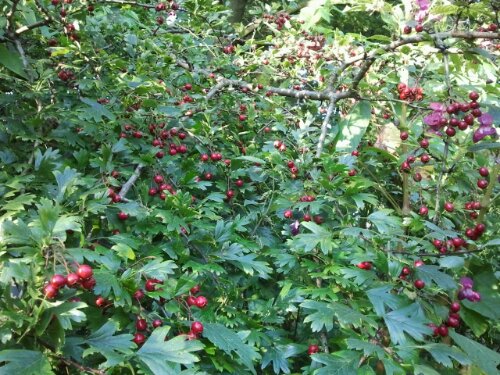
Today I harvested Rose hips from the park and after dinner I’ll be setting up a big jar of Rose hip honey. They are just perfect, on many Rose shrubs, at present. Packed with Vitamin C, cold infusing them into honey is a good way to capture their healthy properties. If you try it, remember to deal with the itchy irritating pips, which reside in the hips.

Rosehip Honey Recipe
Simply slicing each hip in two and scooping out the pips and hairs is enough. I then pack then into a jam jar, pour in honey, to the brim, poke around with a chopstick to release taped air, top up with honey if necessary, seal the jar and leave for as long a you can stand!

image

Here’s Hawthorn, also perfectly ripe. I’ll set up a tincture for these I think.

image

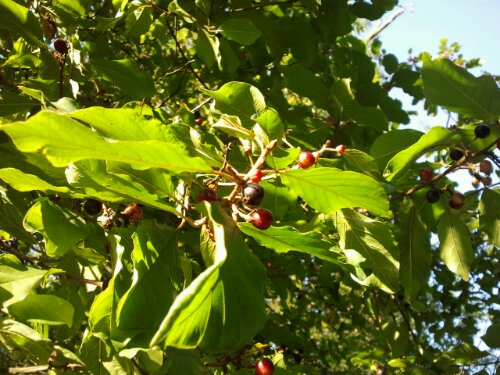
Here’s Cherry Laurel. More on this another day. Perfectly ripe today, also.

It’s been a great day for harvesting! What have you been collecting and making?

Amsterdam Oogst at Tolhuistuin

image

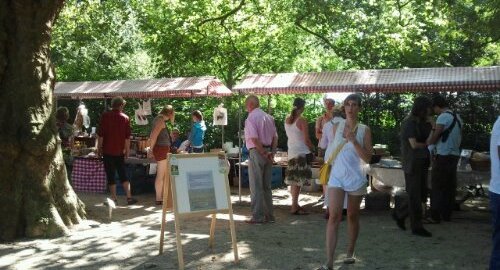
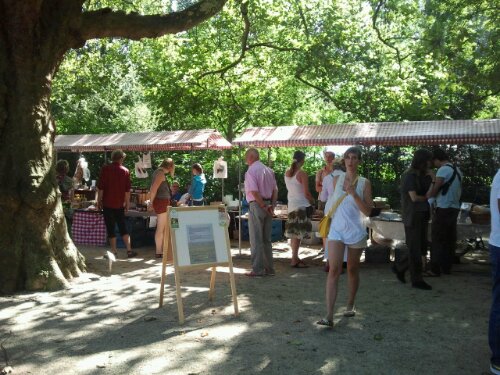
Today I led a small group around the garden at the Tolhuistuin, just over the ferry in Amsterdam noord, by the floating globe. There’s a small festival going on there today, called Amsterdam Oogst, organised by Cities and hosting a local produce market, some mellow music, a herb walk from me, lots of lovely food and a very pretty, shady garden – prefect on this beautiful day!

image

So what did we find today? It’s quite an old garden with winding paths and mature trees and shrubs. We found lots of Elder, some Roses with beautiful ripe hips, Daisy, Lime trees (there are lots of interesting trees there), Hawthorn, Walnut, Plantain, Watercress which seems to have self seeded in a damp grass area, Feverfew and several other wonderful herbs.

image

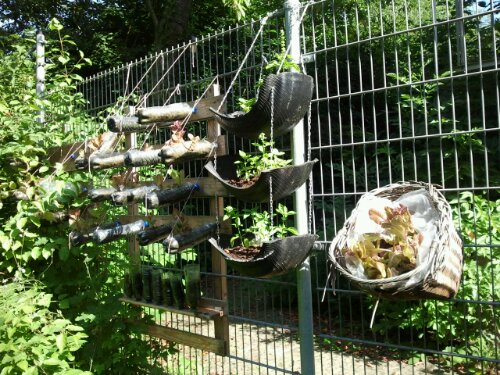
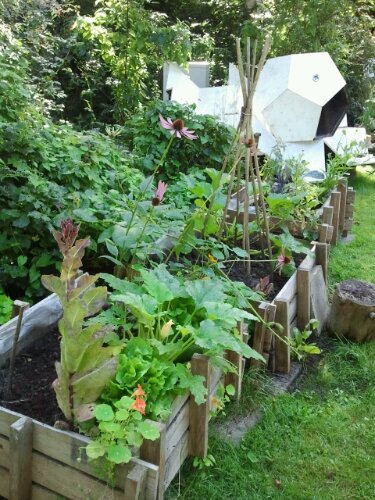
The garden also has lots of interesting new things going on, such as this wall of bottle planters and an area of raised vegetable beds. There is also a plan to have an amazing mushroom forest there. I can’t wait to see it!

image

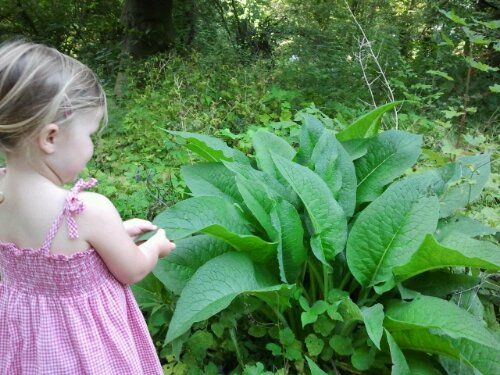
For those who came on the walk particularly, here’s a photo taken today in Park Frankendael of my little girl and a Comfrey plant. They are not an urban myth 😉
image

365 Frankendael day 141

image

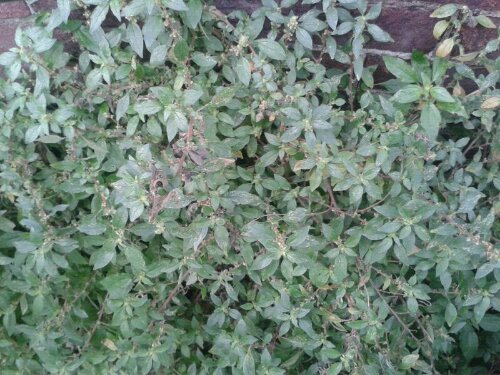
Today a photograph of Pelitory of the Wall (Parietaria officinalis), taken by Elodie den Otter, outside of a yoga studio in Amsterdam. This is a really useful little herb which really is well adapted to growing out of wall cracks and between paving stones. It is useful as a urinary system tonic and has many historic and contemporary applications. Please see my post on day 63 about sister herb, Pensylvania Pelitory, for further information about the two plants.

365 Frankendael day 140

image

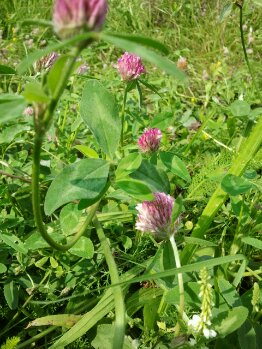
Trees have began to shed their leaves and yet many plants are still in bloom. Here’s one of them, Red Clover (Trifolium pratense) NL: Rode klaver. The flowers are edible, tasty and contain amongst other things, very useful phytoestrogens. Red clover is used by many to increase fertility, in both men and women. It’s still possible to gather flowers for drying, or to pick enough to fill a small jar, then top up with vodka to make a tincture. See Susun Weed for excellent information about this amazing plant.

365 Frankendael day 139

Today, a quick list of 16 edible or medicinal plants, currently in season in Amsterdam. Here they are, photographed in Park Frankendael this morning:

Silverweed – edible, all parts.

image

Jerusalem artichoke – invasive, very tasty. Heaps of it at the back of the closest flower meadow to Frankendael huis (behind the house). Cook the roots with winter savoury – it helps eliminate the intestinal gas which these vegetables are infamous for producing.

image

image

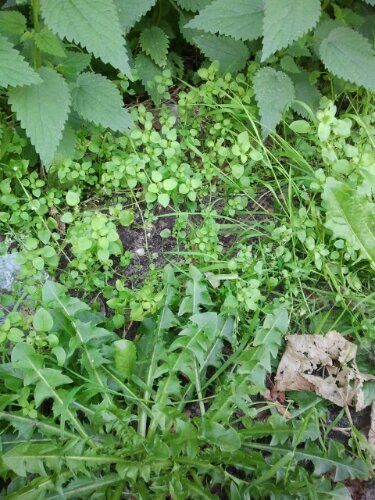
Dandelion, Stinging nettle and Chickweed. All three are edible, nourishing tonic herbs. Can be eaten safely in fairly copious amounts but just a leaf our two, or a handful of Chickweed, will really boost a meal.

image

Rosehips, in abundance. They could be made into syrup now but if the birds leave them alone, I’d wait another few weeks. Medicinal due to high vitamin c levels in particular and other immune boosting constituents. Interesting added to stews etc also.

image

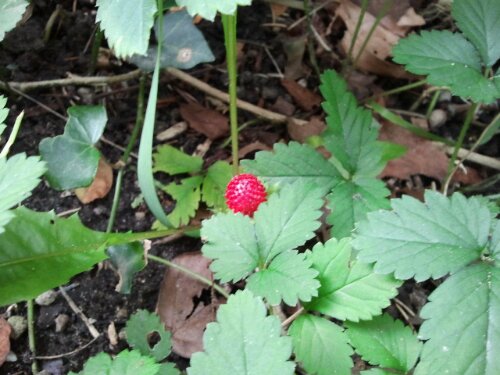
False, but edible, look-a-like strawberries of a Potentilla.

image

Sweetcorn and Sunflowers, growing alongside the Middenweg. I’ve seen quite a few wild Sweetcorn plants lately. Maybe sometimes been sewing the seed as they walk the streets? Not likely that either of these plants will be left, strimmer free, long enough to flower or seed, but what fun that would be if it happened.

image

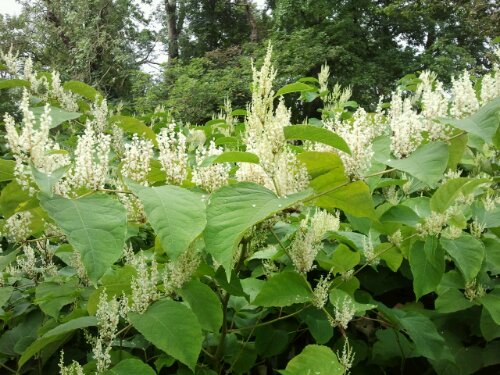
Japanese knotweed, rhubarb like, super sour edible and terribly invasive plant. Search this site and others for how to cook it.
image

Marshmallow (yes, it’s the original sweet namesake). I simply collected a thousand seeds or so from this plant today. It’s so easy to grow in town and so useful as a soothing medicinal and as a food – think gooey egg substitute.

image

Not so easy to see – though what a pretty woodland view – Ground elder and Wild geranium.

Garlic mustard, edible – very! – but only pick one leaf per plant at this time of year. They need to build up energy reserves to survive the winter. You’ll hopefully be rewarded with tall healthy leaf and flower rich plants next year.
image

Wild rocket. Rucola in Dutch. A heap this size would be sold for a small fortune in Albert Heijn. It will taste extra strong and be a bit woody at the moment due to flowering but still useful and very peppery. Maybe collect a seed pod or two and sprinkle them in a price of underused safe land near your home.

image

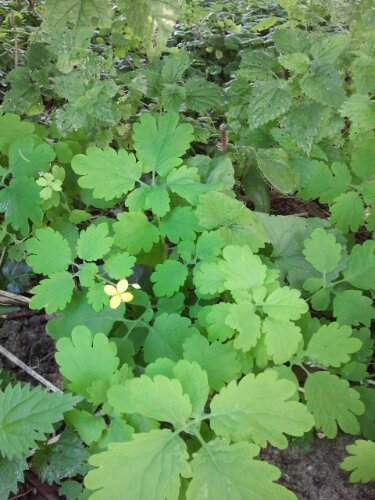
Greater celandine. NOT edible! Poisonous orange sap, but that sap is very useful as a topical treatment for warts and some other skin spots.

image

Lastly the mystery Nut Tree that several people sent me photos of whilst I was on holiday. I still don’t know the name or whether it if edible our not. But I now know it’s sticky and I think it is setting fruit rather than nuts at the moment. Will keep am eye on it as they develop.
image

365 Frankendael day 138

image

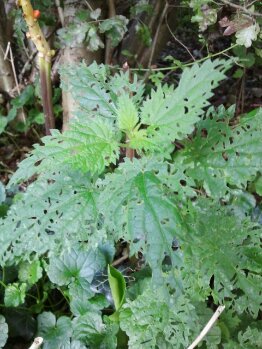
Caterpillars or some other small creatures have been feasting on this patch of Nettle (Urtica dioica) , growing near the garden centre at the back of park Frankendael.

On a safe foraging note, I was sent this link today. Obviously anyone foraging should be conscious of their personal safety and some foraging hot spots are more secluded than others. There is apparently a women in this part of town who has mugged write a number of women, near the Park Frankendael, over the past year or so. She has been asking them for directions, or that sort of thing, then mugging them. A photo fit of her face is on the link.

365 Frankendael Day 137

Just one little hedgerow scene today, by one that is typical of many in Amsterdam and one that is packed full of nutrients, great taste and people’s medicine.

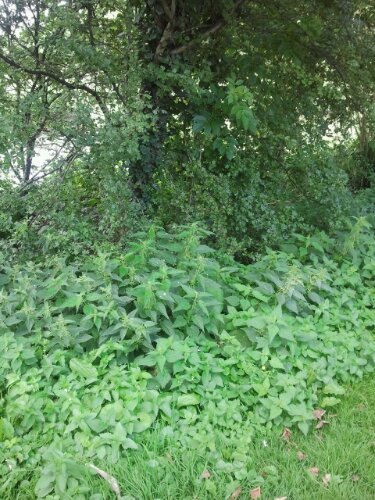
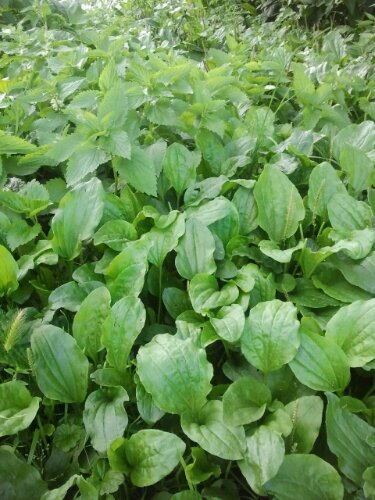
There’s a Hawthorn shrub at the back with a small Elder nestling in its shade, right against its trunk. There are lots of healthy Stinging nettles, ground ivy, some Burdock, a little Fat hen here and there and heaps of super vibrant Plantain. All such useful plants are so plentiful in this and most other European cities. This patch of hedgerow is right by one entrance to the park and is mostly overlooked by people walking into the park or parking up their bikes.

365 Frankendael day 136

image
red clover

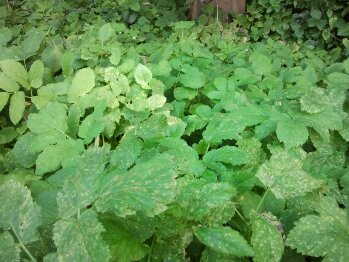
Today I harvested a few handfuls of Red Clover blossoms to make a small jar of tincture, three large leaves of Ground elder, to chop finely and add to our dinner and sat quietly in a beautiful, tiny grove, within the woodland part of park Frankendael.

image
Ground elder

The grove is somewhere I’ve walked by many times, have harvested little from and yet it drew me completely within itself today. This place has a wonderful energy about it, filled with sounds of the city and yet, cool, shaded, green, earthy, nurturing and sheltering. Sounds of birds chattering around me, branches crack as squirrels and other small animals climb around. Just the place to launch the apprenticeship course, I think. To sit on the ground here is a beautiful experience. I smell Ivy all around me and feel supportive earth beneath me. It is a magical place.

image
Grove in Frankendael park

I feel delighted that I will have an opportunity to take several people there, to share my love of this place and of the plants which choose to live in the city.