Category Archives: Projects

7 Day Challenge

Push Your Boundaries
Voluntary hardship is an enriching thing. It takes us to new places and teaches us much about ourselves. I challenge you to make your life a tiny bit harder for just one week, for the benefit of your health, your knowledge, your self-reliance and our community. And that community is the planet.

Harvesting just a fraction of your food outside of the supermarket is easy to do in most towns and cities but most of us don’t do it. You could probably find and support a local farm which sells great organic veg, without too much time or trouble. You could probably find an independent grocery store selling local produce. You could probably find someone who wants to garden share and grow some of your own veg. If you do any of these, great! But let’s take it a step further.
20190221_104306.jpg
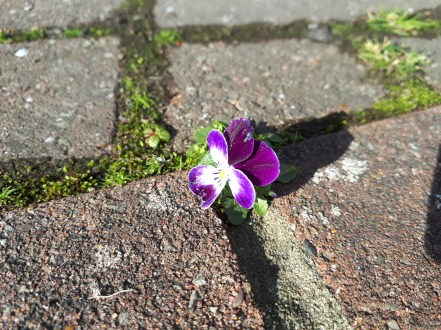
Unsprayed pansies taste great!

Awareness
I want you to become:
Aware of what grows around you.
Aware of how clean your neighbourhood is, or could be.
Aware of how edible plants could be the backbone of urban planning.
Aware of how to (at least partially) feed yourself for free.
 

20190314_232802.jpg
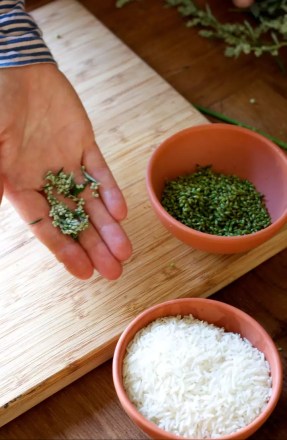
Mugwort flowers and plantain seeds cook well, mixed in with rice (Photo credit: Apartment therapy)

Which Plants?
Think about adding a little something hyper-local, free and special to your breakfast smoothie. Or weave a free and local food into your lunchbox, to dazzle your colleagues at work. I want you to go out, forage something safe and tasty, clean it – and eat it – every day for a week. That’s not asking for much is it? I suggest plants that you can easily ID, maybe stinging nettle, dandelion and bramble buds. Check it’s the real thing (send me photos to check if you like) and then get sensitively plucking.

Identification Help
Need some help with plant ID? Ask me for help via the contact form or why not start with my Dandelion Plant Profile? Send me a quick message (bottom of page) and I’ll send you the Dandelion Profile as a pdf, along with a hello and some encouragement of course! The profile is from my online Urban Herbology Apprenticeship, a course for people who really want to embrace the urban wild. I am taking on a handful of local apprentices this season but the online part of the course is available year round, wherever you live.

magnolia-westerpark-liberation-day-2013
Magnolia flowers

Thinking Food
I suggest that you think of a plant that you purchase and consume very often. Something that’s always on your list and which has probably been grown under greenhouse lights or shipped across at least one continent to reach you. For me, this would be spinach. It’s easy, it’s bland, it’s cheap enough and I buy a big plastic bagful each week. I keep it in the freezer and I throw a handful into my smoothie almost every single day. I barely think about it. Where has it come from? Is it sprayed? What nourishment does it really provide?

Alternatives
So how to replace the spinach? My first thoughts are of stinging nettle tops, full of goodness and growing in most neglected street corners. Dandelion leaves, with there nutrient rich bitter tang, grow close to my local bus stop. Chickweed. That tastes great and grows as a weed, in some pots on my roof. Those three are all low growing plants. Not the best in dirty locations, fine if you have some clean patches to forage from.

20190314_234801.jpg
No dog spray on these leaves! Photo credit: Apartment therapy

Aim High
If you want to play it safer and forage above dog pee height, I suggest looking for Bramble patches and reaching high for some of the new leaf buds. Or Magnolia petals, currently ready to burst open here in Amsterdam. Just one petal will do the trick, there’s no need to take more. Or how about Hawthorn leaf buds? They are easy to spot for some, not for others. Aim for plants which are easy to identify, safe and clean. Always wash your plants at home and remember that birds spray higher than dogs..

Hawthorn Crataegus monogynum
Hawthorn in flower

Build Knowledge
Look up your foraged plants and build up what you understand about them. If you are not confident or experienced enough to eat these plants, at least learn about them. What are the look-a-likes? Are they used as medicines? What nutrients are they thought to contain? How do different cultures eat or utilise this plant?

Keep It Clean
“Hang on a minute Lynn, I’m not eating plants from a dirty patch of land in the middle of my town, just because it’s growing there!”

If these are your thoughts then great! Come on in and join the challenge! You have even more to gain from learning about your immediate environment and how we should improve it. We should be living in spaces that are clean enough to eat from. If we are not, something needs to change.

Whatever the situation around your home, there will be ways to edible-ise it. Maybe you request seagull proof flaps, on local street bins to stop the litter being thrown out by birds each morning? Maybe you could encourage some changes at work or school, in where the canteen sources it’s ingredients from? Maybe you could ask the owner of that vacant lot, if you and some friends could grow veg there for a season?

Improvement in urban conditions doesn’t usually happen spontaneously – We need to make it happen.

Nettle and Sweet Woodruff
Stinging nettles and Cleavers

Voluntary Hardship
At least for 7 days*, let’s take away the convenience of being able to add a handful of supermarket spinach leaves to the morning smoothie and let’s think of some alternatives. Let’s go a little further for our green leafy friends. Let’s not get sick: Pluck safely, cleanly and wisely. Don’t pluck if you are unsure – But let’s learn!

Urban Herbology’s 7 Day Challenge is an opportunity to re-calibrate how we think about food. Are you in? If so scroll down, complete the contact form and I’ll send you a couple of messages to see how you get along (I don’t spam people). Or simply keep in touch with the post comments.

bramble-bud
A tasty bramble bud

Take action
Right now, think of a food which you can switch for urban wild edibles.
Tell me in the comments below, or via the contact form, what you plan to do.
Ask me for the Dandelion Profile sheet and learn more about these plants.

Stay in touch and send me any images of your foraged finds and meals. It’s just 7 days!

It’s only 7 days* – You can do this!
Together, we can make urban living cleaner, safer and more tasty!

*Needless to say (but I will), I hope you will enjoy this challenge immensely and will make ethical urban foraging a habit 🙂


← Back

Thank you for your response. ✨

Edibles at Bristol Harbour

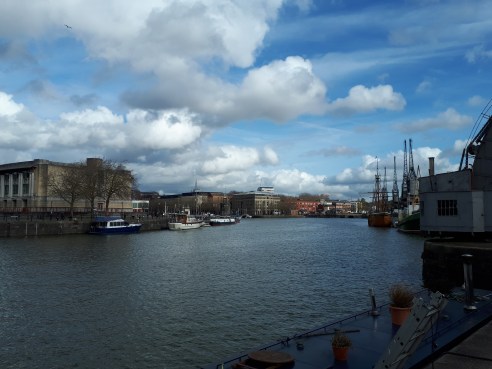
This week, I am with my family in the UK. We began the visit on Tuesday with a stroll around the harbour area of my birthtown Bristol.  What a pleasure to be there! In addition to the whole harbour area being very spruced up since I lived there, the weather is exceptional for this time of year; beautiful sunshine,  stunning skies and it is warm – well for February anyway!

IMG_20190219_173938_517.jpg
Leucanthemum vulgare (dog daisy, about to flower)

After a peek at the SS Great Britain, visiting a great whole food store (which sells oxalis tubers to eat!) and filling our bellies with fish and chips at Wrapping Warf , we wandered around the Arnolfini and Watershed areas.

20190219_124115.jpg
Ship shape and Bristol Fashion – I loved growing up in this city and I love to come back and visit!

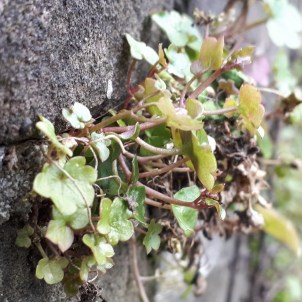
I took a few snaps of edibles which I noticed along the way. The place is very tidy, and popular so most of the plants that I found are resilient perennials. Just look at this little beauty: Ivy Leaved Toadflax (Cymbalaria muralis), sometimes called the Climbing Sailor which makes it so suitable for this nautical location!  What lovely geranium-like rubbery leaves. I do enjoy a nibble on this sort-of-cress-tasting-plant when I find it growing abundantly.  Today was neither the time nor place so the plants spotted in Bristol, carving out a quiet existence in the ship shape hustle and bustle, were left in peace.


IMG_20190219_174138_032.jpg
Climbing sailors – Cymbalaria muralis

Now, along this old railway track – a remnant of the old coal dock, I did find a lovely (if small) selection of urban edibles including Herb Robert (Geranium robertum), Chickweed (Stellaria media) and Mugwort (Artemisia vulgare).

20190219_123602.jpg
And here some of what I believe is Common Mouse-ear (Cerastium fontanum). Very pretty, clustered chickweed-like flowers, bouncing in the breeze, a top leafless stalks. I find this a stunning little edible. Darned tasty (if a little hairy on the tongue) and very fertile. So, if you can access one in a location that it flavours, you will not go hungry.


IMG_20190219_174408_139.jpg
Mouse-ear

The only place that I found around the harbour which was worthy of some urban herb harvesting was on the sloping path that runs towards the little ferry (to the SS Great Britain). There is a quiet green patch, full of brambles, stinging nettle and other lovelies. The plants are starting to build their foliage now so best left for now but in a month or so, that patch should be brimming with nettle tops and bramble buds. I find Bramble leaf buds a great source of fruity-tannic flavour, vitamins and minerals. By shrewd nibbing-out of buds, you can control the growth of a bramble patch in seconds whilst building up an interesting wild tea in your caddy.

So that was my little February Bristol Harbour edibles wander.  I am in Chepstow now, thoroughly enjoying the sounds, sights, taste and company. Will try to make a compilation of Chepstow forage-ables, before the week is out.


Want more?
If you want to learn about the edibles growing near you, how to ID, safely & ethically forage and how to include them in your life, take a look at my course. I would love to help you along your urban herbology journey!


Foraging Wild Garlic

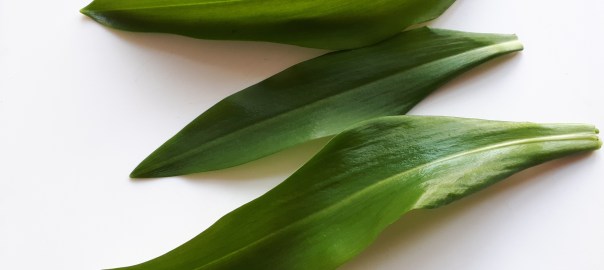
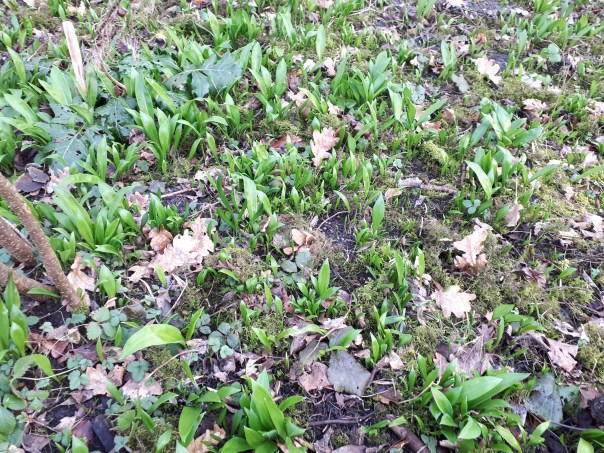
Three beautiful blades of Wild garlic / Ramsons / Daslook (Allium ursinum), plucked from the River of Herbs orchards in Park Frankendael today. I made some pungent daslook sauce from these, by blending them with olive oil and a little apple cider vinegar.

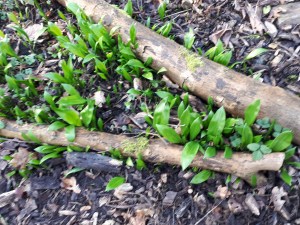
And here are a couple of year old wild garlic bulbs which I removed from the orchard path. The reason for this is discussed in the podcast. Have a listen and let me know your uses for the plant and if you have had any success growing it. The paths are edged with fallen branches. In this photo you can see how the plant spreads into the paths.

I only forage wild garlic when there are huge swathes of it and the leaves are a few inches long.

I’m off to make some dinner using a little of that sauce now. Perhaps you would like to listen to my latest podcast, about ethically foraging Wild Garlic and how to use it.

Early Spring Apprenticeship Workshop

Monday 18th February 2019

10.00 – 13.30

Amsterdam

This workshop is open to my apprentices (from my online/blended course and past apprenticeship groups).

Early spring is a great time to forage, craft and plan new growth for the year ahead. This workshop is a chance to share time together, explore urban nature, talk over issues and build Herbology crafting skills.

Cost €50

We’ll meet at my home (in Amsterdam Watergraafsmeer, near Park Frankendael) and then work inside and out. Light lunch, infusions and teas provided.

Please email me as soon as possible to book your place.

If you would like to join the workshop, you must be a past or present student of my apprenticeship course (either on the full course or studying module by module).

Details on how to join the course.

Metamorphosis

Taking a break from offering workshops and walks, over the past year, has allowed me to concentrate on other things. I thought that it was about time to share some of these with you. One has been taking on a promotion at the British School of Amsterdam, where I work. This development has provided me with the challenge I have been looking for and it feels great!  If you are interested in what keeps a (happily) school bound urban herbologist entertained, read on…

Bansuri

Time has also been freed up for me to finally learn to play the beautiful Bansuri which I brought back from India 13 years ago.  Kees van Boxtel in Haarlem, has become my teacher and what a wonderful teacher he is! His website shows details of upcoming concerts and other interesting things. If you like classical Bansuri, I suggest following his YouTube channel. I can’t write much more about the bansuri – you need to hear it and feel it. It is a very basic feeling. Kees comes to Amsterdam in March (the 3rd I think, at Noorderlicht) if you are interested to see him play there.

20171222_145931_0011217370638.jpg

Moss

My moss love has grown to incredulous heights.  Have you spent time moss watching lately? I thoroughly recommend it if not and if you have, how did it make you feel? Did you have a hand lens with you or are your eyes sharp enough to focus on the many intricate details of the moss structure and glistening water droplets caught therein? Moss watching and moss care gives me a deep sense of calm and greater connection with the world around me. One of the most wonderful things about moss watching is that it can be done in so many places. Moss takes up only a little space, if you want that. It does need care but this is easy to learn and becoming tuned in to adopted moss, tunes you in to the developing seasons and weather.

See the source image

Open water swimming

I want to train to swim the 2km Amsterdam City Swim, late summer this year. Hoping to rope in a few colleagues and friends to join me.  Fancy joining? Sign up has not yet begun, so there is time to think about it and dust your wetsuit off.

Sun Hive
Photo credit: Natural Beekeeping Trust


Apicentric beekeeping

I love honey, don’t eat much of it but I do use it to make medicinal herbal infusions and elixirs and I find it one of the best things in life – on a great many levels that I won’t get into here and now. I have long been a proponent of not keeping honey bees in the city, especially Amsterdam, because we have so many here. It seems that every year more and more very well intentioned hobby beekeepers train and set up hives in Amsterdam and I know they are well intentioned, but have not been interested. I have focussed on the wild bee population, increasing forage plants for them in urban spaces and encouraging others to use those plants ethically and to grow them.

Sun Hive
Photo credit: Natural Beekeeping Trust

However, my sister gave me a Christmas present – Do/Beekeeping. The secret of happy honey bees. By Orren Fox. It is a great read, by a young and enthusiastic American beekeeper. He writes about classic beehives, with such passion and respect for the bees that I decided to delve deeper. I am ready to sign up to train as a bee keeper – learn the rules, join a group, share a hive I hoped…  But the more I think of those cuboid bee hives, the less natural I find them and the less I want to proliferate them. I know there are the Warre hives, people who leave most of the honey in there rather than feeding the bees sugar water over winter, but still. I must learn it but this not going to be the way for me. It is crystal clear. I want to provide gardens for the bees, all the bees and offer more natural homes for the bees who want to move in with me.

Exquisite Comb
Photo credit: Natural Beekeeping Trust

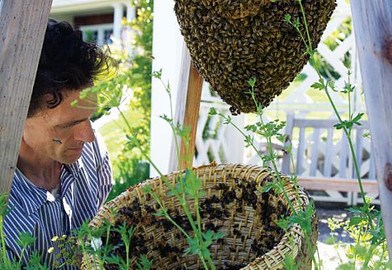
So I started to research skeps – those classic honey pot round top cone shaped natural material structures used in the middle ages. It is decided (if you don’t me, I am like that, if the feeling is so strong and clear, I must do it), I am going to make one this year, or a few, from willow harvested from my Amsterdam volkstuin garden. I will craft at least one skep, cover it with clay and find suitable places to set them. When I am able to harvest, I shall place another skep on top, let the bees move and then take a small amount of honey comb.  Sounds simple… There’s a long way to go until I have all the skills needed, but I can see those bees and smell that honeycomb already, so I am half way there.

Photo credit: yovenice.com

Then (of course) I wanted to go further back, to the most basic type of beekeeping that I could imagine. Bees in trees. Just doing there thing in hollowed out spaces and being very healthy. An old friend, Maurice Marssen was/is interested in a project where swarms would be moved in to special hollowed out tree stumps, to be merely observed now and then, but I couldn’t find his number or email so I kept on looking..  This led me to the Natural Beekeeping Trust, based in the UK. What a great, well intentioned and internationally minded organisation! I am in! If you like the thought of tree hives, watch the inspiring video on this info page, by one of the trustees. They produce a quarterly magazine all about very natural beekeeping, called Natural Bee Husbandry. There is a link to something called a Sun hive, developed by a German man. It has lovely features, allowing some honeycomb harvesting without grubs inside the comb (by excluding the queen from one area of the double skep style hive) and the form is said to reflect that of naturally built honeycombs.  Also a wonderful video page including a video about a couple living in Snowdonia who have been monitoring wild honey bees in trees and have been experimenting with not treating half their cuboid hives with chemicals against the dreaded Varroa. The video is called “Has Varroa lost its bite”.  I again want to move to Snowdonia (of course).

Photo credit: Natural Beekeeping Trust

So now, I am signed up for a local conventional Imker/Beekeeper course to build skills, experience and get connected with local beekeepers. I am heading off to my volkstuin to weave a skep from homegrown willow, am dreaming up more massive flower gardens to satisfy the needs of more native bees and low intensity relaxed honeybees and am keen to meet others with apicentric interests. I’ll update now and then on my progress and hope to hear from anyone out there who is in a similar frame of mind!

If you fancy seeing what happens when the lid is raised from a Sun Hive...


Urban Herbology Podcast 


Every spare moment right now,  I am working on the Urban Herbology Podcast.
Since 2010, I’ve been blogging here about how to forage in cities,  craft local herbs and live in tune with urban seasons.  I love to blog and teach these skills through my course, walks and River of Herbs, so that won’t stop.  But I want to start sharing the amazing things that other urban people are doing to create a better life for us all. 

The Urban Herbology Podcast will showcase people who; create paper from city weeds, turn conventional small businesses into shiny green gems,  people who run community gardens, who guerilla garden for wild bees, who simplify their metro lives, experts in small scale hydroponics, urban farmers, city brewers… People who can help us to become a little more self-reliant every day. 

I figure that podcasting is the most effective way to gather and share this information with you so that’s what I’m doing. 

If you want to suggest inspiring green city folk who I should interview, please make contact!  I’ve got a long list of special people who I’ve met over these 7 incredible years but I’d love to make it longer. Interviews can be face-to-face or over the internet so distance is no problem.  Please use the comments box or email me at urban.herbology.lynn@gmail.com. 

As soon as the Podcast goes live,  I’ll be sure to let you know! 

Green spirit

Gardening is good for you. Whether inside or out, spring, summer, autumn or winter, it is not difficult to see why. Being in contact with earth, plants, air and water feeds the soul, tones muscles, lifts spirits and aligns us acutely with the cycles of nature. As research about biophilia, horticultural therapy, woodland bathing and related topics mounts, I wanted to share a few thoughts about the importance of gardening in the city.

Some of my earliest memories are of gardens – growing lupins and marrows, following snail families, the smell of radishes, cut grass and just pulled potatoes, cress heads, apples, maggots and bee stings, blackberries, sweet blackberries, weeding, muddy nails, stone scratched skin, daisies and rose petal perfume. I think that I have been a gardener since birth. And I think that you have too.

People speak about gardeners having green fingers (or thumbs), about knowing what to do with plants, about experience, having a feel for it and so on. Experience amongst gardeners is most certainly wide ranging but I am sure that we all have green spirit within us and that spending time in nature helps it to grow. I love to see that spirit grow within those around me. It can manifest as a quiet self confidence, improved physical coordination, lightness of touch, imagination, appreciation of others, interest in life, a desire to learn more and a need to be to nature – often. When green spirit reaches the level needed, I see people literally blossom. It radiates from them, they appear bigger, bolder and more connected to nature. It then touches those around them and invariably causing the creation of more beautiful green places and a deeper respect for nature. Green spirit is a wonderful thing!

Bench crafted by Bobby van Vliet

Due to my somewhat selfish desire to fill the world with green spirit, I began a project in 2012 called River of Herbs. The aim was to help more people, plants and wildlife to flourish in the city. Over the years, I have run free courses for individuals, schools and groups, in the name of the project and I have trained and built up experience in Horticultural therapy. The aspect of the project which I have loved most is the herbal orchards of Park Frankendael. I adopted them from the city council in 2014; four fertile patches of land, occasionally mowed, care homes for old fruit trees, shady retreat for dog owners. They are behind the grand old Huize Frankendael. Beneath the trees were about 20 sorts of wild plants, some edible, some not, all ‘weeds’. The aim was to create a garden base for River of Herbs, to teach people about wild herbs – how to grow them and use them. From the start the orchards have been blessed by incredible volunteers. Some come and go. Some come, connect and stay for a long time.

All of the volunteers amaze me.  We have welcomed research students, chefs, job seekers, couch surfers, retired people, dog owners, cat lovers, busy people, tourists, translators, writers,  teachers,  herb people, psychic people, IT people, number people, tired-out people, life/law/loved – struggling people, new people, local people, energetic people, artists, actors,  jewelers, designers, whirlwind people, tranquil people, mature people, young people… so many people have volunteered and made their mark on the orchards. Together, we have laid paths, grown herbs and good friendships.

Japanese wineberry taste so good!

Lots more edible and medicinal herbs have been added to the orchard ‘borders’. Saffron, Sweet cicely, Japanese wineberry, Valerian, Motherwort and Sweet violets are probably my favourites.  We have planted cherry trees, made Elder cuttings, nurtured seedlings and re-homed poisonous plants. We have built benches, a willow hut, a barefoot path, stung our arms and legs on nettles more times than I like to remember and drunk a lot of herb tea.  We have worked together in the green, we have made a community garden and green spirit radiates from each of the volunteers. And how many of these volunteers arrived calling themselves a gardener?  None. Well actually one,  a wonderful chap who helped us to lay woodchip paths in 2014. But that’s not many is it?

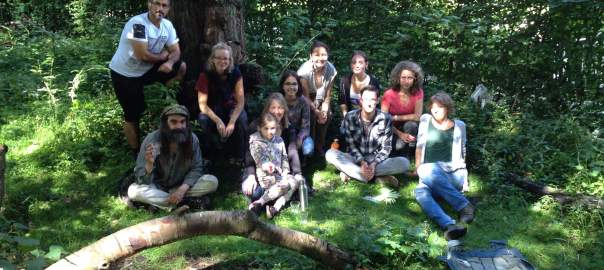
Volunteers River of Herbs orchards July 2017

The measure of a good gardener is not how well they clean their tools, how long their runner beans grow or how weed-free their flower borders are. To me, the measure of a good gardener is how far green spirit radiates from their being and strives to improve the world.


River of Herbs orchards are open to the public 24/7 all year round. 

We generally meet there every Wednesday morning, 10.30 – 12.00 unless the weather is stormy.

Address – Behind Huize Frankendael (Middenweg 72, 1098 BS Amsterdam).

Email – riverofherbs@gmail.com or urban.herbology.lynn@gmail.com 


Elderflower time

This morning, I led a small group walk around Park Frankendael and one of the adjoining streets. There are so many edible and medicinal plants growing here at the moment, it’s a real delight to see!
A few of the plants which we found were Mugwort,  Elderflower,  Hedge woundwort, Valerian, Indian strawberry, Daisy,  Yarrow, Lime, Origano, Horsetail, Marshmallow, Comfrey, Sweet cicely, Catnip, Skullcap and Tansy.

Upon returning home from the walk, I’ve laid aromatic Tansy stems under my doormat (against basement odours and summer bugs), hung Meadowsweet stems to dry for a tummy soothing tea and drizzled Elderflower honey over chestnut, humus and cucumber crackers. Wild garlic seed heads are infusing in olive oil and a jar of Icelandic Fjällagras & Mallow flowers graces my kitchen.  In other words – Life is good!

Heart felt thanks to Jurtina from Reykjavik for reaching out to me last week and asking for the walk. It was a pleasure to walk with you,  Aline and the girls!


Day 30 UH 30 day foraging challenge

20170520_095615
Well, we have reached the end of the Urban Herbology 30 day Foraging Challenge! Thank you for your support through messages and photos. They certainly kept me going and I hope that my posts kept you thinking a little about the topic too.
We’ve seen lots of wonderful plants over the past month. Lots has changed such as cherry trees blooming and fading,  hawthorn flowers slowly developing haws, garlic mustard, cleavers and nettles reaching ever upward as tree canopies have greened. Lime leaves are now ready to eat in place of lettuce and hollyhocks will soon be in flower…  I hope that you have been able to sense some of those changes and many others.
20170520_181718
Yesterday was my second community gardening session at Tuin van Darwin. I now feel connected with that beautiful place and hope you will come and visit sometime.  It is very special.