Category Archives: Wildbiome2

Living wild in the city

It’s just six days into the WildBiome Project month, and already my relationship with food feels transformed. I find myself eating far less than usual, not because of restriction, but because wild food satisfies in a different way – deeply, viscerally.
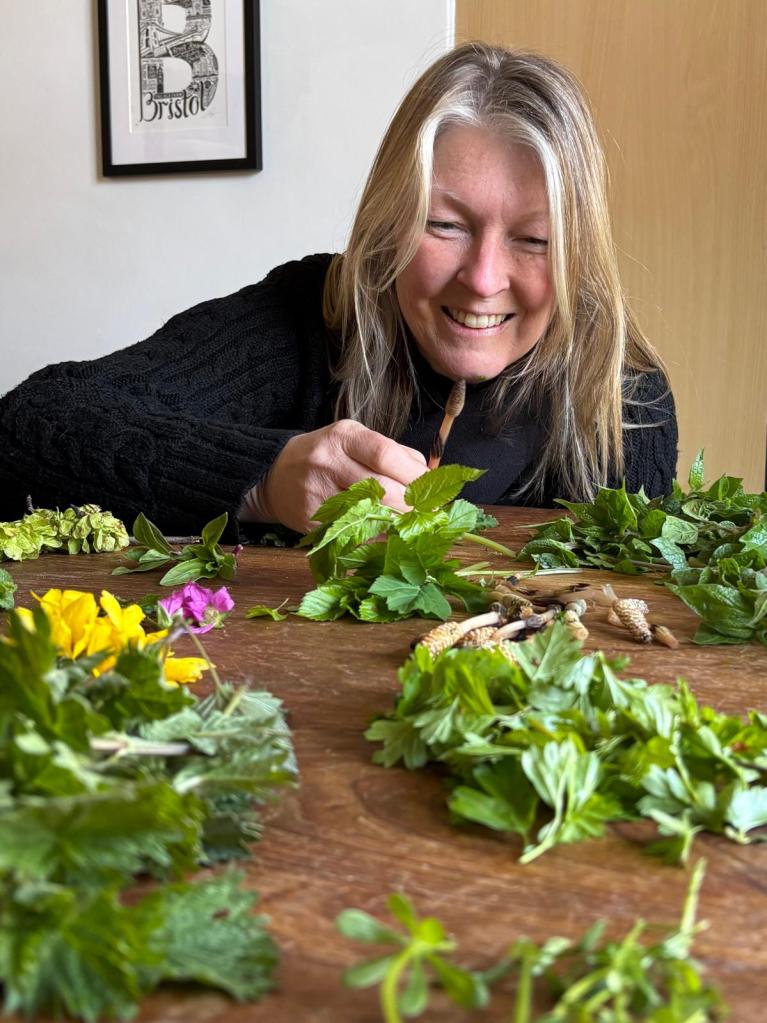
The WildBiome Project is a citizen science research initiative, organised by Mo Wilde and her daughter Caitlin, it brings together over 100 forager participants who are shifting their diets to primarily foraged and wild foods. The University of Bradford (UK) is working with the project, and explores how a need to live on ancient wild, local, famine foods might impact the health of modern humans. We’re tracking our health throughout, with start and end testing of gut microbiome, blood markers, and biometrics. We all keep a daily log of everything that we eat and drink. I am also tracking daily shifts in my mental and physical health.

There’s a stark difference between the wild greens and meats I’m eating now, and the shop-bought versions I’ve relied on in the past. Vegetables grown for mass production are often bred for size and uniformity, but in the process they’ve lost something essential: flavour, and likely nutrition too. In contrast, wild foods are packed with intensity – smaller, perhaps, but potent, rich, and alive.

The act of collecting all of my green food myself has also changed my experience entirely. There’s an intimacy that forms when you forage – a kind of sacred attention. I know this week but this week I’ve found myself spending more time with each ingredient, observing where it comes from, how it grows, how it feels to pluck it from the earth or the tree. This relationship is further deepened when it comes to wild meat.

This week I prepared and ate wild meat – deer shoulder, and duck breast. Both being lean, nuanced in taste, with far less fat than farmed meat. I could sense the creatures in the process, which brought a kind of ceremonial reverence to the act. From the moment of deciding to cook them to the careful seasoning with wild herbs, I gave full attention. I wanted nothing to be wasted. Even as a previous vegetarian, who’s long considered herself a very thoughtful consumer, this experience felt markedly different. The sterility of supermarket meat – even the organic kind – is incomparable to the energy that remains in wild flesh.

I visited my father-in-law during the week, a drive that winds through mile upon mile of Dutch farmland. The landscape is functional, but stark: wide-open fields of monoculture grasses, scattered blue feed containers, massive sheds filled with chickens. You hardly see a tree sometimes, let alone biodiversity. It’s efficient – but eerily empty. In contrast, the wilder parts of the landscape – the wetlands, reedbeds, patches of woodland – teem with life: deer, wild boar, rabbits, geese.

I deeply respect farmers and all they endure. This isn’t about blame or judgement. But it’s hard not to notice how skewed our system is – how difficult it is for most city folk like me to access ethically sourced wild meat. And, how disconnected most of us are from the life that sustains us. Imagine a landscape where more people ate far less meat, but what little they did eat came from the land itself – wild, respected, shared.

I’m also learning to appreciate the value of modern food preservation. My little freezer is now filled two-thirds with wild food – a security blanket of sorts. But I’m also aware of how vulnerable it is. A power cut, due to cable laying or drain repairs in my area, could erase all that effort. So I’m thinking ahead. I have plenty of dried foraged herbs, and locally harvested nuts (those thanks to a more forward planning friend) but I’m lacking wild pickles, dried mushroom and more – I’ll definitely remedy this for next year.

This autumn, I plan to forage more rosehips, blackberries, and nuts. I’ll dry mushrooms and grind them into powder, press roots and greens into pastes and condiments, collect grass seeds to winnow and cook, and build a pantry that doesn’t depend so heavily on electricity. These preserved foods will support not just me, but my family – Frank and Livvy already enjoy wild foods integrated into our regular meals. But I want to go further: I want wild food to be abundant and delicious enough that they can choose whole meals from it, not just flavour boosts.

I’ve also been shifting away from wheat. I already use organic spelt, which feels gentler on my gut, but I’m now using chestnut and acorn flours – rich, earthy, and gluten-free. They won’t replace everything, but they open up new textures and tastes. And they are available from Amsterdam street trees. A more feral kind of baking.

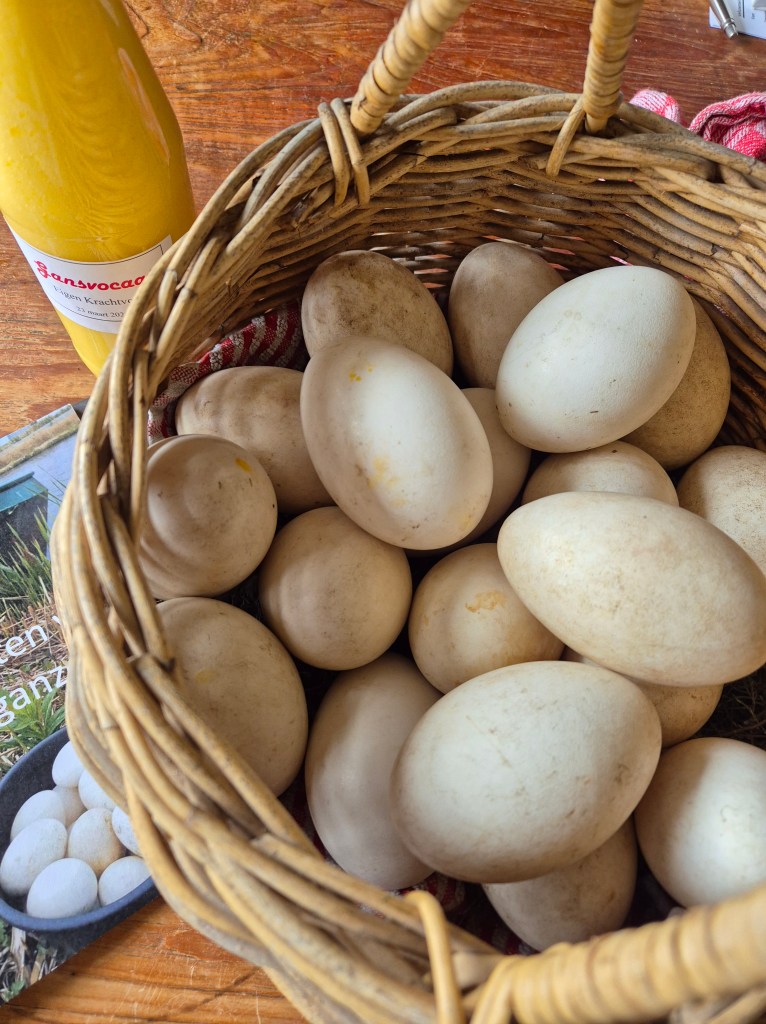
One final joy this week: goose eggs. I’ve been fortunate to connect with a group licensed to collect them (Eigenkracht voer) – part of an effort to manage populations in a wetland area close to Schiphol airport. Rather than shooting or gassing, they use a more humane method: nest-emptying. They carefully remove eggs from accessible nests by boat, leaving one or two in each nest. The process is regulated, seasonal, and animal-conscious. Goose egg collecting was in season until the end of March, and I was able to get a basketful – they’re the equivalent of two chicken eggs each, and utterly delicious.

There are still three weeks to go on this WildBiome journey, but I’m already planning beyond. I won’t continue eating 100% wild – not while I live in the heart of Amsterdam, surrounded by incredible global cuisine that I still want to enjoy occasionally. But I will rebuild my pantry. I want the backbone of my diet to be wild, local, environmentally sound, and deeply nourishing. A way of participating in the land I live on, not just consuming from it.

This isn’t about perfection. It’s about connection. It’s about weaving food, place, and life together – one meal at a time.

April 9 – Wildpluk wandeling

WEDNESDAY 26th MARCH
10.00 – 11.30 – Park Frankendael (Full with waiting list)
€20 per person

WEDNESDAY 9th APRIL
10.00 – 11.30 – Park Frankendael
€20 per person

Click here for full agenda.

Wil je weten welke eetbare en medicinale planten er in Amsterdam te vinden zijn op verschillende tijden van het jaar? Wil je weten hoe je jouw dieet gratis kunt aanvullen met lokale planten? En wilt u weten hoe de lokale giftige planten zijn? Geweldig! Ga dan met mij mee voor een wandeling in Park Frankendael en laat mij je laten zien wat er in de buurt is; Leer hoe je heerlijke en voedzame planten kunt identificeren, hoe je ze op ethische wijze kunt oogsten en hoe je ze kun gebruiken.

Wildpluk wandeling
De wandeling start en eindigt op dezelfde locatie, bij de fietsenrekken die het dichtst bij Huize Frankendael/Restaurant Merkelbach liggen. We wandelen door het bos, langs water, op gras en andere plekken in het park, inclusief de tuinen waar je voedsel kunt verzamelen die ik sinds 2014 samen met andere vrijwilligers heb onderhouden. De wandeling gaat door bij alle weersomstandigheden, behalve bij stormen. Je ontvangt een hand-out om je te helpen de planten en toepassingen te onthouden, en we drinken kruidenthee van kruidenvondsten. Als je wat verzamelde vondsten mee naar huis wilt nemen, neem dan een klein papieren of katoenen zakje mee om wat kruiden en zaden mee naar huis te nemen. De wandeling is rustig en vrij langzaam, de paden zijn grotendeels natuurlijk, van houtsnippers of aarde. Er is een openbaar toilet in het park. Kom voorbereid om eenvoudig verbinding te maken met de stedelijke natuur.

Jouw wildpluk docent
Mijn naam is Lynn Shore, ik geef al meer dan 15 jaar les in stedelijke wildpluk- en zelfvoorzienende vaardigheden in Amsterdam. Ik ben een ervaren kruidkundige en een trots lid van de Association of Foragers, en een Trustee van The Herb Society. Door de jaren heen heb ik wandelingen geleid voor grote en kleine groepen (waaronder Greenpeace), gewerkt met topbarmannen, restaurants, milieuvriendelijke bedrijven en gemeenschapsgroepen.

Deze april doe ik mee aan het Wildbiome onderzoeksproject, waar ik een maand lang alleen van geplukt en wilde voedsel zal leven om de effecten op het lichaam te bestuderen. Ik heb speciale interesses in het verbeteren van de stedelijke voedselzekerheid en mentale gezondheid door middel van natuurverbinding. Ik woon heel dicht bij Park Frankendael en ken de planten hier op mijn duimpje!

Deze wandeling is in het Engels. Ik spreek ook Nederlands. This walk is in English and Dutch.

Boekingsinformatie
Om uw boeking veilig te stellen, kunt u mij een e-mail sturen op urban.herbology.lynn@gmail.org om te controleren of er ruimte is. Betaling dient voorafgaand aan de wandeling te worden gedaan op bankrekening NL41 SNSB 0705 8981 99 (LM Shore). Stuur een e-mail naar urban.herbology.lynn@gmail.com, in geval van vragen, of neem gerust contact met mij op via 06 275 969 30.

Annuleringsbeleid
Betalingen worden volledig terugbetaald tot 24 uur voor het evenement. Als u na die tijd moet annuleren (dus minder dan 24 uur voor de starttijd van het evenement), kan er alleen een terugbetaling worden gedaan als we uw plaats met iemand anders kunnen opvullen.

March and April Foraging Walks

WEDNESDAY 26th MARCH
10.00 – 11.30 – Park Frankendael (Full with waiting list)
€20 per person

WEDNESDAY 9th APRIL
10.00 – 11.30 – Park Frankendael
€20 per person

Click here for full agenda.

Would you like to know which edible and medicinal plants are possible to find in Amsterdam at different times of the year? Want to know how to supplement your diet for free from local plants? And would you like to know how the local poisonous plants? Great! Then, join me for a walk in Park Frankendael and let me show you what’s around; Learn how to identify delicious and nutritious plants, how to ethically harvest them, and how to use them.

These Walks
The walk will start and end at the same location, near the bike racks closest to Huize Frankendael/Restaurant Merkelbach. We will walk in the woods, alongside water, on grass and other areas of the park – including the foraging gardens which I have nurtured with other volunteers, since 2014. The walk will go ahead in all weather except storms. You will receive a handout to help you remember the plants and uses, and we will drink herbal tea from herbal finds. If you want to take some foraged finds home, please bring along a small paper or cotton bag to take home some herbs and seeds. The walk is gentle and fairly slow, the paths are mostly natural, of woodchip or soil. There is a public toilet in the park. Come prepared to connect simply with urban nature.

Who am I?
My name is Lynn Shore, I have been teaching urban foraging and self-sufficiency skills, in Amsterdam for over 15 years. I am an experienced herbalist and a proud member of the Association of Foragers, and a Trustee of The Herb Society. Over the years, I have led walks for large and small groups (including Greenpeace), work with top bartenders, restaurants, eco-friendly businesses, and community groups.

This April I am take part in the Wildbiome research project where I will live only on foraged food for the month to study the effects on the body. I have special interests in improving Urban Food Security, and mental health through nature connection. I live very close to a Park Frankendael, and know the plants here like the back of my hand.

This walk is in English – I also speak Dutch.

Booking Information
To secure your booking, please email me at Urban.herbology.lynn@urbanherbology.org to check there is space. Payment should be made in advance of the walk to bank account NL41 SNSB 0705 8981 99 (LM Shore). Email urban.herbology.lynn@gmail.com, in case of questions, or contact me on 06 275 969 30.

Cancellation Policy
Payments are fully refundable up to 24 hours before the event. If you need to cancel after that time (so less than 24 hours before the event start time) a refund can only be made if we can fill your place with someone else.

Foraging in January

Would you like to know which edible and medicinal plants are possible to find in Amsterdam in the middle of winter? Want to know how to supplement your diet for free from local plants? How to make simple remedies and first aid treatments from them? And would you like to know about the local poisonous plants? Great! Then, join me for a walk in Park Frankendael and let me show you what’s around, even in the colder part of the year; Learn how to identify delicious and nutritious plants, how to ethically harvest them, and how to use them.

January Walks – Choose from:
Sunday 12th January
11.00 – 12.30 – Park Frankendael

(Full – Contact to join the Waiting List)
€15 per person
and
Wednesday 22nd January
10.00 – 11.30 – Park Frankendael
€15 per person

The walks will start and end at the same location, near the bike racks closest to Huize Frankendael/Restaurant Merkelbach. We will walk in the woods, alongside water, on grass and other areas of the park – including the foraging gardens. The walk will go ahead in all weather except storms, so dress for it 🙂 You will receive a handout to help you remember the plants and uses afterward and we will drink herbal tea from herbal finds. If you want to forage, please bring along a small paper or cotton bag to take home some herbs and seeds. The walk is gentle and fairly slow, the paths are mostly natural, of woodchip or soil. There is a public toilet in the park. Come prepared to connect simply with urban nature.

Who am I?
My name is Lynn Shore, I have been teaching urban foraging and self-sufficiency skills, in Amsterdam for over 14 years and have been running a city foraging garden for the past 10 years. I am a fully qualified herbalist and a proud member of the Association of Foragers. Over the years, I have led walks for large and small groups (including Greenpeace), work with top bartenders, restaurants, eco-friendly businesses, and community groups. This coming April I will take part in a research project where I will live only on foraged food for the month to study the effects on the body. My Master of Public Health degree specialised in Urban Food Security and all of my work aims to connect city people with nature – to improve health, wellbeing and the environment. I am passionate about this and love teaching others how to do it. This walk is in English – I also speak Dutch.

Booking Information
Payment is by bank transfer to account NL41 SNSB 0705 8981 99 (LM Shore). Payment is required to secure your booking.
Please Email urban.herbology.lynn@gmail.com to book or in case of questions.

Cancellation Policy
Payments are fully refundable up to 24 hours before the event. If you need to cancel after that time (so less than 24 hours before the event start time) a refund can only be made if we can fill your place with someone else.

Wildbiome 2 Project

How do wildfood diets effect the human body?

I’m a foraging teacher and herbalist in Amsterdam. I have been eating something wild and local every day for many years and I believe that it helps my body and mind, but does it really? To find out, I’ll be participating in the Wildbiome 2 research project, eating only wild food for one full month in April 2025. I need help to pay for my tests to see the health effects of the study.

Wildbiome 2 is a large follow-up study looking at how eating a wild food diet (like our hunter gatherer ancestors) affects human health today. The first study in 2023 was relatively small but delivered some fascinating results so I’m looking forward to finding out more this time as 120 foraging volunteers will take part.

During April 2025 I will eat only locally foraged wild food, no sneaky extras, no chocolate, matcha, spelt or homegrown veg, just 100% wild and local food. In Amsterdam, I’m sure it’s possible to be healthy by adding locally foraged food to our diet each day, but will eating it 100% show up issues? Will it show the effects of pollution? Will I be lacking in some nutrients? I think it will be fine, positive, but as someone who used to work in a research lab, I want to put this to the test scientifically. So some clinical tests need to be done.

Blood, stool and other testing will be done at the start and end of the trial month to look for effects on my gut microbiome, blood sugar, hormones, inflammation levels and many other health/illness markers. The tests are quite expensive so I need to raise funds to cover those costs alongside preparing my wild food store with acorns, apples, roots, leaves, berries, etc.

If you want to support this project, to help find out how wild food affect us, and to help pay for my tests, please donate through my Gofundme appeal.

The project starts on 1 April 2025 but I need to raise funds now.

As a token of my gratitude, I am offering the following:

First 20 people giving €25 donations: each a place on one of my Amsterdam herb group foraging walks, during Autumn, Winter or Spring 2024/5.

€50 donations: join a 1:2 walk.

€100 donations: a 1:1 walk at a mutually convenient time.

link to the Gofundme appeal