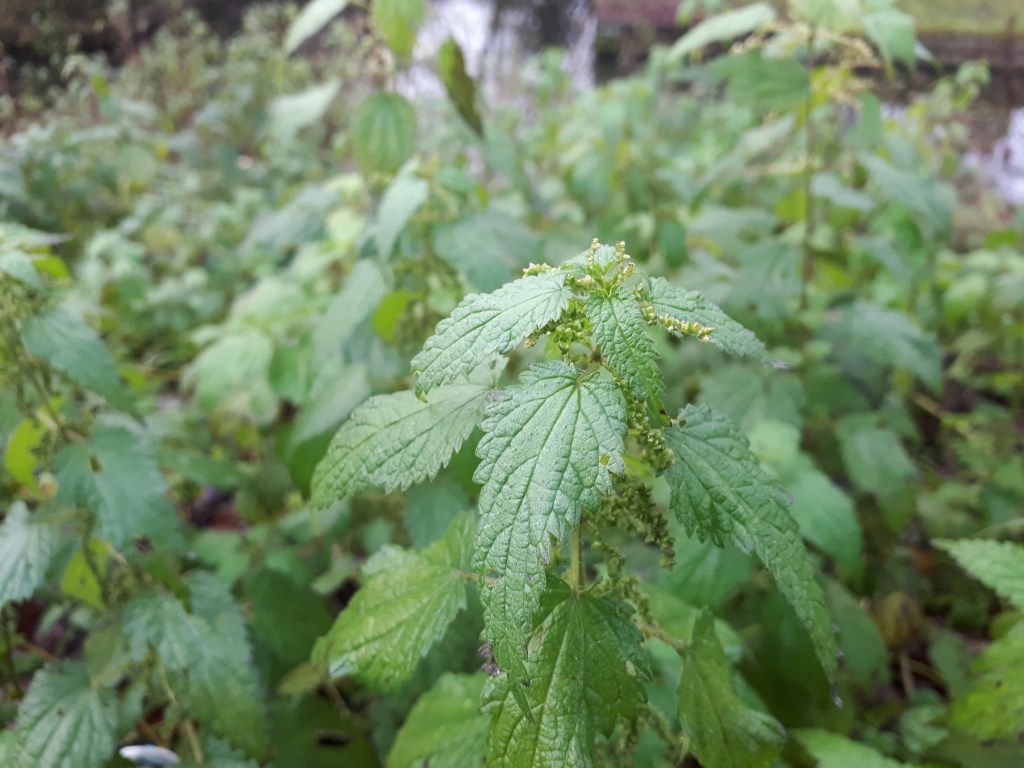
It is nettle time! Learn how to identify, ethically harvest, craft, eat, grow, use and generally make the most of locally growing nettles, so Stinging nettles (Urtica species) and several Deadnettles (some of the Lamiaceae family), with Livvy de Graaf, assisted by Lynn Shore. Lynn is a professional foraging teacher (member Association of Foragers) and consulting herbalist. Livvy, is Dutch-British and has been harvesting and eating wild food for longer than she can remember. She is Lynn’s daughter and certainly knows her way around the woods and foraging orchards, where this event will take place. She looks forward to sharing some of her skills with you. The walk will be primarily in English.
Location We will be working mainly in the River of Herbs foraging gardens, which Lynn has run for over 10 years, so unusually will be able to dig up some of the stinging nettle roots, to plant elsewhere or for you to cook/preserve/process at home. Meeting at main entrance of Park Frankendael, closest to Middenweg 72, Amsterdam (Restaurant Merkelbach / Huize Frankendael).
Handout Written info and recipes will be provided. You will learn about and try different preparations made from the focus plants (including a cup of tea). You will then be able to make your own potions/creations at home, using what we forage together and the handout.
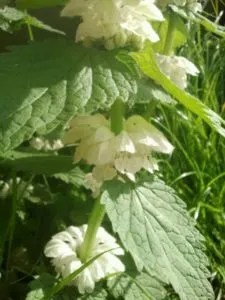
Who is Stinging nettle’s sister?Yellow deadnettleStinging nettle
The plants Different “nettles” are up and forageable in Amsterdam all through the year, but at this time the Stinging nettles are growing strongly, and different Deadnettles begin to flower. This is the best time to start using them in simple remedies and to enrich food. As you learn about Stinging nettles and Deadnettles, you will also meet some other amazing wild herbs that are around at the same time. For instance, wild garlic is also in full growth at this time, so you will be able to dig some of those bulbs up, from legal places, if you want that and have uses for them.
Please bring along cup/mug paper bag (grocery small bag to take the harvest home) pen/pencil to add to the notes. hand trowel / handschep (we will have a few to share if you don’t have one).
Booking €15 per person, paid in advance Please email to reserve your place and receive the bank details for pre-payment. Your place is secured when your payment has been received.
Cancellation policy 100% refund if cancellation more than 24 hours before event start time. Cancellation after that time (so less than 24 hours before the start time) can only be refunded if we can fill your place with another person.
Extra Date: Saturday17th February, 10.00 – 11.30, Park Frankendael. Amsterdam
This is an event for wild garlic lovers!
Learn how to identify, ethically harvest, craft, eat, grow, use and generally make the most of wild garlic (Allium ursinum) or Daslook, with Livvy de Graaf, assisted by Lynn Shore, professional foraging teacher and herbalist. Livvy, is Dutch-British and has been harvesting and eating wild food for longer than she can remember. She is Lynn’s daughter and certainly knows her way around the woods of Park Frankendael, where this walk will take place. She looks forward to sharing some of her skills with you.
We will be working mainly in the River of Herbs foraging gardens, so unusually, will be able to dig up some of the fresh wild garlic bulbs, to plant elsewhere or for you to cook/preserve at home.
Handout with wild garlic info. and recipes, and a cup of herb tea will be provided. You will learn about and try different preparations from sweet, sour, savoury to medicinal. And will be able to make your own potions/creations at home, using what we forage together and the handout.
Wild garlic emerging from the early spring soil, heralds the start of the main foraging season. As you learn about wild garlic, you will also learn to recognise other amazing wild herbs which are around at the same time.
Please bring along: drinking cup Paper bag (grocery small bag to take the harvest home) pen/pencil to add to the notes. hand trowel / handschep (I will have a couple to share if you forget or don’t have one).
Cost: 15 Euro per person – Payable in advance Please email urban.herbology.lynn@gmail.com and you will receive the bank details for payment. When payment is received your place is booked.
Cancellation Policy: If canceling, for any reason, 24 hours or more before the start of the event – Full refund. If canceling after that time (so less than 24 hours before the start time of the event) you will be refunded only if we have a replacement.
Here’s a short Urban Herbology post from 9 years ago, about how to make a little harvest of wild garlic go a long way. Click on View Original Post, to open up and see some of the benefits of this herb and a simple way to use it over several weeks. I hope it helps you. If you want to learn lots more about wild garlic, I run workshops about the plant, throughout the season. The next one is on Sunday 6th March 2022. Details are on the events page.
The woodland floor in Frankendael Park is carpeted with flowering snowdrops and the emerging leaves of Ramsons (wild garlic, Allium ursinum). I’m sure snowdrops have their uses but when you find them, Ramsons are an urban herb forager’s dream. All parts of the plant are edible and very useful, though the leaves and flowers are all you should use. The bulbs should be left alone and only pick a leaf or two from any plant. They taste truly delicious – if you like the taste of garlic! They taste best, by far, before the pretty white flowers open and can be eaten from early spring, when the first leaves emerge from the soil.
Ramsons have similar properties to Garlic but are milder in all respects. They are also more tolerable to those you have difficulty digesting other members of the onions family.
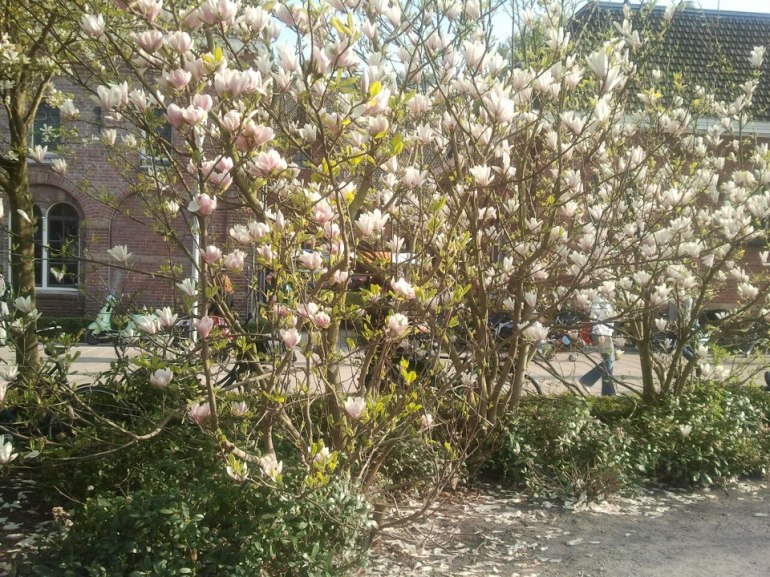
Magnolia is a tree which I fall in love with again, every year. Everything about it enthralls me. From the graceful angles of the branches, the bark, exotic blooms to the glossy evergreen leaves. A huge magnolia in bloom is a show stopper. One such tree arches quietly over the terrace behind Huize Frankendael, in Amsterdam east. Hundreds of visitors must walk beneath it without giving the tree much thought, until in March or April it explodes into bloom. There is no other tree that I would rather sit beneath and gaze up through than that magnificent magnolia in spring!
Edible and Medicinal Magnolia Petals The flowers of Magnolia trees are edible and medicinal. In traditional chinese medicine, Magnolia flowers are known as Xin yi hua and are associated with the lung and stomach meridians. I enjoy eating them fresh plucked each year and happily report that they taste fragrant and spicy. I can also report that when I eat Magnolia petal, my sinuses become clear, quite like magic.
Imagine a slightly rubbery super sized rose petal which clears the sinuses a little, when you bite into it and you are getting close to the mouth feel and flavour of a magnolia petal. I like them very much and because a little goes a long way with these large petals, I can certainly recommend them to other urban herb lovers. As you may know, via my apprenticeship and walks, I teach how to harvest interesting herbs in towns and cities, in a safe and ethical way. This entails taking only a little, leaving no trace and really make the most of the harvest. Do contact me if you would like to know more – This is my passion!
Medicinal Bark Fairly recent research suggests that Magnolia bark extract can help with oral health, stress reduction and several other disorders. In traditional medicine it is reportedly used as an antibacterial, anti-inflammatory, anticancer agent, in the treatment of Alzheimer disease, depression, diabetes, and menopause. All Magnolia species varieties are considered to possess the same medicinal qualities and there are apparently no known side effects – although we know that someone somewhere, could be allergic to the plant, so please be cautious. Magnolia Bark Extract is widely available for sale and Magnolia bark is an ingredient in many traditional Chinese medicines including Hsiao-cheng-chi-tang, Wuu-Ji-San, Heii-san, Shimpi-to, Hangekouboku-to, Masinin-gan, Sai-boku-to, Syosaiko-to, Irei-to and Goshaku-san.
Japanese traditional medicine also prizes both the bark and flowers of Magnolia. Bark harvesting is not something suggested for the urban forager because it certainly leaves a trace and it is certainly not ethical.
Magnolias in Westerpark
Stealthy Petal Plucking When harvesting from perhaps the most beautiful of city trees, one would perhaps look both foolish and anti-social to pluck entire flowers. So I suggest that you don’t. Instead, I recommend that when stumbling upon a prime Magnolia specimen in bloom, and feeling the urge to eat it, you do the following:
1. After checking for unwanted observers, wander nonchalantly up to the tree. Are the blossoms within your reach? If not move on to another. 2. If so, reach up as if to smell the fragrance of a prime bloom, pull it gently to your nose with one hand, whilst deftly plucking a single petal from its base, with the other hand whilst simultaneously inhaling the spicy aroma. 3. Tuck the plucked petal in your pocket as you gently release the bloom with your other hand. 4. Move along to another flower, as if to compare its scent with the previous bloom. Repeat steps 1 to 3 until you have harvested three or four petals.
A magnolia flower can miss one petal without much issue. If two or more petals are plucked from one bloom, evidence of foraging shows and that is not the plan. So one petal from a flower, move to another, one more petal and so on. When you have three or four petals, you are done. That is enough to make something very tasty and useful and you will have increased your stealth foraging skills..
Untouched – Delicious
Favourite Trees I tend to forage a handful of petals each year, from 6 favourite Magnolias which are dotted around east Amsterdam. They are all growing in public spaces so stealth foraging is required. I don’t harvest from them if other people are around because apart from it just looks silly. I also limit myself to plucking a petal from two flowers per tree. I first wrote about my love of Magnolia petals on 2012. Since then urban foraging has increased in popularity so I also am careful to only pluck from Magnolias which seem not to have been visited by other foragers.
Magnolia Petal Recipes Things that I like to do with a precious handful of magnolia petals. I hope that you have a go and let me know how you get on in the comments.
Magnolia Petal Pickle They can be pickled, old English style by simply filling a small jar with fresh petals and then completely filling the jar again with rice wine vinegar or apple cider vinegar with a little salt and sugar to balance the flavours. I don’t add sugar or salt so I guess my version is simply Magnolia petal vinegar – I don’t mind because it tastes good 🙂
Fermented Magnolia Petals You may like to ferment them using a little salt and water, in the style of Sandor Katz. I prefer to lay them in my handy small Japanese vegetable press. I then sprinkle with a pinch of salt and apply the gentle but consistent pressure of the Japanese press for about 3 hours. This produces a very light ferment and it draws out some of the water from the petals (which tastes good too). You can leave the pressure for a lot longer if you prefer, winding the contraption every few hours to ensure the petals are in fact under a little pressure and to encourage the process.
Magnolia Petal Honey When I first tasted a Magnolia petal and felt its clearing effect on my sinuses, I decided to transfer the petals’ properties to honey. This is soooo simple to make. It creates something which my family and friends find delicious and I hope you will too. If the honey turns you off, try Agave syrup. It works very well but in my experience is less spreadable (being rather runny).
Magnolia petals infusing in honey
How to Make Magnolia Petal Honey (or use Agave syrup) 1. Gather your petals. 2. I rarely wash magnolia petals because I only harvest clean looking ones, which are from way above the ground but unsoiled by birds. You may like to wash yours. If so, then dry them off. 3. Tear the clean, surface dry petals into a sterile small glass jar. I use dishwasher cleaned pesto jars for this sort of thing. 4. Covered completely with runny honey. Use a chop stick or knitting needle to loosen trapped air bubbles. You may need to release the air and top up with honey several times. The jar should be filled to the brim with honey. The air bubbles won’t all leave the honey but prodding with chopsticks, helps them to escape and thus reduces the risk of contamination. 5. When no more air bubbles are escaping and no more honey needs to be added, close the jar tightly with its lid. 6. The constituents of the petals will infuse into the honey over the following days and weeks but the honey will take on a delicious Magnolia aroma and taste within a few hours. 7. Eat in any honey way (smear on bread, add to smoothies, mix with a little vinegar for an elixir, etc) you choose or take a teaspoon now and them to help soothe anxiety, sore throats or respiratory congestion. I don’t bother to strain this honey as I like the petal crunch. You could strain after 6 weeks if you preferred. It seems a waste of those petals though.
Please note that the herbal honey may start to ferment after a while, due to the high water content in the petals. Keep an eye on the jar, if it starts to bubble, the lid must be loosened to avoid pressure building up and the glass jar exploding. Storing it in a cool dark location will help to preserve its shelf life. Eating it all up will also avoid the problem 🙂
I hope that you get a taste for Magnolia petals this year and have a try at infusing them in honey, agave syrup, vinegar, vodka or olive oil. This herb is so beautiful, so giving and so tasty – it would be a pity to miss the fun completely wouldn’t it? I was looking at my favourite Magnolia at twilight this evening. It will open its blooms very soon and I will be waiting and thanking it for every petal.
Do you like it? Please do add a comment about your magnolia experiences at the foot of the page or fill in the contact form. I would love to hear how you get on with magnolia and what else you are keen to learn about!
Learn Urban Herbology If you want to learn more about foraging and using herbs in towns and cities, take a look at my apprenticeship course. I have helped hundreds of wonderful people learn about Urban Herbology over the years and I would love to help you on your journey!






 Urban Herbology