Tag Archives: wildpluk

April 9 – Wildpluk wandeling

WEDNESDAY 26th MARCH
10.00 – 11.30 – Park Frankendael (Full with waiting list)
€20 per person

WEDNESDAY 9th APRIL
10.00 – 11.30 – Park Frankendael
€20 per person

Click here for full agenda.

Wil je weten welke eetbare en medicinale planten er in Amsterdam te vinden zijn op verschillende tijden van het jaar? Wil je weten hoe je jouw dieet gratis kunt aanvullen met lokale planten? En wilt u weten hoe de lokale giftige planten zijn? Geweldig! Ga dan met mij mee voor een wandeling in Park Frankendael en laat mij je laten zien wat er in de buurt is; Leer hoe je heerlijke en voedzame planten kunt identificeren, hoe je ze op ethische wijze kunt oogsten en hoe je ze kun gebruiken.

Wildpluk wandeling
De wandeling start en eindigt op dezelfde locatie, bij de fietsenrekken die het dichtst bij Huize Frankendael/Restaurant Merkelbach liggen. We wandelen door het bos, langs water, op gras en andere plekken in het park, inclusief de tuinen waar je voedsel kunt verzamelen die ik sinds 2014 samen met andere vrijwilligers heb onderhouden. De wandeling gaat door bij alle weersomstandigheden, behalve bij stormen. Je ontvangt een hand-out om je te helpen de planten en toepassingen te onthouden, en we drinken kruidenthee van kruidenvondsten. Als je wat verzamelde vondsten mee naar huis wilt nemen, neem dan een klein papieren of katoenen zakje mee om wat kruiden en zaden mee naar huis te nemen. De wandeling is rustig en vrij langzaam, de paden zijn grotendeels natuurlijk, van houtsnippers of aarde. Er is een openbaar toilet in het park. Kom voorbereid om eenvoudig verbinding te maken met de stedelijke natuur.

Jouw wildpluk docent
Mijn naam is Lynn Shore, ik geef al meer dan 15 jaar les in stedelijke wildpluk- en zelfvoorzienende vaardigheden in Amsterdam. Ik ben een ervaren kruidkundige en een trots lid van de Association of Foragers, en een Trustee van The Herb Society. Door de jaren heen heb ik wandelingen geleid voor grote en kleine groepen (waaronder Greenpeace), gewerkt met topbarmannen, restaurants, milieuvriendelijke bedrijven en gemeenschapsgroepen.

Deze april doe ik mee aan het Wildbiome onderzoeksproject, waar ik een maand lang alleen van geplukt en wilde voedsel zal leven om de effecten op het lichaam te bestuderen. Ik heb speciale interesses in het verbeteren van de stedelijke voedselzekerheid en mentale gezondheid door middel van natuurverbinding. Ik woon heel dicht bij Park Frankendael en ken de planten hier op mijn duimpje!

Deze wandeling is in het Engels. Ik spreek ook Nederlands. This walk is in English and Dutch.

Boekingsinformatie
Om uw boeking veilig te stellen, kunt u mij een e-mail sturen op urban.herbology.lynn@gmail.org om te controleren of er ruimte is. Betaling dient voorafgaand aan de wandeling te worden gedaan op bankrekening NL41 SNSB 0705 8981 99 (LM Shore). Stuur een e-mail naar urban.herbology.lynn@gmail.com, in geval van vragen, of neem gerust contact met mij op via 06 275 969 30.

Annuleringsbeleid
Betalingen worden volledig terugbetaald tot 24 uur voor het evenement. Als u na die tijd moet annuleren (dus minder dan 24 uur voor de starttijd van het evenement), kan er alleen een terugbetaling worden gedaan als we uw plaats met iemand anders kunnen opvullen.
March and April Foraging Walks

WEDNESDAY 26th MARCH
10.00 – 11.30 – Park Frankendael (Full with waiting list)
€20 per person

WEDNESDAY 9th APRIL
10.00 – 11.30 – Park Frankendael
€20 per person

Click here for full agenda.

Would you like to know which edible and medicinal plants are possible to find in Amsterdam at different times of the year? Want to know how to supplement your diet for free from local plants? And would you like to know how the local poisonous plants? Great! Then, join me for a walk in Park Frankendael and let me show you what’s around; Learn how to identify delicious and nutritious plants, how to ethically harvest them, and how to use them.

These Walks
The walk will start and end at the same location, near the bike racks closest to Huize Frankendael/Restaurant Merkelbach. We will walk in the woods, alongside water, on grass and other areas of the park – including the foraging gardens which I have nurtured with other volunteers, since 2014. The walk will go ahead in all weather except storms. You will receive a handout to help you remember the plants and uses, and we will drink herbal tea from herbal finds. If you want to take some foraged finds home, please bring along a small paper or cotton bag to take home some herbs and seeds. The walk is gentle and fairly slow, the paths are mostly natural, of woodchip or soil. There is a public toilet in the park. Come prepared to connect simply with urban nature.

Who am I?
My name is Lynn Shore, I have been teaching urban foraging and self-sufficiency skills, in Amsterdam for over 15 years. I am an experienced herbalist and a proud member of the Association of Foragers, and a Trustee of The Herb Society. Over the years, I have led walks for large and small groups (including Greenpeace), work with top bartenders, restaurants, eco-friendly businesses, and community groups.

This April I am take part in the Wildbiome research project where I will live only on foraged food for the month to study the effects on the body. I have special interests in improving Urban Food Security, and mental health through nature connection. I live very close to a Park Frankendael, and know the plants here like the back of my hand.

This walk is in English – I also speak Dutch.

Booking Information
To secure your booking, please email me at Urban.herbology.lynn@urbanherbology.org to check there is space. Payment should be made in advance of the walk to bank account NL41 SNSB 0705 8981 99 (LM Shore). Email urban.herbology.lynn@gmail.com, in case of questions, or contact me on 06 275 969 30.

Cancellation Policy
Payments are fully refundable up to 24 hours before the event. If you need to cancel after that time (so less than 24 hours before the event start time) a refund can only be made if we can fill your place with someone else.

Winter Solstice Walk

Saturday 18th December 2021
13.00 – 14.30
Park Frankendael, Amsterdam
€15 per person (my apprentices – free)
Booking through Meetup

As we approach the shortest day of the year, I invite you to join me for a wander around the woody parts of Park Frankendael. We will be looking at the edible and medicinal plants which can be found at this quiet time of the year. Park Frankendael is a great place to learn about ethical foraging, to find out what’s “in season”, how and where to find it and how to use it.

The walk will go ahead come rain or shine so please be prepared for that when you book – a great opportunity to get your wellies or boots out if there’s a bit of rain – we will stick mostly to the paths though. I forage in all weather’s but the walk will not happen if we have a storm, because we’ll be in the woods and falling branches are not fun – so keep an eye on your messages after booking, just in case.

Booking for my walks are through Meetup

[I am a druid, herbalist, teacher, mother and have been teaching ethical foraging in Amsterdam for the past eleven years. Living in harmony with local nature, and helping others to do so, is my purpose. The aim of these walks is to pass on that enthusiasm and some degree of self-sufficiency to you. If you would like to know about my foraging and herbalism experience and the courses that I offer, please take a look at the about page.

7 Day Challenge

Push Your Boundaries
Voluntary hardship is an enriching thing. It takes us to new places and teaches us much about ourselves. I challenge you to make your life a tiny bit harder for just one week, for the benefit of your health, your knowledge, your self-reliance and our community. And that community is the planet.

Harvesting just a fraction of your food outside of the supermarket is easy to do in most towns and cities but most of us don’t do it. You could probably find and support a local farm which sells great organic veg, without too much time or trouble. You could probably find an independent grocery store selling local produce. You could probably find someone who wants to garden share and grow some of your own veg. If you do any of these, great! But let’s take it a step further.

20190221_104306.jpg
Unsprayed pansies taste great!

Awareness
I want you to become:
Aware of what grows around you.
Aware of how clean your neighbourhood is, or could be.
Aware of how edible plants could be the backbone of urban planning.
Aware of how to (at least partially) feed yourself for free.


20190314_232802.jpg
Mugwort flowers and plantain seeds cook well, mixed in with rice (Photo credit: Apartment therapy)

Which Plants?
Think about adding a little something hyper-local, free and special to your breakfast smoothie. Or weave a free and local food into your lunchbox, to dazzle your colleagues at work. I want you to go out, forage something safe and tasty, clean it – and eat it – every day for a week. That’s not asking for much is it? I suggest plants that you can easily ID, maybe stinging nettle, dandelion and bramble buds. Check it’s the real thing (send me photos to check if you like) and then get sensitively plucking.

Identification Help
Need some help with plant ID? Ask me for help via the contact form or why not start with my Dandelion Plant Profile? Send me a quick message (bottom of page) and I’ll send you the Dandelion Profile as a pdf, along with a hello and some encouragement of course! The profile is from my online Urban Herbology Apprenticeship, a course for people who really want to embrace the urban wild. I am taking on a handful of local apprentices this season but the online part of the course is available year round, wherever you live.

magnolia-westerpark-liberation-day-2013
Magnolia flowers

Thinking Food
I suggest that you think of a plant that you purchase and consume very often. Something that’s always on your list and which has probably been grown under greenhouse lights or shipped across at least one continent to reach you. For me, this would be spinach. It’s easy, it’s bland, it’s cheap enough and I buy a big plastic bagful each week. I keep it in the freezer and I throw a handful into my smoothie almost every single day. I barely think about it. Where has it come from? Is it sprayed? What nourishment does it really provide?

Alternatives
So how to replace the spinach? My first thoughts are of stinging nettle tops, full of goodness and growing in most neglected street corners. Dandelion leaves, with there nutrient rich bitter tang, grow close to my local bus stop. Chickweed. That tastes great and grows as a weed, in some pots on my roof. Those three are all low growing plants. Not the best in dirty locations, fine if you have some clean patches to forage from.

20190314_234801.jpg
No dog spray on these leaves! Photo credit: Apartment therapy

Aim High
If you want to play it safer and forage above dog pee height, I suggest looking for Bramble patches and reaching high for some of the new leaf buds. Or Magnolia petals, currently ready to burst open here in Amsterdam. Just one petal will do the trick, there’s no need to take more. Or how about Hawthorn leaf buds? They are easy to spot for some, not for others. Aim for plants which are easy to identify, safe and clean. Always wash your plants at home and remember that birds spray higher than dogs..

Hawthorn Crataegus monogynum
Hawthorn in flower

Build Knowledge
Look up your foraged plants and build up what you understand about them. If you are not confident or experienced enough to eat these plants, at least learn about them. What are the look-a-likes? Are they used as medicines? What nutrients are they thought to contain? How do different cultures eat or utilise this plant?

Keep It Clean
“Hang on a minute Lynn, I’m not eating plants from a dirty patch of land in the middle of my town, just because it’s growing there!”

If these are your thoughts then great! Come on in and join the challenge! You have even more to gain from learning about your immediate environment and how we should improve it. We should be living in spaces that are clean enough to eat from. If we are not, something needs to change.

Whatever the situation around your home, there will be ways to edible-ise it. Maybe you request seagull proof flaps, on local street bins to stop the litter being thrown out by birds each morning? Maybe you could encourage some changes at work or school, in where the canteen sources it’s ingredients from? Maybe you could ask the owner of that vacant lot, if you and some friends could grow veg there for a season?

Improvement in urban conditions doesn’t usually happen spontaneously – We need to make it happen.

Nettle and Sweet Woodruff
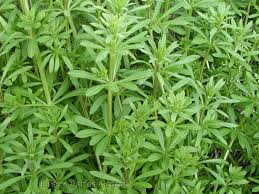
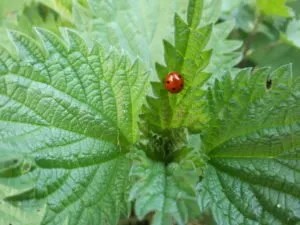
Stinging nettles and Cleavers

Voluntary Hardship
At least for 7 days*, let’s take away the convenience of being able to add a handful of supermarket spinach leaves to the morning smoothie and let’s think of some alternatives. Let’s go a little further for our green leafy friends. Let’s not get sick: Pluck safely, cleanly and wisely. Don’t pluck if you are unsure – But let’s learn!

Urban Herbology’s 7 Day Challenge is an opportunity to re-calibrate how we think about food. Are you in? If so scroll down, complete the contact form and I’ll send you a couple of messages to see how you get along (I don’t spam people). Or simply keep in touch with the post comments.

bramble-bud
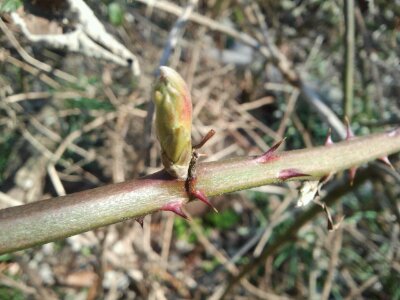
A tasty bramble bud

Take action
Right now, think of a food which you can switch for urban wild edibles.
Tell me in the comments below, or via the contact form, what you plan to do.
Ask me for the Dandelion Profile sheet and learn more about these plants.

Stay in touch and send me any images of your foraged finds and meals. It’s just 7 days!

It’s only 7 days* – You can do this!
Together, we can make urban living cleaner, safer and more tasty!

*Needless to say (but I will), I hope you will enjoy this challenge immensely and will make ethical urban foraging a habit 🙂


Go back

Your message has been sent

Warning
Warning
Warning
Warning

Warning.