Category Archives: Foraging

We Plucked Our Lunch!

Thank you very much to everyone who joined me for a lunchtime forage in Frankendael Park on Sunday 12th May. It was so nice to meet new faces and to welcome back several previous urban herb walkers.

image

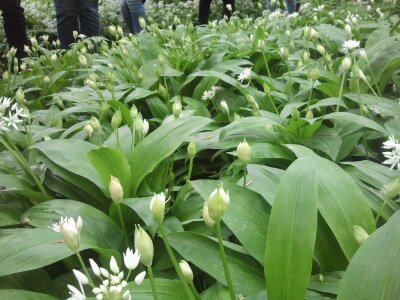
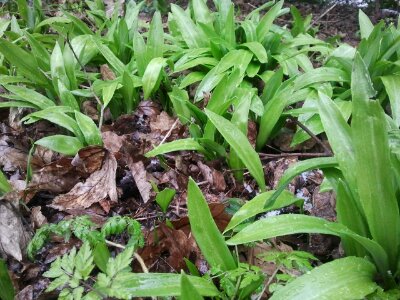
Miraculously it didn’t rain a drop throughout the two hour walk. But as expected, we found lots of beautiful herbs, many edible and tasty. Here is pungent Wild Garlic (Allium ursinum) Daslook.
image

And bold, beautiful, bitter Burdock (Arctium lappa) Grote Klis, in a stand of potential urinary tonic Pennsylvania Pellitory, with a sprig of parsley scented Ground Elder (Aegopodium podograria ) Zevenblad in the left of the photo.
image

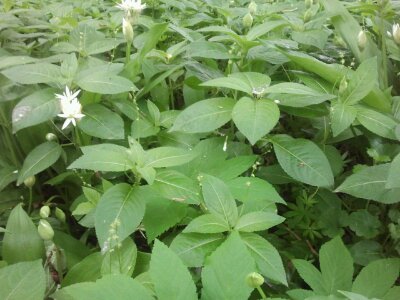
We also found some poisonous plants, to be known and avoided by foragers, like this patch of Dog’s Mercury (Mercurialis perennis) Bosbingelkruid. This unassuming little pointy leaved plant with delicate spikes of tiny flowers, is a member of the super toxic Euphorbia family (Wolfsmelkfamilie). In this photo (below), the Dog’s Mercury is mixed in with a little flowering Wild Garlic. Another reason why thoughtfully plucking one leaf at a time is a useful idea…
image

We talked about the Carrot family, with it’s crazy mix of tasty members such as Ground Elder, Fennel and Angelica (Angelica archangelica) Grotengelwortel, as well as deadly Poison Hemlock (Conium maculatum), Gevlekte scheerling Hemlock Waterdroplet (Oenanthe crocata) and Fool’s Parsley (Aethusa cynapium). All of these and more are found throughout Amsterdam. It is vitally important that foragers know how to identify plants such as these. A good field guide and taking walks with experienced foragers helps people to gradually build up their wild plant knowledge – plant by plant.

image

On a lighter note, we spread my three-day Dandelion and Burdock Honey onto Mugwort bread swirls, ate Lime leaves (Tilia europa) Linden, tasted Blackberry bush leaves, Horehound foliage, Meadowsweet (Filpendula ulmaria) Moerasspirea, White Deadnettle (Lamium alba) Dovenetel (above) and lots of other incredible plants.

20130513-222010.jpg

We learned how to prodding around with a chopstick can help make a good tincture, how honey often makes a great herbal carrier and is a remedy for many ailments. And, how a fairly damp day like yesterday, is not ideal for setting up a cold oil infusion.

I spoke about how to pay a little back to the land we forage from, by simple gestures such as tidying up, to longer term projects such as growing little Elder shrubs.

I always love showing people the plants and had such a great time with you all. Thanks again!

On Tuesday evening (21st May), I’ll be taking foraged plants to the Ready Stay Cook section of Pop-Up Amsterdam Live. It would be great to see some of you there.

My next guided foraging walks are on Sunday 26th May in Westerpark and Wednesday 29th May in Park Frankendael.

Urban Dandelion and Burdock

Europe is awash with roaring Dandelions at the moment. They are standing proud and showing their wooly faces in parks, along roadsides, in fields and hedgerows. They also grow happily on my roof (and from there I harvest its leaves and roots) .

I love the taste of Dandelion and Burdock syrup, especially when mixed with water and drunk in the summer sunshine. Not many flavours remind me so fondly of my English childhood. But to make Dandelion and Burdock syrup, the roots of Burdock and leaves of Dandelion should be collected and boiled up with sugar water. I don’t use using sugar unless there is no other option and I don’t dig up Burdock roots. Roots tend to concentrate toxins, they are tough to dig up, fellow park visitors may pounce on me and tell me to stop and most of all, I’d like the plants to grow to maturity so that I may harvest the seeds and leaves.

Regarding the Dandelion leaves, I don’t ever harvest them in quantity from Amsterdam public spaces. They live on the plants for a long time, they get walked on and everything else you may like to think of happens on them, whereas the flowers are far more transient. I can more easily see if they are dirty, they only stay on the plant for a short time so are less open to pollution and I just love the sight of them in a jar of honey! Having said this, harvesting herbs from ground level in public spaces is always a bit of a risk, pollution is everywhere. But with syrups, a small amount is consumed in one go, the use of honey kills many bugs naturally and I feel that the benefits far outweigh the concerns. But that’s just me perhaps!

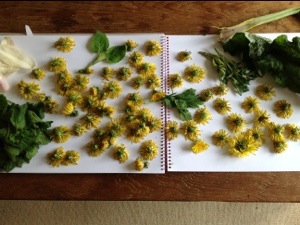
My version of Dandelion and Burdock simply requires honey, 20-30 fresh Dandelion flowers and a small Burdock leaf. That’s all. It has all the medicinal properties that Dandelion and Burdock plants offer, it is quick to make, tastes deliciously bitter-sweet and it keeps well.

20130510-164455.jpg

How to make Urban Dandelion and Burdock Syrup

1. Harvest 20-30 clean, fresh and lively Dandelion heads from a clean area.
Harvest one young, equally vibrant Burdock leaf from a super-healthy looking plant.

2. Place your harvest on a clean white surface for about an hour, to allow any resident bugs time to crawl away.

3. Tear up the Burdock leaf and layer dandelion heads and burdock leaf in a medium sized (250ml) jam jar.

4. As you layer the herb, carefully spoon in runny honey. Poke around a little with a clean chopstick so that air bubbles are released.

5. Continue to layer herb, spoon in honey and prod with the chopstick until the jar is full.

6. Check for obvious air bubbles and prod some more. Top up with honey (right to the lid) and secure with a well fitting lid.

20130510-164708.jpg

7. Leave to stand and infuse for at least three days.

8. Use as it is, as a toast spread or strain (or not) and use as a syrup base for refreshing summer drinks.

Bitter-sweet yum! It taste’s of the English summers of my childhood. We’ll try it on the Pluck Your Lunch! forage this Sunday

Pluck Your Lunch in Westerpark!

THIS WALK IS NOW FULLY BOOKED
Please join me for an urban herb foraging walk in Westerpark
!

Westerpark (exact meeting point to be arranged)magnolia westerpark liberation day 2013
Sunday 26th May 2013
11:00 – 13:00
€10 per person (children free and very welcome)
Booking via email (lynn.shore@gmail.com) or this link
You will learn how to:

  • Ethically and safely forage from city parks, streets and green spaces
  • Identify lots of edible and medicinal plants which are available all over the city.
  • Turn your harvest into tasty food
  • Make simple home remedies
  • Pay back the land that we forager from


We will ethically forage some of the plants that we find and turn them into tasty and nutritious teas and sandwich fillings and more, on the spot.  I am passionate about helping people to discover the edible plants growing around them. My 365 ended a few weeks ago – identifying, photographing and writing about Amsterdam herbs each day for a year.

Please note: You don’t have to eat from the wild on this walk but you certainly can if you want to!

We can expect to find such tasty, useful treats as:Mayday Hawthorn  2012
Lime leaves, Hawthorn flowers,
Garlic mustard, Comfrey,
Ground Elder, Dandelion,
Nettle, Magnolia petals,
Mugwort, Self heal,
Edible tree buds and far far more.
There are hundreds of edible plants around at this time of year.

You will receive a useful colour handout with names, photos, uses and folklore of many of the plants we will find on the walk.
I’ll bring along some herbal cake or breadsticks for everyone to try.

russian comfrey frankendael

You don’t need to bring anything along to the walk but if you want to get the most out of it, here are some suggestions:

  • Bring along whatever food you like to accompany your herbal harvest.
  • A flask of hot water to make tea and some bread and butter would be useful but not essential.
  • A couple of paper bags to take some leaves and flowers home
  • A small glass jar filled with vodka, to make a tincture – I’ll show you how.
  • A small jar filled with olive oil to set up a herbal infusion.
  • Small notebook, to take a few personal notes and press some leaves, to help you find the plants another time.

Come celebrate the edible green gifts that this beautiful city has to offer!


Love your Elders!

Love Your Elders – Plant Your Elders!
Sunday 7th April 11.00-12.30

Time to join me to either plant your Elder cuttings from last year, or to learn how to take cuttings and propagate this medicine chest of the European hedgerow. Native Elder (Sambucus nigra, NL:Vlier) grows easily and offers familiar flowers and berries each year. But all parts of the shrub have medicinal, magical and culinary uses. Learn which parts of this beloved urban herb are safe, which parts are toxic and how to make simple remedies, tasty concoctions and fibre dyes from each.
Park Frankendael

As a regular city forager, I think it’s vital to give something back to the land which I harvest from. Of course there are other ways to show gratitude the the Earth but I find that one of the most powerful ways is to add more of the native plants which I use.

€10 per adult
Free for apprentices
€5 if you bring along a rooted Elder baby from last year
Or no cash exchange for a few nice herb seed packets

Includes handout
Please contact me directly (lynn.shore@gmail.com) if you would like to come along.

If you can’t come but want to know how to grow Elder, here’s a link to instructions I wrote last year. Let me know if you need any tips.

365 Frankendael day 347

More molehill collecting for me today. I’ve been busy repotting some balcony herbs and took the risk of sowing a few seeds. So more soil was needed!

image

Some of the molehills in park Frankendael are very sandy, others are full of organic matter. Here’s a sandy one – just right to add drainage to the organic soil I bought from Albert Heijn. The little Plantain (Plantago major or media) in the photo was completely covered by the hill until I scraped the top soil away. Just that one molehill filled an empty 5 litre soil bag. Plantago media is an endangered species in the Netherlands, so if that’s the plant I’m extra happy. Either way, my molehill antics provided free soil for me and a freed herb for the park!

image

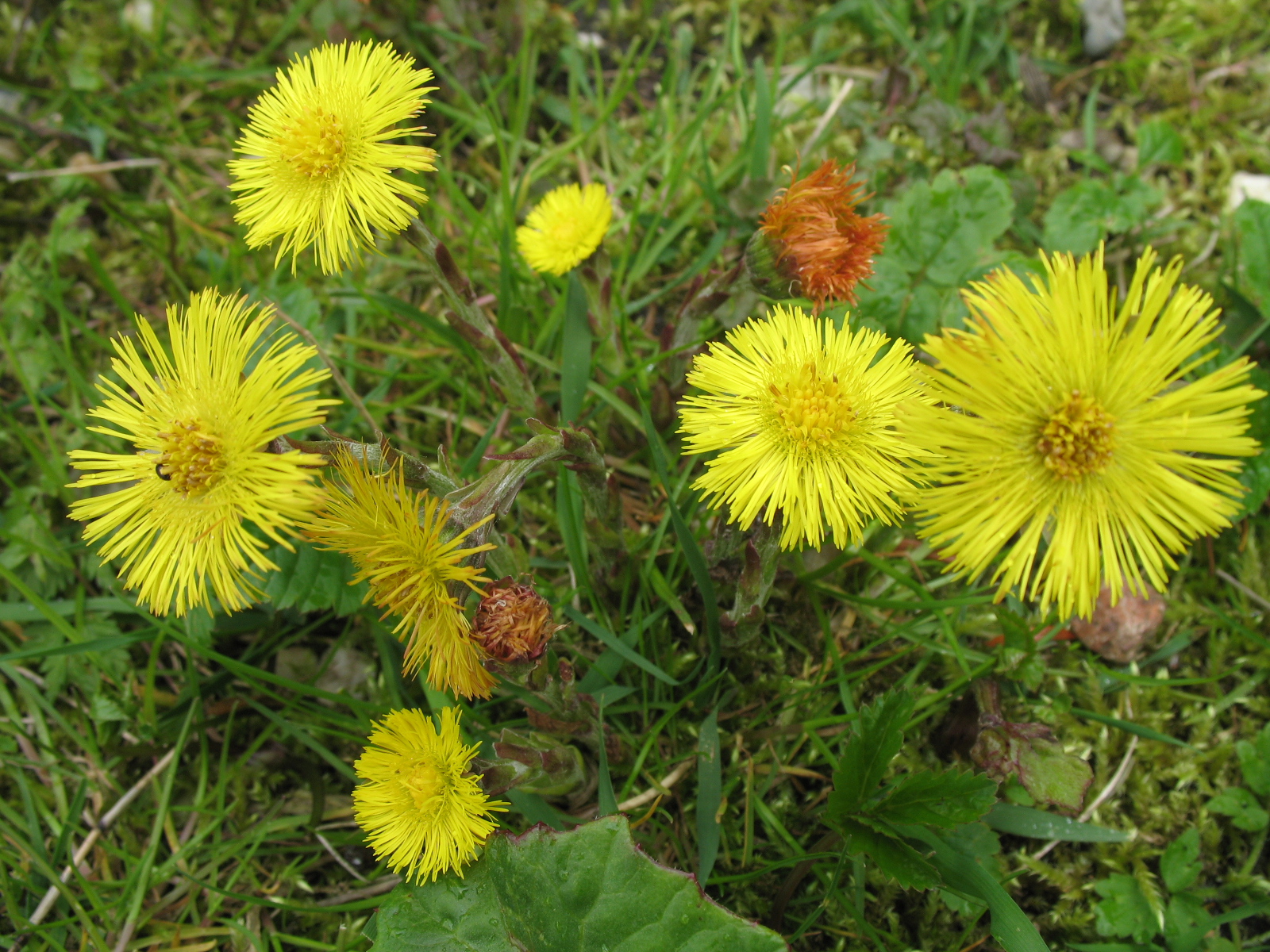
I’ve found lots of Coltsfoot (Tussilago farfara) today, both in the park and other parts of town. I’ve been collecting some of the flower heads to make Coltsfoot honey. They smell amazing when just picked and it’s easy to see why they are a great cough remedy. They are easiest to find in grassland close to water. They look like Dandelion from a distance. But close-up they look like strange Asparagus type scaly things, shooting up as spears through the soil and sending flowers to face the sun before producing proper leaves. Very difficult to mix them up with anything else.

So what else today?

Violets (Viola sp):
image

Young shoots of Rosebay willowherb:

image

More Motherwort (Leonurus cardiaca) NL:Hartgespan. If in doubt of this plant (but certain it’s a square stemmed Labiate) nibble a tiny bit of leaf. If the extreme bitterness literally knocks your socks off, it’s Motherwort!

image

Primrose:

image

And some lovely buds and shots from which I made a refreshing immune system boosting tea,

Lime tree buds (Tilia sp). Reach for a too high for dogs twig, maybe on a burr such as this. Snap off a fresh tip bud (after checking its OK with the tree of course) and just pop it in your mouth. After a little chewing your mouth will be full of unmistakable Lime tree goo! It’s great stuff for all manner of ailments and makes me feel very happy to know the tree, every time to do it. I can’t really understand why everyone else in the park doesn’t do this. There is some information I wrote a while ago about Lime, for those wondering what all the fuss is about.

image

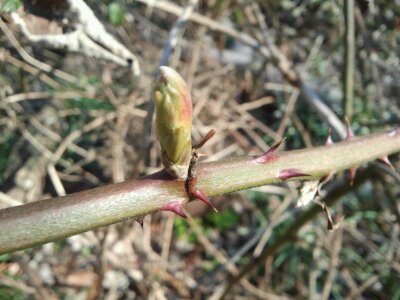
Bramble (Blackberry bush) – just the soft green shoots.

image

Added to my Spring brew (and still really tastes great hours later as I write this and enjoy the second pot) was of course a leaf or two of my new herb friend Common Horehound (Marrubium vulgare).

image

Wild Garlic (Allium ursinum) remains in pungent foliage.

image

And finally today, a real taste of the foraging weeks to come – Ground Elder (Aegopodium podograria). Just a few plants coming through today but it’s up! I absolutely love this herb (though it’s often a real pain to gardeners). It’s common English name is Goutweed because it helps clear the body of uric acid amongst other things. I love it because it makes me feel good and tastes rather like Parsley. It can be eaten, used medicinally internally and applied externally in things such as salves and compresses. Learn more about it at the June Embrace Your Weeds workshop which I’m running with City Plot.

image

Now back to my pot of Spring Shoots Tea…

Pick your lunch! 10th April 2013

Fancy a wild herb walk in a beautiful part of Amsterdam Oost?

Join me for a herbal forage in my main stamping ground, Park Frankendael. We can expect to find such tasty treats as Garlic mustard, Ground elder, Nettle, Mugwort, Coltsfoot, Wild garlic and far far far more! I’ll show you how to identify common edible plants, how to use them and some useful tricks to help preserve them.
Bring along whatever you like to accompany your harvest. A flask of hot water to make tea and some bread and butter may be useful. I’ll bring some herbal cake or breadsticks to share.
I’ve been photographing and charting the wild edibles in this park on my blog for quite some time, so you can get an idea of what we may find on the walk.

Come celebrate the green edible gifts that this beautiful city has to offer!!

Wednesday 10th April,
12.00-13.30
Main old gates, Park Frankendael

€10 per person
(incl. comprehensive colour handout).
Please contact me to sign up for the walk.
Lynn.shore@gmail.com

Wild Garlic Mojo / Pesto

image

People tend to call herbs blended with pine nuts and cheese, Pesto. I know of another herb blend called Mojo, from holidays in Tenerife. Green mojo is similar to pesto but has more kick to it due to it containing garlic and coriander and they don’t add pinenuts, basil or cheese generally. I began turning today’s Wild Garlic harvest into a sort of pesto and it turned out far more like spicy Mojo. So I’m calling this Wild Garlic Mojo, because if you know both you’ll find this far more akin to Mojo than Pesto. I also like the name as the garlic properties certainly get your mojo up and running!

Wild Garlic Mojo
Take one handful of ethically harvested wild garlic leaves. Place in blender.
Add 250 ml best quality Olive oil, juice of half a lemon,
pinch of quality sea salt,
handful of freshly grated parmesan cheese.
Sprinkling of pine nuts.
Now blend to a fine consistency which should be very easy to pour. Mojo is runny.

Store in sterile glass containers and use as a spicy, aromatic, digestive dressing for grilled cheese, meat, tofu etc or as a useful cooking seasoning.

image

Mojo originates from the Canary islands and should have heaps of colour, flavour and punch. This has them all.

New Events

Please check out the a Urban Herbology events page for details of my forthcoming herbal forays in Amsterdam.

Love Your Elders  (Sunday 7th April)

365 Frankendael Urban Herb Walk (End April/Start May)

Embrace Your Weeds (June)

As well as details of the new Apprenticeship group and River of Herbs.

I’m also planning a spring picnic in the park for people who have helped me during the  365 Frankendael project and a street herb walk in Bristol, later in the year.

Wild garlic bread sticks

These bread sticks are chunky and have more than a hint of wild garlic about them. We love making them and eating them and hope you will too. If you came to the River of Herbs or February Apprenticeship meetings then you tested the recipe with my first Wild Garlic harvest of the year. The plants are getting bigger, bolder and more tasty by the day. Only a few leaves are needed for this recipe. Please remember to pick carefully and to leave the plants in excellent shape, with their bulbs intact in the soil.

Wild Garlic Oil
Firstly, gather three Wild Garlic (Allium ursinum, Ramsons, NL: Daslook) leaves. Give them a quick rinse and pat them dry with a clean tea towel or similar. Finely chop the leaves and place them in a very small glass jam jar. Cover with extra virgin olive oil and poke around a little with a chopstick or cocktail stick, to release trapped air bubbles. Top up if necessary, to keep the leaves covered in oil.

Leave your wild garlic oil to infuse, with the lid on, whilst you make the bread as follows.

NB: The infused oil will be ready to use in as little as an hour but will keep at room temperature for several weeks, provided there was no water on the outside of the leaves when you chopped them. Mine never lasts that long as we eat it in everything at this time of year.

image

My basic bread recipe

4 cups of bread flour (I generally use 3 cups spelt flour and 1 cup strong wheat flour)
1 and 2/3 cups luke warm water
2 tablespoons olive oil
2 teaspoons fast action dried yeast
1 teaspoon fine sea salt

Gently and gradually mix together all of the above ingredients. When doing this by hand, I place the flour in a big heap on my worktop and make a volcanic crater in the centre. I sprinkle the yeast and salt around that crater but pour the water and oil into the crater. I’m then able to work everything in, bit by bit, avoiding it all spilling onto the kitchen floor…

When everything is well combined you need to knead it! Aim for a good ten minutes of therapeutic kneading, by which time your dough should be silky and springy to the touch. Then place your ball of dough in a glass or ceramic bowl, covered with a damp clean cloth or cling film, in a warm place, “until the dough has doubled in size”. I must say that I find that standard bread making statement of limited use. Dough “proving” is sometimes hard to gauge as the dough will change shape and texture as it rises. Mine generally mutates in a glass bowl, filling it gradually with long bubbles, rather than simply doubling up neatly. Use your judgement and common sense with this, the time needed for the first proving, will depend on your room temperature and specific ingredients. 40 to 90 minutes should do the trick but don’t worry if it doesn’t exactly seem to double in size.

Now give your dough a second kneading. This will make the dough decrease a lot in size and that’s fine. This step is called “knocking back”. After the quick knocking back knead, cover your dough ball again and leave in a warm place to double in size, again.

(Unless I am on holiday I generally use a bread machine for the kneading and proving stages of bread making (machine set to the dough setting). This recipe works equally well for bread machines and for hand working).

image

Creating the herby bread sticks:

Turn out your twice risen dough, onto a floured worktop and sprinkle a little flour over the top. Then pour about a tablespoon or two of your wild garlic infused oil (including the leafy bits) and a teaspoon or two of Malden Sea Salt Flakes onto the dough.

image

Work this in just a little, so that you feel that the oil and salt are throughout the dough.

image

Divide the mixture into about twelve small balls and make each into a long stick shape. Or whatever shape you like.

image

Place on an oven tray and bake at 200°C until they turn hard on the outside and light golden brown.

image

365 Frankendael day 310

More snow in Amsterdam today so a pleasant but chilly walk in park Frankendael, to collect a few Wild Garlic (Allium ursinum) leaves.

image

I gathered nine leaves, that’s enough to see my family through the week, with a garlicy meal a day. I preserved them in a tiny jam jar of olive oil, after chopping the leaves finely. Storing them in this way, at room temperature, makes using Ramsons in cooking as simple a possible.

image