I have been very busy the past few weeks, getting the Urban Herbology Foraging and Crafting Courses set up to run independently, for people who want and need these skills for increased self-reliance and community resilience, but who don’t want to do my full Apprenticeship course in one go. Both courses are now recognized and accredited by the Complementary Medicine Association, so I am very pleased. People can follow these alone (one or both) or they can build up to all 5 courses, which make up the Apprenticeship.
So that has taken up a lot of time behind my screen however, I have been outside a lot too. And, what beautiful things I have seen and what lovely people I have met! Here are a few of them:
Street food Today I led a small group walk in the center of town, looking at interesting herbs which the local council frequently plant besides roads. Above you will see Feverfew (Tanacetum parthenium), Daylily (Hemerocallis spp.) and Jerusalem Sage (Phlomis fruticosa). Absolute edible and medicinal crackers! Not that I suggest the Amsterdam population goes out foraging all these from council plantings, but what I do suggest is that people get to know what’s growing near them and how they could be used in small amounts.
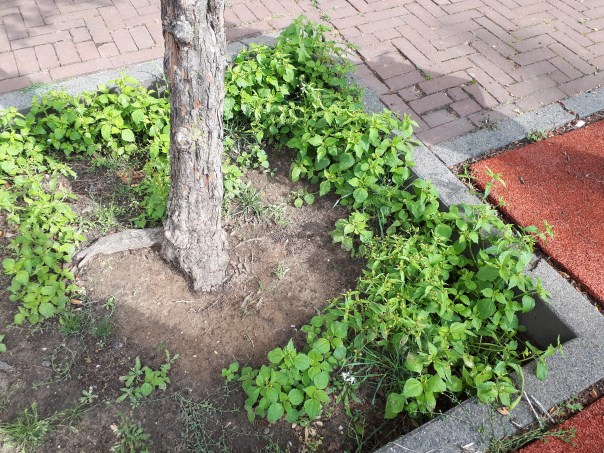
Street weeds We also found some wonderful street weeds. I find that a street will have one predominant weed species, growing in many neglected plant pots, street gardens, between bike racks and in paving cracks. See if you notice the same… Sometimes I find a street lined with Gallant soldiers (Galinsoga parviflora) (apparently loved as guasca by Latin American cooks for potato dishes – thanks Mayda!), sometimes Pellitory-of-the-wall (Parietaria officinalis) an age old remedy for the urinary system), sometimes Herb Robert (look it up – it’s an awesome herb). These are surely a gift from the gutter gods. I urge everyone to get to know their street weeds. You never know when they could help you out of a tight spot.
In the tree pit shown above, we found heaps of Gallant soldiers, two prime Shepherd’s purse plants and a few other special plants.
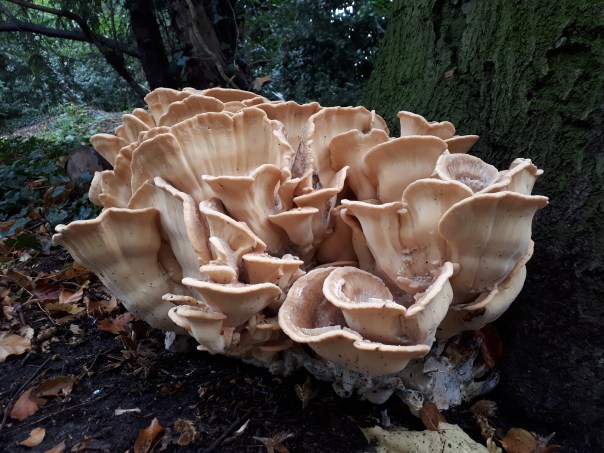
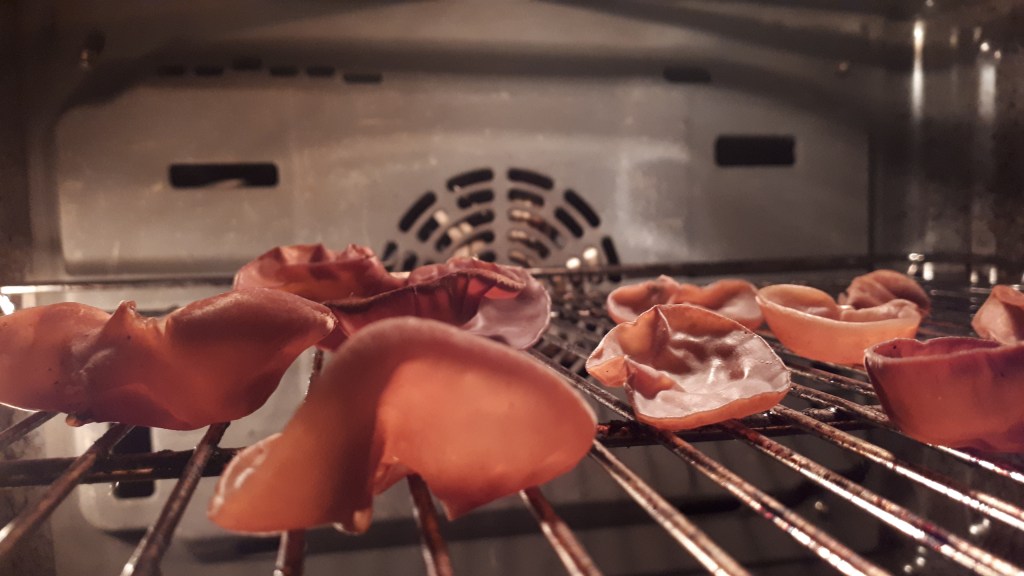
Fungi This seems to be the fruiting bodies of Giant polypore (Meripilus giganteus – Thank you Peter!) and what a gorgeous specimen the photo on the left preserves. Found these are at the base of a mature Beech tree, in woodland at the end of a lovely herb walk. The base of the tree is spiraled by clumps of specimen of this fungus, each one at a different stage of decay. This type of fungal fruiting body decays very quickly. Quite a site to behold.
I am not a mushroom expert so I am not going to tell much about these except that I have read, if this is indeed Giant polypore, when super fresh and cooked to perfection, it tastes like cardboard and is mildly poisonous. Umm – I will move on to other wild treats me thinks!
Fresh as a daisy
Not!
Fine taste This afternoon, I showed some of the staff from Restaurant Merkelbach around the plants which surround their workplace. This is also where the River of Herbs orchards are to be found and it is lovely to share that space with such super people. Walking with them, this afternoon reminds me of how inspiring it is, to meet people with great taste and such sharp culinary imagination! I look forward to learning what they make with today’s finds.
I am delighted to tell you that Urban Herbology Education is now a Registered Training School with the CMA (Complementary Medical Association). The Urban Herbology Foraging Course is now Accredited by and Registered with the CMA and the other courses within the Urban Herbology Apprenticeship course are to be evaluated by the CMA very soon. So the UH Herb Crafting, Wheel of the Year, Herb Growing and Healing courses should also be accredited by and registered with the CMA before long.
The Complementary Medical Association is an international non-profit organisation, established in the UK in 1993, which is the most highly respected membership organisation for complementary medical and natural health-care professionals and training schools. I am so pleased to have received their seal of approval for the course which in turn should help graduates of the Urban Herbology Apprenticeship course to gain further recognition for their learning within the course.
Lammas or Lughnasadh is the festival of first harvest. Celebrated at arond August 1st in the northern hemisphere. It is a time of flowers, seeds and fruits.
I have started a map to help my students and others to find herb gardens, foraging spots, community gardening projects and other interesting herbal places. I live in Amsterdam Oost so to start with, most of the map points are clustered there but I hope that it will steadily grow as more people add interesting medicinal and edible herbs to the map. I also want to map more places where Urban Herbologists can learn about plants and nature in general. Hopefully we can build it up for other cities and parts of the world. Let’s see where it goes.
If you would like to add points to the map, which show finds outside of private gardens, either send details and a photo to: urban.herbology.lynn@gmail.com or ask me to have editing rights, so that you can post your own favourites. I want each point to have the Scientific plant name, local name and English.
Please remember that this is for educational purposes and that no responsibility is taken for incorrect points on the map. The aim is purely for people interested in Urban Herbology to find more interesting plants and places close to where they live.
At present the map layers are:
General (useful herbs, edibles, medicinals in open ground) Trees (with edible / medicinal uses in open space) Private Collections (museum gardens, botanical gardens etc) Community Gardens (where you could get involved with some local schemes)
I hope you find it interesting and useful. Let me know any feedback.
In reaction to the current social distancing requirements, I am offering a free weekly online gathering for my apprentices. It has worked out really well, we Zoom and chat about whatever herbal things are on our minds, check out someone’s garden or plant pot for mystery plants if that comes up, make herbal lotions and potions together-apart, my cat joins in the fun sometimes, we discuss issues with crafting, using remedies and simply spend some time together. It is very gezellig – as the Dutch say!
I am going to keep these weekly gatherings going as I am really seeing how it is adding power to my students’s herbology studies and creating a great sense of togetherness as we each navigate the plants in our own area, at our own pace. The gatherings are open to all past and present apprentices and are most certainly a great place for brand new students to connect. You don’t need any background knowledge or experience and everyone is very friendly so don’t be shy about joining in!
This week, we will look at how to make useful tinctures, elixirs and honey/agave infusions.
If you want to work along with me this Friday at 19.30 Amsterdam time, you could gather beforehand: about 20 dandelion flowerheads, a clean dry glass jar with well fitting lid, a knitting needle or chopstick and enough honey or agave syrup to fill that jar. You could also have some strong spirit available – vodka/brandy etc. Soggy dandelion flowers are not going to work well so dust them off or wash them and dry before the gathering.
I have a batch of newcomers to the course, who joined in the past few weeks so several of you are in the same boat and this is a great way to connect.
Send me a message if you would like to know more, take a look at the apprenticeship website or see the meetup group. It is perfectly possible to dip in an out of the course at your own pace.
De laatste tijd hebben een paar vrienden en familie me een zetje gegeven over deze botanische stoepkrijt die momenteel in Europa gaande is.
Ann van City Plot gaf me gisteravond een zetje, wat de laatste strohalm heeft bewezen – het is duidelijk tijd dat we beginnen met meedoen! Wil iemand meedoen met ons?
Hier zijn een paar dingen die we vandaag in de stad hebben gekrijt …
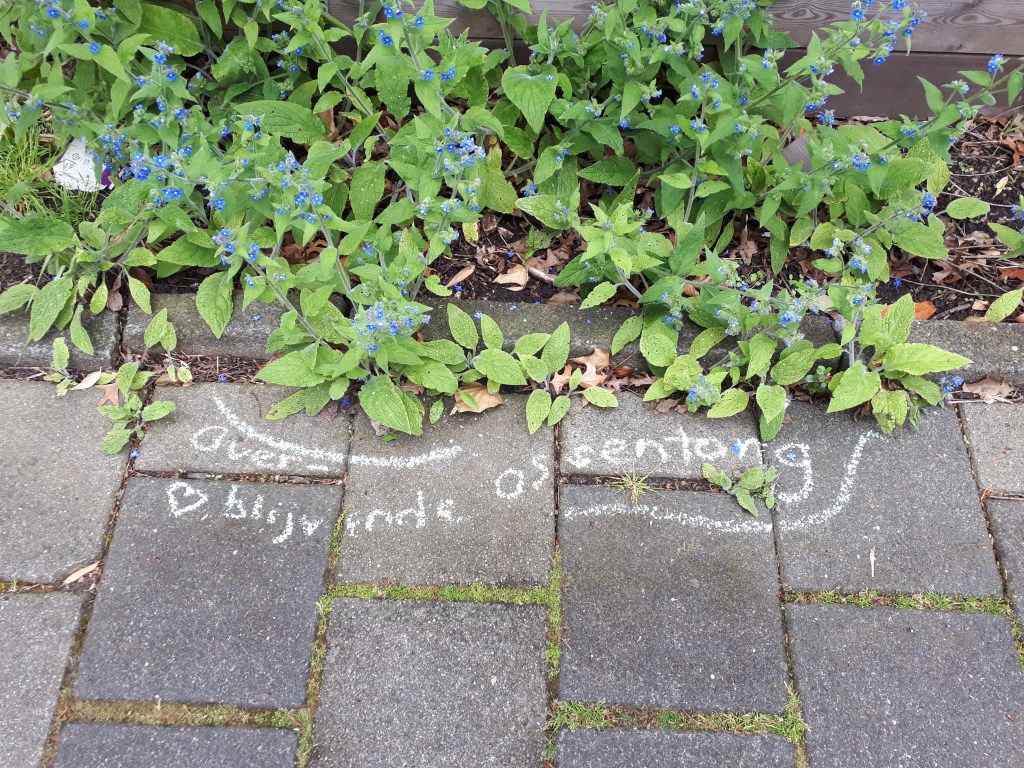
Overblijvende ossentong (Pentaglottis sempervirens) Green Alkanet
Er gaat niets boven een naamplaatje om mensen te helpen beseffen wat er onder hun neus groeit terwijl ze door de straten lopen.
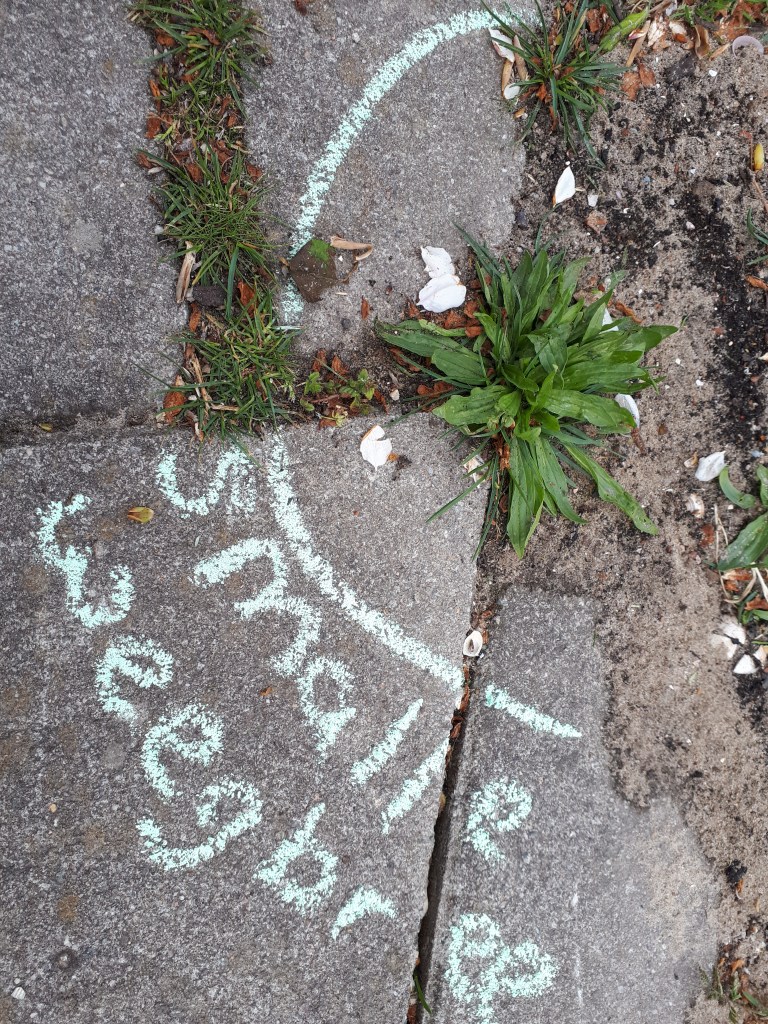
Smalle weegree (Plantago lanceolata) Ribwort
Veel van ons kennen de waarde van de planten die de meeste mensen onkruid noemen. We zijn gepassioneerd door mensen die beseffen wat er kan worden gedaan met planten die om hen heen groeien en zorgen voor de planten die van nature groeien in vergeten ruimtes.
Grote weegbree (Plantago major) Plantain
Meestal willen we niet van trottoirs oogsten of foerageren, maar die stedelijke kruiden en groenten kunnen een bron zijn van gratis zaad, stekjes, startplanten en leerplanten.
Lindenboom (Tilia sp.) Lime tree
Hier is een Grote stinkende gouwe die ik vorige week uit een stoeptegelscheur trok en nu op mijn dak groeit voor een huismiddeltje en een leerplant. Het gele sap binnenin heeft verschillende toepassingen.
Als je niet zeker bent van de naam van de plant, stuur me dan een duidelijke foto via Whatsapp of e-mail van en ik stuur je de plantnaam. 06 275 969 30 urban.herbology.lynn@gmail.com
Ik zou ook graag je gelabelde planten zien en zal hier graag wat foto’s plaatsen, en op het Urban Herbology Facebook pagina.
Lately, a few friends and family have nudged me about this botanical street chalking that’s going on in Europe right now.
Ann from City Plot gave me a nudge last night which has proved the final straw – it’s clearly time that we start to join in the fun!
Anyone in?
Here are a couple that we did today across town…
Green alkanet (Pentaglottis sempervirens)
Nothing like a name tag to help people realise what’s growing under their noses as they walk around the streets.
Smalle weegree (Plantago lanceolata) Ribwort
Many of us know the value of the plants which most people call weeds. We are passionate about people realising what can be done with plants growing around them and looking after the plants which naturally grow in forgotten spaces.
Grote weegree (Plantago major) Plantain
Mostly, we won’t want to harvest or forage from pavements but those urban herbs and veggies can be a source of free seed, cuttings, starter plants and teaching plants.
Lindenboom (Tilia sp.) Lime tree
Here’s a Greater celandine which I pulled from a pavement crack last week and now grows on my roof for a home remedy and teaching plant. The yellow sap inside has several uses.
It you’re not sure of the name of the plant, feel free to send me a clear photo by What’s app or email and I’ll send you the plant name. 06 275 969 30 urban.herbology.lynn@gmail.com
I’d love to see your labelled plants too and will happily post some photos here, and on the Urban Herbology FaceBook page.
A few photos and short comments today as we rapidly approach Beltane, the festival of early summer.
Lime trees – Tilia – Linden in Amsterdam
This week, the Lime trees which line many Amsterdam streets, burst into leaf. I love to eat these leaves, they have a mild flavour, are not tough and they bring many nutritional and medicinal uses. The trees in this street show a characteristic of Lime, they often grow leaves down the trunk. This is a bonus for foragers as it makes the leaves easy to harvest from a tree species which can easily reach 20 meters.
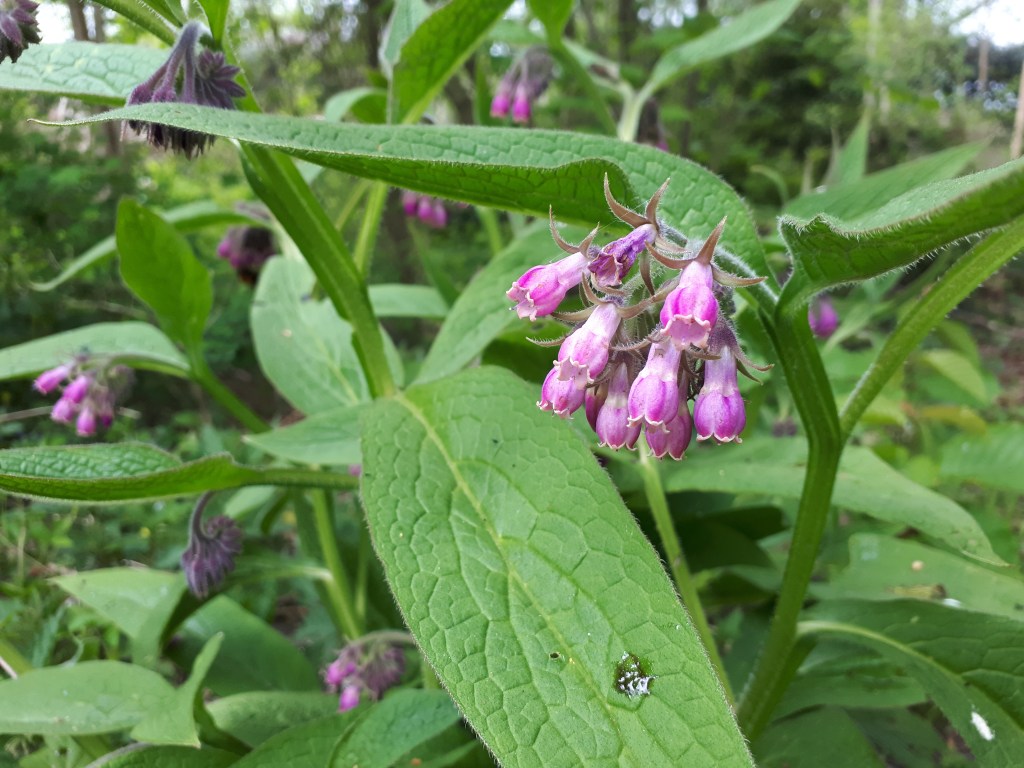
Symphytum x uplandicum in flower
Comfrey plants are in bloom. This helps up to identify the species and help discern whether the comfrey growing near you in the white flowering Symphytum officinale, which is not seen as safe in internal preparations (such as teas) but helpful in external preparations (such as skin salves) or Symphytum uplandicum, which tends to have leafy parts which don’t contain the hepatotoxins in it’s leaves and flowers.
Another Symphytum in flower – 20 m away from the purple one above
Next up, Hawthorn. This is called by many names around the world, including May Tree because it generally bursts into bloom around the first of May. Well this year, it is a little earlier than I have seen for a while. It has been in bloom for over a week and it looks very pretty. Hawthorn is a tree wrapped in much folklore and superstition, due to the plethora of medicinal uses associated with it. This is one of my favourite city herbs.
Hawthorn in bloom. Crataegeus monogyna.
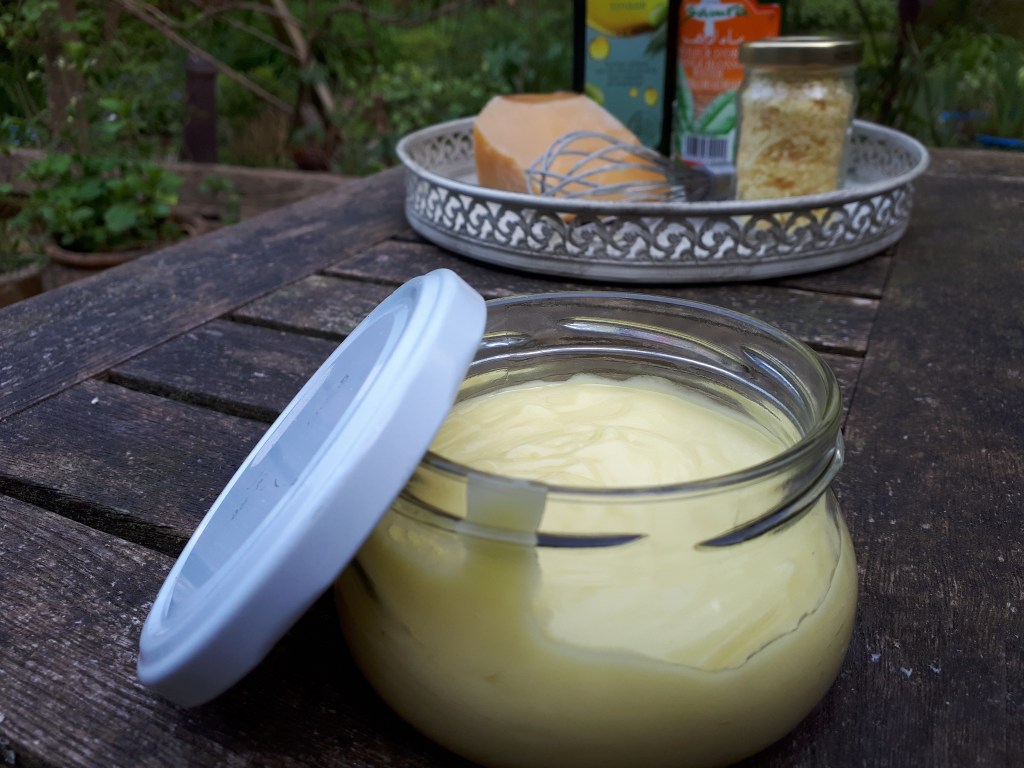
I have been Zooming with some of my apprentices over the past few weeks. I am posting the date and time on the Apprenticeship events page and any who fancy joining me for a chat, do. One week, there was a question about creams so I made them a video about it and have actually been more in love with the cream recipe since! It is a real skin soother. I made this one with orange blossom water and olive oil.
My Zoom cream. Orange blossom water and olive oil.
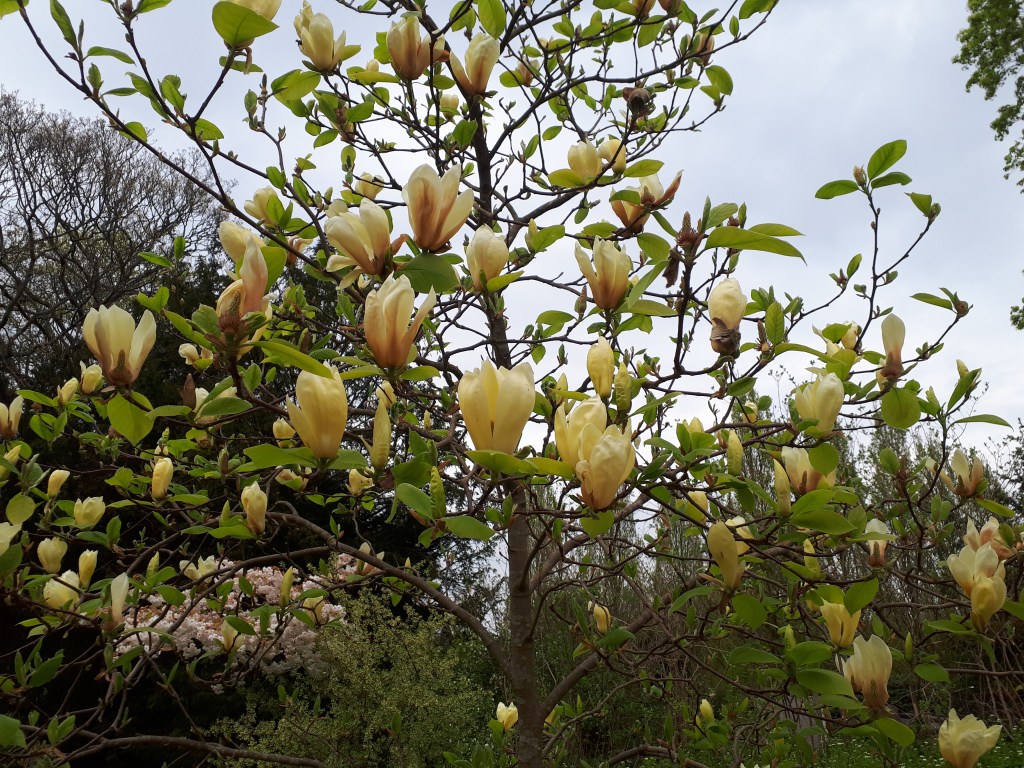
Magnolia is going over now, the flowers that it. If you have uses for the leaves then now is the time to harvest a few of those! Here is a beautiful specimen which grows in my local cemetery which happens to also be the Netherlands national arboretum – A nice double function, you may agree. The cemetery also houses the national funeral museum. An incredibly interesting place.
Yellow petaled Magnolia in Neiuwe Osster Begraafplaats, Amsterdam Oost.
Below is a photo of an invasive weed which grows in parts of Park Frankendael. I identified it several years ago as Pennsylvania pellitory (Parietaria pensylvanica), a non-stinging member of the nettle family and a sister of the well known traditional herb, Pellitory-of-the-wall (Parietaria officinalis). It is called Glaskruid in Dutch and Cucumber weed in parts of the USA. Both helpful common names as it kind of looks glassy when held to the light (translucent) and it has a mild cucumer taste. Sadly, it is also known as asthma weed because when the flowers start to release their pollen, it can cause havoc for people with respiratory issues. This prime specimen is growing in the woodland area of the park. There is a single mature plant growing in the River of Herbs nettle orchard, on the left hand side, soon after entering through the gate. We are leaving it there and will keep an eye on it when the weedy seed spreading time comes.
Pennsylvania pellitory
Next today, can you see the Elderflower (Sambucus nigra) in the photo below? I found this yesterday, on my walk back home from the supermarket in Oostpoort. Beautiful, fragrant (often nastily fragrant), edible, medicinal and fabulous Elderflower!! I just thought you may like to see it as this heralds the start of the main foraging season for many people. Here are a few recipes and thoughts about elderflower. As you will see from those posts, I am a big fan of them and each year, as well as making foods, drinks and home remedies from them, I dry a batch or two and store carefully to use as a tea during times when my immune system needs a boost. Elderflower tea is a well known traditional remedy for. Since COVID-19 hit Amsterdam, my Elderflower tea has been drunk at least once a day so my stock has steadily been depleted. It will certainly be restocked in a few weeks time, when the flowers are open everywhere and I can harvest some for drying.
I am trying to grow more vegetables than usual at home. I may write a post about these later but for now, here’s a windowsill shot of some veg scraps which I am trying to bring on. The Paksoi is particularly fast!
Romaine lettuce base, basil cuttings, paksoi base, spring onions, some sprouting lentils, celery base and carrot tops. Day 1.
You may have read about my Rosemary beetle problem. I can now report that the issue is improved but continuing. Yesterday, I picked only 5 beetles from the pruned bush. My poor Rosemary bush!
Lastly, a mention of a Dutch woman who asked for my advice by telephone earlier this week. She had been foraging in an Amsterdam park and noticed a young fern head had been snapped off and removed in an area with many fern heads were coming up. She took this to mean that some knowledgeable forager had found an edible fern and harvested some. She has heard that some young fern heads are edible and she wanted to try so she snapped one off, took it home, prepared and ate it. Unfortunately although now recovered, she became quite ill and she wondered what to do and did I know much about ferns.
My advice was to call her doctor or the emergency services if this sort of thing ever happened again and that if she relapsed at all now, to contact them straight away, showing them a photo of what she had eaten. Also not to follow supposed “leads” from other foragers. That fern head may have been snapped off by any number of things, from kids playing near them, a strong bird animal pecking around, a dog etc. This is just one of the reasons why I teacher foragers to pluck really gently and to leave no trace. When one person sees you have been there, others often think that it is fine to copy. Sometimes with catastrophic effects.
I don’t forage ferns and I keep a few bottles of Norit activated charcoal tablets handy, they may sometimes be helpful at absorbing toxins but hospital is your best bet, if a plant poisoning situation occurs – don’t be proud if it should happen, just call 999 / 112 / 991 etc and get professional help – quickly. And only harvest what you know really well, have identified properly and only eat what you are sure is safe for you. I am looking forward to meeting the woman and us going for a herb walk together.
Gnarly apple tree – Wishing you a blooming lovely Beltane!
I went for a walk and forage in the Orchards of Park Frankendael this morning and made some recordings for you. Next time, I will hold my phone the other way so that it records a wider frame but for now, I hope that you can at least enjoy some of the blossoms and bees!
So there we have it, about 30 minutes of my ramblings in the orchards. We saw quite a few plants today but there are hundreds more to find. Let me know what you would like to see next time!















 Urban Herbology